Nowadays, many sectors use lubrication derived from petroleum oil, resulting in severe environmental pollution. Hence, as a countermeasure, developing lubricants from organic sources is gaining attention. This research aimed to formulate a new bio-based banana peel oil by adding scallop shell nanoparticles (SSNs) as an additive. The process involved extracting banana peel oil (BPO) using a Szf-06A Soxhlet extraction fat analyser. The extracted oil was mixed with 0.5 vol% of three types of SSNs as an additive, and the mixture was then homogenised using ultrasonication. A tribological test using a four-ball tester, according to ASTM D-4172, was performed to determine the coefficient of friction (CoF) and the wear scar diameter (WSD). Scanning electron microscopy (SEM) was conducted to verify the wear mechanism. Samples with commercial-sized SSN additives yielded the best CoF (0.08385) and WSD (0.67 mm) results, indicating that commercial SSN additives can improve the physical properties and enhance the excellent anti-wear and anti-friction characteristics of lubricant mixtures compared to mineral oil.
Nickel coatings incorporated with quarry dust were synthesized through direct current electrodeposition from a nickel Watt’s bath. The study explored the effects of varying current densities on the surface morphology and wear behaviour of the nickel-quarry dust (Ni-QD) composite coatings deposited on a high-speed steel (HSS) substrate. Quarry dust was chosen as a reinforcement material due to its high silica and alumina content, which enhance the properties of the coating. To achieve finer particle size, the quarry dust was subjected to ball milling before electrodeposition. The study tested a range of current densities from 2 to 8 A/dm², as different current densities produce different results. The composite coatings were characterized using a Scanning Electron Microscope (SEM) and their wear resistance was evaluated through pin-on-disk test. The results indicated that increasing the current density enhanced the wear resistance of the coatings. Coatings produced at high current densities displayed a colony-like structure, demonstrating the impact of deposition conditions on colony size relative to current density. Ni-QD composite coatings created at 6 and 8 A/dm² resulted in smoother and narrower wear scars with minimal scratching, attributed to the low surface roughness of the coatings.
This research delves into the distinct wear scar properties exhibited by pure nickel and nickel composite coatings with varying concentrations of fly ash when sliding against a stainless steel ball on an aluminium alloy 6061 (AA6061) substrate. The composite coatings were formulated from a modified nickel Watt's bath using an electrodeposition technique, involving a 1-hour process at 40°C and a current density of 5 A/dm². Through experimentation utilizing a high-frequency reciprocating rig (HFRR) tester, the resulting composite coatings underwent assessment, capturing the features of the scar surfaces. Notably, the Ni-FA (nickel-fly ash) composite coating, comprising 90 g/l of fly ash, demonstrated notably enhanced wear resistance in contrast to both the pure nickel coating and the Ni-FA composite coatings with lower fly ash concentrations. The disparities in morphology between the pure nickel and Ni-FA composite coatings were discernible through scanning electron microscopy, energy-dispersive X-ray spectroscopy (EDS), and analysis of surface roughness on the wear scars. These distinctions can be attributed to the varying impacts of fly ash concentration on the wear scar characteristics.
This research focused on the effects of saccharin content on the properties of electrodeposited nickel-quarry dust (Ni-QD) composite coatings. The nickel modified Watt's bath was prepared using various saccharin content of 5, 10, 15 and 20 g/l. The electrodeposition process was carried out under 60% ultrasonic amplitude. The composite coatings were characterized using scanning electron microscope (SEM) and X-ray diffraction (XRD). Then, the influence of various saccharin content on the composite coatings was investigated using hardness test. The hardness of the coating was improved at higher saccharin content due to the nickel grain refining and high co-deposition of quarry dust (QD).
This research work mainly investigates the effects of drilling penetration angle and cutting tool's geometrical features on the hole's wall surface roughness. L-20 FCCD design was employed to analyze the factors that contribute to the best surface roughness measurement. Analysis of variance (ANOVA) statistical tool was used to obtain the significant parameters. From the conducted experiment, the lowest measurement is 0.410 mu m on a 0 degrees drilling angle, and the highest is 1.210 mu m on a 5 degrees drilling angle. The perturbation plot shows the combination of low-level drilling angle and high-level second primary clearance contributes to the best surface roughness result.
In this work, parameter effects on thrust force for one-shot drilling of CFRP was conducted. A total of eight parameters has been selected in order to study against thrust force generated - an experiment using L18 Taguchi design to evaluate the contribution percentage of thrust force. Analysis of variance (ANOVA) and signal-to-noise (S/N) ratio statistical tools were used to obtain the most significant parameters contributes to high thrust force measurement. Dominating parameters contribution to thrust force are drilling feed rate (71.72%) for machining parameter and drill point angle (14.48%) for drill geometrical feature parameter.
 Mohd Shahir Kasim合作论文数3
 Intan Sharhida Othman合作论文数Adv Mfg Ctr, Tech Univ Malaysia Malacca UTeM3Mohammad Shah All-Hafiz Mohd Shahrim合作论文数2Muhamad Hafiz Muhamad Hassan合作论文数2
 M. F. Jaafar合作论文数2Pay Jun Liew合作论文数2
 Shahira Liza合作论文数I Kohza TriPreM, Univ Teknol Malaysia2
 Raja Izamshah合作论文数Faculty of Manufacturing Engineering;Universiti Teknikal Malaysia Melaka;Faculty of Manufacturing Engineering, Universiti Teknikal Malaysia Melaka2
 Qumrul Ahsan合作论文数Department of Materials and Metallurgical Engineering, Bangladesh University of Engineering and Technology2
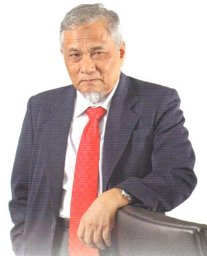 Assoc. Prof. Ir. Ts. Dr. Mohd Shukor Salleh合作论文数Institute of Microengineering2
 Rose Farahiyan合作论文数Fakulti Kejuruteraan Pembuatan, Universiti Teknikal Malaysia Melaka1
 Ammar Farhan合作论文数1
 Jariah Mohamad Juoi合作论文数Ctr Smart Syst & Innovat Design, Univ Tekn Malaysia Melaka1
 Mohd Rody Bin Mohamad Zin合作论文数Centre for Advanced Research on Energy, Universiti Teknikal Malaysia Melaka1
 Jeefferie Abd Razak合作论文数universiti teknikal malaysia melaka1
 Mohd Asyadi Azam合作论文数Universiti Teknikal Malaysia Melaka1




