Post-processing is a critical stage in LiDAR-based 3D object detection, where dense and overlapping proposals must be filtered for compact and reliable perception. This work introduces two learned filtering modules that replace heuristic non-maximum suppression (NMS) by leveraging relations among detections. D2D-Rescore employs transformer-based detection-to-detection (D2D) attention, while GossipNet3D adapts the 2D GossipNet concept to 3D through localized message passing in bird's-eye view. A metric-aware matching strategy aligned with the nuScenes evaluation protocol ensures consistent training and validation behavior, improving overall detection performance. Both approaches improve mean average precision (mAP), nuScenes detection score (NDS), and true positive quality compared to CircleNMS, particularly for small and infrequent classes, while adding minimal computational overhead. These results demonstrate that learned, detection-level filtering can enhance 3D detector reliability without modifying the base network, offering a principled alternative to heuristic suppression. Code is available at https://github.com/rst-tu-dortmund/learned-3d-nms .
Radio Detection and Ranging (RADAR) sensors are crucial for environmental perception in automated driving, and therefore, for vehicle safety. However, the inherent variability of RADAR point cloud data and the differing properties of existing evaluation metrics pose significant challenges for developing standardized quantitative evaluation methods. This challenge is compounded by the fact that many metrics are optimized for dense, low-noise data or specific feature spaces, which only partially address the unique characteristics of RADAR data. To address this challenge, this work offers a systematic classification of similarity metrics and presents a practical procedural model. Metric sensitivity and robustness are evaluated using Monte-Carlo-Simulation (MCS) under realistic perturbations (translation, rotation, density, and Radar Cross-Section (RCS) variation). The results highlight metric-specific responses to typical RADAR artifacts and, together with the cited literature, form the basis for a standardized evaluation method.
Kalman filter (KF)-based multi-object tracking (MOT) remains a strong baseline for autonomous driving due to its strong performance, computational efficiency and interpretability. In most practical systems, the process noise and measurement noise covariances are defined globally and shared across object classes, presuming identical uncertainty characteristics across heterogeneous traffic participants. This work revisits this assumption and proposes CANMOT, a class-aware and object-aligned noise modeling framework for KF-based 3D MOT. Class-specific diagonal process and measurement covariance matrices are introduced and optionally expressed in the object coordinate frame to preserve longitudinal-lateral anisotropy. Systematic experiments on the nuScenes benchmark show that class-aware and object-aligned noise modeling improves tracking performance and substantially reduces identity switches compared to state-of-the-art (SotA). In addition, the consistency of the estimated uncertainty is analyzed using the Average Normalized Estimation Error Squared (ANEES) and χ^2-based violation tests. The results reveal severe overconfidence in standard KF-based MOT baselines. While the proposed formulation improves calibration without modifying the underlying filtering framework, it still exhibits substantial inconsistency, highlighting the need for further research in this area. Code is available at https://github.com/rst-tu-dortmund/learned-3d-nms.
Pulse-width-modulated (PWM) automotive headlights enhance nighttime event-based camera detection, yet systematic parameter optimization for vulnerable road user detection remains unexplored. This study evaluates PWM frequency, duty cycle, light distribution, ego-vehicle speed, and ambient lighting under European New Car Assessment Programme-inspired crossing scenarios for cyclist and pedestrian detection. Results establish performance ranging from substantial improvements to severe degradation relative to continuous illumination. Cyclist detection achieves robust performance with high-frequency modulation across light distributions, while low-frequency operation with low beam produces severe degradation through background noise accumulation. Pedestrian detection requires high beam with street lighting enabled; low beam universally fails regardless of modulation parameters. Limited parameter combinations achieve simultaneous improvements for both targets. Detection performs optimally on retroreflective surfaces, while low-reflectivity clothing limits capability, requiring target-specific optimization.
Radar-only object detection is experiencing growing interest due to the unique advantages of radar sensors, combined with recent advancements in improving their resolution. However, 3D object detection performance on radar remains limited compared to other sensor modalities, primarily due to the persisting sparsity and noise of radar point clouds. While several works have explored the use of different sensor modalities, such as lidar, to support the training of radar-only object detectors, they rely on labeled datasets, which limits the amount of usable data. To address this limitation, we draw inspiration from masked autoencoders and propose the radar-lidar autoencoder (RaLi-AE), a cross-modal autoencoder designed for self-supervised pre-training of radar-only object detectors. The main pre-training objective is the reconstruction of the dense lidar point cloud from the sparse radar point cloud. Our approach demonstrates an overall improvement of up to 3.1% points mean average precision on two different baseline methods and three datasets. Furthermore, we show that our method enables effective transfer learning across datasets.
The fusion of sensor data is essential for a robust perception of the environment in autonomous driving. Learning-based fusion approaches mainly use feature-level fusion to achieve high performance, but their complexity and hardware requirements limit their applicability in near-production vehicles. High-level fusion methods offer robustness with lower computational requirements. Traditional methods, such as the Kalman filter, dominate this area. This paper modifies the Adapted Kalman Filter (AKF) and proposes a novel transformer-based high-level object fusion method called HiLO. Experimental results demonstrate improvements of 25.9 percentage points in F_1 score and 6.1 percentage points in mean IoU. Evaluation on a new large-scale real-world dataset demonstrates the effectiveness of the proposed approaches. Their generalizability is further validated by cross-domain evaluation between urban and highway scenarios. Code, data, and models are available at https://github.com/rst-tu-dortmund/HiLO .
Semantic segmentation of the scene surrounding a car in Bird's-Eye-View (BEV) is an important task for the safe operation of an automated vehicle. Information about drivable areas and interactions with vulnerable road users such as pedestrians needs to be available. Most methods for local semantic scene segmentation rely on a combination of cameras with expensive lidar sensors for accurate mapping of the BEV scene. We propose a camera-only approach that aims to solve the map segmentation task by estimating ground height in the scene for resource efficient perspective view to BEV lifting.
affect the performance of learned models in selfdriving vehicles (SDVs). While this is a well-established problem, prior work has mostly explored naive solutions such as finetuning, focusing on the motion prediction task. In this work, we explore novel adaptation strategies for differentiable autonomy stacks (structured policy) consisting of prediction, planning, and control, perform evaluation in closed-loop, and investigate the often-overlooked issue of catastrophic forgetting. Specifically, we introduce two simple yet effective techniques: a low-rank residual decoder (LoRD) and multi-task fine-tuning. Through experiments across three models conducted on two real-world autonomous driving datasets (nuPlan, exiD), we demonstrate the effectiveness of our methods and highlight a significant performance gap between open-loop and closed-loop evaluation in prior approaches. Our approach improves forgetting by up to 23.33% and the closed-loop out-of-distribution driving score by 9.93% in comparison to standard fine-tuning. https://github.com/rst-tu- dortmund/LoRD
The contribution at hand presents a novel approach to improve object detection in automated driving by dynamically controlling the illumination of matrix headlamps. The dynamic sampling-based headlamp control strategy is, in principle, applicable in moving, real vehicles and allows for a dynamic environment lighting adaption without causing discomfort for the human eye. At the same time, the innovative approach achieves in the simulation similar detection confidences of a neural network as the already optimized static homogenous light distribution. Another advantage is that the novel strategy works without additional hardware, HD maps or localization, and only requires series-produced automotive cameras and matrix headlights.
Visual observation of objects is essential for many robotic applications, such as object reconstruction and manipulation, navigation, and scene understanding. Machine learning algorithms constitute the state-of-the-art in many fields but require vast data sets, which are costly and time-intensive to collect. Automated strategies for observation and exploration are crucial to enhance the efficiency of data gathering. Therefore, a novel strategy utilizing the Next-Best-Trajectory principle is developed for a robot manipulator operating in dynamic environments. Local trajectories are generated to maximize the information gained from observations along the path while avoiding collisions. We employ a voxel map for environment modeling and utilize raycasting from perspectives around a point of interest to estimate the information gain. A global ergodic trajectory planner provides an optional reference trajectory to the local planner, improving exploration and helping to avoid local minima. To enhance computational efficiency, raycasting for estimating the information gain in the environment is executed in parallel on the graphics processing unit. Benchmark results confirm the efficiency of the parallelization, while real-world experiments demonstrate the strategy's effectiveness.
The acceptance of automated driving depends largely on the user's perception of risk and trust in the automated vehicle. One of the challenges in the design of user interfaces and interaction with the human driver is therefore to promote trust and reduce risk perception in non-safety-critical situations. The aim of this contribution is to investigate the effect of driver workload on perceived risk of drivers during partially automated driving and to attenuate the perceived risk associated with non-safety-critical situations by adapting driver-related factors. To address this objective, a section of the manD 1.0 (human driver monitoring) dataset is utilized, which includes the behavior of 39 drivers in car-following scenarios, where the perceived risk and trust in the automated system are affected by assigning a secondary auditory task to the participants. The results of the analysis show that driver interventions in automated driving, such as braking, steering, or taking control, as indicators of perceived risk, occur more frequently when drivers are not multitasking, even when the driving situation is not critical. The consideration of age, gender, and driving experience shows that driver characteristics have no significant influence on the takeover decision in this context. The proposed interaction can be integrated into a feedback loop to enhance trust when falsely high perceived risk is detected. Such an approach can be applied to a range of automation levels, including partially or entirely passive drivers, as well as to passengers in automated shuttles where the absence of a human driver may lead to increased perceived risk. Further studies are required to learn more about the qualitative and quantitative relationships between the different mental states of drivers and their improvement methods.
The contribution at hand presents a novel, selective dynamic sampling-based control strategy for matrix headlights to enhance the camera object detection in automated driving systems. The approach is based on continuously sampling the illuminated environment with different luminous intensity distributions created by the matrix headlights. By this, the neural network for camera object detection identifies the most suitable illumination for the current situation to detect traffic objects optimally. The approach is applicable in real-time in dynamic environments, avoiding flickering for human road users and working without prior knowledge of the environment or the objects. The hardware requirements are limited to cameras and matrix headlights, allowing for widespread use. The approach is evaluated across diverse dynamic scenarios, generating 4,130 samples for robust statistical analysis. The results in the simulation show that the novel approach outperforms human-focused luminous intensity distributions with a mean average precision of 0.88 compared to human-focused luminous intensity distributions like low beam, with only a mean average precision of 0.31. In challenging situations, e.g., larger distances to the objects, the approach improves the mean average precision by 37.5% compared to the best-scoring classic luminous intensity distribution high beam. Even when the ego vehicle is driving, the novel approach achieves a mean average precision of between 0.75 and 0.85, outperforming all other luminous intensity distributions and significantly increasing the safety of automated vehicles.
The contribution at hand presents a novel method for optimizing the illumination of matrix headlights in simulation to improve the environment perception of camera-based computer vision and the object detection quality for automated driving. With high-definition (HD) matrix headlights in combination with the developed novel algorithm, different surfaces and materials in the environment can be illuminated with different intensities, resulting in material-based and -optimized illumination that is individually adapted to each material. This environment-optimal illumination improves the detection quality of computer vision, which is better than conventional homogenous headlamp illumination. Additionally, it is possible to achieve a similar detection quality using the novel proposed optimization approach with potential energy savings of up to 88%.
The contribution at hand presents and evaluates a novel matrix headlamp lighting distribution optimized for computer vision and energy consumption, thus enhancing automated vehicles' safety through an improved perception. The light distribution considers the materials of the environment to illuminate each material selectively with a different intensity. The simulative results show that today's real light distributions are inefficient for automated driving and that the proposed material-based illumination can enhance the detection quality by over 80% while saving energy simultaneously, outperforming real and homogenous light distributions.
Road environments can include several local optimal solutions to be explored by a motion planning algorithm, which can be computationally complex. This work proposes a two-stage approach, where each stage solves the same basis-spline parameterized optimal control problem. In the first step, a solution is selected from a discrete set of trajectory candidates. In the second one, the trajectory is refined by a nonlinear optimization algorithm in the continuous solution space. The non-uniform basis-spline parameterization guarantees the trajectory's time-continuous feasibility. Final costs are introduced to ensure convergence towards a final manifold. The approach is evaluated in a highway scenario where other vehicles must be circumnavigated to reach a specified velocity and lane center.
In driver monitoring various data types are collected from drivers and used for interpreting, modeling, and predicting driver behavior, and designing interactions. Aim of this contribution is to introduce manD 1.0, a multimodal dataset that can be used as a benchmark for driver monitoring in the context of automated driving. manD is the short form of human dimension in automated driving. manD 1.0 refers to a dataset that contains data from multiple driver monitoring sensors collected from 50 participants, gender-balanced, aged between 21 to 65 years. They drove through five different driving scenarios in a static driving simulator under controlled laboratory conditions. The automation level (SAE International, Standard J3016) ranged from SAE L0 (no automation, manual) to SAE L3 (conditional automation, temporal). To capture data reflecting various mental and physical states of the subjects, the scenarios encompassed a range of distinct driving events and conditions. manD 1.0 includes environmental data such as traffic and weather conditions, vehicle data like the SAE level and driving parameters, and driver state that covers physiology, body movements, activities, gaze, and facial information, all synchronized. This dataset supports applications like data-driven modeling, prediction of driver reactions, crafting of interaction strategies, and research into motion sickness.
Upcoming vehicle generations will provide fault-tolerant onboard power supply systems and an increasing level of driving automation. These changes contribute to the applicability of Steer-by-Wire (SbW) systems and the development of automated lateral vehicle guidance control functions. For the market acceptance of automated driving the lateral vehicle guidance control function must be cooperative, that implies it must permit driver interventions. This contribution proposes a cooperative control concept for the Handwheel Actuator (HWA) of a SbW system, which enables a true coexistence between steering position and steering torque control. The controller performs precise tracking of the reference steering position provided by a lateral vehicle guidance controller. In the event of a driver intervention, the driver can override the active control and experiences a natural steering feel. In contrast to existing approaches, the transitions hereby are seamless as no gain scheduling, switching or controller output saturation are required. Moreover, a consistent control performance is ensured. After the derivation of a mathematical system model, identification, and model evaluation, the cooperative control concept is systematically designed. Besides a frequency domain analysis of the nominal control performance and stability, real vehicle tests are conducted to verify simulation results and get a representative view of the controller performance.
 Frank Hoffmann合作论文数TU Dortmund83
 Christoph Rosmann合作论文数35
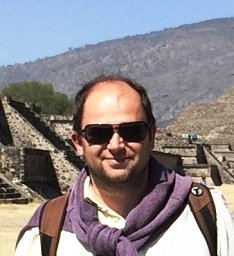 Michael Ruderman合作论文数Faculty of Engineering and Science, University of Agder30
 Martin Keller合作论文数29
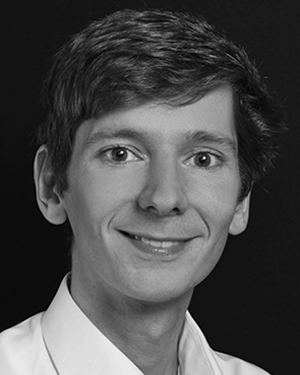 Till Nattermann合作论文数24C. Haß合作论文数22Jan Braun合作论文数Institute of Control Theory and Systems Engineering, Technische Universität Dortmund21Karl-Heinz Glander合作论文数20Artemi Makarow合作论文数Inst Control Theory & Syst Engn, TU Dortmund Univ19
 Jörn Malzahn合作论文数Institute of Control Theory and Systems Engineering, Technische Universität Dortmund18
 Mirko Waldner合作论文数17Johannes Krettek合作论文数14
 Franz Albers合作论文数13Christopher Diehl合作论文数13
 Maximilian Krämer合作论文数Inst Control Theory & Syst Engn, TU Dortmund Univ13
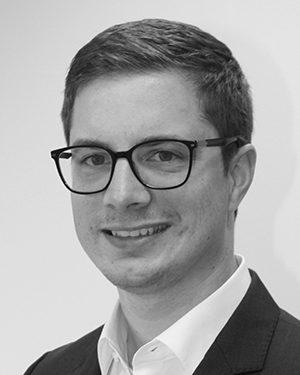 Christian Wissing合作论文数TU Dortmund Univ, Fac Elect Engn & Informat Technol, D-44227 Dortmund, Germany13Anh Son Phung合作论文数Institute of Control Theory and Systems Engineering, Technische Universität Dortmund12Georg Schoppel合作论文数12Ingo Glowatzky合作论文数11Martin Krüger合作论文数10Khazar Dargahi Nobari合作论文数10Manuel Schmidt合作论文数Inst Control Theory & Syst Engn, Tech Univ Dortmund10
 Malte Oeljeklaus合作论文数TU Dortmund10Alois Seewald合作论文数10Luis-Felipe Posada合作论文数Institute of Control Theory and Systems Engineering, Technische Universität Dortmund10Andreas Homann合作论文数9Christian Götte合作论文数8Joern Malzahn合作论文数8
 Niklas Stannartz合作论文数8Christoph Krimpmann合作论文数8
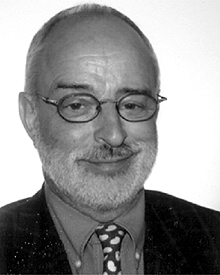 M. Hiller合作论文数8
 M. Torlo合作论文数8Rene Franke合作论文数8Patrick Palmer合作论文数Institute of Control Theory and Systems Engineering, TU Dortmund University7Krishna Kumar Narayanan合作论文数Institute of Control Theory and Systems Engineering, Technische Universität Dortmund7Nathalie Muller合作论文数6
 Anne Stockem Novo合作论文数6
 Christian Lienke合作论文数6Katharina Bartsch合作论文数6Manfred Hiller合作论文数6oliver ottgen合作论文数5Peter Opgen-Rhein合作论文数5roland greul合作论文数5derek ward合作论文数5Markus Buss合作论文数5Robert Gonschorek合作论文数5Manoj Mohamed合作论文数5Hilgert, J.合作论文数5




