Hybrid encoding of quantum information is a promising approach towards the realisation of optical quantum protocols. It combines advantages of continuous variables encoding, such as high efficiencies, with those of discrete variables, such as high fidelities. In particular, entangled hybrid states were shown to be a valuable ressource for quantum information protocols. In this work, we present a hybrid entanglement witness that can be implemented on currently available experiments and is robust to noise currently observed in quantum optical set-ups. The proposed witness is based on measurements of genuinely hybrid observables. The noise model we consider is general. It is formally characterised with Kraus operators since the considered hybrid system can be expressed in a finite dimension basis. A practical advantage of the witness is that it can be tested by measuring just a few experimentally available observables.
In the late 1980's, Ou and Mandel experimentally observed signal beatings by performing a non-time-resolved coincidence detection of two photons having interfered in a balanced beam splitter [Phys. Rev. Lett 61. 54 (1988)]. In this work, we provide an alternative interpretation of the fringe pattern observed in this experiment as the direct measurement of the chronocyclic Wigner distribution of a frequency Schrodinger-cat-like state produced by local spectral filtering. Based on this analysis, we also study the time-resolved HOM experiment to measure such frequency state.
Encoding quantum information in continuous variables is intrinsically faulty. Nevertheless, redundant qubits can be used for error correction, as proposed by Gottesman, Kitaev and Preskill in Phys. Rev. A \textbf{64} 012310, (2001). We show how to experimentally implement this encoding using time-frequency continuous degrees of freedom of photon pairs produced by spontaneous parametric down conversion. We experimentally illustrate our results using an integrated AlGaAs photon pairs source. We show how single qubit gates can be implemented and finally propose a theoretical scheme for correcting errors in a circuit-like and in a measurement-based architecture.
In the context of phase estimation with Gaussian states, we introduce a quantifiable definition of metrological advantage that takes into account thermal noise in the preparation procedure. For a broad set of states-isotropic nonpure Gaussian states-we show that squeezing is not only necessary but sufficient to achieve metrological advantage. We interpret our results in the framework of resource theory and discuss possible sources of advantage other than squeezing. Our work is a step towards using phase estimation with pure and mixed states to define and quantify nonclassicality. This work is complementary with studies that defines nonclassicality using quadrature displacement estimation.
When the coupling rate between two quantum systems becomes as large as their characteristic frequencies, it induces dramatic effects on their dynamics and even on the nature of their ground state. The case of a qubit coupled to a harmonic oscillator in this ultrastrong coupling regime has been investigated theoretically and experimentally. Here, we explore the case of two harmonic oscillators in the ultrastrong coupling regime. Probing the properties of their ground state remains out of reach in natural implementations. Therefore, we have realized an analog quantum simulation of this coupled system by dual frequency pumping a nonlinear superconducting circuit. The pump amplitudes directly tune the effective coupling rate. We observe spectroscopic signature of a mode hybridization that is characteristic of the ultrastrong coupling. We experimentally demonstrate a key property of the ground state of this simulated ultrastrong coupling between modes by observing simultaneous single- and two-mode squeezing of the radiated field below vacuum fluctuations.
The contextuality of quantum mechanics can be shown by the violation of inequalities based on measurements of well chosen observables. An important property of such observables is that their expectation value can be expressed in terms of probabilities for obtaining two exclusive outcomes. Examples of such inequalities have been constructed using either observables with a dichotomic spectrum or using periodic functions obtained from displacement operators in phase space. Here we identify the general conditions on the spectral decomposition of observables demonstrating state independent contextuality of quantum mechanics. Our results not only unify existing strategies for maximal violation of state independent non-contextuality inequalities but also lead to new scenarios enabling such violations. Among the consequences of our results is the impossibility of having a state independent maximal violation of non-contextuality in the Peres–Mermin scenario with discrete observables of odd dimensions.
We propose a method that uses a superconducting architecture to simulate a time-dependent ultrastrong coupling between two bosonic fields. We show that the system emits microwave radiation with complex noise properties.
Mechanical resonators represent one of the most promising candidates to mediate the interaction between different quantum technologies, bridging the gap between efficient quantum computation and long-distance quantum communication. Here, we introduce an interferometric scheme where the interaction of a mechanical resonator with input-output quantum pulses is controlled by an independent classical drive. We design protocols for state teleportation and direct quantum state transfer, between distant mechanical resonators. The proposed device, feasible with state-of-the-art technology, can serve as a building block for the implementation of long distance quantum networks of mechanical resonators.
The controllability of current quantum technologies allows to implement spin-boson models where two-photon couplings are the dominating terms of light-matter interaction. In this case, when the coupling strength becomes comparable with the characteristic frequencies, a spectral collapse can take place, i.e. the discrete system spectrum can collapse into a continuous band. Here, we analyze the thermodynamic limit of the two-photon Dicke model, which describes the interaction of an ensemble of qubits with a single bosonic mode. We find that there exists a parameter regime where two-photon interactions induce a superradiant phase transition, before the spectral collapse occurs. Furthermore, we extend the mean-field analysis by considering second-order quantum fluctuations terms, in order to analyze the low-energy spectrum and compare the critical behavior with the one-photon case.
The connection between the Leggett-Garg inequality and optimal scenarios from the point of view of quantum metrology is investigated for perfect and noisy general dichotomic measurements. In this context, we show that the Fisher information can be expressed in terms of quantum temporal correlations. This connection allows us to associate scenarios with relatively high Fisher information to scenarios in which the Leggett-Garg inequality is violated. We thus demonstrate a qualitative and, to some extent, quantitative link between measurement invasiveness and metrological performance. Finally, we illustrate our results by using a specific model for spin systems.
Colloque organisé en 3 parties proposé par la division PAMO Autres divisions concernées : ASTRO, DMC Le contrôle quantique est un domaine en plein développement dont l’objectif est de manipuler finement, à l’échelle quantique, des atomes et des molécules pour contrôler leurs réactions chimiques, les aligner et refroidir, en faire des qubits pour des ordinateurs quantiques, améliorer les images des IRM, ou encore faire interférer les ondes de matière pour réaliser des mesures de précision. Ce colloque a pour objectif de présenter à travers trois sous-colloques les avancées majeures de ce domaine de recherche.
We introduce a cavity-optomechanical system where the temporal envelope of input/output pulses is controlled by an independent classical drive. We design protocols for quantum communication between distant mechanical resonators.
Instantaneous quantum computing is a subuniversal quantum complexity class, whose circuits have proven to be hard to simulate classically in the discrete-variable realm. We extend this proof to the continuous-variable (CV) domain by using squeezed states and homodyne detection, and by exploring the properties of postselected circuits. In order to treat postselection in CVs, we consider finitely resolved homodyne detectors, corresponding to a realistic scheme based on discrete probability distributions of the measurement outcomes. The unavoidable errors stemming from the use of finitely squeezed states are suppressed through a qubit-into-oscillator Gottesman-Kitaev-Preskill encoding of quantum information, which was previously shown to enable fault-tolerant CV quantum computation. Finally, we show that, in order to render postselected computational classes in CVs meaningful, a logarithmic scaling of the squeezing parameter with the circuit size is necessary, translating into a polynomial scaling of the input energy.
We demonstrate monolithic AlGaAs sources generating high dimensional frequency-entangled states in the telecom band at room temperature. The reflectivity and dispersion properties of our devices allow producing qudits with d of several tens.
The ground state of a pair of ultrastrongly coupled bosonic modes is predicted to be a two-mode squeezed vacuum. However, the corresponding quantum correlations are currently unobservable in condensed matter where such a coupling can be reached, since it cannot be extracted from these systems. Here, we show that superconducting circuits can be used to perform an analog simulation of a system of two bosonic modes in regimes ranging from strong to ultrastrong coupling. More importantly, our quantum simulation setup enables us to detect output excitations that are related to the ground-state properties of the bosonic modes. We compute the emission spectra of this physical system and show that the produced state presents single- and two-mode squeezing simultaneously.
Particle number fluctuations, no matter how small, are present in experimental setups. One should rigorously take these fluctuations into account, especially for entanglement detection. In this context, we generalize the spin-squeezing inequalities introduced by G. T\'oth et al. [Phys. Rev. Lett. 99, 250405 (2007).]. These new inequalities are fulfilled by all separable states even when the number of particles is not constant and may present quantum fluctuations. These inequalities are useful for detecting entanglement in many-body systems when the superselection rule does not apply or when only a subspace of the total system Hilbert space is considered. We also define general dichotomic observables for which we obtain a coordinate-independent form of the generalized spin-squeezing inequalities. We give an example where our generalized coordinate-independent spin-squeezing inequalities present a clear advantage over the original ones.
We investigate the output generation of squeezed radiation of a cavity photon mode coupled to another off-resonant bosonic excitation. By modulating in time their linear interaction, we predict a high degree of output squeezing when the dispersive ultra-strong-coupling regime is achieved, i.e., when the interaction rate becomes comparable to the frequency of the lowest-energy mode. Our paper paves the way to squeezed light generation in frequency domains where the ultrastrong coupling is obtained, e.g., solid-state resonators in the GHz, THz, and mid-IR spectral ranges.
The Leggett-Garg inequality is a widely used test of the "quantumness" of a system, and involves correlations between measurements realized at different times. According to its widespread interpretation, a violation of the Legget-Garg inequality disproves macroscopic realism and non-invasiveness. Nevertheless, recent results point out that macroscopic realism is a model dependent notion and that one should always be able to attribute to invasiveness a violation of a Legget-Garg inequality. This opens some natural questions: how to provide such an attribution in a systematic way? How can apparent macroscopic realism violation be recast into a dimensional independent invasiveness model? The present work answers these questions by introducing an operational model where the effects of invasiveness are controllable through a parameter associated with what is called the measurability of the physical system. Such a parameter leads to different generalized measurements that can be associated with the dimensionality of a system, to measurement errors or to back action.
Binary quantum information can be fault-tolerantly encoded in states defined in infinite-dimensional Hilbert spaces. Such states define a computational basis, and permit a perfect equivalence between continuous and discrete universal operations. The drawback of this encoding is that the corresponding logical states are unphysical, meaning infinitely localized in phase space. We use the modular variables formalism to show that, in a number of protocols relevant for quantum information and for the realization of fundamental tests of quantum mechanics, it is possible to loosen the requirements on the logical subspace without jeopardizing their usefulness or their successful implementation. Such protocols involve measurements of appropriately chosen modular variables that permit the readout of the encoded discrete quantum information from the corresponding logical states. Finally, we demonstrate the experimental feasibility of our approach by applying it to the transverse degrees of freedom of single photons.
 P. Milman合作论文数Laboratoire Kastler Brossel;Departement de Physique de l'Eco, le Normale Superieure;Laboratoire Kastler Brossel, de l'Ecole Normale Superieure42
 Arne Keller合作论文数Département de Physique, Université Paris Sud31
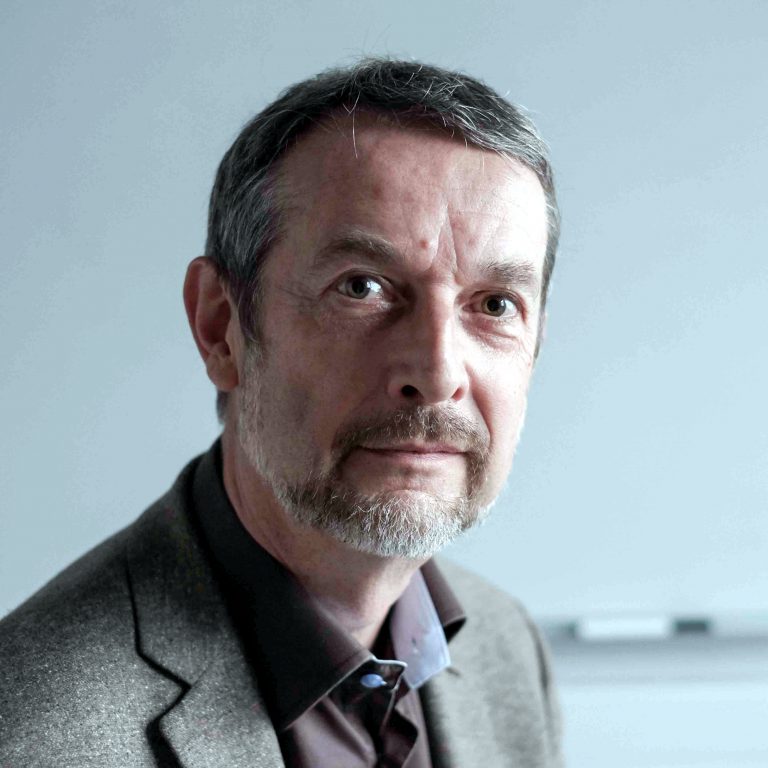 Claude Fabre合作论文数Laboratoire Kastler Brossel, Sorbonne Universite27
 Julien Laurat合作论文数19
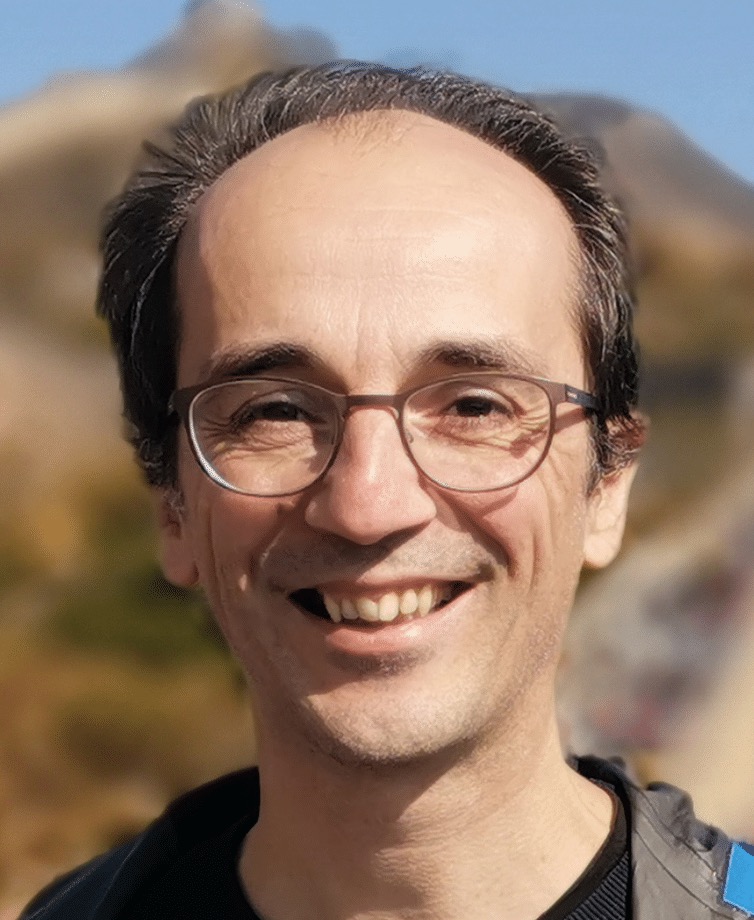 Nicolas Treps合作论文数Laboratoire Kastler Brossel, Université Pierre et Marie Curie;Sorbonne Université12
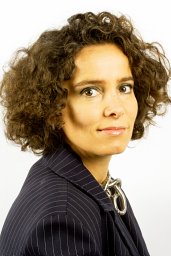 Sara Ducci合作论文数Laboratoire matériaux et phénomènes quantiques, Université Paris–Diderot12
 Luca Guidoni合作论文数12
 Simone Felicetti合作论文数Department of Physical Chemistry, University of the Basque Country11
 Andreas Ketterer合作论文数Phys Inst, Albert Ludwigs Univ Freiburg10Gaelle Keller合作论文数9
 Stephen Patrick Walborn合作论文数Departamento de Física, Facultad de Ciencias Físicas y Matemáticas, Universidad de Concepción;SeQure Quantum9Samuel Guibal合作论文数8
 Laurent Longchambon合作论文数8
 Quentin Glorieux合作论文数Laboratoire Kastler Brossel;Institut Universitaire de France8S. Fedortchenko合作论文数7
 Jean-Pierre Likforman合作论文数MPQ7Agnes Maitre合作论文数7
 Romain Dubessy合作论文数MPQ6Zhang, K.S.合作论文数5Douce T合作论文数Laboratoire Matériaux et Phénomènes Quantiques, Université Paris Diderot5
 Aristide Lemaître合作论文数Centre for Nanoscienceand Nanotechnology, Centre National de la Recherche Scientifique;Université Paris-Saclay5
 Ivan Favero合作论文数LPA5
 Saulo V. Moreira合作论文数Dept Phys & NanoLund, Lund Univ4
 Florent Baboux合作论文数4
 Giulia Ferrini合作论文数S. Orsola-Malpighi Hospital, University of Bologna4
 Maria I Amanti合作论文数Institute of Quantum Electronics4Andreas Eckstein合作论文数Department of Physics, University of Oxford4
 Elisabeth Giacobino合作论文数Laboratoire Kastler Brossel4
 Danijela Marković合作论文数Unite Mixte Phys, Univ Paris Saclay3Adrien Laversanne-Finot合作论文数INRIA, Univ Bordeaux3
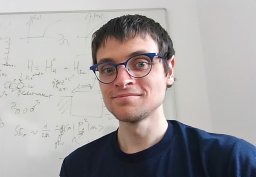 Louis Garbe合作论文数Atominst, Vienna Ctr Quantum Sci & Technol3
 Mariana R. Barros合作论文数3
 Florian Kaiser合作论文数Lab. de Phys. de la Mater. Condensee, Univ. de Nice;c;Lab. de Phys. de la Mater. Condensee, Univ. de Nice3Adeline Orieux合作论文数Lab. Mater. et Phenomenes Quantiques, Univ. Paris Diderot - Paris 7;c;Lab. Mater. et Phenomenes Quantiques, Univ. Paris Diderot - Paris 73Sébastien Jezouin合作论文数Laboratoire de Photonique et de Nanostructures, UPR203Daniel Barry Ostrowsky合作论文数3
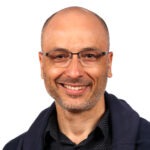 Cristiano Ciuti合作论文数Materials and Quantum Phenomena Laboratory, University of Paris Cité3
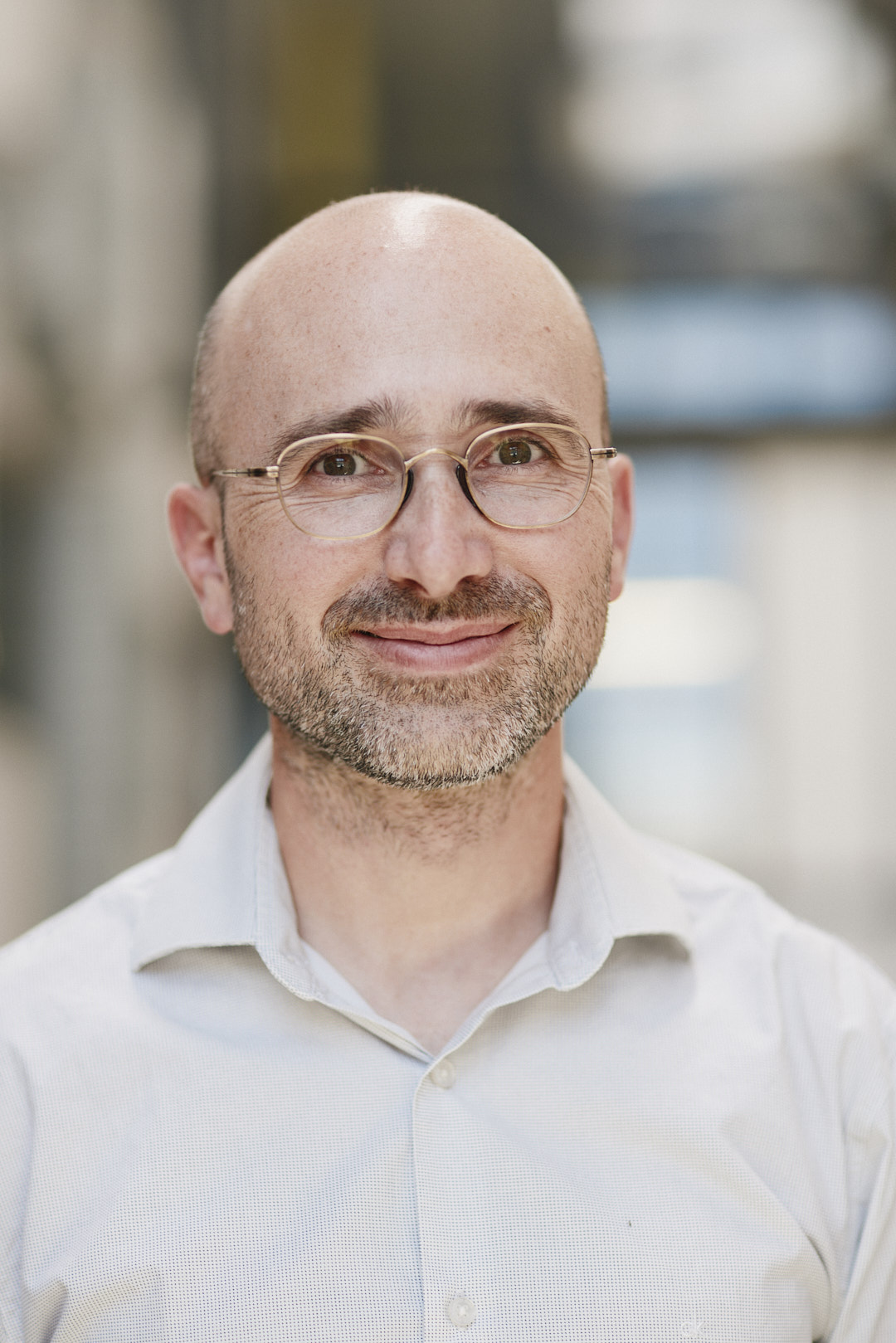 Benjamin Huard合作论文数Quantum Circuit Group, Ecole Normale Supérieure de Lyon;Alice & Bob3
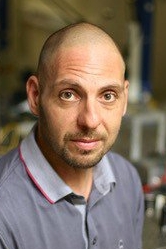 Sébastien Tanzilli合作论文数Institut de Physique de Nice, Université Côte d’Azur;Laboratoire de Physique de la Matière Condensée, CNRS3
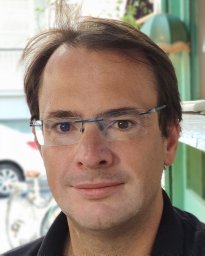 Frédéric Grosshans合作论文数LPQM3
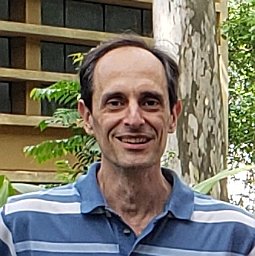 Marcelo Martinelli合作论文数Instituto de F ´ õsica;Universidade de Sao Paulo;Instituto de F ´ õsica, Universidade de Sao Paulo3
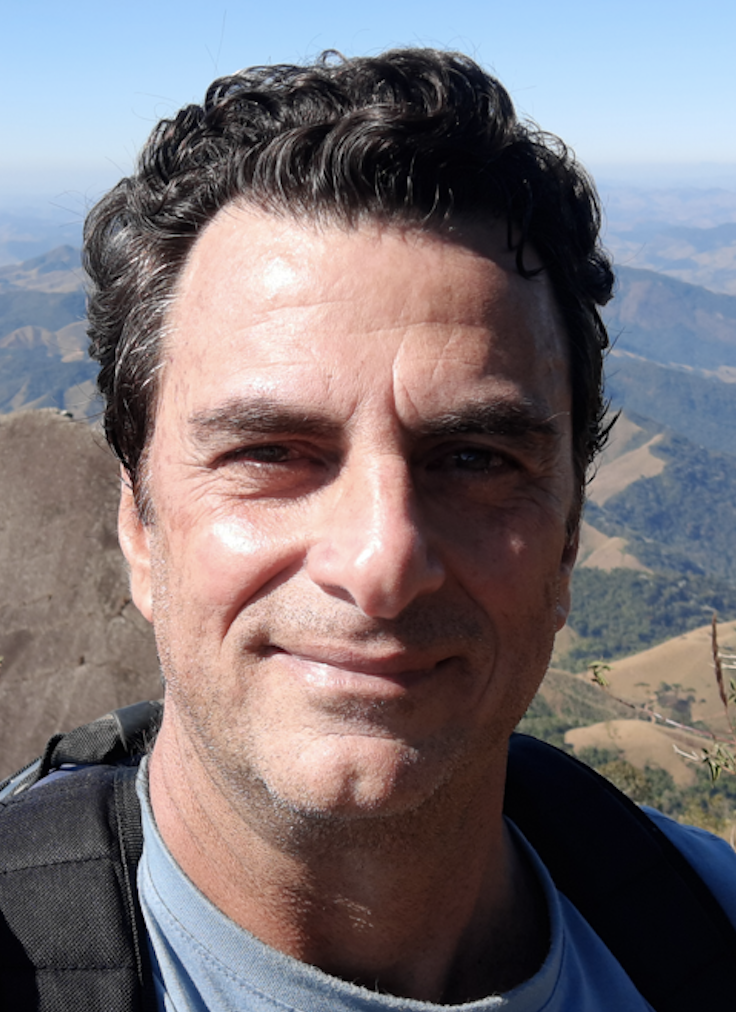 Antonio Z. Khoury合作论文数Instituto de F ´ õsica;Universidade Federal Fluminense;Instituto de F ´ õsica, Universidade Federal Fluminense3
 Giuseppe Leo合作论文数Université Paris Cité3sebastien removille合作论文数3V. D'Auria合作论文数2p filloux合作论文数2
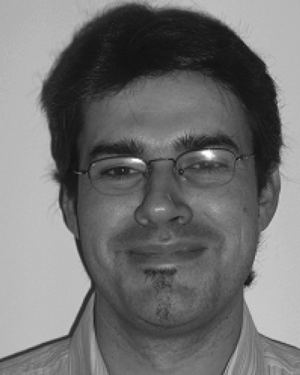 Jean-Pierre Gazeau合作论文数2J. Belhassen合作论文数2




