This paper proposes a novel way to solve transient linear, and non-linear solid dynamics for compressible, nearly incompressible, and incompressible material in the updated Lagrangian framework for tetrahedral unstructured finite elements. It consists of a mixed formulation in both displacement and pressure, where the momentum equation of the continuum is complemented with a pressure equation that handles incompresibility inherently. It is obtained through the deviatoric and volumetric split of the stress, that enables us to solve the problem in the incompressible limit. The Varitaional Multi-Scale method (VMS) is developed based on the orthogonal decomposition of the variables, which damps out spurious pressure fields for piece wise linear tetrahedral elements. Various numerical examples are presented to assess the robustness, accuracy and capabilities of our scheme in bending dominated problems, and for complex geometries.
The whistling noise phenomenon, which is related to vortexes appearance in high Reynolds air flows in ducts, implies a very precise description of the flow at the very small scales, especially near the solid walls, on which boundary layer division may occur. In this work, the Variational Multiscale method has been coupled to automatic anisotropic adaptive meshing, allowing the capture of very complex flows at high Reynolds number. The adaptive procedure is based on the error evaluation on several chosen quantities (phase location, velocity, velocity direction changes) and it provides the capture of very thin flow motions, even close to the walls or boundaries. Simulations of flows on resonator-like geometries have been performed, reputed to whistle for certain flow rates. A method to qualitatively discriminate whistling from non-whistling flow rates has been implemented, based on the appearance of certain vortexes on the obtained flow patterns.
Computational fluid dynamics (CFD) in many cases requires designing 3D models manually, which is a tedious task that requires specific skills. In this paper, we present a novel method for performing CFD directly on scanned 3D point clouds. The proposed method builds an anisotropic volumetric tetrahedral mesh adapted around a point-sampled surface, without an explicit surface reconstruction step. The surface is represented by a new extended implicit moving least squares (EIMLS) scalar representation that extends the definition of the function to the entire computational domain, which makes it possible for use in immersed boundary flow simulations. The workflow we present allows us to compute flows around point-sampled geometries automatically. It also gives a better control of the precision around the surface with a limited number of computational nodes, which is a critical issue in CFD.
In this paper, we present a high fidelity conservative and adaptive level-set method for the simulation of two-fluid flows. A new level-set method is designed that associates both re-initialization and convection steps in an implicit manner. Thus the new obtained convection-reaction problem is solved using a stabilized finite element method. The accuracy, the time scheme and the mass conservation are thoroughly analyzed. Anisotropic meshing with conservative interpolation is implemented and tested on several benchmarks including splashes, sloshing and complex bubble dynamics. (C) 2019 Elsevier Ltd. All rights reserved.
In the context of reducing the cost of floating wind energy, predicting precisely the loads applied on structures and their response is essential. As the simulation of floating wind turbines requires the representation of both complex geometries and phenomena, several techniques have been developed. The wake generated by the aerodynamic loads experienced and the tower can be modeled using methodologies inherited from onshore wind simulation, and coupled with a hydrodynamic codes that were most of the time developed for the oil and gas industry. This work proposes a methodology for the simulation of a single or several turbines with an exact representation of the geometries involved, targeting an accurate evaluation of loads. The software library used is ICI-tech, developed at the High Performance Computing Institute (ICI) of Centrale Nantes. A single computational mesh is used, where every phase is defined through level-set functions. The Navier–Stokes (NS) equations are solved in the Variational MultiScale (VMS) formalism using finite element discretization and a monolithic approach. A coupling with an automatic and anisotropic adaptation procedure guarantees the good representation of the geometries immersed. The adaptation allows the simulation of phenomena with very different orders of magnitude, e.g. aerodynamics around blades and waves propagation. The reduction of the number of points in the mesh and the massive parallelization of the code are also necessary for wind turbine simulation.
The demand in renewable energy has significantly increased over a few years and, consequently, the industrial production of renewable energy has considerably expended. In the meantime, wind energy has matured, and many wind farms have been installed, both onshore and offshore. Offshore wind is an emerging field where current fixed-bottom technology is limited when water depths exceeds 50 m. Consequently new solutions are currently being explored, with, in particular, the development of floating supports. Moving offshore enable to capture stronger and more constant winds, but may lead to higher CAPEX and OPEX. One way to reduce costs is to use numerical simulation for optimizing the whole structure from the mooring lines to the blades. The numerical tools involved enable a fine prediction of the behavior the structures have under a large span of conditions, e.g. the loads applied on the structures when extreme events occur. These results can lead to an adjustment of the security coefficients of the wind turbines, which can reduce the CAPEX costs. This work focuses on a methodology enabling the simulation of one or several floating wind turbines using full-CFD, with an accurate representation of their respective geometries. The software library used is ICITech, developed at the High Performing Computing Institute of Centrale Nantes. A monolithic approach is used, with a single mesh in the simulation, where all the interfaces are defined using modified level-set functions. The Navier-Stokes equations are solved using stabilized finite elements and the Variational MultiScale formulation. In order to largely reduce the computational costs, an anisotropic and automatic mesh adaptation is done, which enables to capture physical phenomena having different orders of magnitude. The first results of mesh immersion and aerodynamic simulations are presented.
Mesh adaptation has proven to be very efficient for simulating transient multiphase computational fluid dynamics applications. In this work, we present a new parallel anisotropic mesh adaptation technique relying on an edge based error estimator. It provides a high level of accuracy while substantially reducing the computational effort. This technique enables a good capture of physical phenomena, boundary layers, interfaces, free surfaces and even multiphase turbulent flows, and has a great potential to simulate a large variety of applications. Current investigations explore the performance of the new algorithm on massively parallel resources. In this paper, we show that the developed adaptive meshing works very well in a parallel environment involving topological mesh modifications and dynamic repartitioning of parallel slots. It is also shown that the proposed methodology provides an additional gain in terms of computational cost due the production of a non-uniform mesh size distribution. Runs performed on national and European supercomputers will show the scalability and pertinence of our developments.
Depuis quelques années, la demande en électricité renouvelable a augmenté significativement. Dans ce contexte, les filières de production d’énergies renouvelables se sont rapidement développées. Dans le même temps, l’éolien a atteint un niveau de maturité tel que les parcs éoliens onshore et offshore posés se sont multipliés. Aujourd’hui, la recherche de vents plus forts et plus constants poussent les acteurs du domaine à se tourner vers le développement de parcs éoliens flottants. Les coûts associés à la réalisation de telles machines sont encore élevés et doivent être optimisés. Un des leviers pour la réduction des coûts est la modélisation numérique. Le développement d’outils numériques permettant une prédiction fine du comportement de ces structures en mer va permettre une meilleure prise en compte des différents chargements mécaniques. L’accès à des résultats précis va tendre à réduire les coefficients de sécurité liés au dimensionnement de ces éoliennes, et ainsi contribuer à la réduction des coûts de CAPEX.
In this paper we propose a new framework to build high order (mainly P2) meshes (with curved edges) driven by a metric field. In contrast to the common way to obtain such meshes that is to deform a P1 mesh by using an appropriate differential operator, we study a completely different route based on a fully adaptive strategy. Meshes are built in a full Riemann framework, edges being redefined as the geodesics of the underlying Riemannian manifold. The iterative process is made of three ingredients, the mesh topology operation that are defined by basic algebraic topological operations, the on flight edge calculations and the element conformity and shape measurement extension. This paper will show first results of such an approach and will discuss the performance issues.
In recent years, imaging techniques have well improved in many sectors, providing accurate numerical descriptions from 2D or 3D images, with applications in different fields, from medical research to material science. In this paper, a methodology to build a numerical description under the mesh format has been implemented and is used for massively parallel finite element numerical simulations, directly based on the image information to obtain an accurate 3D representation [1, 2]. Firstly, mathematical morphology techniques process the image data, providing the specific features of interest for the simulations. Then, the immersed image method interpolates the image information on an initial mesh. Then, an iterative anisotropic mesh adaptation operator has been developed to construct the optimal mesh, based on the estimated error concerning the image interpolation. To perform simulations, one needs to build regularized phase functions, corresponding to the objects we wish to distinguish in the images. Two main advantages of having such functions are: the gradient of the regularized function performs better for mesh adaptation; the regularized function may be directly used in the finite element solver for defining the material properties distribution. To obtain them, a modified convective level-set approach, through the resolution of an hyperbolic equation of the Eikonal type, has been implemented. Finally, flow is determined by solving the multiphase Navier-Stokes equations with a Variational MultiScale method [3], fully coupled to advection, image immersion, anisotropic remeshing and redistancing. All these developments have been extended in a massively parallel context [4] and have shown good performance up to around 200,000 processing cores, meaning 14 billion nodes in 3D cases. Two types of applications are studied in this work: flow simulations on random fibrous structures issued from in-situ 3D X-Ray tomography imaging; flows in urban environments, where 3D reconstructions comme from different GIS ( Geographic Information Systems) supports.
Gas bubbles are widely present in manufacturing processes, either as a consequence of the processing conditions or as an added element that will promote better final properties. For example, in steel-manufacturing, argon bubbles are injected in the molten steel to help mixing and produce an homogeneous chemical composition, or to limit nozzle clogging arising from the inclusions transported with the liquid. Efficiency of bubble addition or creation is often dependent on the bubble size. In this paper, computational flow dynamics of a representative system composed of a Newtonian fluid and numerous gas bubbles is studied. A two phase modeling approach is considered, the two fluids being treated as a continuous phase in an inhomogeneous Navier Stokes solver. The interface between phases is defined by a level set like method and the motion and deformation is obtained by a transport equation. To perform such simulations, a finite element code (ICItech) is used, where exists a monolithic adaptive finite element solver. They also require massively parallel implementations of the following tools: resolution of very large linear/non-linear solver for the Navier-Stokes and bubble advection equations, anisotropic mesh adaptation on unstructured distributed meshes, automatic generation of samples with a very large number of bubbles. An important feature is the high level of the surface tension value that may considered which requires an accurate prediction of the capillary force, achieved through an implicit treatment of this term in the solver. To validate our approach, the case of a single bubble rising in a liquid matrix is considered, at different Bond and Morton numbers (to represent physics of multiphase systems like air/water, argon/steel...). Then, scalability of the code is tested on computational domains with several thousands of bubbles, for fixed material properties and initial size distribution, to see how well is it able to predict expected phenomena like clustering, bubble deformation, coalescence or break-up,... for different flow boundary conditions. To run full test cases of bubbles evolution, up to 8 Ki cores are used.
This chapter is dedicated to the simulation of composite forming processes. It concerns numerical methods for molding, at the different material scales, involving multiphysics analysis. From the different possible numerical techniques, we focus on a stabilized finite element method for the resolution of the continuum equations (mass, momentum and energy conservation), in a Eulerian framework, with a level-set approach for interface displacement treatment. Internal variables, such as the reticulation rate or fiber fraction and orientation may be computed using models defined through ordinary differential equations. Examples at the process scale, as well as at the composite inner structure scales illustrate the capabilities of such numerical techniques.
In this paper, a work performed to allow massively parallel finite element flow computations is presented. It includes the development and optimisation of two particular features of a finite element multiphase computational fluid dynamics software, which are mesh generation and linear system solution, using anisotropic adaptation and multigrid preconditioning. Parallel performances on supercomputers are shown, where the largest generated mesh on 65 536 Intel Xeon or 261 144 Power PC cores had 33.4 billions of nodes, leading to a 100 billion of unknowns linear system solution. Final applications concern, between others, image-based flow simulations.
In this paper, a new methodology to build automatically 3D adapted meshes, ready for numerical simulations and directly from images, is proposed. It is based on the Immersed Image Method, which interpolates the image information on an initial mesh and combines it with parallel automatic anisotropic mesh adaptation with a control of the number of mesh nodes. Simultaneously, a smooth redistancing technique, based on the resolution of a Hamilton–Jacobi equation, is developed to produce phase functions for the objects to be detected in the image. The proposed methodology is applied on mesh generation and in multiphase flow computations based on 2D and 3D images.
We present a new immersed method for solving conjugate heat transfer and fluid-solid interactions (FSI). It is based on the use of Non Uniform Rational B-Splines (NURBS) to compute the distance function ans thus representing the immersed solids inside the computational domain. Combined with anisotropic mesh adaptation and stabilized Finite Elements Method (FEM), it allows a novel, efficient and flexible approach to deal with turbulent flows and heat transfer inside large domains.
SummaryWe propose a full Eulerian framework for solving fluid‐structure interaction (FSI) problems based on a unified formulation in which the FSIs are modelled by introducing an extra stress in the momentum equation. The obtained three‐field velocity, pressure and stress system is solved using a stabilized finite element method. The key feature of this unified formulation is the ability to describe different kind of interactions between the fluid and the structure, which can be either elastic or a perfect rigid body, without the need of treating this last case via penalization. The level‐set method combined with a dynamic anisotropic mesh adaptation is used to track the fluid‐solid interface. Copyright © 2015 John Wiley & Sons, Ltd.
In this work, we develop a new anisotropic space and time adaptive method for convection dominated problems with inner and boundary layers. A new route to construct a metric field directly at the nodes of the mesh is highlighted using the length distribution tensor and an edge based error analysis. A Streamline Upwind Petrov-Galerkin (SUPG) finite element method is employed to solve the unsteady convection-diffusion equation. The numerical experiments show that the use of both space and time adaptivity generates optimal time stepping, allows the recovery of the global convergence order of the numerical schemes, reduces the computational time and cost and produces accurate and oscillation free numerical solutions.
Implicit boundary means that the boundaries and/or interfaces between domains are not anymore defined by an explicit boundary mesh but rather by an implicit function. It is the case with embedded boundary methods or immersed boundary methods. Here we consider a filtered level set methods and meshing is then performed using an anisotropic mesh adaptation framework applied to the level sel interpolation. The interpolation error estimate is driving the adaptive process giving rise to a new way of boundary recovery. The accuracy of the recovery process depends then on the user given parameter, an arbitrary thickness of the interface. The thickness is normally related to the mesh size, but it is shown that adaptive meshing enables to reverse this condition: fixing the thickness parameter and accounting for the adaptation process to fulfill the mesh size condition. Several examples are given to demonstrate the potential of this approach.
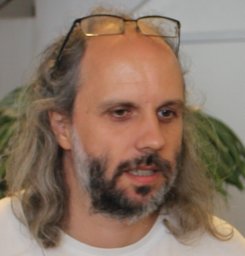 Hugues Digonnet合作论文数Centre de Mise Forme des Materiaux48
 da Silva Luisa M合作论文数Department of Pharmacology, Federal University of Paraná47
 Elie Hachem合作论文数Center for Materials Forming (CEMEF),, MINES ParisTech28
 Bruno Vergnes合作论文数Centre de Mise en Forme des Matériaux18
 Patrice Laure合作论文数Institut-Non Linéaire de Nice, CNRS-Université de Nice16
 jean-francois Agassant合作论文数14
 J.L. Chenot合作论文数14
 Marc Bernacki合作论文数Centre de Mise en Forme des Matériaux (CEMEF),, Mines Paristech13
 Rudy Valette合作论文数CEMEF, Ecole des Mines de Paris - Paristech10
 Lionel Fourment合作论文数10
 Bruchon Julien合作论文数UMR CNRS 7635, École des Mines de Paris9
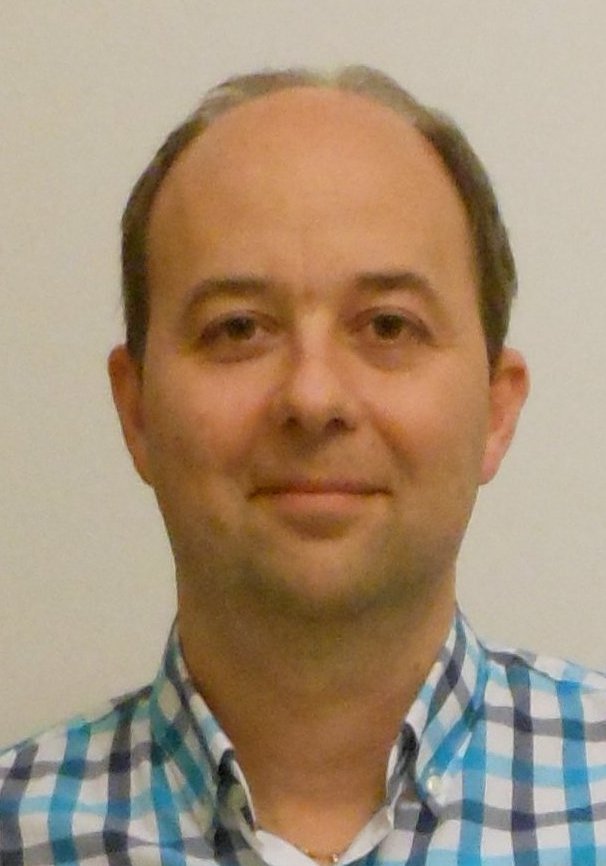 Roland Logé合作论文数Laboratory of Thermomechanical Metallurgy, Institute of Materials, School of Engineering, Ecole Polytechnique Federale de Lausanne8
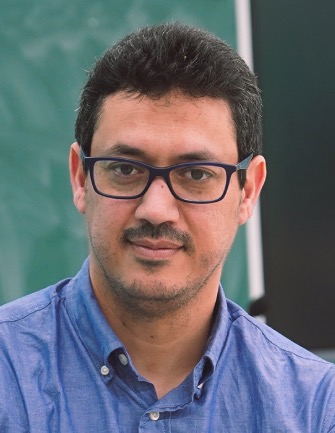 Youssef Mesri合作论文数Ecole des mines de Paris;Paris Elite Institute of Technology, Shanghai Jiao Tong University7R. Ducloux合作论文数6N. Kosseifi合作论文数6Jeremy Veysset合作论文数6Stephanie Feghali合作论文数Center for Material Forming (CEMEF),, MINES-ParisTech6
 Heba Resk合作论文数6Elisabeth Massoni合作论文数CEMEF, Ecole des Mines de Paris6g jannoun合作论文数5Yves Demay合作论文数5Walid Zerguine合作论文数4Etienne Perchat合作论文数4
 Karim Hitti合作论文数Dept Math, Univ Balamand;Issam Fares Fac Technol, Univ Balamand;Univ Balamand, Univ Balamand4olivier basset合作论文数4Michel Vincent合作论文数4Yvan Chastel合作论文数4
 Ramon Codina Rovira合作论文数Department of Civil and Environmental Engineering, Universitat Politècnica de Catalunya4Mathilde Leboeuf合作论文数4
 Dirk Roose合作论文数Department of Computer Science, Faculty of Engineering Science, KU Leuven4
 Achim Basermann合作论文数C&C Research Laboratories, NEC Europe Ltd.4
 Bert Maerten合作论文数3
 Andres Rodriguez-Villa合作论文数3N Soyris合作论文数3
 Simon Santoso合作论文数Lab Jean Kuntzmann, Univ Grenoble Alpes3
 Hassan Bouchiba合作论文数3Jan Clinckemaillie合作论文数3Guy Lonsdale合作论文数3A. Fortin合作论文数3
 Michel Bellet合作论文数Centre de Mise en Forme des Matériaux (Materials Processing), CEMEF3
 Jean-Christophe Gilloteaux合作论文数National University of Ireland Maynooth;Department of Electronic Engineering;Department of Electronic Engineering, University of Ireland Maynooth3H. Miled合作论文数3Jochen Fingberg合作论文数C&C Research Laboratories, NEC Europe Ltd.3C. Beraudo合作论文数3
 Francois Goulette合作论文数ENSTA Paris3
 Didier Theron合作论文数Institut d’Electronique, de Microélectronique et de Nanotechnologie, Cité scientifique––Avenue Poincaré––B.P. 693
 Fabrice Toussaint合作论文数Lafarge Centre de Recherche3H Bastian合作论文数2a bernnat合作论文数2




