We consider a SQUID ring inductively coupled to an electromagnetic field mode, both treated quantum mechanically. We demonstrate a method for creating a maximally entangled state between the ring and the field mode. Our method utilises a non-adiabatic external magnetic flux pulse to move into and out of a transition region. Hence, our approach is fundamentally different to techniques based on Landau–Zener tunnelling that can also be used to achieve similar results. Our analysis is extended to include the effects of coupling the system to a dissipative environment. With this model we show that although such an environment makes a noticeable difference to the time evolution of the system, it need not destroy the entanglement of this coupled system over time scales required for quantum technologies.
We present a design for a linear array of eight electric potential sensors arranged with 1mm spacing and configured to measure spatially varying potential at the microscopic scale. The array successfully detects a 50μm wide feature associated with one of the samples tested. In a single sensor arrangement we have demonstrated <1μm resolution, but the data acquisition times can become prohibitive. The sensors operate noninvasively by capacitively coupling to the sample. The issues associated with using an array of sensors in close proximity are addressed. Cross coupling and strategies for matching the response of the sensors are described in detail. Results are presented for a range of samples including a resistive potential divider, a ceramic microwave circuit board, and a section taken from an oil drill pipe containing a known fault. The data acquisition times are compared with those of a single sensor system, with improvements of 4.5 times in speed reported. In one case real-time simultaneous data acquisition is demonstrated using all eight sensors. Since these sensors operate via the displacement current they may also be applied to the characterization of material properties, including, for example, insulators, dielectrics, and poorly conducting composite materials. It is concluded that we see significant improvements in the data acquisition times for the linear array over a single sensor as expected and are able to overcome the difficulties associated with operating an array of sensors in close proximity.
This paper discusses the use of continuous weak measurement and quantum feedback for the rapid purification of the quantum state of a model solid state qubit: a superconducting Cooper pair box. The feedback algorithm uses Jacobs' rapid purification protocol, which starts with a completely mixed state and applies controls to rotate the qubit Bloch vector onto the plane orthogonal to the measurement axis. This rotation maximises the rate of increase of the average purity of the state but can require large changes in the control fields to produce the required rotation. Since solid state qubits have finite controls and feedback channels have limited bandwidth, such rotations may not be practical. This paper applies Jacobs' protocol to the Cooper pair box with realistic control fields.
In this paper we describe an experimental technique for imaging defects in carbon composite structures non-invasively using ultra-high input impedance electric potential (displacement current) sensors. We suggest that with suitable two-dimensional arrays of these sensors it should prove practicable to image in real time, and in situ, large scale carbon composite structures such as aircraft wing and tail surfaces.
This paper describes the application of a novel electric potential sensor to the measurement of the propagation delay of electrical pulses in a saline environment. This is achieved non-invasively through weak capacitive coupling to a novel electric field sensor. An experimental test cell is used to demonstrate that in an environment consisting of a polar liquid we are able to localize the position of a pulse, as well as determine its amplitude and shape. These are the basic requirements for implementing an imaging system based on this technology. Results are presented which show a spatial resolution of better than 0.23 mm using this propagation delay method. The paper includes a discussion of the effect of salt concentration on the electrical conductivity, propagation delay and velocity. The applicability of the sensor to the detection of signals originating from nerve fibres is discussed with preliminary data acquired from a 100 m diameter glass coated micro-wire immersed in saline.
A theoretical spectroscopic analysis of a microwave driven superconducting charge qubit (Cooper-pair box) coupled to an RLC oscillator model is performed. By treating the oscillator as a probe through the backreaction effect of the qubit on the oscillator circuit, we extract frequency splitting features analogous to the Autler-Townes effect from quantum optics, thereby extending the analogies between superconducting and quantum optical phenomenology. These features are found in a frequency band that avoids the need for high frequency measurement systems and therefore may be of use in qubit characterization and coupling schemes. In addition we find this frequency band can be adjusted to suit an experimental frequency regime by changing the oscillator frequency.
In this paper, we consider a natural generalisation of classical proportional navigation guidance for quantum information processing devices. We demonstrate how standard guidance laws can be modified to allow the efficient control of the quantum state of an example qubit. We consider an example experimental system: a Josephson charge qubit (Cooper pair box). The quantum guidance algorithm is assessed in an open-loop control system based on the standard bias fields present in the device, without the need for any additional external fields (such as microwave 'pump' fields, which are often used to drive these charge devices into excited states).
In this paper we study numerical solutions to the quasiclassical equations of motion for a superconducting-quantum-interference device ring-radio frequency (rf) resonator system in the regime where the ring is highly hysteretic. In line with experiment, we show that for a suitable choice of ring circuit parameters the solutions to these equations of motion comprise sets of levels in the rf voltage-current dynamics of the coupled system. We further demonstrate that transitions, both up and down, between these levels can be controlled by voltage pulses applied to the system, thus opening up the possibility of high order (e.g., 10 state), multilevel logic and memory.
We consider the interaction of a quantum mechanical SQUID ring with a classical resonator (a parallel LC tank circuit). In our model we assume that the evolution of the ring maintains its quantum mechanical nature, even though the circuit to which it is coupled is treated classically. We show that when the SQUID ring is driven by a classical monochromatic microwave source, energy can be transferred between this input and the tank circuit, even when the frequency ratio between them is very large. Essentially, these calculations deal with the coupling between a single macroscopic quantum object (the SQUID ring) and a classical circuit measurement device where due account is taken of the nonperturbative behavior of the ring and the concomitant nonlinear interaction of the ring with this device.
In this paper we study, by analogy with quantum optics, the superconducting quantum interference device (SQUID) ring mediated quantum mechanical interaction of an input electromagnetic field oscillator mode with two or more output oscillator modes at subintegers of the input frequency. We show that through the nonlinearity of the SQUID ring multiphoton downconversion can take place between the input and output modes with the resultant output photons being created in an entangled state. We also demonstrate that the degree of this entanglement can be adjusted by means of a static magnetic flux which controls the strength of the interaction between these modes via the SQUID ring.
Conventional electrocardiogram (ECG) systems make use of separate electrical connections to the arms and legs. These use a ‘long baseline’ for the voltage reference potential which in the case of precordial ECG leads is provided using a Wilson central terminal (WCT) wiring configuration. The aims of this project were (a) to construct compact, non-invasive surface ECG sensor arrays which would operate without the need for a WCT reference, (b) to obtain high quality precordial ECGs showing fine differences in ECG detail between small adjacent areas of the chest and (c) to reconstruct, from a compact array of four sensors, ECGs which closely match to the conventional 7-lead ECG system, but without the need for multiple wires and long baselines. In this paper, we describe two sensor array configurations which have been constructed using electric potential sensors (EPSs). We show high quality precordial ECGs obtained from small areas of the surface of the chest and show the different angular vectors (leads) in the frontal cardiac plane constructed using signals from the array elements. We suggest that these ECG arrays, which are simple to apply, should prove to be a valuable tool in providing useful information about the state of the heart.
The apparent difficulty in recovering classical nonlinear dynamics and chaos from standard quantum mechanics has been the subject of a great deal of interest over the last 20 years. For open quantum systems—those coupled to a dissipative environment and/or a measurement device—it has been demonstrated that chaotic-like behaviour can be recovered in the appropriate classical limit. In this paper, we investigate the entanglement generated between two nonlinear oscillators, coupled to each other and to their environment. Entanglement—the inability to factorize coupled quantum systems into their constituent parts—is one of the defining features of quantum mechanics. Indeed, it underpins many of the recent developments in quantum technologies. Here, we show that the entanglement characteristics of two 'classical' states (chaotic and periodic solutions) differ significantly in the classical limit. In particular, we show that significant levels of entanglement are preserved only in the chaotic-like solutions.
The driven nonlinear Duffing oscillator is a very good, and standard, example of a quantum mechanical system from which classical-like orbits can be recovered from unravelings of the master equation. In order to generate such trajectories in the phase space of this oscillator, in this paper we use the quantum jump unraveling together with a suitable application of the correspondence principle. We analyze the measured readout by considering the power spectra of photon counts produced by the quantum jumps. Here we show that localization of the wave packet from the measurement of the oscillator by the photon detector produces a concomitant structure in the power spectra of the measured output. Furthermore, we demonstrate that this spectral analysis can be used to distinguish between different modes of the underlying dynamics of the oscillator.
 Robert Prance合作论文数135
 Prance, H.合作论文数108
 Jason F. Ralph合作论文数Department of Electrical and Electronic Engineering;Liverpool University;Department of Electrical and Electronic Engineering, Liverpool University90
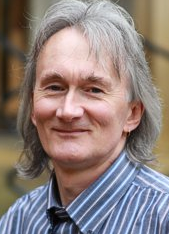 Tim Spiller合作论文数Department of Physics, University of York58
 Mark Everitt合作论文数Centre for Theoretical Physics;University in Egypt;Centre for Theoretical Physics, University in Egypt44
 A. Widom合作论文数Department of Physics,Northeastern University42J. Diggins合作论文数24R. Whiteman合作论文数21P. B. Stiffell合作论文数18C. J. Harland合作论文数17G MEGALOUDIS合作论文数17
 Apostolos Vourdas合作论文数Department of Computer Science, Faculty of Engineering and Informatics, University of Bradford15
 Y. N. Srivastava合作论文数Northeastern University Physics Department12Andrew B Clippingdale合作论文数12Aj Clippingdale合作论文数11J. E. Mutton合作论文数11V Schollmann合作论文数9P. Stiffell合作论文数8D. A. Poulton合作论文数7
 Elias J. Griffith合作论文数7Ryszard Nest合作论文数Matematisk Institut5g buckling合作论文数4Long A合作论文数4
 Francois Brouers合作论文数Institut de Physique, Sart Tilman, Liege 4000, Belgium4P. S. Spencer合作论文数4
 Adi R. Bulsara合作论文数Space and Naval Warfare Systems Center Pacific4J. E. Sacco合作论文数4W Gebrial合作论文数4C. Watkins合作论文数3
 Sameer Al-Khawaja合作论文数3J. Hollingworth合作论文数3Richard a Nyquist合作论文数3WB BEARDMORE合作论文数2G. Pancheri合作论文数2peter steiffell合作论文数2Robert J. Prance合作论文数2m nock合作论文数2M. Moore合作论文数2William M Theis合作论文数2
 Carmine Vittoria合作论文数Department of Electrical & Computer Engineering, College of Engineering, Northeastern University2M.W. Potts合作论文数2Gwyneth D Howells合作论文数2Kate Verrier Jones合作论文数2G.J. Colyer合作论文数2K.K. Bajaj合作论文数2l l murch合作论文数1V. S. Sonwalkar合作论文数1LM PSCHIGODA合作论文数1ADC GRASSIE合作论文数1




