Introduction: Our aim was to identify the clinical benefit of immediate vs delayed correction of bile duct injury (BDI) from cholecystectomy. Methods: A retrospective study was conducted of all patients with a BDI sustained during cholecystectomy referred for repair by the Hepatopancreaticobiliary (HPB) Surgery Division at Carolinas Medical Center (CMC), a high-volume tertiary referral center. Patients with cystic duct leaks were excluded from analysis. All patients were evaluated with initial endoscopic retrograde cholangiopancreatography (ERCP). Type of BDI, preoperative interventions, postoperative complications, and mortality ≤180 days after corrective intervention were reviewed. Outcomes were compared for groups receiving immediate vs delayed (≤48 h vs >48 h, respectively, from injury confirmation) BDI repair. Results: Of 50 included patients, 18 (36%) underwent immediate repair and 32 (64%) underwent delayed repair of BDI. Median time to repair in the delayed group was 32.5 (0–1825) days. Distribution of injury types was similar between the groups. Nineteen patients (59%) in the delayed group had prior percutaneous transhepatic cholangiography (PTC); no PTC was performed in the immediate group. In the delayed group, 10 patients (40%) received 1–3 additional ERCP procedures, compared with zero in the immediate group. Incidence of hypotension was higher in the immediate (n = 2, 11.1%) vs delayed group (n = 0; p = .034), and no difference was found in mortality rates. Conclusions: Equal outcomes result from immediate vs delayed repair after BDI. Because delayed repair leads to more preoperative diagnostic interventions and increased subsequent costs, we advocate for early referral to a tertiary care center and immediate repair.
Kirks, Russell C. Jr. MD; Cochran, Allyson R.; Murphy, Keith; Barnes, T. E. MD; Baker, Erin H. MD; Martine, John B. MD; Iannitti, David A. MD, FACS; Vrochides, Dionisios MD, PhD, FACS, FRCSC Author Information
Objectives: It was our objective to expand the capability of a freely available, HIPAA-compliant, web-based data management system, Research Electronic Data Capture (REDCap), to create complex output capable of reporting both real-time predictive analytics (PA) and adherence to the pancreaticoduodenectomy (PD) ERAS pathway. Of importance was accessibility in a fast-paced clinic environment and easy reproducibility of the platform to other surgical procedures Methods: The platform required 2 components: the PA component and the ERAS adherence tracking component. For the PA component, predictive models were developed using retrospective PD patient data from 2008-2014 and programmed into the REDCap system. Two interfaces were developed. A) Input of patient demographic and medical data and B) Output display of risk predictions for 12 clinical outcomes including death and surgical site infection, among others. For the ERAS adherence component, 5 interfaces (Pre-Operative, Peri-Operative, Immediate Post-Operative, Post-Discharge, and Completion Percentages) were created to display and track ERAS item completion in real-time by clinicians, as well as report on overall completion and compliance statistics Results: Initial conceptualisation occurred in May 2015, and in 3 months the platform and PA were developed and trialed in a real-world HPB clinic setting. Comparison of pre- and post-ERAS implementation show statistically significant increases in compliance to thrombosis prophylaxis (p=0.048), post-operative termination of urinary catheter (p<0.001), balanced fluids POD 0 (p<0.001), and mobilisation POD 1 (p<0.001). Increases were also seen in pre-operative oral carbohydrate treatment and termination of post-operative epidural analgesia. Conclusion: Leveraging a freely available and user-friendly system like REDCap, we have successfully designed, tested, and implemented a data capture and reporting process which tracks adherence to the PD ERAS pathway and predicts surgical outcomes. Significant increases in ERAS compliance, and the replication and utility of this system, engages clinicians to track ERAS action items in real-time and display patients’ risks to better predict potential post-surgical adverse outcomes Disclosure of interest: None declared.
Objectives: The American College of Surgeons (ACS) surgical risk calculator provides postoperative risk predictions based on aggregated national data. After we observed the calculator not accurately predicting our pancreaticoduodenectomy (PD) surgical outcomes, we aimed to evaluate the predictive capacity of the ACS calculator, develop our own predictive models, and finally internally validate the novel models for statistical and clinical efficacy. Methods: Retrospective data were collected on 400 patients undergoing PD from 2008-2014 at Carolinas Medical Center (CMC). Data on 21 preoperative risk factors were entered into the ACS calculator, and outcome probabilities generated by the ACS models were recorded. Concurrently, predictive models for postoperative outcomes were individually constructed, and univariate analysis at p<0.25 and stepwise elimination at p<0.10 was performed. Probabilities were calculated from these novel models, and predictive accuracy was assessed and compared by Brier Score (agreement between observed and predicted outcomes) and receiver-operating characteristic area (ROC AUC, prediction of individualised risk) for both model sets. Internal validation was conducted using bootstrap logistic regression and the predictive capacity of the original and bootstrap models were compared using ROC AUC values. Results: Results showed little difference between the ACS model and novel model Brier scores. However, ACS outcome models weakly predicted individualised postoperative outcomes as measured by ROC AUC (ACS ROC AUC range: 0.404-0.652), while our novel models demonstrate much stronger individualised predictive capacity (Novel ROC AUC range: 0.604-0.843). Further, preliminary results show the ROC AUC values for the bootstrap models were not significantly different than the original ROC values, suggesting both strong internal validity and predictive capacity of the novel models. Conclusion: Patient populations vary across surgical centres. Therefore, accurate and customised models predicting patient outcomes are ideal. Our highly predictive and validated models specific for PD procedures allow us to further develop this process into other major surgical procedures including major hepatectomy and distal pancreatectomy. Disclosure of interest: None declared.
Objectives: The American College of Surgeons (ACS) surgical risk calculator provides postoperative risk predictions based on aggregate national data. After we observed the calculator not accurately predicting our pancreaticoduodenectomy (PD) surgical outcomes, we aimed to develop our own predictive models for all our major surgical procedures. Our successes with the PD predictive models encouraged us to develop models for open major hepatectomy patients (resection of 3+ liver segments), as well as move toward more customised and evidence-based predictor variables. Methods: A retrospective chart review was conducted on 350 patients who underwent a major hepatectomy from 2008-2015 at Carolinas Medical Center (CMC), of which 136 were open procedures. Patient data on 21 preoperative risk factors were entered into the ACS calculator, and the outcome probabilities generated by the ACS models were recorded. In conjunction, novel predictive models for selected postoperative outcomes were individually constructed, and univariate analysis at p<0.25 and stepwise elimination at p<0.10 removed non-significant variables. Probabilities were calculated from these novel models, and predictive accuracy was assessed and compared by Brier Score (agreement between observed and predicted outcomes) and receiver-operating characteristic area (ROC AUC, prediction of individualised risk) for both model sets. Results: Results show nominal to no difference between the ACS model and novel model Brier scores. However, ACS outcome models were weak to predict individualised postoperative outcomes as measured by ROC AUC (ACS ROC AUC range: 0.474-0.869), while our novel model demonstrates much stronger individualised predictive capacity (Novel ROC AUC range: 0.727-0.970) Conclusion: High volume centres require accurate modelling for predicting patient outcomes. It is perhaps misleading to use aggregated data that are at least not stratified by surgical volume, but ideally customised for each surgical centre. Our highly predictive models specific for open major hepatectomy procedures not only encourage the ongoing development of predictive models, but also prospective validation studies and incorporation of risk prediction into mobile platform environments. Disclosure of interest: None declared.
Background: Outcomes following repair of common bile duct injury (CBDI) are influenced by center and surgeon experience. Determinants of morbidity related to timing of repair are not fully described in this population.Methods: Patients with CBDI managed surgically at a single center from January 2008 to June 2015 were retrospectively reviewed. Outcomes of patients undergoing early (<= 48 h from injury) and delayed (>48 h) repair were compared. Predictive modeling for readmission was performed for patients undergoing delayed repair.Results: In total, 61 patients underwent surgical biliary reconstruction. Between the early and delayed repair groups, no differences were found in patient demographics, injury classification subtype, vasculobiliary injury (VBI) incidence, hospital length of stay, 30-day readmission rate, or 90-day mortality rate. Patients undergoing delayed repair exhibited increased chance of readmission if VBI was present or if multiple endoscopic procedures were performed prior to repair. A predictive model was constructed with these variables (ROC 0.681).Conclusion: When managed by a tertiary hepatopancreatobiliary center, equivalent outcomes can be realized for patients undergoing early and delayed repair of CBDI. Establishment of evidence-based consensus guidelines for evaluation and treatment of CBDI may allow identification of factors that drive morbidity and predict clinical outcomes in this population.
Murphy, Keith; Cochran, Allyson R.; Kirks, Russell C. Jr. MD; Barnes, T. E. MD; Iannitti, David A. MD, FACS; Martinie, John B. MD, FACS; Baker, Erin H. MD; Vrochides, Dionisios MD, PhD, FACS, FRCSC Author Information
s / Clinical Nutrition ESPEN 12 (2016) e30ee59 e34 patients POD-D occurred a median of 1 (1-11) days later than POD-F. Reasons for discharge delay were insufficient social support in 13 (14%), patient’s preference in 39 (41%) and medical team preference in 41 (44%). In one patient extended hospitalization was due to a neurosurgical intervention. There was no difference in demographic data, rate, length and reasons for discharge delay between the retrospective and the prospective cohort. Private insurance (OR: 2.61 95%CI 1.08-6.34, p1⁄40.034) and patient discharged on a day other than Monday (OR: 2.94 95%CI: 1.16-7.14, p1⁄40.023) were independent predictors for discharge delay. The reason for discharge delay significantly predicted the length of delay; it was longest for insufficient social support (mean 3.8 days, 95%CI: 1.875.67, p<0.001). Conclusion: The introduction of a specific patient diary with objective discharge criteria did not decrease the rate of discharge delay. Private insurance seems to be one of several non-medical factors that prolong hospital stay. Waiting for post-acute care created the longest delays. References: 1. Fiore JF Jr, et al. Dis Colon Rectum 2012;55:416-23 Disclosure of interest: None declared. OR13. COMPARATIVE EFFECTIVENESS AND ANALYSIS OF POSTOPERATIVE OUTCOMES AFTER ENHANCED RECOVERY PROGRAMME FOR OESOPHAGECTOMY Francesco Puccetti , Uberto Fumagalli , Stefano De Pascale , Alessandra Melis , Riccardo Rosati . Oesophago-gastric Surgery, IRCCS Humanitas, Rozzano (MI), Italy; Gastrointestinal Surgery, IRCCS San Raffaele Hospital,
 Kirks Russell合作论文数8David A. Iannitti合作论文数8
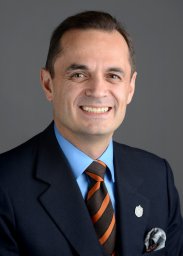 Dionisios Vrochides合作论文数Hippokration Hospital, Aristotle University;Biomedical Center, Uppsala University;Aristotle University, Uppsala University8
 John B. Martinie合作论文数Atrium Health Levine Cancer Institute;Carolinas HealthCare System;School of Medicine, Wake Forest University7
 Keith Murphy合作论文数6
 Allyson Cochran合作论文数Atrium Hlth, Charlotte, NC USA6
 Erin D. Baker合作论文数Department of Mechanical and Industrial Engineering, College of Engineering, University of Massachusetts Amherst3
 Kyle Raub合作论文数2Alessandra Melis合作论文数1Imran Siddiqui合作论文数1John B. Martine合作论文数1Ana Martinez合作论文数1
 E. Baker合作论文数Atrium Hlth, Carolinas Med Ctr1Patrick D. Lorimer合作论文数Department of General Surgery, Carolinas Medical Center1Stefano De Pascale合作论文数1Puccetti Francesco合作论文数1Riccardo Rosati合作论文数Dipartimento di Ingegneria Informatica, Automatica e Gestionale, Sapienza Università di Roma1Ryan Z. Swan合作论文数1Uberto Fumagalli合作论文数1




