The CARMEN Virtual Laboratory (VL) is a cloud-based platform which allows neuroscientists to store, share, develop, execute, reproduce and publicise their work. This paper describes new functionality in the CARMEN VL: an interactive publications repository. This new facility allows users to link data and software to publications. This enables other users to examine data and software associated with the publication and execute the associated software within the VL using the same data as the authors used in the publication. The cloud-based architecture and SaaS (Software as a Service) framework allows vast data sets to be uploaded and analysed using software services. Thus, this new interactive publications facility allows others to build on research results through reuse. This aligns with recent developments by funding agencies, institutions, and publishers with a move to open access research. Open access provides reproducibility and verification of research resources and results. Publications and their associated data and software will be assured of long-term preservation and curation in the repository. Further, analysing research data and the evaluations described in publications frequently requires a number of execution stages many of which are iterative. The VL provides a scientific workflow environment to combine software services into a processing tree. These workflows can also be associated with publications and executed by users. The VL also provides a secure environment where users can decide the access rights for each resource to ensure copyright and privacy restrictions are met.
One-third of utilities around the globe report a loss of more than 40 percent of clean water due to leaks. By reducing the amount of water leaked, smart water networks can help reduce the money wasted on producing or purchasing water, and the related energy required to pump water and treat water for distribution. A UK demo site is presented focusing on leak management, integrating fixed flow and pressure instrumentation, advanced (smart) metering infrastructure and novel instruments (capable of high resolution monitoring). Example data analysis results for this site using the AURA-Alert anomaly detection system for Condition Monitoring are presented.
Event Abstract Back to Event The CARMEN data sharing portal project: what have we learned? Leslie S. Smith1*, Jim Austin2, Stephen Eglen3, Tom Jackson2, Mark Jessop2, Bojian Liang2, Michael Weeks2 and Evelyne Sernagor4 1 University of Stirling, Computing Science and Mathematics, United Kingdom 2 University of York, Computer Science, United Kingdom 3 University of Cambridge, Applied Mathematics and Theoretical Physics, United Kingdom 4 Newcastle University, Institute of Neuroscience, United Kingdom The UK CARMEN project represents one of the first major efforts at sharing electrophysiological datasets, and the techniques for processing them, using a portal. It started in 2006 (with the late Professor Colin Ingram as Principal Investigator), with funding from the UK EPSRC, and this was followed on with funding from the UK BBSRC. It has been providing a gradually improving service for about five years, starting from the capability or sharing data, and adding services, and workflows. It has its own internal data format, Neural Data Format: by converting proprietary dataset types to this format using a service, we enable services and workflows that process this format to be applicable to datasets originating from many different types of recording platforms. Given the experience that we have gained from running this service, what have we learned? What would we do differently if we were to start again? Is there still interest in this type of capability, or has the world moved onwards? We recently put out a questionnaire to all registered users of CARMEN, and we have now some feedback from registered users, and (perhaps equally importantly) from people who registered and did not end up using the system. In general, the use of the system for secure data sharing and exchange seems to have been the most popular. Certainly, in the design of the system, we were very aware that geographically distributed neuroinformaticians and neuroscientists wanted to share their datasets, and to be able to do so in a way that was secure. This seems to have been one of the successes of the system. Yet had we only wanted to do that, we could have put together a much simpler system altogether! Certainly, it is the case that some users have used the system in a much more powerful way, as evidenced by the recent paper [Eglen et al 2014]. But such types of users have been relatively few. What is it that has put users off from more sophisticated interaction with what is in essence a platform that could be used for extended analysis and sharing of data from many different laboratories? One issue has been speed of access. Although the network at the server end is fast, many users do not have such fast access from their laboratories. The result is that uploading large datasets (and indeed downloading them as well) can be slow. There is little that the CARMEN staff can really do to help here, because the problem lies at the users end, and is not under the control of CARMEN itself. Many users complained that the use of the services and workflows was difficult. They reported that it was difficult to work out exactly how to use them, and even to find out exactly what services were available precisely. This is a bit disappointing: a great deal of time was spent in trying to make services usable, and in enabling effective search techniques, and providing information on these services within the system. But perhaps the system is complex to use, and many users, more used to expensively developed sites that were easier to use, did not spend the time really finding out what could be done. That said, it is clear that running services was relatively complex, and further, that running multiple services (and workflows) was really quite difficult to organise. There does seem to be some agreement that using CARMEN services and workflows for cross-dataset analysis (i.e. on datasets from a number of sources) is of interest, however, very little data on CARMEN has been made public, so unless users have direct access to datasets that they can then upload, this type of activity has been difficult. Some users simply did not like the concept: they wanted something that was decentralised, and could use many local machines. Some wanted a more professionally designed “look and feel” as well. For the first of these, the issue of dataset size is problematic - indeed, that was the reason for the basic design, with the concept of bringing the processing to the data, rather than the other way around. For the second, we too would have liked to employ more professional designers, but the budget did not stretch that far. Another suggestion is direct integration on to the systems that the neurophysiologists are already using. This would be a great idea, but there are many such systems (although integrating it on to Matlab, which is often used for initial data analysis would be a possibility). In addition, the CARMEN project has been running at a time of rapid technological change within the Internet. Much of the user-facing processing was designed initially to use Java applets, because in that way we could provide systems that enabled uploading and downloading in a secure and effective fashion. But times have moved on, and one would now expect to use a mixture of HTML5 and JavaScript for these types of purposes. The datasets are very complex, particularly when one includes the multiplicity of data types in electrophysiological datasets (simple time series, excerpted sections, spikes, etc., plus the metadata that describes the representation, and the experiments that produced the dataset). Neural Data Format (NDF) caters for these. At the time that the NDF was designed, HDF5 was not really able to work with data in the way that we desired. This is no longer the case, and were we to redesign NDF, we would now use an HDF5 based format. This would be a major task, but we can get around the issues by creating services to translate between HDF5 and NDF. It is worth noting that HDF5 alone does not solve the problem. Indeed one of the INCF Task Forces has been developing an HDF5 format for this type of application, and this work is only now nearing completion. Another aspect of technological change lies in data display. When CARMEN started, there was no straightforward way of enabling complex data display in a browser (short of a very complex Java applet). As a result, we used a proprietary piece of software for data display. Now, however, thanks to the large expansion in the capabilities of JavaScript, this is no longer the case. Reading over the users comments, it appears that CARMEN, or a portal like it, remains a popular idea: however, it needs to be easy to use, both for upload/download and for running services and workflows. Documentation needs to be better, and easy to find (perhaps easy to find is critically important here). We are planning a new project proposal, and we will be taking these issues into account. Acknowledgements UK EPSRC grant EP/E002331/1 and BBSRC grant BB/IO01042/1. References [Eglen et al 2014] A data repository and analysis framework for spontaneous neural activity recordings in developing retina, SJ Eglen, M Weeks, M Jessop, J Simonotto, T Jackson and E Sernagor, GigaScience, 3:3, 2014, doi:10.1186/2047-217X-3-3 Keywords: neuroscience data portal, data processing services, data processing workflows, data sharing, electrophysiological time series data Conference: Neuroinformatics 2014, Leiden, Netherlands, 25 Aug - 27 Aug, 2014. Presentation Type: Poster, not to be considered for oral presentation Topic: Infrastructural and portal services Citation: Smith LS, Austin J, Eglen S, Jackson T, Jessop M, Liang B, Weeks M and Sernagor E (2014). The CARMEN data sharing portal project: what have we learned?. Front. Neuroinform. Conference Abstract: Neuroinformatics 2014. doi: 10.3389/conf.fninf.2014.18.00068 Copyright: The abstracts in this collection have not been subject to any Frontiers peer review or checks, and are not endorsed by Frontiers. They are made available through the Frontiers publishing platform as a service to conference organizers and presenters. The copyright in the individual abstracts is owned by the author of each abstract or his/her employer unless otherwise stated. Each abstract, as well as the collection of abstracts, are published under a Creative Commons CC-BY 4.0 (attribution) licence (https://creativecommons.org/licenses/by/4.0/) and may thus be reproduced, translated, adapted and be the subject of derivative works provided the authors and Frontiers are attributed. For Frontiers’ terms and conditions please see https://www.frontiersin.org/legal/terms-and-conditions. Received: 28 Apr 2014; Published Online: 04 Jun 2014. * Correspondence: Prof. Leslie S Smith, University of Stirling, Computing Science and Mathematics, Stirling, Scotland, FK9 4LA, United Kingdom, l.s.smith@cs.stir.ac.uk Login Required This action requires you to be registered with Frontiers and logged in. To register or login click here. Abstract Info Abstract The Authors in Frontiers Leslie S Smith Jim Austin Stephen Eglen Tom Jackson Mark Jessop Bojian Liang Michael Weeks Evelyne Sernagor Google Leslie S Smith Jim Austin Stephen Eglen Tom Jackson Mark Jessop Bojian Liang Michael Weeks Evelyne Sernagor Google Scholar Leslie S Smith Jim Austin Stephen Eglen Tom Jackson Mark Jessop Bojian Liang Michael Weeks Evelyne Sernagor PubMed Leslie S Smith Jim Austin Stephen Eglen Tom Jackson Mark Jessop Bojian Liang Michael Weeks Evelyne Sernagor Related Article in Frontiers Google Scholar PubMed Abstract Close Back to top Javascript is disabled. Please enable Javascript in your browser settings in order to see all the content on this page.
Water distribution systems, and other infrastructures, are increasingly being pervaded by sensing technologies, collecting a growing volume of data aimed at supporting operational and investment decisions. These sensors monitor system characteristics, i.e. flows, pressures and water quality, such as in pipes. This paper presents the application of pattern matching techniques and binary associative neural networks for novelty detection in such data. A protocol for applying pattern matching to automatically recognise specific waveforms in time series based on their shapes is described together with a system called Advanced Uncertain Reasoning Architecture (AURA) Alert for autonomous determination of novelty. AURA is a class of binary neural network that has a number of advantages over standard artificial neural network techniques for condition monitoring including a sound theoretical basis to determine the bounds of the system operation. Results from application to several case studies are provided including both hydraulic and water quality data. In the case of pattern matching, the results demonstrated some transferability of burst patterns across District Metered Areas; however limitations in performance and difficulties with assembling pattern libraries were found. Results for the AURA system demonstrate the potential for robust event detection across multiple parameters providing valuable information for diagnosis; one example also demonstrates the potential for detection of precursor information, vital for proactive management.
This paper introduces a binary neural network-based prediction algorithm incorporating both spatial and temporal characteristics into the prediction process. The algorithm is used to predict short-term traffic flow by combining information from multiple traffic sensors (spatial lag) and time series prediction (temporal lag). It extends previously developed Advanced Uncertain Reasoning Architecture (AURA) k-nearest neighbour (k-NN) techniques. Our task was to produce a fast and accurate traffic flow predictor. The AURA k-NN predictor is comparable to other machine learning techniques with respect to recall accuracy but is able to train and predict rapidly. We incorporated consistency evaluations to determine whether the AURA k-NN has an ideal algorithmic configuration or an ideal data configuration or whether the settings needed to be varied for each data set. The results agree with previous research in that settings must be bespoke for each data set. This configuration process requires rapid and scalable learning to allow the predictor to be set-up for new data. The fast processing abilities of the AURA k-NN ensure this combinatorial optimisation will be computationally feasible for real-world applications. We intend to use the predictor to proactively manage traffic by predicting traffic volumes to anticipate traffic network problems.
Background: During early development, neural circuits fire spontaneously, generating activity episodes with complex spatiotemporal patterns. Recordings of spontaneous activity have been made in many parts of the nervous system over the last 25 years, reporting developmental changes in activity patterns and the effects of various genetic perturbations.Results: We present a curated repository of multielectrode array recordings of spontaneous activity in developing mouse and ferret retina. The data have been annotated with minimal metadata and converted into HDF5. This paper describes the structure of the data, along with examples of reproducible research using these data files. We also demonstrate how these data can be analysed in the CARMEN workflow system. This article is written as a literate programming document; all programs and data described here are freely available.Conclusions: 1. We hope this repository will lead to novel analysis of spontaneous activity recorded in different laboratories. 2. We encourage published data to be added to the repository. 3. This repository serves as an example of how multielectrode array recordings can be stored for long-term reuse.
Event Abstract Back to Event Considerations for developing a standard for storing electrophysiology data in HDF5 Jeffrey L. Teeters1*, Jan Benda2, Andrew P. Davison3, Stephen Eglen4, Stephan Gerhard5, Richard C. Gerkin6, Jan Grewe2, Kenneth Harris7, Tom Jackson8, Roman Mouček9, Robert Pröpper10, Hyrum L. Sessions11, Leslie S. Smith12, Andrey Sobolev2, Friedrich T. Sommer1, Adrian Stoewer2 and Thomas Wachtler2 1 University of California at Berkeley, United States 2 Ludwig Maximilian University, Germany 3 Centre Nationale de la Recherche Scientifique, France 4 University of Cambridge, United Kingdom 5 ETH Zurich, Switzerland 6 Carnegie Mellon University, United States 7 Imperial College London, United Kingdom 8 University of York, United Kingdom 9 University of West Bohemia, Czechia 10 Technical University of Berlin, Germany 11 Blackrock Microsystems, United States 12 University of Stirling, United Kingdom The INCF Program on Standards for Data Sharing has a working group that is developing a standard for storing electrophysiology data in HDF5. The impetus for this effort is that many experimentalists are starting to use HDF5 to store data, so a standard would facilitate data sharing significantly. The most important requirement of such a standard is to accommodate the common types of data used in electrophysiology and also the metadata required to describe them. Neuroshare (an API for accessing electrophysiology data stored in various formats) defines four data types: analog signals, segments, neural events and experimental events; as well as some metadata. A standard needs to efficiently store these data types, and probably also imaging data and some kinds of data generated in the data processing chain, such as features used for spike sorting. Further, a standard way of storing the metadata must be specified. The set of metadata required to describe electrophysiology data is difficult to determine a priori because the types of experiments are so varied. So, a flexible mechanism must be used which allows referencing and specifying values for currently existing ontologies and also accommodates information not currently systematized. Techniques to include post-experiment annotations of data, and for relating different data parts, are also required. There are numerous projects relevant to storing electrophysiology data in HDF5. These include: NEO, NeuroHDF, brainliner.jp, klusta-team spikedetekt, BrainVisionHDF5 and Ovation (ovation.io). A project, NeXus Format (nexusformat.org), uses HDF5 to store particle physics data, but might be adaptable for electrophysiology. It is managed using a well-defined community infrastructure that may be worth emulating. So far, the working group entertains two approaches towards defining a standard, which may eventually be merged. One, currently named Pandora, defines a generic data model that can be used with HDF5 or other storage back-ends. Due to the generic nature, the data model can be used to store various kinds of neuroscience data. The other proposal, called epHDF, defines domain specific schemata for storing electrophysiology data in HDF5. For any approach, a suite of test data sets to help evaluate a proposed standard is needed, and tools to allow validating data files are desirable. Details of the above considerations and the current state of the development of a standard will be presented. Acknowledgements Acknowledgment: This work was conducted within the Electrophysiology Task Force of the INCF Program on Standards for Data Sharing. Funding for J.L. Teeters and F.T. Sommer provided through NSF grant 0855272. Keywords: HDF5, data sharing, metadata, Electrophysiology, Standards Conference: Neuroinformatics 2013, Stockholm, Sweden, 27 Aug - 29 Aug, 2013. Presentation Type: Poster Topic: Electrophysiology Citation: Teeters JL, Benda J, Davison AP, Eglen S, Gerhard S, Gerkin RC, Grewe J, Harris K, Jackson T, Mouček R, Pröpper R, Sessions HL, Smith LS, Sobolev A, Sommer FT, Stoewer A and Wachtler T (2013). Considerations for developing a standard for storing electrophysiology data in HDF5. Front. Neuroinform. Conference Abstract: Neuroinformatics 2013. doi: 10.3389/conf.fninf.2013.09.00069 Copyright: The abstracts in this collection have not been subject to any Frontiers peer review or checks, and are not endorsed by Frontiers. They are made available through the Frontiers publishing platform as a service to conference organizers and presenters. The copyright in the individual abstracts is owned by the author of each abstract or his/her employer unless otherwise stated. Each abstract, as well as the collection of abstracts, are published under a Creative Commons CC-BY 4.0 (attribution) licence (https://creativecommons.org/licenses/by/4.0/) and may thus be reproduced, translated, adapted and be the subject of derivative works provided the authors and Frontiers are attributed. For Frontiers’ terms and conditions please see https://www.frontiersin.org/legal/terms-and-conditions. Received: 09 Apr 2013; Published Online: 11 Jul 2013. * Correspondence: Dr. Jeffrey L Teeters, University of California at Berkeley, Berkeley, United States, teeters@berkeley.edu Login Required This action requires you to be registered with Frontiers and logged in. To register or login click here. Abstract Info Abstract The Authors in Frontiers Jeffrey L Teeters Jan Benda Andrew P Davison Stephen Eglen Stephan Gerhard Richard C Gerkin Jan Grewe Kenneth Harris Tom Jackson Roman Mouček Robert Pröpper Hyrum L Sessions Leslie S Smith Andrey Sobolev Friedrich T Sommer Adrian Stoewer Thomas Wachtler Google Jeffrey L Teeters Jan Benda Andrew P Davison Stephen Eglen Stephan Gerhard Richard C Gerkin Jan Grewe Kenneth Harris Tom Jackson Roman Mouček Robert Pröpper Hyrum L Sessions Leslie S Smith Andrey Sobolev Friedrich T Sommer Adrian Stoewer Thomas Wachtler Google Scholar Jeffrey L Teeters Jan Benda Andrew P Davison Stephen Eglen Stephan Gerhard Richard C Gerkin Jan Grewe Kenneth Harris Tom Jackson Roman Mouček Robert Pröpper Hyrum L Sessions Leslie S Smith Andrey Sobolev Friedrich T Sommer Adrian Stoewer Thomas Wachtler PubMed Jeffrey L Teeters Jan Benda Andrew P Davison Stephen Eglen Stephan Gerhard Richard C Gerkin Jan Grewe Kenneth Harris Tom Jackson Roman Mouček Robert Pröpper Hyrum L Sessions Leslie S Smith Andrey Sobolev Friedrich T Sommer Adrian Stoewer Thomas Wachtler Related Article in Frontiers Google Scholar PubMed Abstract Close Back to top Javascript is disabled. Please enable Javascript in your browser settings in order to see all the content on this page.
This paper considers signal plan selection; the main topic is the design of a system for utilising pattern matching to assist the timely selection of sound signal control plan changes. In this system, historical traffic flow data is continually searched, seeking traffic flow patterns similar to today's. If, in one of these previous similar situations, (a) the signal plan utilised was different to that being utilised today and (b) it appears that the performance achieved was better than the performance likely to be achieved today, then the system recommends an appropriate signal plan switch. The heart of the system is "similarity". Two traffic flow patterns (two time series of traffic flows arising from two different days) are said to be "similar" if the distance between them is small; similarity thus depends on how the metric or distance between two time series of traffic flows is defined. A simple example is given which suggests that utilising the standard Euclidean distance between the two sequences comprising cumulatives of traffic flow may be better than utilising the standard Euclidean distance between the original two sequences of traffic flow data. The paper also gives measured on-street public transport benefits which have arisen from using a simple rule-based (traffic-responsive) signal plan selection system, compared with a time-tabled signal plan selection system. (C) 2012 Elsevier Ltd. All rights reserved.
This paper describes recent enhancements to the YouShare platform, the online collaboration environment, which allows researchers to share data and software applications and perform compute-intensive analysis tasks quickly and securely. The enhancements to the platform are a result of user feedback on the current system and technology advancements. These fall into four groups – better handling of searching, use of synonyms, the addition of a workflow tool and enhancements to the infrastructure. The paper outlines these improvements. Key / Index word or phrases. Search, synonym search, workflow.
The CARMEN platform allows neuroscientists to share data, metadata, services and workflows, and to execute these services and workflows remotely via a Web portal. This paper describes how we implemented a service-based infrastructure into the CARMEN Virtual Laboratory. A Software as a Service framework was developed to allow generic new and legacy code to be deployed as services on a heterogeneous execution framework. Users can submit analysis code typically written in Matlab, Python, C/C++ and R as non-interactive standalone command-line applications and wrap them as services in a form suitable for deployment on the platform. The CARMEN Service Builder tool enables neuroscientists to quickly wrap their analysis software for deployment to the CARMEN platform, as a service without knowledge of the service framework or the CARMEN system. A metadata schema describes each service in terms of both system and user requirements. The search functionality allows services to be quickly discovered from the many services available. Within the platform, services may be combined into more complicated analyses using the workflow tool. CARMEN and the service infrastructure are targeted towards the neuroscience community; however, it is a generic platform, and can be targeted towards any discipline.
The aim of our work is to develop Intelligent Decision Support (IDS) tools and techniques to convert traffic data into intelligence to assist network managers, operators and to aid the travelling public. The IDS system detects traffic problems, identifies the likely cause and recommends suitable interventions which are most likely to mitigate congestion of that traffic problem. In this paper, we propose to extend the existing tools to include dynamic hierarchical and distributed processing; algorithm optimisation using natural computation techniques; and, using a meta-learner to short-circuit the optimisation by learning the best settings for specific data set characteristics and using these settings to initialise the GA.
Introduction. Increasingly, research collaborations need to share large amounts of data and perform computation intensive analysis tasks quickly and securely. The youShare infrastructure is designed to provide researchers with platform to allow them to run compute-intensive research and allows collaborators to interact with the actual experiment, data, analysis or results. The aim is to promote collaboration by allowing data, programs, and research outputs to be shared flexibly and securely between groups of researchers. This paper overviews the youShare system and its capabilities.
The CARMEN (Code, Analysis, Repository and Modelling for e-Neuroscience) system [1] provides a web based portal platform through which users can share and collaboratively exploit data, analysis code and expertise in neuroscience. The system has been beendeveloped in the UK and currently supports 200 hundred neuroscientists working in a Virtual Environment with an initial focus on electrophysiology data. The proposal here is that the CARMEN system provides an excellent base from which to develop an 'executable paper' system. CARMEN has been built by York and Newcastle Universities and is based on over 10 years experience in the construction of eScience based distributed technology. CARMEN started four years ago involving 20 scientific investigators (neuroscientists and computer scientists) at 11 UK Universities (www.CARMEN.org.uk). The project is supported for another 4 years at York and Newcastle, along with a sister project to take the underlying technology and pilot it as a UK platform for supporting the sharing of research outputs in a generic way. An entirely natural extension to the CARMEN system would be its alignment with a publications repository. The CARMEN system is operational on the domain https://portal.CARMEN.org.uk, where it is possible to request a login to try out the system.
Urban traffic control systems such as the widely deployed SCOOT system, incrementally respond to changing traffic conditions. Such systems are often complemented by traffic 2 control centres where road network managers intervene manually to mitigate rapidly developing congestion events. An Intelligent Decision Support (IDS) system developed by the authors within the UK FREEFLOW (FF) project to aid the network managers is presented in this paper.. The primary objective of the FF IDS system is to identify traffic congestion in near-real-time and to recommend appropriate traffic control intervention measures. The FF-IDS consists of multiple internal components. A state estimation component monitors live traffic sensor data and determines if there is a congestion problem on the road network. If a problem is identified, a binary neural pattern-matching component is used to identify past time periods with similar congestion events. This is able to rapidly search large historic traffic datasets finding sets of traffic control interventions carried out during similar historical time periods. The effectiveness of each intervention is evaluated using a Performance Index (PI) and the intervention that resulted in the highest improvement in PI is recommended to network managers. The FF-IDS system can also present traffic incidents and equipment faults that occurred during these historical time periods to the network manager as potential causes of the problem. This paper describes the FF-IDS system in detail. The system is currently under development. An early version of the FF-IDS system was trialled using off-line data from London, yielding encouraging preliminary results.
In the study of information flow in the nervous system, component processes can be investigated using a range of electrophysiological and imaging techniques. Although data is difficult and expensive to produce, it is rarely shared and collaboratively exploited. The Code Analysis, Repository and Modelling for e-Neuroscience (CARMEN) project addresses this challenge through the provision of a virtual neuroscience laboratory: an infrastructure for sharing data, tools and services. Central to the CARMEN concept are federated CARMEN nodes, which provide: data and metadata storage, new, thirdparty and legacy services, and tools. In this paper, we describe the CARMEN project as well as the node infrastructure and an associated thick client tool for pattern visualisation and searching, the Signal Data Explorer (SDE). We also discuss new spike detection methods, which are central to the services provided by CARMEN. The SDE is a client application which can be used to explore data in the CARMEN repository, providing data visualization, signal processing and a pattern matching capability. It performs extremely fast pattern matching and can be used to search for complex conditions composed of many different patterns across the large datasets that are typical in neuroinformatics. Searches can also be constrained by specifying text based metadata filters. Spike detection services which use wavelet and morphology techniques are discussed, and have been shown to outperform traditional thresholding and template based systems. A number of different spike detection and sorting techniques will be deployed as services within the CARMEN infrastructure, to allow users to benchmark their performance against a wide range of reference datasets.
Dissemination, reuse and sharing of digital resources is technically and culturally challenging in neuroscience – particularly in the area of Multi-Electrode Array (MEA) recording. Large, complex datasets are typical, with a heterogeneous range of data and code formats. The CARMEN project (http://www.carmen.org.uk/) aims to enable broad sharing or resources, through provision of a secure, online environment for data analysis, and curation of data, analysis code and experimental protocols.
There is an increasing growth in the volume of data generated by condition health monitoring applications as the technology becomes more pervasive and as the sensing technology becomes more complex. This can lead to significant problems in processing the volumes of data in an efficient way, particularly when the data is held remotely. This paper describes a distributed grid architecture that supports real-time pattern matching analysis to address this requirement within complex CHM problems. The architecture is generic and scalable.
We describe a high performance grid based signal search tool for distributed diagnostic applications developed in conjunction with Rolls-Royce plc for civil aero engine condition monitoring applications. With the introduction of advanced monitoring technology into engineering systems, healthcare, etc., the associated diagnostic processes are increasingly required to handle and consider vast amounts of data. An exemplar of such a diagnosis process was developed during the DAME project, which built a proof of concept demonstrator to assist in the enhanced diagnosis and prognosis of aero-engine conditions. In particular it has shown the utility of an interactive viewing and high performance distributed search tool (the signal data explorer) in the aeroengine diagnostic process. The viewing and search techniques are equally applicable to other domains. The signal data explorer and search services have been demonstrated on the Worldwide Universities Network to search distributed databases of electrocardiograph data.
The organisation of much industrial and scientific work involves the geographically distributed utilisation of multiple tools, services and (increasingly) distributed data. A generic Distributed Tool, Service and Data Architecture is described together with its application to the aero-engine domain through the BROADEN project. A central issue in the work is the ability to provide a flexible platform where data intensive services may be added with little overhead from existing tool and service vendors. The paper explains the issues surrounding this and explains how the project is investigating the PMC method (developed in DAME) and the use of Enterprise Service Bus to over come the problems. The mapping of the generic architecture to the BROADEN application (visualisation tools and distributed data and services) is described together with future work.
 Jim Austin合作论文数Department of Computer Science, University of York;Cybula;Computer Sheds25
 Martyn Fletcher合作论文数Department of Computer Science|University of York17Mark Jessop合作论文数16
 Bojian Liang合作论文数9
 Leslie S. Smith合作论文数Dept . of Computing Science and Mathematics;University of Stirling;Dept . of Computing Science and Mathematics, University of Stirling6
 Victoria J. Hodge合作论文数Department of Computer Science University of York6
 Michael R. Weeks合作论文数Georgia State University5
 C.D. Ingram合作论文数Institute of Neuroscience, Newcastle University3
 Stephen John Eglen合作论文数Department of Applied Mathematics and Theoretical Physics, University of Cambridge3
 Aaron P. Turner合作论文数School of Medicine, University of Washington3Richard Mounce合作论文数2jennifer d simonotto合作论文数2Steve Mounce合作论文数2
 Rajesh Krishnan合作论文数2
 Mike Smith合作论文数Department of Mathematics, University of York2
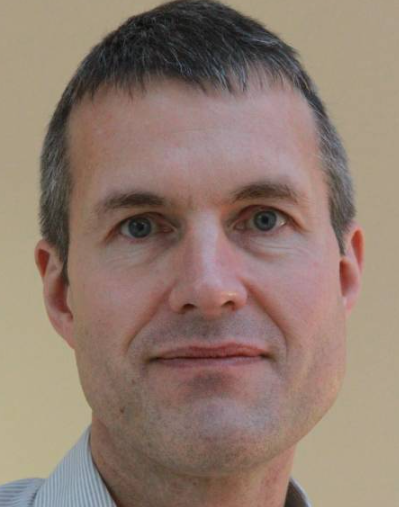 Paul Watson合作论文数School of Computing, Newcastle University;National Innovation Centre for Data2
 John Polak合作论文数Department of Civil and Environmental Engineering, Imperial College London;Urban Systems Laboratory, Imperial College London;South East University2
 Alastair Knowles合作论文数2
 Evelyne Sernagor合作论文数Unit of Neurophysiology and Biophysics Laboratory of Developmental Neurobiology, National Institutes of Health Bethesda2
 Joby Boxall合作论文数Department of Civil and Structural Engineering, Faculty of Engineering, The University of Sheffield2Andy Pasley合作论文数2Teeters Jeffrey合作论文数1Jan Grewe合作论文数1Mike Weeks合作论文数1Ha Thompson合作论文数1Robert Pröpper合作论文数1peter lobner合作论文数1Sessions Hyrum合作论文数1Alan Wood合作论文数1
 Visakan Kadirkamanathan合作论文数Department of Automatic Control and Systems Engineering, Faculty of Engineering, The University of Sheffield1Adrian Stoewer合作论文数1
 Kenneth Harris合作论文数Department of Neuromuscular Diseases, Institute of Neurology, University College London1
 Andrew Davison合作论文数Department of Computing, Faculty of Engineering, Imperial College London1Peter Cowley合作论文数1
 Robert L. Grossman合作论文数Department of Medicine, University of Chicago;Department of Computer Science, University of Chicago;Analytic Strategy Partners LLC1
 Jason Leigh合作论文数Electronic Visualization Laboratory;University of Illinois at Chicago1
 Thomas Wachtler-Kulla合作论文数Munich Center for Neurosciences-Brain S Mind, Graduate School of Systemic Neurosciences, Ludwig-Maximilians-Universität München1Geoffrey Allan合作论文数1Stefan Klinger合作论文数1Georgios K. Pitsilis合作论文数Department of Computer and Information Science, Norwegian University of Science and Technology1
 Richard C. Gerkin合作论文数Center for the Neural Basis of Cognition1
 Peter J. Fleming合作论文数Department of Automatic Control and Systems Engineering, University of Sheffield1
 Phillip W. Lord合作论文数Department of Computer Science, University of Manchester1Friedrich T Sommer合作论文数Redwood Neuroscience Institute1Panayiotis Periorellis合作论文数University of Sunderland1Laurin Herr合作论文数1
 Luc Renambot合作论文数Department of Computer Science, College of Engineering, University of Illinois Chicago1Tom Defanti合作论文数1Frank Gibson合作论文数SIB/ISB1




