Abstract In many fields of science dealing with geostatistical data, the weighted least squares proposed by Cressie Cressie (1985) remains a popular choice for variogram estimation. Simplicity, ease of implementation and non-parametric nature are its principle advantages. It also avoids the heavy computational burden of Generalized least squares. But that comes at the cost of loss of information due to the use of a diagonal weight matrix. Besides, the parameter dependent weight matrix makes the estimating equations biased. In this paper we propose two alternative weight matrices which do not depend on the parameters. We show that one of the weight matrices gives parameter estimates with lower asymptotic variance and also has asymptotically unbiased estimating equations. The observations are validated using simulation and real data.
Consider a stationary spatio‐temporal random process and let be a sample from the process. Our object here is to predict, given the sample, for all t at the location so. To obtain the predictors, we define a sequence of discrete Fourier transforms using the observed time series. We consider these discrete Fourier transforms as a sample from the complex valued random variable . Assuming that the discrete Fourier transforms satisfy a complex stochastic partial differential equation of the Laplacian type with a scaling function that is a polynomial in the temporal spectral frequency ω, we obtain, in a closed form, expressions for the second‐order spatio‐temporal spectrum and the covariance function. The spectral density function obtained corresponds to a non‐separable random process. The optimal predictor of the discrete Fourier transform is in terms of the covariance functions. The estimation of the parameters of the spatio‐temporal covariance function is considered and is based on the recently introduced frequency variogram method. The methods given here can be extended to situations where the observations are corrupted by independent white noise. The methods are illustrated with a real data set.
Maurice B. Priestley, Professor Emeritus of the University of Manchester, was an outstanding, influential, and highly respected figure in the field of time-series analysis. So reads the opening sentence of his obituary (Subba Rao and Tunnicliffe Wilson, 2014) in this journal, which has recognized his extraordinary contribution as editor for over 30 years by inviting us to collate this special issue in his honor. Several of those contributing to this issue also spoke at a meeting organized in honor of Professor Priestley at Manchester University in December 2013, and we are pleased that others of his close associates from further afield, who were unable to attend that meeting, have also readily agreed to honor him by submitting papers for this issue. In his opening presentation at the conference on Applications of Time Series Analysis in Astronomy and Meteorology (Priestley, 1997), Professor Priestley said ‘…the subject (of time series) itself is a very complex one, being essentially a branch of statistics but with its own peculiar vocabulary and methodology. It is nevertheless a deeply fascinating subject involving a vast array of physical, mathematical and statistical ideas, and covering an immense field of applications ranging from neurophysiology to astrophysics. The difficulties involved in understanding the subject are due partly to the fact that it evolved from two quite distinct disciplines, namely, communications engineering and statistics.’ Professor Priestley was himself knowledgeable and expert in both of these disciplines and as editor of this journal welcomed contributions in which time-series was applied to diverse fields. With his students, he himself embarked on a program of research to extend time-series modeling beyond the context of linear stationary Gaussian processes, and many of the papers in this issue are similar in their aim. In their paper, Cardinale and Nason introduce a new theory of locally stationary wavelet packet processes for modeling time-series and illustrate the model with application to Standard and Poor 500 Index series. Models involving non-normal distributions are the subject of several papers. Harvey and Lange propose and study the application of the generalized error distribution for the EGARCH model with application to commodity and stock returns, while Robinson and Taylor investigate the application of a flexible semi-parametric score function model for the error distribution in the context of modeling a high-dimensional process and assess its efficiency for processes with a range of specific non-normal distributions. Jesus and Chandler propose using the Whittle likelihood for fitting models to processes such as rainfall event records that have highly skewed distributions. For valid inference, they propose estimating equations on the basis of the Whittle likelihood score, with a sandwich rule expression for the parameter covariance matrix. They illustrate their methodology using simulations of rainfall series driven by a Poisson process of events. Eichler et al. also model highly non-normal series of neural spike train data using the multi-variate Hawkes process excited by Poisson events. They derive graphical representations of the plausible causal dependence between the firing times of ten neurons. Wong et al. extend the nonlinear threshold model to threshold mixture models for copula functions describing the dependence between bivariate series innovations. Gao et al. model the dynamic dependence of binary panel data on previous outcomes and fixed covariates and demonstrate improvements in inference from imposing a flat prior on the random level effects. Their application is to female labor supply series. Chan et al. address the problem of very high-dimensional series by showing how dimension reduction can be achieved using a factor analysis model and demonstrate how this may be consistently estimated. They illustrate their approach and compare it with other methods, using daily returns of 123 stocks in the Standard and Poor 500. Spatio-temporal processes are the subject of two papers. Subba Rao and Terdik formulate a model that describes intrinsically stationary spatial dependence between the temporal discrete Fourier transforms at the different spatial locations using a parametrized variogram and show how this can be estimated. Bandyopadhyay et al. develop tests for second-order stationarity of spatio-temporal series by checking for correlation between spectral ordinates. Berentsen et al. examine local Gaussian correlation as a measure of nonlinear dependence with particular reference to the time-series context and models, such as ARCH and GARCH. Tunnicliffe Wilson applies spectral factorization to extend the classical spectral estimation of open-loop lagged response between time-series to the case of closed-loop feedback, illustrating the method using three series measuring the respiration of preterm infants. This issue illustrates the current diversity of models and fields of application of time-series analysis encompassed by this journal. The cross-fertilization of ideas and innovations this diversity encourages is a fitting memorial to Professor Priestley.
Our object in this paper is to study the temperature variations in the Antarctic Peninsula using multiple regression models with correlated errors admitting ARMA models with nonGaussian innovations. We found that the fitted models adequately describe the variations. The data we consider are minimum/maximum monthly temperatures recorded at the Faraday station by the British Antarctic Survey for the period from January 1951 to December 1995. The time series models considered here are novel in the sense that the linear ARMA models have innovations which have extreme value distributions, and the maximum likelihood estimation described here can be widely used in many disciplines. The time series models we fitted indicate that the mean of the minimum temperatures is likely to increase over the next 50 years and the temperatures will be above 0C during the summer months which means that the melting season will increase, creating more climatic and ecological problems. Although the mean temperature is reported to have increased by 2.5C we believe that the maximum temperatures have remained unchanged over the past 45 years. This has led to a decrease in the diurnal temperature range which has also been observed in many other parts of the globe. The influence of human activity on climate is still unknown but our ability to perturb the ozone layer is an established fact. We established a relationship between minimum monthly temperatures and ozone levels and found they are highly negatively correlated (at a lag of one month) implying that the higher levels of ozone in the air keep temperatures low. This resulted in a new time series model relating the minimum temperatures to ozone levels. After appropriate statistical tests, we have come to the conclusion that the observed increase in the minimum temperatures is a consequence of human activity rather than natural causes and so a reduction in the production of “greenhouse gases” could lead to a decrease in minimum temperatures, thereby reducing the adverse effect of global warming in the Antarctic Peninsula.
In this article, we assume the spatio‐temporal process to be intrinsically stationary in time and stationary in space. Our objective here is to present an alternative way, based on frequency domain methods, for modelling the data. We consider the discrete Fourier transforms (DFTs) defined for the (intrinsic) time‐series data observed at several locations as our data. We use the well‐known property that DFTs are asymptotically uncorrelated and distributed as complex Gaussian in deriving many results. Our objective here is to emphasize the usefulness of the DFTs in the analysis of spatio‐temporal data. Under the assumption of intrinsic stationarity, we consider the estimation of frequency variogram (FV) and discuss its asymptotic sampling properties. We show that FV introduced earlier is a frequency decomposition of space–time variogram. The DFTs can be computed very fast using fast Fourier transform algorithms. Assuming that the DFTs of the incremental process satisfy a Laplacian model, an analytic expression for the space–time spectral density and an expression for the FV in terms of the spectral density function for the intrinsic stationary process are derived. The estimation of the parameters of the spectral density is also considered. A statistical test for spatial independence of spatio‐temporal data is proposed.
Journal of Time Series AnalysisVolume 38, Issue 1 p. 145-146 Book Review Spatial and Spatio-Temporal Bayesian Models with R-INLA, by Marta Blangiardo and Michela Cameletti. Published by John Wiley and Sons, Chichester, UK, 2015. Total number of pages: 308. ISBN 978-1-118-32655-8 T. Subba Rao, T. Subba Rao School of Mathematics, Alan Turing Building, The University of Manchester, Oxford Road, Manchester M13 9PL., UKSearch for more papers by this author T. Subba Rao, T. Subba Rao School of Mathematics, Alan Turing Building, The University of Manchester, Oxford Road, Manchester M13 9PL., UKSearch for more papers by this author First published: 16 June 2016 https://doi.org/10.1111/jtsa.12201Citations: 1Read the full textAboutPDF ToolsRequest permissionExport citationAdd to favoritesTrack citation ShareShare Give accessShare full text accessShare full-text accessPlease review our Terms and Conditions of Use and check box below to share full-text version of article.I have read and accept the Wiley Online Library Terms and Conditions of UseShareable LinkUse the link below to share a full-text version of this article with your friends and colleagues. Learn more.Copy URL Share a linkShare onFacebookTwitterLinkedInRedditWechat No abstract is available for this article.Citing Literature Volume38, Issue1January 2017Pages 145-146 RelatedInformation
The covariance function and the variogram play very important roles in modelling and in prediction of spatial and spatio-temporal data. The assumption of second order stationarity, in space and time, is often made in the analysis of spatial data and the spatio-temporal data. Several times the assumption of stationarity is considered to be very restrictive, and therefore, a weaker assumption that the data is Intrinsically stationary both in space and time is often made and used, mainly by the geo-statisticians and other environmental scientists. In this paper we consider the data to be intrinsically stationary. Because of the inclusion of time dimension,the estimation and derivation of the sampling properties of various estimators related to spatio-temporal data become complicated. In this paper our object is to present an alternative way, based on Frequency Domain methods for modelling the data. Here we consider Discrete Fourier Transforms (DFT) defined for the (Intrinsic) time series data observed at several locations as our data, and then consider the estimation of the parameters of spatio-temporal covariance function, estimation of Frequency Variogram, tests of independence etc. We use the well known property that the Discrete Fourier Transforms of stationary time series evaluated at distinct Fourier Frequencies are asymptotically independent and distributed as complex normal in deriving many results considered in this paper.
Journal of Time Series AnalysisVolume 37, Issue 2 p. 288-288 Book Review Statistics for Spatial Data, Revised Edition, by Noel Cressie. Published by Wiley Classics Library, John Wiley, 2015. Total number of pages: 928. ISBN: 978-1-119-11518-2 T. Subba Rao, Corresponding Author T. Subba Rao School of Mathematics, Alan Turing Building, The University of Manchester, Manchester M13 9PL, Manchester M13 9PL, United KingdomSearch for more papers by this author T. Subba Rao, Corresponding Author T. Subba Rao School of Mathematics, Alan Turing Building, The University of Manchester, Manchester M13 9PL, Manchester M13 9PL, United KingdomSearch for more papers by this author First published: 10 November 2015 https://doi.org/10.1111/jtsa.12168Read the full textAboutPDF ToolsRequest permissionExport citationAdd to favoritesTrack citation ShareShare Give accessShare full text accessShare full-text accessPlease review our Terms and Conditions of Use and check box below to share full-text version of article.I have read and accept the Wiley Online Library Terms and Conditions of UseShareable LinkUse the link below to share a full-text version of this article with your friends and colleagues. Learn more.Copy URL Share a linkShare onFacebookTwitterLinkedInRedditWechat No abstract is available for this article. Volume37, Issue2March 2016Pages 288-288 RelatedInformation
Pragmatics has been described as the study of the rules prevailing in the use of language in social context. Pragmatic or communicative competence is the capability to produce socially and culturally appropriate spoken discourse in a variety of participation configurations, including the interpersonal mode. In contrast, children with difficult in recognizing and satisfying the social rules of language are usually described as having pragmatic disabilities. The present study aimed to profile the pragmatic skills in Malayalam speaking Down syndrome in the age range of 4-12 years. The study involved a total number of 10 children and 5 children each across the age group of 4-7.11 years and 8-11.11 years of mental age. The statistical result shows that their exit a significant difference in the age group of 4-7.11 years and 8-11.11 years for clinician initiated and self-initiated pragmatic skills and no significant difference across the age group for both the clinician initiated and self-initiated. The present study concluded that as the age increases couple of clinician initiated pragmatic skills like eye contact, gaze exchange, joint attention, labeling answering question turn taking, reapir, topic initiation topic maintance and adding information were improved. Pragmatic skills like smiling, request for object and feedback was same across the age. Negation got decline with age. In self - initiating skill, refusal, stylistic variation, turn taking, narration topic initiation, maintance, topic change initiation of joint attention and request for repair were improved as age increases. Communicative intent and questioning were same across the age.
Phonology refers to the speech sound systems of a language. It involves the study of classification and organization of speech sounds in a language. The term 'phonemic' refers to speech sound use (functions/behavior/organization of the speech sound system). Most of the previous research reveals that phonological skills develop with age and thus older children had more accurate speech and fewer error patterns in their speech. However, in Indian contexts, limited studies are noted in the area of language development in typically developing Hindi-speaking children. Thus, the present study aimed to obtain extensive phonological data among in Hindi-speaking typically developing children across four age groups 4-4.5years, 4.5-5 years, 5-5.5 years, and 5.5-6 years. Following the guidelines of LARSP on sample collection, a series of toys and pictures were used and data was collected by video recording the interaction between the clinician and the client. The results revealed that phonology develops significantly with the age. Thus, older children had more accurate production and fewer error patterns in their speech relative to younger group. A comparison with related studies has been discussed clearly in the paper which reveals a number of studies supporting the finding. The present study has significant implications for the assessment of developmental speech disorders among Hindi-speaking group of Indian population
The object of this paper is to obtain a class of spatio-temporal covariance functions and then derive an optimal predictor of observations at a known location (where there is no data available) given the time series data at neighbouring locations.
Journal of Time Series AnalysisVolume 35, Issue 6 p. 640-641 Book Review Randall, Douc, Eric, Moulines and David, S. Stoffer (2014) Nonlinear Time Series—Theory, Methods and Applications with R Examples. CRC Press, UK (A Chapman & Hall Book). Texts in Statistical Science. ISBN: 978-1-4665-0225-3 pages 531. T Subba Rao, Corresponding Author T Subba Rao School of Mathematics, The University of Manchester, Manchester, M13 9PL United KingdomSearch for more papers by this author T Subba Rao, Corresponding Author T Subba Rao School of Mathematics, The University of Manchester, Manchester, M13 9PL United KingdomSearch for more papers by this author First published: 11 September 2014 https://doi.org/10.1111/jtsa.12087Read the full textAboutPDF ToolsRequest permissionExport citationAdd to favoritesTrack citation ShareShare Give accessShare full text accessShare full-text accessPlease review our Terms and Conditions of Use and check box below to share full-text version of article.I have read and accept the Wiley Online Library Terms and Conditions of UseShareable LinkUse the link below to share a full-text version of this article with your friends and colleagues. Learn more.Copy URL Share a linkShare onFacebookTwitterLinkedInRedditWechat No abstract is available for this article. Volume35, Issue6November 2014Pages 640-641 RelatedInformation
A frequency domain methodology is proposed for estimating parameters of covariance functions of stationary spatio‐temporal processes. Finite Fourier transforms of the processes are defined at each location. Based on the joint distribution of these complex valued random variables, an approximate likelihood function is constructed. The sampling properties of the estimators are investigated. It is observed that the expectation of these transforms can be considered to be a frequency domain analogue of the classical variogram. We call this measure frequency variogram. The method is applied to simulated data and also to Pacific wind speed data considered earlier by Cressie and Huang (1999). The proposed method does not depend on the distributional assumptions about the process.
Now a day’s researchers are focusing on natural fiber composites. In the present work composites were prepared with epoxy (Araldite LY-556) resin and ‘emu’ bird feathers as fiber. The composites were prepared by varying the weight percentage (P) of ‘emu’ fiber ranging from 1 to 5 and length (L) of feather fibers from 1 to 5 cm. The various mechanical properties like tensile strength, flexural strength; flexural modulus and impact strength were determined. An attempt is made to model the mechanical properties through response surface methodology (RSM). Analysis of Variance (ANOVA) is used to check the validity of the model. The results reveal that the developed models are suitable for prediction of mechanical properties of Epoxy ‘Emu’ Feather Fiber Composites.
We consider a stationary spatio-temporal random process and assume that we have a sample. By defining a sequence of discrete Fourier transforms at canonical frequencies at each location, and using these complex valued random varables as observed sample, we obtain expressions for the spatio-temporal covariance functions and the spectral density functions of the spatio-temporal random processes. These spectra correspond to non separable class of random processes. The spatio-temporal covariance functions, obtained here are functions of the spatial distance and the temporal frequency and are similar to Matern class. These are in terms of modified Bessel functions of the second kind. and the parameters are in terms of the second order spectral density functions of the random proces and the spatial distances. We consider the estimation of the parameters of the covariance function and also briefly mention their asymptotic properties. The estimation of the entire data at a known location, and also the estimation of a value given the above sample is also considered. The predictors are obtained using the vectors of Discrete Fourier Transforms. We also describe a statistical test for testing the independence of the m spatial time series (testing for spatial independence) using the Finite Fourier Transforms and it is based on the likelihood ratio test of complex valued random variables The methods are illustrated with real data. Keywords: Discrete Fourier Transforms, Covariance functions, Spectral density functions, Space-Time Processses, Prediction(kriging) Laplacian operators, Frequency Variogram, Tests for independence, Whittle likelihood.
 Mahmoud Gabr合作论文数Department of Biotechnology, Urology and Nephrology Center, Mansoura 35516, Egypt.10
 A. K. Chaudhuri合作论文数6
 Gyorgy Terdik合作论文数Institute of Mathematics and Informatics, University of Debrecen6
 M. B. Priestley合作论文数5
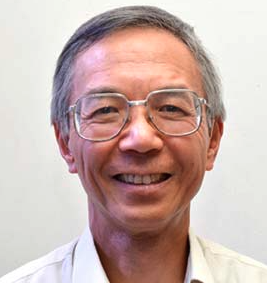 H. Tong合作论文数Department of Statistics, The London School of Economics and Political Science5Gy. Terdik合作论文数5
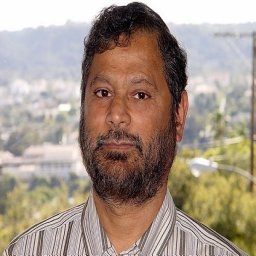 Sreenivasa Rao Jammalamadaka合作论文数Swedish University of Agricultural Sciences;bDepartment of Statistics and Applied Probability;University of California , Santa Barbara;University of Agricultural Sciences, University of California , Santa Barbara4Majid Yar合作论文数3S. A. O. Sesay合作论文数3Peter Neal合作论文数2
 Georgi Boshnakov合作论文数Department of Mathematics, School of Natural Sciences, Faculty of Science and Engineering, The University of Manchester2
 Sourav Das合作论文数2
 Ramandeep Kaur合作论文数Dept Chem, Punjabi Univ2
 Barry G. Quinn合作论文数Department of Statistics, Faculty of Science and Engineering, Macquarie University2
 Granville Tunnicliffe Wilson合作论文数Mathematics and Statistics Department, University of Lancaster2Suhasini Subba Rao合作论文数Department of Statistics;Texas A&M University;Department of Statistics, Texas A&M University2V. Pandurangadu合作论文数1satish kumaraswamy合作论文数1C. R. Rao合作论文数1satish kumaraswami合作论文数1Priestle.Mb合作论文数1
 V. Chandra Sekhar合作论文数CSE, SRKR Engineering College1Hegde Medha合作论文数1Kalahasthi C. Indukumar合作论文数1Richard Chandler合作论文数Institute for Risk and Disaster Reduction, Faculty of Mathematical & Physical Sciences, University College London1
 Balasubramanian Viswanathan合作论文数Indian Institute of Technology, Madras1J. Yuan合作论文数1
 Hengqing Tong合作论文数1V. R. K. Murthy合作论文数1
 Alireza Nematollahi合作论文数Department of Statistics, Shiraz University1
 Patrick J. Laycock合作论文数1B.K.Samanata Ray合作论文数1
 Sureswaran Ramadass合作论文数National Advanced IPv6 Centre, Universiti Sains Malaysia1Marepalli Rao合作论文数1B. K. Samantharay合作论文数1Rama B Radhakrishna合作论文数1M. Y. Hussain合作论文数1
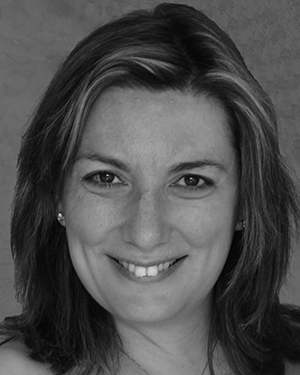 Eleni Tsolaki合作论文数Department of Mathematics and Statistics, University of Cyprus1B. K. Samantaray合作论文数1G.R. Dargahi-Noubary合作论文数1




