The marine green alga Brilliantia kiribatiensis gen. et sp. nov. is described from samples collected from the coral reefs of the Southern Line Islands, Republic of Kiribati, Pacific Ocean. Phylogenetic analysis of sequences of the large- and small-subunit rDNA and the rDNA internal transcribed spacer region revealed that Brilliantia is a member of the Boodleaceae (Cladophorales), containing the genera Apjohnia, Boodlea, Cladophoropsis, Chamaedoris, Phyllodictyon, and Struvea. Within this clade it formed a distinct lineage, sister to Struvea elegans, but more distantly related to the bona fide Struvea species (including the type S. plumosa). Brilliantia differs from the other genera by having a very simple architecture forming upright, unbranched, single-celled filaments attached to the substratum by a rhizoidal mat. Cell division occurs by segregative cell division only at the onset of reproduction. Based on current sample collection, B. kiribatiensis seems to be largely restricted to the Southern Line Islands, although it was also observed on neighboring islands, including Orona Atoll in the Phoenix Islands of Kiribati, and the Rangiroa and Takapoto Atolls in the Tuamotus of French Polynesia. This discovery highlights the likeliness that there is still much biodiversity yet to be discovered from these remote and pristine reefs of the central Pacific.
Seaweeds are a source of food throughout the Pacific region. Kiribati, however, does not have a strong history of using seaweed in their diets, despite having reliable access to indigenous edible seaweeds. A series of peer-led seaweed training workshops held in Kiribati between 2018 and 2019 provided women with knowledge, skills, and motivational support needed to engage in the seaweed supply chain, from harvesting, processing, and marketing to consumption. This study aimed to identify opportunities and enablers to support women's participation across the seaweed supply chain. Structured interviews with 49 women explored their interest and expected costs and benefits from involvement in the supply chain. There was high interest in most seaweed-related activities and the key motivators were health and nutrition for themselves and their family. Participants were also interested in developing and sharing new skills and saw the potential for income generation. However, there were also clear barriers including a desire for further training in seaweed harvesting, processing, and recipe creation; additional social support; and in public promotion. Given the natural resources and desire of women to engage in developing this new edible seaweed supply chain in Kiribati, there is now a need for capacity development to build social and economic wellbeing and food security across the broader community. Additional peer-to-peer training opportunities may look to other Pacific Islands where seaweed is already an established and traditional food.
Edible seaweeds have significant potential to contribute to sustainable diets that promote health of Pacific Islanders in ecologically, economically, and socially acceptable ways. No studies to date have investigated motivators for and the consumption of edible green seaweed from the genus Caulerpa (sea grapes) in Samoa and Kiribati. An observational, cross-sectional study utilized an interviewer-administered questionnaire to explore consumption behaviors and the role of sea grapes in the current diets of individuals in Samoa and Kiribati. Of the total 145 participants (n = 79, 54.5% Samoa; n = 66, 45.5% Kiribati), half (n = 76, 52%) reported consuming sea grapes. A significantly greater proportion of Samoans (n = 56, 70.9%) reported consumption than I-Kiribati participants (n = 20, 30.3%). A greater proportion of consumers were male (n = 47, 61.8%). Samoan consumers reported consumption of sea grapes with a higher diversity of foods and being related to traditional events or ceremonies. Motivators for consumption varied between countries, with Samoan consumers reporting strong agreement for taste and value for money, and identified sea grapes as nutritious food, as influences on consumption. Easy access was a motivator in Kiribati only. The findings of this study are underpinned by the degree of food security and differences in culture in Samoa and Kiribati. Future public health efforts to integrate traditional fresh food into local food systems will need to work within the existing social parameters in each respective country.
The Republic of Kiribati is largely composed of infertile, low-lying atolls, and coral islands in the central Pacific. Kiribati's geographical isolation and remoteness makes it difficult to access regional and global economic markets, and it is considered as one of the least developed countries in the Pacific. However, Kiribati has one of the largest exclusive economic zones with globally important tuna stocks. Many of the uninhabited atolls in the Line and Phoenix Island group boast excellent examples of healthy coral reefs without anthropogenic stresses, and are home to globally significant populations of seabirds. Recent deep-sea research suggests high biodiversity in benthic habitats below 200 ft., with many species new to science. The limited flora of Kiribati is ecologically critical to wildlife on the atolls, as well as for the culture and survival of the i-Kiribati people. Although there are few published scientific studies, a review of technical reports suggests localized pollution, destructive fishing practices, overfishing, and poorly planned coastal infrastructure have all contributed to the decline of coastal resources. Regionally, Kiribati has made significant commitments toward the protection of marine resources in the Pacific Ocean, the largest of which is the declaration of the 405,755 km2 Phoenix Islands Protected Area and World Heritage Area. There is growing interest to expanding their terrestrial protected areas to include complementary marine protected areas in the Line Islands.
 Libby Swanepoel合作论文数2Ulusapeti Tiitii合作论文数2Karibanang Tamuera合作论文数2
 Nicholas Paul合作论文数School of Marine and Tropical Biology, James Cook University2Farran Mack Redfern合作论文数1Robert Gillett合作论文数1Hayley Butcher合作论文数1Mark O’Brien合作论文数1Farran Redfern合作论文数1
 Stuart Sandin合作论文数Scripps Institution of Oceanography, University of California, San Diego1
 Emily L A Kelly合作论文数Center for Marine Biodiversity and Conservation, Scripps Institution of Oceanography, University of California San Diego, 9500 Gilman Drive, La Jolla, CA, 92093, USA. elkelly@ucsd.edu.1
 Andreas F Haas合作论文数NIOZ Royal Netherlands Inst Sea Res, Dept Marine Microbiol & Biogeochem, Texel, Netherlands1Lovell Edward R合作论文数1
 Enric Sala合作论文数National Geographic Society1
 Simon Donner合作论文数Department of Geography, University of British Columbia1
 Johnson Maggie D合作论文数Department of Biology, California State University1
 Sarah Burkhart合作论文数School of Health and Sports Sciences, University of the Sunshine Coast1
 Randi D. Rotjan合作论文数Department of Biology, Tufts University1
 Jan Janouškovec合作论文数The University of British Columbia, University of British Columbia1
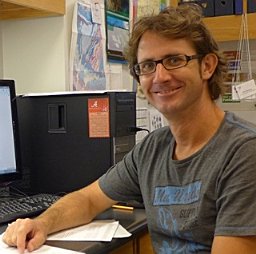 Frederik Leliaert合作论文数Phycology Research Group;Centre for Molecular Phylogenetics and Evolution, and;Biology Department;Ghent University;and Centre for Molecular Phylogenetics and Evolution, Ghent University1
 Silva Larson合作论文数1
 Sangeeta Mangubhai合作论文数P.O. Box 10135 Bamburi, Mombasa Kenya1
 Michael G. Fox合作论文数Trent University1
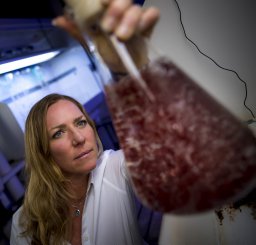 Jennifer E. Smith合作论文数Deparment of Botany;University of Hawai;Deparment of Botany, University of Hawai1




