A single monolayer of the layered semimetal WTe2 behaves as a two-dimensional topological insulator, with helical conducting edge modes surrounding a bulk state that becomes insulating at low temperatures. Here we present evidence that the bulk state has a very unusual nature, containing electrons and holes bound by Coulomb attraction (excitons) that spontaneously form in thermal equilibrium. On cooling from room temperature to 100 K the conductivity develops a V-shaped dependence on electrostatic doping, while the chemical potential develops a 43 meV step at the neutral point. These features are much sharper than is possible in an independent-electron picture, but they can be largely accounted for by positing that some of the electrons and holes are paired in equilibrium. Our calculations from first principles show that the exciton binding energy is larger than 100 meV and the radius as small as 4 nm, explaining their formation at high temperature and doping levels. Below 100 K more strongly insulating behavior is seen, suggesting that a charge-ordered state forms. The observed absence of charge density waves in this state appears surprising within an excitonic insulator picture, but we show that it can be explained by the symmetries of the exciton wave function. Monolayer WTe2 therefore presents an exceptional combination of topological properties and strong correlations over a wide temperature range.
The integration of diverse electronic phenomena, such as magnetism and nontrivial topology, into a single system is normally studied either by seeking materials that contain both ingredients, or by layered growth of contrasting materials1–9. The ability to simply stack very different two-dimensional van der Waals materials in intimate contact permits a different approach10,11. Here we use this approach to couple the helical edges states in a two-dimensional topological insulator, monolayer WTe2 (refs. 12–16), to a two-dimensional layered antiferromagnet, CrI3 (ref. 17). We find that the edge conductance is sensitive to the magnetization state of the CrI3, and the coupling can be understood in terms of an exchange field from the nearest and next-nearest CrI3 layers that produces a gap in the helical edge. We also find that the nonlinear edge conductance depends on the magnetization of the nearest CrI3 layer relative to the current direction. At low temperatures this produces an extraordinarily large nonreciprocal current that is switched by changing the antiferromagnetic state of the CrI3. The coupling between magnetism and topology is studied in a van der Waals heterostructure.
The layered semimetal tungsten ditelluride (WTe2) has recently been found to be a two-dimensional topological insulator (2D TI) when thinned down to a single monolayer, with conducting helical edge channels. We found that intrinsic superconductivity can be induced in this monolayer 2D TI by mild electrostatic doping at temperatures below 1 kelvin. The 2D TI-superconductor transition can be driven by applying a small gate voltage. This discovery offers possibilities for gate-controlled devices combining superconductivity and nontrivial topological properties, and could provide a basis for quantum information schemes based on topological protection.
A two-dimensional topological insulator (2DTI) is guaranteed to have a helical 1D edge mode in which spin is locked to momentum, producing the quantum spin Hall effect and prohibiting elastic backscattering at zero magnetic field. No monolayer material has yet been shown to be a 2DTI, but recently the Weyl semimetal WTe2 was predicted to become a 2DTI in monolayer form if a bulk gap opens. Here, we report that at temperatures below about 100 K monolayer WTe2 does become insulating in its interior, while the edges still conduct. The edge conduction is strongly suppressed by in-plane magnetic field and is independent of gate voltage, save for mesoscopic fluctuations that grow on cooling due to a zero-bias anomaly which reduces the linear-response conductance. Bilayer WTe2 also becomes insulating at low temperatures but does not show edge conduction. Many of these observations are consistent with monolayer WTe2 being a 2DTI. However, the low temperature edge conductance, for contacts spacings down to 150 nm, is below the quantized value,
We investigate the effective interaction between two microwave fields, mediated by a transmon-type superconducting artificial atom which is strongly coupled to a coplanar transmission line. The interaction between the fields and atom produces an effective cross-Kerr coupling. We demonstrate average cross-Kerr phase shifts of up to 20 degrees per photon with both coherent microwave fields at the single-photon level. Our results provide an important step toward quantum applications with propagating microwave photons.
We address the recent advances on microwave quantum optics with artificial atoms. This field relies on the fact that the coupling between a superconducting artificial atom and propagating microwave photons in a 1D open transmission line can be made strong enough to observe quantum coherent effects, without using any cavity to confine the microwave photons. We investigate the scattering properties in such a system with resonant coherent microwaves. We observe the strong nonlinearity of the artificial atom and under strong driving we observe the Mollow triplet. By applying two resonant tones, we also observe the Autler-Townes splitting. By exploiting these effects, we demonstrate two quantum devices at the single-photon level in the microwave regime: the single-photon router and the photon-number filter. These devices provide essential steps towards the realization of an on-chip quantum network.
 David Cobden合作论文数Department of Physics, College of Arts & Sciences, University of Washington16
 Frederick Wellstood合作论文数Department of Physics, College of Computer, Mathematical & Natural Sciences, University of Maryland16
 Christopher John Lobb合作论文数Department of Physics, College of Computer, Mathematical & Natural Sciences, University of Maryland16
 Rupert Lewis合作论文数Centre for Developmental Medicine and Biology, Research;Faculty of Medicine and Health Science;University of Auckland;Faculty of Medicine and Health Science, University of Auckland15Hanhee Paik合作论文数Department of Physics, Yonsei University15
 Zaiyao Fei (费再瑶)合作论文数School of Electronic Science and Engineering, Nanjing University12J. Anderson合作论文数11
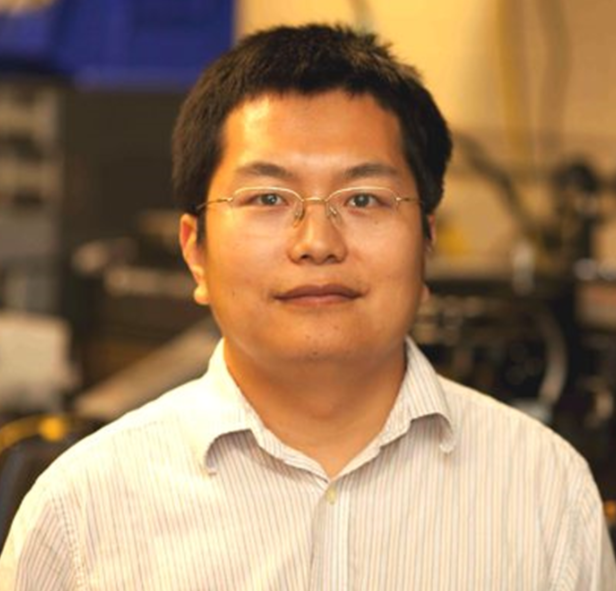 Xiaodong Xu合作论文数Department of Physics, University of Washington;Department of Materials Science and Engineering, University of Washington11S. K. Dutta合作论文数11
 Wenjin Zhao合作论文数Kavli Institute at Cornell for Nanoscale Science, Cornell University10anthony przybysz合作论文数9
 Bosong Sun合作论文数Dept Phys, Univ Washington9Alex J. Dragt合作论文数8Brian K Cooper合作论文数JQI, University of Maryland7Paul V. Nguyen合作论文数6
 C. M. Wilson合作论文数Yale University6
 Per Delsing合作论文数Chalmers University of Technology6Goran Johansson合作论文数6Io-Chun Hoi合作论文数5
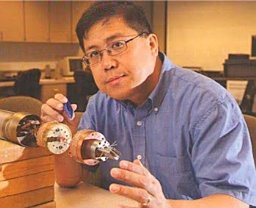 Roberto C. Ramos合作论文数Low Temperature Lab;Department of Physics;Drexel University;Low Temperature Lab, Drexel University5
 Jiun-Haw Chu (曲君浩)合作论文数Department of Physics, University of Washington5
 Hyeokshin Kwon合作论文数5
 Paul T Malinowski合作论文数Univ Calif San Diego, Phys Dept, San Diego, CA 92093 USA4Sudeep K. Dutta合作论文数4Silvia Luescher合作论文数3Philip Bement合作论文数3Christian Olsen合作论文数Stewart Blusson Quantum Matter Inst, Univ British Columbia3Ebrahim Sajadi合作论文数Stewart Blusson Quantum Matter Inst, Univ British Columbia3
 Huizhong Xu合作论文数3
 Joshua Alexander Folk合作论文数Department of Physics & Astronomy, Faculty of Science, The University of British Columbia3
 Sanfeng Wu合作论文数Department of Physics, Princeton University3
 Peropadre Borja合作论文数Dept Chem & Chem Biol, Harvard Univ3
 Joe Finney合作论文数Lancaster University3
 Joel Lindkvist合作论文数2Elliott Runburg合作论文数2
 Frank McKay合作论文数2Bob Anderson合作论文数2
 Xiong Huang合作论文数Univ Calif Riverside, Dept Phys & Astron, Riverside, CA 92521 USA2
 Tom Stace合作论文数School of Mathematics and Physics, Faculty of Science, The University of Queensland2Xinghan Cai合作论文数2John Teufel合作论文数National Institute of Standards and Technology2
 Anton Frisk Kockum合作论文数Chalmers University of Technology2
 Kaushik Mitra合作论文数Joint Quantum Institute;Department of Physics;University of Maryland;Joint Quantum Institute, University of Maryland2
 Yongtao Cui (崔永涛)合作论文数Department of Physics & Astronomy, University of California, Riverside2
 Lars Tornberg合作论文数Department of Microtechnology and Nanoscience;Chalmers University of Technology;Department of Microtechnology and Nanoscience, Chalmers University of Technology2
 Konrad Lehnert合作论文数Department of Physics, Yale University2Jennifer Harlow合作论文数1Joseph Finney合作论文数1Reed Andrews合作论文数1




