Automatic chord recognition (ACR) via deep learning models has gradually achieved promising recognition accuracy, yet two key challenges remain. First, prior work has primarily focused on audio-domain ACR, while symbolic music (e.g., score) ACR has received limited attention due to data scarcity. Second, existing methods still overlook strategies that are aligned with human music analytical practices. To address these challenges, we make two contributions: (1) we introduce POP909-CL, an enhanced version of POP909 dataset with tempo-aligned content and human-corrected labels of chords, beats, keys, and time signatures; and (2) We propose BACHI, a symbolic chord recognition model that decomposes the task into different decision steps, namely boundary detection and iterative ranking of chord root, quality, and bass (inversion). This mechanism mirrors the human ear-training practices. Experiments demonstrate that BACHI achieves state-of-the-art chord recognition performance on both classical and pop music benchmarks, with ablation studies validating the effectiveness of each module.
Computational Auditory Scene Analysis (CASA) aims to detect what sounds appear and when they occur in an audio recording, as well as to separate the audio into waveforms corresponding to the identified sound classes. The CASA problem presents several challenges. First, previous source separation systems require training on clean data, which is often scarce. Second, existing conditional source separation systems are designed to separate only a limited number of sound classes and cannot scale to separate hundreds of classes. Third, prior works require users to specify the sounds to be separated and cannot automatically detect which sound classes to separate. Fourth, there is a limited research on building hierarchical source separation systems. The contributions of this work are as follows. First, we propose training universal source separation (USS) systems on large-scale weakly labeled and unlabelled datasets, rather than relying solely on clean data. Second, we develop a large-scale USS system capable of separating up to 527 sound classes, with the potential to scale to unlimited number of classes. Third, we introduce a method to automatically detect and separate sound classes without user specification. Fourth, we present a hierarchical USS system that can separate sound classes at various hierarchical levels. We train the USS systems on AudioSet and evaluate their performance on speech, audio, and music datasets, demonstrating the effectiveness of our approach.
When generating outputs for domains with specific validity constraints (e.g., a program should compile), LLMs often fail in a small number of focused ways: for example, by using Python function names when generating TypeScript. We observe that these error patterns can be represented using a small number of constraints that can be learned in practice. We propose prefix filters, which are per-domain-and-LLM symbolic functions, as objects to capture the error patterns, Palla as an algorithm to learn prefix filters efficiently in practice, and implement Palla. Prefix filters learned by Palla i) help us quantitatively analyze the error patterns of LLMs, and ii) can be used to constrain the outputs of a model via constrained sampling algorithms. For example, Palla boosts compile rates for Qwen2.5-1.5B on TypeScript generation, by over 60
Unified multimodal models (UMMs) emerge as a promising paradigm for general-purpose multimodal intelligence. As they are deployed in real-world applications, effectively updating internal knowledge becomes critical. While knowledge editing methods have matured for text-only models, a fundamental question remains unexplored: do knowledge edits that successfully modify textual outputs transfer to image generation for UMMs? To this end, we introduce UniKE, the first benchmark for cross-modality knowledge editing in UMMs, comprising 3,005 instances across attribute edits and relation edits. We propose an automated VQA-based evaluation protocol to assess factual consistency between edited knowledge and generated images. Our evaluation reveals a striking modality gap: parameter-editing methods achieving high text-side efficacy (up to 93\%) fail to produce visual changes, with VQA accuracy below 6\% under direct generation. We propose Reasoning-augmented Parameter Editing, which explicitly activates edited knowledge before generation, improving visual verification to 10-27\% for attributes. Through mechanistic analysis, we identify the root cause: edit-affected pathways exhibit near-random overlap with visual attribute-conditioning channels, indicating a fundamental pathway mismatch. These findings demonstrate that textual knowledge edits do not guarantee cross-modality transfer, motivating future work on modality-aware editing methods.
Traditional fixed-depth architectures scale quality by increasing training FLOPs, typically through increased parameterization, at the expense of a higher memory footprint, or data. A potential alternative is looped architectures, which instead increase FLOPs by sending activations through a block of layers in a loop. While promising, existing recipes for training looped architectures can be unstable, suffering from residual explosion and loss spikes. We address these challenges by recasting looping as a nonlinear time-variant dynamical system over the residual stream. Via a linear approximation to this system, we find that instability occurs in existing looped architectures as a result of large spectral norms in their injection parameters. To address these instability issues, we propose Parcae, a novel stable, looped architecture that constrains the spectral norm of the injection parameters via discretization of a negative diagonal parameterization. As a result, Parcae achieves up to 6.3
Unified multimodal models (UMMs) aim to integrate multimodal understanding and generation within a unified architecture, yet it remains unclear to what extent textual and visual modalities are aligned. To investigate this question, we use reasoning-guided image generation as a diagnostic task, where models produce textual reasoning first and then generate images. We introduce UReason, a benchmark for evaluating reasoning-to-generation alignment in this paradigm, consisting of 2,000 human-curated and human-verified instances spanning five reasoning-intensive tasks: Code, Arithmetic, Spatial, Attribute, and Text. To enable controlled analysis, we develop an evaluation framework that compares direct generation, reasoning-guided generation, and decontextualized generation, which conditions only on the refined prompt extracted from reasoning. Across eight widely used open-source UMMs, while we find that reasoning-guided generation yields improvements over direct generation, somewhat surprisingly, decontextualized generation consistently outperforms reasoning-guided generation by a large margin. Our further analyses suggest that the intended visual semantics in textual reasoning are not reliably reflected in the generated images, despite their unified design and training. Overall, UReason serves as a practical litmus test for reasoning-to-generation alignment and provides a challenging benchmark for developing next-generation, more tightly aligned UMMs.
Controllable music generation remains a significant challenge, with existing methods often requiring model retraining or introducing audible artifacts. We introduce MusicRFM, a framework that adapts Recursive Feature Machines (RFMs) to enable fine-grained, interpretable control over frozen, pre-trained music models by directly steering their internal activations. RFMs analyze a model's internal gradients to produce interpretable "concept directions", or specific axes in the activation space that correspond to musical attributes like notes or chords. We first train lightweight RFM probes to discover these directions within MusicGen's hidden states; then, during inference, we inject them back into the model to guide the generation process in real-time without per-step optimization. We present advanced mechanisms for this control, including dynamic, time-varying schedules and methods for the simultaneous enforcement of multiple musical properties. Our method successfully navigates the trade-off between control and generation quality: we can increase the accuracy of generating a target musical note from 0.23 to 0.82, while text prompt adherence remains within approximately 0.02 of the unsteered baseline, demonstrating effective control with minimal impact on prompt fidelity.
As LLM-powered scams proliferate, black-box forensics for conversational LLM agents offers a path to accountability for systems hidden behind anonymous endpoints. Identifying the base model behind a chatbot endpoint (attribution), without model parameter access or knowledge of the hidden system prompt, would let investigators trace AI-enabled scams back to the providers whose models power them. Detecting when two endpoints run the exact same system prompt (fingerprinting), even one novel and unseen, would link individual scams into criminal networks and expose silent API changes. We conduct an empirical investigation of both capabilities. Our attribution classifiers identify the base model behind an agent with 98
The OpenITI MAKHZAN dataset is a large aggregation of Arabic-script ground truth and evaluation data drawn from a wide variety of Persian, Arabic, Ottoman Turkish, and Urdu scribal print and handwritten (manuscript) documents. Comprising nearly 1,500 page images across 208 documents sourced from 30 repositories worldwide, the dataset spans seven languages, around 20 unique and mixed script types, and a chronological range from the 10th to the 20th century. This data set is available, open access, for all on Zenodo. This article explains the different types of data in this large dataset and how this data was compiled and verified and suggests potential use cases for it, such as the training and evaluation of new print and handwritten transcription models.
Foundation models for weather science are pre-trained on vast amounts of structured numerical data and outperform traditional weather forecasting systems. However, these models lack language-based reasoning capabilities, limiting their utility in interactive scientific workflows. Large language models (LLMs) excel at understanding and generating text but cannot reason about high-dimensional meteorological datasets. We bridge this gap by building a novel agentic framework for weather science. Our framework includes a Python code-based environment for agents (ZephyrusWorld) to interact with weather data, featuring tools like an interface to WeatherBench 2 dataset, geoquerying for geographical masks from natural language, weather forecasting, and climate simulation capabilities. We design Zephyrus, a multi-turn LLM-based weather agent that iteratively analyzes weather datasets, observes results, and refines its approach through conversational feedback loops. We accompany the agent with a new benchmark, ZephyrusBench, with a scalable data generation pipeline that constructs diverse question-answer pairs across weather-related tasks, from basic lookups to advanced forecasting, extreme event detection, and counterfactual reasoning. Experiments on this benchmark demonstrate the strong performance of Zephyrus agents over text-only baselines, outperforming them by up to 35 percentage points in correctness. However, on harder tasks, Zephyrus performs similarly to text-only baselines, highlighting the challenging nature of our benchmark and suggesting promising directions for future work.
Vision-Language Models (VLMs) often produce self-reflective statements like "let me check the figure again" during reasoning. Do such statements trigger genuine visual re-examination, or are they merely learned textual patterns? We investigate this via VisualSwap, an image-swap probing framework: after a model reasons over an image, we replace it with a visually similar but semantically different one and test whether the model notices. We introduce VS-Bench, 800 image pairs curated from MathVista, MathVerse, MathVision, and MMMU-Pro. Experiments on Qwen3-VL, Kimi-VL, and ERNIE-VL reveal a striking failure: models overwhelmingly miss the swap, with accuracy dropping by up to 60
Living languages are shaped by a host of conflicting internal and external evolutionary pressures. While some of these pressures are universal across languages and cultures, others differ depending on the social and conversational context: language use in newspapers is subject to very different constraints than language use on social media. Prior distributional semantic work on English word emergence (neology) identified two factors correlated with creation of new words by analyzing a corpus consisting primarily of historical published texts (Ryskina et al., 2020, arXiv:2001.07740). Extending this methodology to contextual embeddings in addition to static ones and applying it to a new corpus of Twitter posts, we show that the same findings hold for both domains, though the topic popularity growth factor may contribute less to neology on Twitter than in published writing. We hypothesize that this difference can be explained by the two domains favouring different neologism formation mechanisms.
Despite the growth of Text-to-Audio (TTA) models for creative applications like sound design and live jamming, existing systems, particularly in the open-source, lack the ability for flexible fine-grained control (such as vocal "sketches") while maintaining fast inference speeds for real-time interaction. We address this unnecessary tradeoff between speed and control through FlashFoley, the first open-source, accelerated sketch2audio model. With FlashFoley, we extend the Sketch2Sound framework, wherein we finetune TTA models with pitch, volume, and brightness controls through simple linear adaptation, to adversarial post-training, allowing the model to generate 11s samples from audio sketches in 75ms. We combine this with training FlashFoley with native out-painting capabilities, which combined with a novel chunking algorithm enables real-time interactive streaming generation with minimal quality degradation, while maintaining high-quality fast offline sampling. Audio examples can be found at https://flashfoley.github.io/web/.
Standard autoregressive video generation algorithms based on Diffusion and Flow Matching rely on rigid training objectives and static sampling schedules, limiting inference procedures from adapting to the data. We introduce Equilibrium Forcing (EqF), a simplified framework for video denoising generative models without noise level conditioning. EqF pioneers modular training- and inference-time designs for noise-unconditional generation that decouple learning the denoising field from sampling. This flexibility allows for inference-time algorithms that operate in a closed loop by adapting to feedback from the sample, improving video quality and consistency on challenging autoregressive video generation benchmarks. Extensive analysis elucidates exactly how removing the noise level conditioning enables EqF's data-dependent inference properties to surpass the performance of standard noise level-conditional denoising video methods.
Asking a large language model to respond in JSON should be a formatting choice, not a capability tax. Yet we find that structured output requirements – JSON, XML, LaTeX, Markdown – substantially degrade reasoning and writing performance across open-weight models. The research response has focused on constrained decoding, but sampling bias accounts for only a fraction of the degradation. The dominant cost enters at the prompt: format-requesting instructions alone cause most of the accuracy loss, before any decoder constraint is applied. This diagnosis points to a simple principle: decouple reasoning from formatting. Whether by generating freeform first and reformatting in a second pass, or by enabling extended thinking within a single generation, separating the two concerns substantially recovers lost accuracy. Across six open-weight models, four API models, four formats, and tasks spanning math, science, logic, and writing, decoupling recovers most lost accuracy. Notably, most recent closed-weight models show little to no format tax, suggesting the problem is not inherent to structured generation but a gap that current open-weight models have yet to close. Code is available at https://github.com/ivnle/the-format-tax.
Diffusion language models offer a promising alternative to autoregressive models due to their global, non-causal generation process, but their continuous latent dynamics make discrete constraints---e.g., the output should be a JSON file that matches a given schema---difficult to impose. We introduce a training-free guidance method for steering continuous diffusion language models to satisfy formal syntactic constraints expressed using regular expressions. Our approach constructs an analytic score estimating the probability that a latent state decodes to a valid string accepted by a given regular expression, and uses its gradient to guide sampling, training auxiliary classifiers. The denoising process targets the base model conditioned on syntactic validity. We implement our method in Diffinity on top of the PLAID diffusion model and evaluate it on 180 regular-expression constraints over JSON and natural-language benchmarks. Diffinity achieves 68-96\% constraint satisfaction while incurring only a small perplexity cost relative to unconstrained sampling, outperforming autoregressive constrained decoding in both constraint satisfaction and output quality.
Discrete representation learning has shown promising results across various domains, including generation and understanding in image, speech and language. Inspired by these advances, we propose MuseTok, a tokenization method for symbolic music, and investigate its effectiveness in both music generation and understanding tasks. MuseTok employs the residual vector quantized-variational autoencoder (RQ-VAE) on bar-wise music segments within a Transformer-based encoder-decoder framework, producing music codes that achieve high-fidelity music reconstruction and accurate understanding of music theory. For comprehensive evaluation, we apply MuseTok to music generation and semantic understanding tasks, including melody extraction, chord recognition, and emotion recognition. Models incorporating MuseTok outperform previous representation learning baselines in semantic understanding while maintaining comparable performance in content generation. Furthermore, qualitative analyses on MuseTok codes, using ground-truth categories and synthetic datasets, reveal that MuseTok effectively captures underlying musical concepts from large music collections.
Interactive streaming music generation promises the use of generative models for live performance and co-creation that is impossible with offline models. However, SOTA models exist in the discrete-AR regime, requiring industrial levels of compute for both training and inference. In this work, we investigate whether audio diffusion models, with their wide support in the open-source community but non-streaming bidirectional nature, can be repurposed efficiently into interactive models accessible on consumer hardware. By taking a critical look at the modern pipeline for block-wise outpainting diffusion, we identify critical inefficiencies during inference that result in strictly worse computational efficiency than their discrete-AR counterparts. We propose Live Music Diffusion Models (LMDMs), a simple modification of the generative diffusion process that recovers, and then outperforms, the inference complexity of the discrete Live Music Models (LMMs) through block-wise KV Caching. Unlike LMMs, LMDMs further enable stable post-training alignment through our novel ARC-Forcing paradigm, reducing error accumulation without any explicit RL or reward models. We demonstrate the application of LMDMs in a number of creative domains, including text-conditioned generation, sketch-based music synthesis, and jamming. We finally show how LMDMs can be used as a generative instrument in a real artist-AI collaboration, utilizing LMDMs as a "generative delay" to transform musicians' improvisation live for variable timbral effects while running locally on a consumer gaming laptop.
Language Models (LMs) are increasingly used in applications where generated outputs must satisfy strict semantic or syntactic constraints. Existing approaches to constrained generation fall along a spectrum: greedy constrained decoding methods enforce validity during decoding but distort the LM’s distribution, while rejection sampling (RS) preserves fidelity but wastes computation by discarding invalid outputs. Both extremes are problematic in domains such as program fuzzing, where both validity and diversity of samples are essential. We present Constrained Adaptive Rejection Sampling (CARS), an approach that strictly improves the sample-efficiency of RS without distributional distortion. CARS begins with unconstrained LM sampling and adaptively rules out constraint-violating continuations by recording them in a trie and subtracting their probability mass from future draws. This adaptive pruning ensures that prefixes proven invalid are never revisited, acceptance rates improve monotonically, and the resulting samples exactly follow the constrained distribution. In experiments on a variety of domains--e.g., program fuzzing and molecular generation--CARS consistently achieves higher efficiency--measured in the number of LM forward passes per valid sample--while also producing stronger sample diversity than both Greedy Constrained Decoding (GCD) and methods that approximate the LM's distribution.
 Julian Mcauley合作论文数Department of Computer Science & Engineering, Jacobs School of Engineering, University of California, San Diego;NICTA28
 Zachary Novack合作论文数Jacobs School of Engineering, University of California, San Diego;Stability AI17
 Shlomo Dubnov合作论文数California Institute for Telecommunications and Information Technology, University of California, San Diego;Music Department, University of California, San Diego;Center for Research In Entertainment and Learning17
 Dan Klein合作论文数Department of Electrical Engineering & Computer Sciences, University of California, Berkeley;Scaled Cognition17
 Graham Neubig合作论文数Language Technologies Institute, School of Computer Science, Carnegie Mellon University16
 Niloofar Mireshghallah合作论文数Paul G. Allen Center for Computer Science and Engineering, University of Washington;Research Group, Microsoft Semantic Machines15
 Ke Chen合作论文数Adobe Research14
 Harsh Jhamtani合作论文数Microsoft Semantic Machines13
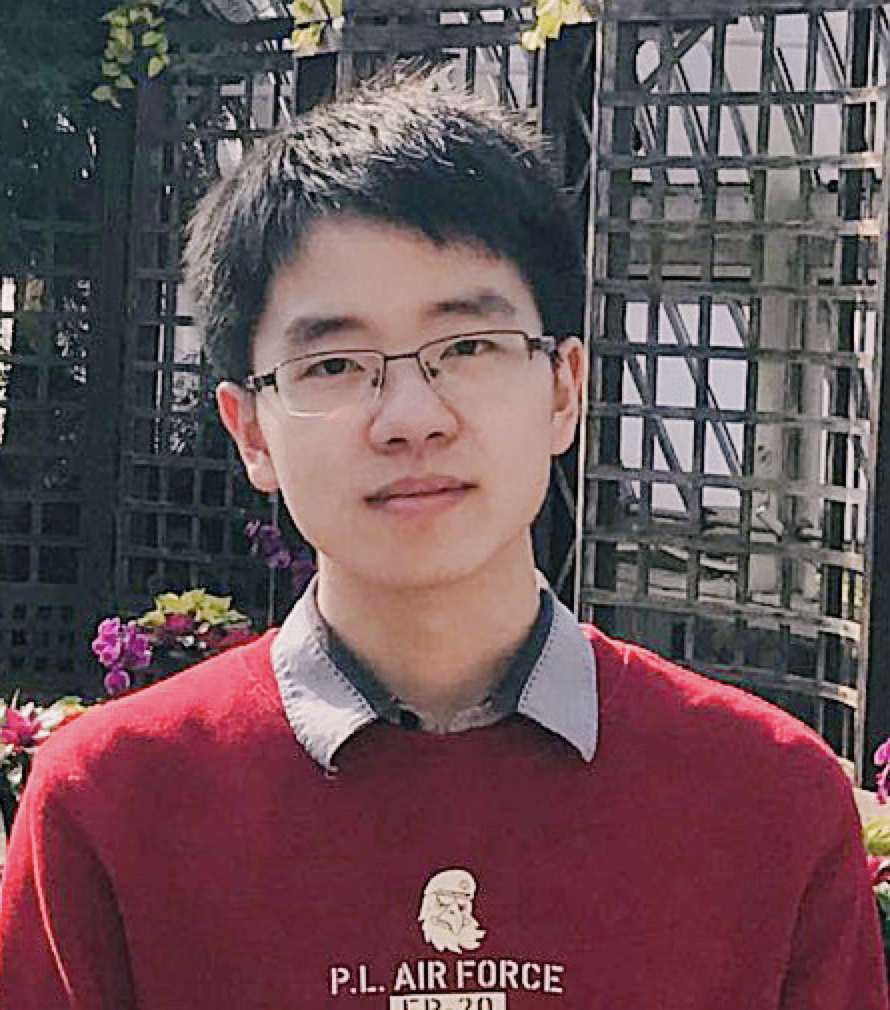 Junxian He (何俊贤)合作论文数Department of Computer Science & Engineering, School of Engineering, The Hong Kong University of Science and Technology12
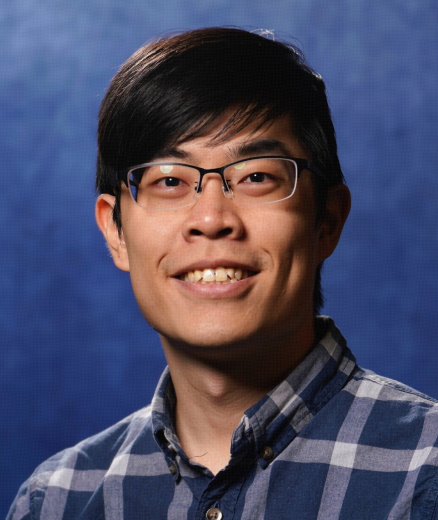 Hao-Wen (Herman) Dong (董皓文)合作论文数Department of Performing Arts Technology, School of Music, Theatre & Dance, University of Michigan;Computer Science and Engineering Division, Department of Electrical Engineering and Computer Science, College of Engineering, University of Michigan10
 Kartik Goyal合作论文数Language Technologies Institute, School of Computer Science, Carnegie Mellon University10
 Nikita Srivatsan合作论文数School of Computer Science, Carnegie Mellon University9
 Danlu Chen (陳丹露)合作论文数BergLab, Department of Computer Science and Engineering, University of California San Diego8
 Nikolai Vogler合作论文数Department of Computer Science and Engineering, University of California, San Diego8
 Volkan Cirik合作论文数ASAPP8
 Louis-Philippe Morency合作论文数Multimodal Communication and Machine Learning Laboratory, Language Technology Institute, School of Computer Science, Carnegie Mellon University;Human-Computer Interaction Institute, School of Computer Science, Carnegie Mellon University8
 Eduard Hovy合作论文数School of Computing and Information Systems, The University of Melbourne7
 Ivan Lee合作论文数University of California, San Diego6
 Maria Ryskina合作论文数Vector Institute for AI6
 Chris Dyer合作论文数Language Technologies Institute, Machine Learning Department, School of Computer Science, Carnegie Mellon University;DeepMind6
 Xuezhe Ma合作论文数Information Sciences Institute, University of Southern California;Department of Computer Science, University of Southern California;Language Technologies Institute, School of Computer Science, Carnegie Mellon University6
 Yasaman Jafari合作论文数BergLab, Department of Computer Science and Engineering, University of California San Diego5
 Rose Yu (虞琦)合作论文数Department of Computer Science and Engineering, Jacobs School of Engineering, University of Californ, San Diego5
 John Wieting合作论文数Toyota Technological Institute, University of Chicago5
 Greg Durrett合作论文数Department of Computer Science, New York University;Center for Data Science, New York University5
 Chufan Shi合作论文数University of Southern California4
 Xingjian Du (杜行健)合作论文数Bytedance AI Lab4
 Cheng Yang合作论文数4Daniel Spokoyny合作论文数Carnegie Mellon University4Bergen Leon合作论文数Department of Brain and Cognitive Sciences, Massachusetts Institute of Technology4
 Christopher N. Warren合作论文数Department of History, Dietrich College of Humanities and Social Sciences, Carnegie Mellon University;Department of English, Dietrich College of Humanities and Social Sciences, Carnegie Mellon University4
 Max G'Sell合作论文数Department of Statistics, Carnegie Mellon University;Machine Learning Department, Carnegie Mellon University4Omar U. Florez合作论文数3
 Samuel V. Lemley合作论文数Univ Virginia3Jacobo Myerston合作论文数3
 Jordi Pons合作论文数Stability AI3
 Justus Mattern合作论文数Rheinisch-Westfälische Technische Hochschule Aachen3
 Haohe Liu (刘濠赫)合作论文数Centre for Vision Speech and Signal Processing, University of Surrey3
 Archit Uniyal合作论文数University Institute of Engineering and Technology, Panjab University, Chandigarh, India3
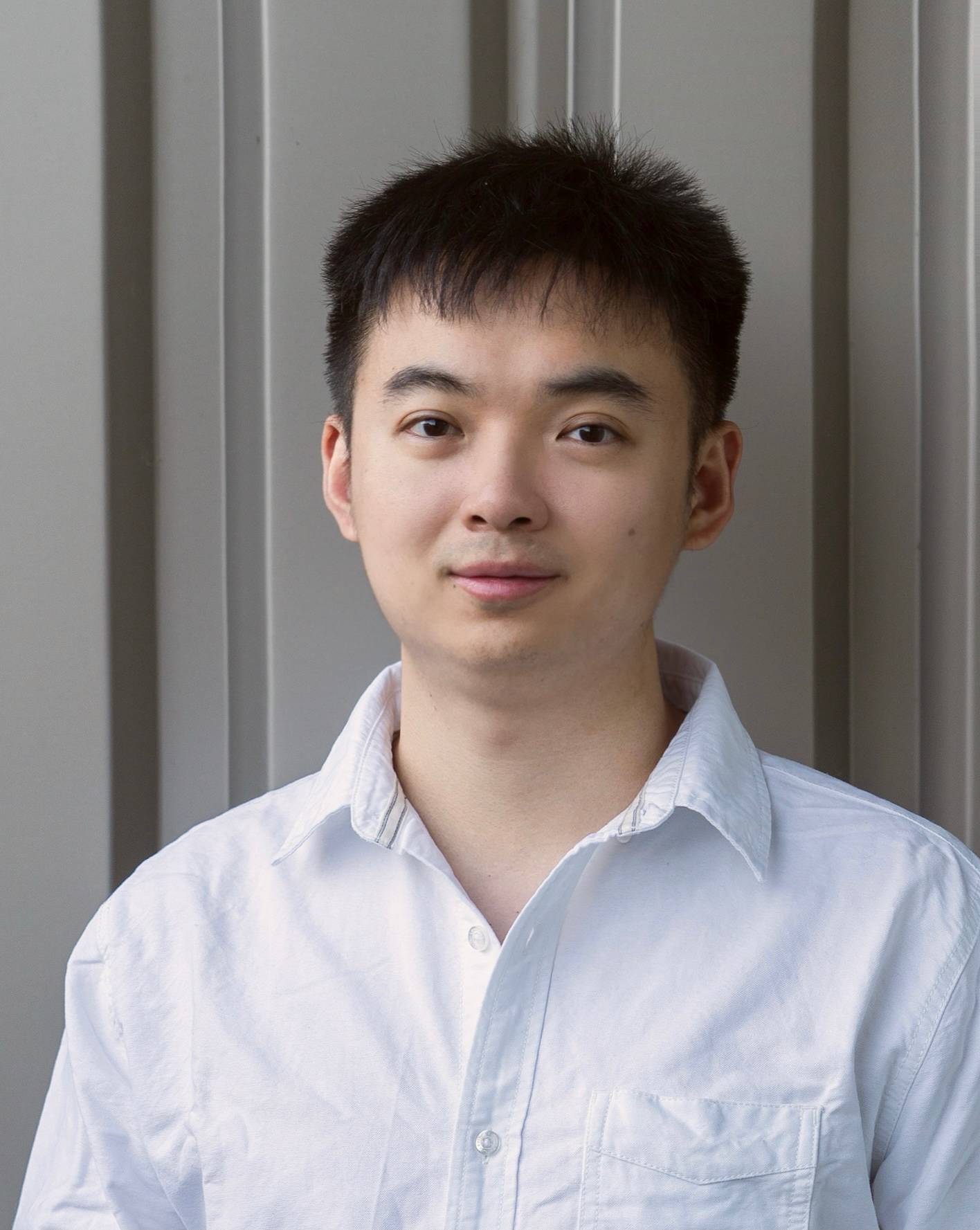 Zhiting Hu (胡志挺)合作论文数Amazon;Halicioglu Data Science Institute, University of California, San Diego3
 Ahmed El-Kishky合作论文数OpenAI3
 Yian Ma合作论文数Computer Science and Engineering Department, University of California San Diego;Halıcıo˘glu Data Science Institute, University of California San Diego3
 Bodhisattwa Prasad Majumder合作论文数Allen Institute for AI3
 Jonathan K. Kummerfeld合作论文数School of Computer Science, Faculty of Engineering, University of Sydney3
 Nicholas J. Bryan合作论文数Center for Computer Research in Music and Acoustics3
 Matthew R. Gormley合作论文数Machine Learning Department, School of Computer Science, Carnegie Mellon University;Language Technologies Institute, Carnegie Mellon University;Solventum3
 Kevin Gimpel合作论文数QuillBot3
 Varun Gangal合作论文数Patronus AI3
 Reza Shokri合作论文数Department of Computer Science, School of Computing, National University of Singapore;Google3




