FUSE spectra of the strong O VI 1032 angstrom emission in the active dwarf star AB Dor show modulation in both flux and profile with rotational phase that corresponds to regions of open and closed magnetic field in the star's corona. In Dec. 2003, activity appears at mid-latitudes and is confined to similar to 1.3-1.4R(star). These observations provide the first spectroscopic confirmation of the large scale magnetic structures and their dynamics in a stellar corona.
Spectra of the bright symbiotic star AG Draconis (BD + 67degrees922) in the wavelength range 905-1187 Angstrom obtained with the Far Ultraviolet Spectroscopic Explorer (FUSE) are presented. The spectra show a number of narrow, nebular emission lines, together with a uniform continuum from the hot component of the system, and numerous interstellar absorption lines. We infer the existence of Ne VIII in the AG Dra nebula through the identification of the Ne VII lambda973.3 recombination line. The emission-line spectrum is dominated by intense lines of O VI but also shows weaker lines from highly ionized ions including Ne V, Ne VI, S IV, and S VI. Members of the He II Balmer series can be identified up to n = 20. Lines of Fe II and Fe III fluoresced by O VI lambda1032 are identified at wavelengths 1141.172 and 1142.429 Angstrom, respectively. The emission lines are shown to be produced in a plasma with an electron temperature of 20,000-30,000 K, photoionized by the white dwarf. The Ne VI lambda997/lambda999 ratio shows that this ion and all others except perhaps Ne VII are formed at least 300 white dwarf radii from the white dwarf. Revised wavelengths for the Ne V 2s(2)2p(2) P-3(0,1)-2s2p(3) S-5(2) and Ne VI 2s(2)2p P-2-2s2p(2) P-4 transitions are published.
The Far Ultraviolet Spectroscopic Explorer (FUSE) ultraviolet spectra of eight giant and supergiant stars reveal that high-temperature (3 × 10⁵ K) atmospheres are common in luminous cool stars and extend across the color-magnitude diagram from α Car (F0 II) to the cool giant α Tau (K5 III). Emission present in these spectra includes chromospheric H Lyβ, Fe II, C I, and transition region lines of C III, O VI, Si III, and Si IV. Emission lines of Fe XVIII and Fe XIX signaling temperatures of ~107 K and coronal material are found in the most active stars, β Cet and 31 Com. A short-term flux variation, perhaps a flare, was detected in β Cet during our observation. Stellar surface fluxes of the emission of C III and O VI are correlated and decrease rapidly toward the cooler stars, reminiscent of the decay of magnetically heated atmospheres. Profiles of the C III λ977 lines suggest that mass outflow is underway at T ~ 80,000 K and the winds are warm. Indications of outflow at higher temperatures (3 × 10⁵ K) are revealed by O VI asymmetries and the line widths themselves. High-temperature species are absent in the M supergiant α Ori. Narrow fluorescent lines of Fe II appear in the spectra of many giants and supergiants, apparently pumped by H Lyα, and formed in extended atmospheres. Instrumental characteristics that affect cool star spectra are discussed.
We present a survey of coronal forbidden lines detected in Far Ultraviolet Spectroscopic Explorer (FUSE) spectra of nearby stars. Two strong coronal features, Fe XVIII λ974 and Fe XIX λ1118, are observed in 10 of the 26 stars in our sample. Various other coronal forbidden lines, observed in solar flares, also were sought but not detected. The Fe XVIII feature, formed at log T = 6.8 K, appears to be free of blends, whereas the Fe XIX line can be corrupted by a C I multiplet. FUSE observations of these forbidden iron lines at spectral resolution λ/Δλ ~ 15,000 provides the opportunity to study dynamics of hot coronal plasmas. We find that the velocity centroid of the Fe XVIII feature deviates little from the stellar rest frame, confirming that the hot coronal plasma is confined. The observed line widths generally are consistent with thermal broadening at the high temperatures of formation and show little indication of additional turbulent broadening. The fastest rotating stars, 31 Com, α Aur Ab, and AB Dor, show evidence for excess broadening beyond the thermal component and the photospheric v sin i. The anomalously large widths in these fast-rotating targets may be evidence for enhanced rotational broadening, consistent with emission from coronal regions extending an additional ΔR ~ 0.4-1.3 R* above the stellar photosphere, or represent the turbulent broadening caused by flows along magnetic loop structures. For the stars in which Fe XVIII is detected, there is an excellent correlation between the observed Röntgensatellit (ROSAT) 0.2-2.0 keV soft X-ray flux and the coronal forbidden line flux. As a result, Fe XVIII is a powerful new diagnostic of coronal thermal conditions and dynamics that can be utilized to study high-temperature plasma processes in late-type stars. In particular, FUSE provides the opportunity to obtain observations of important transition region lines in the far-UV, as well as simultaneous measurements of soft X-ray coronal emission, using the Fe XVIII coronal forbidden line.
We present Far Ultraviolet Spectroscopic Explorer (FUSE) observations of the O VI λλ1031.926, 1037.617 absorption lines associated with gas in and near the Milky Way, as detected in the spectra of a sample of 100 extragalactic targets and two distant halo stars. We combine data from several FUSE Science Team programs with guest observer data that were public before 2002 May 1. The sight lines cover most of the sky above Galactic latitude |b| > 25°—at lower latitude the ultraviolet extinction is usually too large for extragalactic observations. We describe the details of the calibration, alignment in velocity, continuum fitting, and manner in which several contaminants were removed—Galactic H2, absorption intrinsic to the background target and intergalactic Lyβ lines. This decontamination was done very carefully, and in several sight lines very subtle problems were found. We searched for O VI absorption in the velocity range -1200 to 1200 km s-1. With a few exceptions, we only find O VI in the velocity range -400 to 400 km s-1; the exceptions may be intergalactic O VI. In this paper we analyze the O VI associated with the Milky Way (and possibly with the Local Group). We discuss the separation of the observed O VI absorption into components associated with the Milky Way halo and components at high velocity, which are probably located in the neighborhood of the Milky Way. We describe the measurements of equivalent width and column density, and we analyze the different contributions to the errors. We conclude that low-velocity Galactic O VI absorption occurs along all sight lines—the few nondetections only occur in noisy spectra. We further show that high-velocity O VI is very common, having equivalent width >65 mÅ in 50% of the sight lines and equivalent width >30 mÅ in 70% of the high-quality sight lines. The central velocities of high-velocity O VI components range from |vLSR| = 100 to 330 km s-1; there is no correlation between velocity and absorption strength. We discuss the possibilities for studying O VI absorption associated with Local Group galaxies and conclude that O VI is probably detected in M31 and M33. We limit the extent of an O VI halo around M33 to be <100 kpc [at a 3 σ detection limit of log N(O VI) ∼ 14.0]. Using the measured column densities, we present 50 km s-1 wide O VI channel maps. These show evidence for the imprint of Galactic rotation. They also highlight two known H I high-velocity clouds (complex C and the Magellanic Stream). The channel maps further show that O VI at velocities <-200 km s-1 occurs along all sight lines in the region l = 20°-150°, b < -30°, while O VI at velocities >200 km s-1 occurs along all sight lines in the region l = 180°-300°, b > 20°.
The Far Ultraviolet Spectroscopic Explorer is a NASA Origins mission launched in June 1999 to obtain high-resolution spectra of astronomical sources at far-ultraviolet wavelengths. The science objectives require the satellite to provide inertial pointing at arbitrary positions on the sky with sub-arcsecond accuracy and stability. The requirements were met using a combination of ring-laser gyroscopes, three-axis magnetometers, and a fine error sensor for attitude knowledge, and reaction wheels for attitude control. Magnetic torquer bars are used for momentum management of the reaction wheels, and coarse sun sensors for safe mode pointing. The gyroscopes are packaged as two coaligned inertial reference units of three orthogonal gyroscopes each. There are four reaction wheels: three oriented along orthogonal axes, the fourth skewed at equal angles (54.7°) with respect to the others. Early in the mission the gyroscopes began showing signs of aging more rapidly than expected, and one failed after two years of operation. In addition, two of the orthogonal wheels failed in late 2001. The flight software has been modified to employ the torquer bars in conjunction with the two remaining wheels to provide fine pointing control. Additional new flight software is under development to provide attitude control if both gyroscopes fail on one or more axes. Simulations indicate that the pointing requirements will still be met, though with some decrease in observing efficiency. We will describe the new attitude control system, compare performance characteristics before and after the reaction wheel failures, and present predicted performance without gyroscopes.
Observations obtained with the Far Ultraviolet Spectroscopic Explorer (FUSE) have been used to determine the column densities of D I, N I, and O I along seven sight lines that probe the local interstellar medium (LISM) at distances from 37 to 179 pc. Five of the sight lines are within the Local Bubble, and two penetrate the surrounding H I wall. Reliable values of N(H I) were determined for five of the sight lines from Hubble Space Telescope (HST) data, International Ultraviolet Explorer (IUE) data, and published Extreme Ultraviolet Explorer (EUVE) measurements. The weighted mean of D I/H I for these five sight lines is (1.52 ± 0.08) × 10-5 (1 σ uncertainty in the mean). It is likely that the D I/H I ratio in the Local Bubble has a single value. The D I/O I ratio for the five sight lines within the Local Bubble is (3.76 ± 0.20) × 10-2. It is likely that O I column densities can serve as a proxy for H I in the Local Bubble. The weighted mean for O I/H I for the seven FUSE sight lines is (3.03 ± 0.21) × 10-4, comparable to the weighted mean (3.43 ± 0.15) × 10-4 reported for 13 sight lines probing larger distances and higher column densities. The FUSE weighted mean of N I/H I for five sight lines is half that reported by Meyer and colleagues for seven sight lines with larger distances and higher column densities. This result combined with the variability of O I/N I (six sight lines) indicates that at the low column densities found in the LISM, nitrogen ionization balance is important. Thus, unlike O I, N I cannot be used as a proxy for H I or as a metallicity indicator in the LISM.
We describe the 910-1180 Angstrom spectra of seven late-type dwarf stars obtained with the Far Ultraviolet Spectroscopic Explorer (FUSE) satellite. The stars include Altair (A7 IV), Procyon (F5 IV V),alpha Cen A (G2 V), AB Dor (K1 V),alpha Cen B (K2 V),epsilon Eri (K2 V), and AU Mic (M0 V). We present line identifications, fluxes, Doppler shifts, and widths. Doppler shifts are measured with respect to heliocentric wavelength scales determined from interstellar absorption lines, and are compared with transition region line shifts seen in Hubble Space Telescope (HST) ultraviolet spectra. For the warmer stars the O vi lines extend the trend of increasing redshift with line formation temperature, but for the cooler stars the O vi line redshifts are essentially zero. The C III and O vi lines of most stars in the sample are best fit with two Gaussians, and we confirm the correlation of increasing importance of the broad component with increasing stellar activity. The nonthermal velocities of the narrow component are subsonic and exhibit a trend toward larger velocities with decreasing surface gravity, while the nonthermal velocities of the broad components show no obvious trend with stellar gravity. The C III and O vi lines of Altair show unique broad horned profiles. Two flares were observed on AU Mic. One shows increasing continuum flux to shorter wavelengths, which we interpret as free-free emission from hot plasma, and relatively narrow, redshifted C III and O vi emission. The other shows very broad line profiles.
We present FUSE observations of OVI absorption in a sample of 100 extragalactic targets and 2 distant halo stars. We describe the details of the calibration, alignment in velocity, continuum fitting, and manner in which contaminants were removed (Galactic H2, absorption intrinsic to the background target and intergalactic Ly-beta lines). We searched for OVI absorption in the velocity range -1200 to 1200 km/s. With a few exceptions, we only find OVI between -400 and 400 km/s; the exceptions may be intergalactic OVI. We discuss the separation of the observed OVI absorption into components associated with the Galactic halo and components at high-velocity, which are probably located in the neighborhood of the Galaxy. We describe the measurements of equivalent width and column density, and we analyze the different contributions to the errors. We conclude that low-velocity Galactic OVI absorption occurs along all sightlines - the few non-detections only occur in noisy spectra. We further show that high-velocity OVI is very common, having equivalent width >65 mAA in 50 high-velocity OVI absorption has velocities relative to the LSR of +/-(100–330) km/s; there is no correlation between velocity and absorption strength. We present 50 km/s wide OVI channel maps. These show evidence for the imprint of Galactic rotation. They also highlight two known HI high-velocity clouds (complex C and the Magellanic Stream). The channel maps further show that OVI at velocities <-200 km/s occurs along all sightlines in the region l=20-150, b<-30, while OVI at velocities >200 km/s occurs along all sightlines in the region l=180-300, b>20 (abbreviated).
The spectrum of the Io plasma torus in the range of 995-1187 Angstrom was recorded at 0.26 Angstrom resolution by the Far Ultraviolet Spectroscopic Explorer (FUSE) on 2000 January 20. Five orbits of data were obtained in point-and-shoot mode (no tracking of the moving target), with the east ansa of the torus initially centered in the 30 " x 30 " aperture of the FUSE LiF spectrographs yielding a total observation time of 3405 s. The spectral resolution exceeds by a factor of 10 that of the data obtained by the Hopkins Ultraviolet Telescope (HUT) during the Astro-1 mission. This region of the spectrum is dominated by resonance multiplets of S III and S IV, whose multiplet structures are nearly completely resolved, as well as numerous S II multiplets originating on the D-2(o) state of the ground configuration. Weak emission from a few lines of the resonance multiplets of Cl III and Cl II is detected at or above the 3 sigma level, Cl III being stronger with two components roughly one-tenth the brightness of the main components of S III lambda 1018. We derive an abundance of Cl+2 of 3% relative to S+2, leading to an overall chlorine ion abundance in the torus of approximate to1%. The ratio of S IV to S III brightness is about twice that observed by HUT, which, when the different slit geometries are accounted for, supports the earlier analysis that S IV emissions originate from a region more extended out of the centrifugal plane than the S III emissions.
Far Ultraviolet Spectroscopic Explorer FUSE observations of the bright binary system Capella (Alpha Aurigae; G1 III + G8 III) reveal a rich emission line spectrum containing neutral and ionic species, among them H I, O I, C III, O VI, S VI, Ne V and Ne VI. In addition the Fe XVIII 974.85 A line, formed at temperatures of approx. 6 x 10^6 K, is detected. Whereas the chromospheric and transition region emission is dominated by that from the G1 giant, consistent with results from previous ultraviolet observations, Fe XVIII is formed largely in the G8 giant atmosphere. Line ratios from C III suggest densities of 2-8 x 10^10 cm^-3, although anomalous line profiles of the 1176 transition may signal optical depth effects. The hydrogen Lyman series, detected for the first time, displays asymmetric emission consistent with an expanding atmosphere.
Goddard High Resolution Spectrograph observations of the nucleus of the bright, nearby Seyfert galaxy NGC 4151 are presented and briefly described.
Far Ultraviolet Spectroscopic Explorer observations of the binary system Capella reveal a rich emission-line spectrum containing neutral and ionic species, among them H I, O I, C III, O VI, S VI, Ne V, and Ne VI. In addition, Fe XVIII lambda 974.85, formed at temperatures of approximate to6 x 10(6) K, is detected. Whereas the strong transition region lines principally come from the G1 giant, consistent with results from previous ultraviolet observations, Fe XVIII is formed largely in the G8 giant atmosphere. Line ratios from C III suggest densities of (2-8) x 10(10) cm(-3), although anomalous line profiles of the 1176 Angstrom transition may signal optical depth effects.
The Far Ultraviolet Spectroscopic Explorer (FUSE) satellite was launched on June 24, 1999. FUSE is designed to make high resolution (lambda/Delta lambda = 20,000 - 25,000) observations of solar system, galactic, and extragalactic targets in the far ultraviolet wavelength region (905 - 1187 Angstrom). Its high effective area, low background and planned three year life allow observations of objects which have been too faint for previous high resolution instruments in this wavelength range.FUSE has now been in orbit for one year. We discuss the accomplishments of the FUSE mission during this time, and look ahead to the future now that normal operations are under way.
We report the discovery of the photospheric P V 3s(2S)-3p(2Po) transitions and Fe III 3d6(5D)-3d5(6S)4p(5Po) transitions detected in the far-UV spectrum of the hot hydrogen-rich white dwarf GD 394. The spectrum was obtained with the Far Ultraviolet Spectroscopic Explorer using the large aperture. The spectrum covers a wavelength range of 910-1180 Å at a resolution of λ/Δλ ~ 15,000. The presence of photospheric phosphorus and iron is the first firm detection of heavy elements other than silicon in the photosphere of GD 394. This detection confirms Extreme Ultraviolet Explorer observations, which show evidence of heavy elements in the photosphere of GD 394 with relatively low individual abundances. The spectrum reveals also a host of photospheric Si III and Si IV features.
The FUSE satellite employs innovative techniques for autonomous target acquisitions and fine pointing control. One of two Fine Error Sensors, incorporated in the optical path of the science instrument, provide the Instrument Data System computer with images, for target identification, and field star centroids, for fine pointing information to the spacecraft attitude control system. A suite of 'toolbox' functions has been developed to locate stars, selected and track on 'unknown' guide stars from the image, identify the star field, track preselected 'known' guide stars, follow moving targets, and provide pointing optimizations to fine- tune the centering of a target. After a maneuver to a new field, initial attitude is determined by identifying stars found in a 20' X 20' image. Identification is done by matching stars with an uploaded table of up to 200 objects selected from the Hubble Space Telescope (HST) Guide Star Catalog (GSC), ranging from V equals 9 to 13.5 mag., and typically covering a one degree field around the target. During identification, tracking is performed on unidentified stars in the image to prevent the satellite from drifting. A corrective slew is then commanded to place the target at the desired position. Tracking is then resumed on preselected guide stars. If desired, further fine alignment of the science apertures is performed by a target peakup using the FUV detectors. We discuss the target acquisition process; end-to- end performance; and problems encountered due to the limitations of the small field of view of the FES, HST GSC errors, and stray light in the telescope baffles.
Far-ultraviolet spectra were obtained of the active cool star AB Doradus (HD 36705) during the calibration and checkout period of the Far Ultraviolet Spectroscopic Explorer (FUSE) satellite. Observations in this early phase of the mission were taken at a resolving power of 12,000-15,000 (~20-25 km s-1) and covered the spectral range 905-1187 Å. The integrated spectrum exhibits strong, rotationally broadened stellar emission from C III (λλ977, 1175) and O VI (λλ1032, 1037) and many weaker lines. Strong emission lines of C III and O VI exhibit broad wings. The C III λ977 profile shows blueshifted absorption at ~30 km s-1, and C II λ1036 absorption appears superposed on emission in the wing of O VI λ1037. Rotational modulation of C III and O VI is present, in harmony with its photometric variability. Flares were detected in the brightest lines, and subexposures were analyzed to examine flux and profile variations. Downflows that extend to 600 km s-1 during a flare are found in the O VI profiles. These early observations demonstrate that FUSE will be an exceptional instrument for studying chromospheres in cool stars.
 Jeffrey L. Linsky合作论文数Department of Astrophysical and Planetary Sciences, College of Arts and Sciences, University of Colorado Boulder19
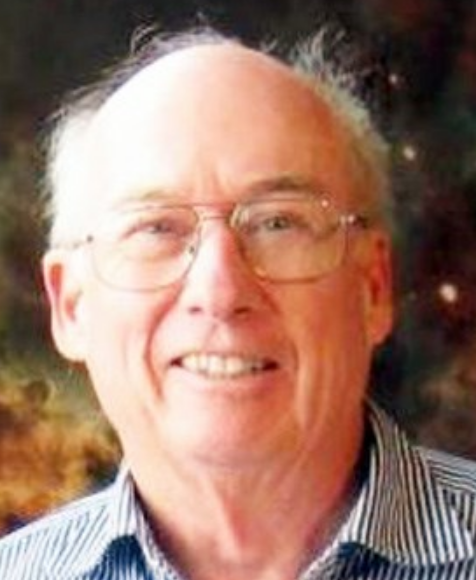 Blair D. Savage合作论文数University of Wisconsin-Madison13
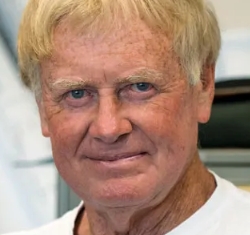 John Hutchings合作论文数National Research Council of Canada12
 David J. Sahnow合作论文数11Andrea K. Dupree合作论文数11
 Peter R Young合作论文数National Aeronautics and Space Administration Goddard Space Flight Center10
 Frederick M. Walter合作论文数Department of Physics and Astronomy, College of Arts and Sciences, Stony Brook University10Dennis C Ebbets合作论文数10
 Kenneth G. Carpenter合作论文数10Sp Maran合作论文数9
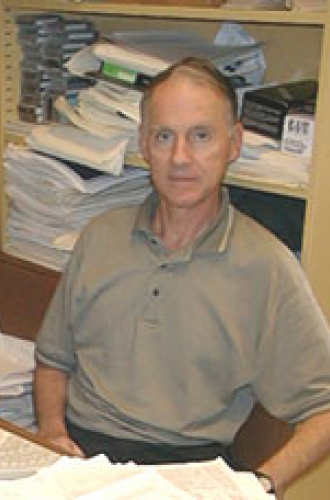 Laurence M Trafton合作论文数Department of Astronomy, College of Natural Sciences, University of Texas at Austin9
 H. Warren Moos合作论文数William H. Miller III Department of Physics & Astronomy, Krieger School of Arts & Sciences, Johns Hopkins University9
 Sara Heap合作论文数NASA Goddard Space Flight Center9
 Andrew M. Smith合作论文数NASA Goddard Space Flight Center;Laboratory for Astronomy and Solar Physics;Laboratory for Astronomy and Solar Physics, NASA Goddard Space Flight Center9J. C. Brandt合作论文数9A. Boggess合作论文数9David S Leckrone合作论文数9E. A. Beaver合作论文数9Ray J. Weymann合作论文数Steward Observatory, University of Arizona9
 Michael Jura合作论文数Division of Astronomy and Astrophysics, University of California, Los Angeles9george sonneborn合作论文数8Jeffrey W Kruk合作论文数8
 Martin Snow合作论文数University of Colorado Laboratory for Atmospheric and Space Physics7Wr Oegerle合作论文数6
 Kenneth Sembach合作论文数Space Telescope Science Institute6Scott D Friedman合作论文数6
 Edward Michael Murphy合作论文数Department of Physics and Astronomy;Johns Hopkins University;Department of Physics and Astronomy, Johns Hopkins University6
 William P. Blair合作论文数Department of Physics and Astronomy, Johns Hopkins University5Erik Wilkinson合作论文数5Seth Redfield合作论文数5
 Paul Feldman合作论文数William H. Miller III Department of Physics & Astronomy, Krieger School of Arts & Sciences, Johns Hopkins University4
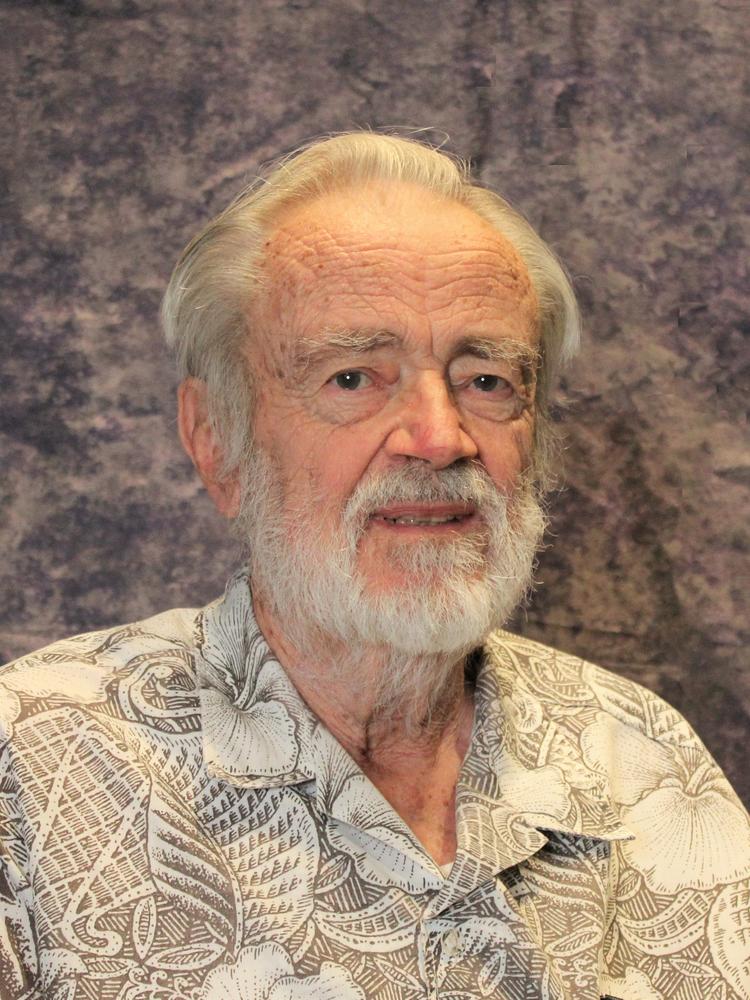 Edward Jenkins合作论文数Department of Astrophysical Sciences, Princeton University4
 Donald G. York合作论文数The Department of Astronomy and Astrophysics, The University of Chicago4J. Christopher Howk合作论文数JHU4Bruce E. Woodgate合作论文数4
 James C. Green合作论文数Department of Astrophysical & Planetary Sciences, College of Arts and Sciences, University of Colorado Boulder4
 Brian E. Wood合作论文数Space Science Division, United States Naval Research Laboratory4Sb Parsons合作论文数3Ohw Siegmund合作论文数3H. R. Johnson合作论文数3steven n shore合作论文数3Richard J. Rudy合作论文数3
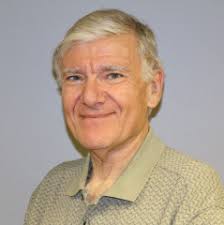 Sumner Starrfield合作论文数School of Earth and Space Exploration, Arizona State University3Richard D Robinson合作论文数3Glenn M. Wahlgren合作论文数3Derck Massa合作论文数3Frederick C. Bruhweiler合作论文数3
 J. Michael Shull合作论文数Department of Astrophysical and Planetary Sciences, College of Arts and Sciences, University of Colorado Boulder;Center for Astrophysics and Space Astronomy, College of Arts and Sciences, University of Colorado Boulder3
 Cora Randall合作论文数Laboratory for Atmospheric and Space Physics, University of Colorado Boulder;Department of Atmospheric and Oceanic Sciences, University of Colorado Boulder3




