We propose a new approach to perform the boosted difference of convex functions algorithm (BDCA) on non-smooth and non-convex problems involving the difference of convex (DC) functions. The recently proposed BDCA uses an extrapolation step from the point computed by the classical DC algorithm (DCA) via a line search procedure in a descent direction to get an additional decrease of the objective function and accelerate the convergence of DCA. However, when the first function in DC decomposition is non-smooth, the direction computed by BDCA can be ascent and a monotone line search cannot be performed. In this work, we proposed a monotone improved boosted difference of convex functions algorithm (IBDCA) for certain types of non-smooth DC programs, namely those that can be formulated as the difference of a possibly non-smooth function and a smooth one. We show that any cluster point of the sequence generated by IBDCA is a critical point of the problem under consideration and that the corresponding objective value is monotonically decreasing and convergent. We also present the global convergence and the convergent rate under the Kurdyka-Lojasiewicz property. The applications of IBDCA in image recovery show the effectiveness of our proposed method. The corresponding numerical experiments demonstrate that our IBDCA outperforms DCA and other state-of-the-art DC methods in both computational time and number of iterations.
Image dehazing is regarded as a fundamental image processing task with a major impact on higher-level imaging tasks. Many existing haze removal methods are designed for homogeneous haze, but in real-world cases, the haze is normally non-homogeneous. Superpixels, which segment an image into a set of closely spaced regions, can be employed in real-world scenarios to deal with non-homogeneous haze. In our paper, an adaptive non-homogeneous image dehazing approach that utilizes the superpixel-guided algorithm is designed to segment different hazy regions. Considering that both ambient light and transmission map estimation have a significant impact on the results, our research focuses on the development of a variational dehazing model that takes into account non-uniform ambient light and non-uniform transmission maps to address varying levels of haze. A series of numerical results illustrate the superiority and efficacy of our method.
Nonhomogeneous image dehazing has long been a highly challenging problem due to the uneven distribution of haze in real-world images. This challenge is further exacerbated given complex weather conditions, making it even more difficult to effectively remove haze and restore image clarity. To address this issue, we propose a novel variational model based on the Atmospheric Scattering Model, incorporating an adaptive nonuniform map reweighting technique. Our approach dynamically adjusts to different haze levels across an image, ensuring effective region-specific dehazing. Meanwhile, we introduce a localized spatial-aware regularization, which enables us to improve consistency in regions with heavier haze while providing more flexibility in areas with rich details. To solve the proposed model, we introduce a Block Coordinate Proximal Gradient (BCPG) method and rigorously analyze the existence and convergence properties of this algorithm, ensuring that it reliably produces optimal solutions. Extensive experiments have been conducted to validate the effectiveness of our method. The results demonstrate that our approach significantly improves image clarity and detail, even given challenging nonuniform haze conditions. Our findings indicate that the proposed method is robust and effective, making it a valuable tool for addressing nonhomogeneous image dehazing given complex weather conditions.
Image deblurring is a challenging inverse problem due to its ill-posed nature, leading to various strategies for enhancing stability. The Rudin-Osher-Fatemi (ROF) model is a seminal framework recognized for its effectiveness in image denoising and deblurring, inspiring numerous variational techniques. Despite existing approaches focusing on solving analysis-based, synthesis-based, and balanced models, achieving a more accurate solution to the ROF model remains an open question. The Fast Iterative Shrinkage-Thresholding Algorithm (FISTA) is a widely applied numerical algorithm known for its efficiency in large-scale optimization. However, FISTA’s effectiveness in solving the ROF model is constrained because it is primarily designed for synthesis models when the sparsifying transform is orthonormal. To overcome this limitation, we propose a novel Kernel FISTA (K-FISTA), integrated with a structured Pseudoinverse Image Formulation (PIF) model. In practice, our approach outperforms classical methods like ADMM and sPADMM by achieving lower final energy values, offering a more accurate numerical approximation to the common minimizer while maintaining fast convergence. Extensive experiments validate the effectiveness of the K-FISTA method in image deblurring, and we provide theoretical guarantees for its convergence.
Blind image deblurring is a critical and challenging task in the field of imaging science due to its severe ill-posedness. Appropriate prior information and regularizations are normally introduced to alleviate this problem. Inspired by the fact that the matrix representing a natural image is intrinsically low-rank or approximately low-rank, we employ the low-rank matrix approximation (LRMA) approach for tackling blind image deblurring problems with unknown kernels. When applied to color image restoration tasks, making use of the quaternion representation in the hypercomplex domain enables us to better illustrate the inner relationships among color channels and thus more accurately characterize color image structure. Following this idea, we develop a novel model for color image blind deblurring by implementing the quaternion representation to the LRMA method. This proposed model facilitates better results for blur kernel estimation through preserving the sharper color intermediate latent image, which is first implemented for addressing the blind color image deblurring problem. Extensive numerical experiments demonstrate that our proposed quaternion-aware low-rank prior model greatly improves the performance when compared with the conventional low-rank based scheme and outperforms some of the state-of-the-art methods in terms of some criteria and visual quality.
Visibility enhancement of outdoor images under complex imaging conditions has been a crucial task for computer vision and received growing attention. However, existing image enhancement methods could result in typical block-like artifacts or color distortion. The undesirable impurities might also be significantly magnified after the enhancement task, further reducing the image quality. For enhancing and super-resolving complex real-world degradation, we propose a simultaneous visual enhancement and resolution improvement (VERI) variational scene recovery model for jointly enhancing image visibility and improving the resolution of the degraded image. Particularly, we estimate the scattering light map for degradation images to achieve clean scene radiance and simultaneously seek a high-quality image through a deep super-resolution network. The semi-proximal alternating direction method of multipliers (sPADMM) algorithm is employed for efficiently solving the minimization problems in the proposed model. Extensive experiments illustrate the effectiveness and robustness of the proposed method in dealing with various scenes, such as haze, sandstorm, underwater or low illumination.
Like many computer vision problems, human pose estimation is a challenging problem in that recognizing a body part requires not only information from local area but also from areas with large spatial distance. In order to spatially pass information, large convolutional kernels and deep layers have been normally used, introducing high computation cost and large parameter space. Luckily for pose estimation, human body is geometrically structured in images, enabling modeling of spatial dependency. In this paper, we propose a spatial shortcut network for pose estimation task, where information is easier to flow spatially. We evaluate our model with detailed analyses and present its outstanding performance with smaller structure.
Long range relations play a key role in tasks like human pose estimation that requires dense prediction. We propose an additional module containing a process called feature translation, to gather long range information at early stages. It is shown that such module has connection with dilated convolution and is more efficient. The module significantly improves performance in pose estimation and we show that most of the improvement is contributed by the feature translation process.
There are many factors affecting visual face recognition, such as low resolution images, aging, illumination and pose variance, etc. One of the most important problem is low resolution face images which can result in bad performance on face recognition. The modern face hallucination models demonstrate reasonable performance to reconstruct high-resolution images from its corresponding low resolution images. However, they do not consider identity level information during hallucination which directly affects results of the recognition of low resolution faces. To address this issue, we propose a Face Hallucination Generative Adversarial Network (FH-GAN) which improves the quality of low resolution face images and accurately recognize those low quality images. Concretely, we make the following contributions: (1) we propose FH-GAN network, an end-to-end system, that improves both face hallucination and face recognition simultaneously. The novelty of this proposed network depends on incorporating identity information in a GAN-based face hallucination algorithm via combining a face recognition network for identity preserving. (2) We also propose a new face hallucination network, namely Dense Sparse Network (DSNet), which improves upon the state-of-art in face hallucination. (3) We demonstrate benefits of training the face recognition and GAN-based DSNet jointly by reporting good result on face hallucination and recognition.
Stitching interferometry is an effective method to extend the measurement range of commercial interferometer. It has been applied in the laboratorial environment, but rarely in workshop. In order to improve the testing efficiency in workshop, stitching interferometry could be combined with machine tool and implement in-situ testing. A dynamic stitching interferometer system is established in this paper, which contains dynamic interferometry, precision motion control and advanced stitching algorithm. This system has been prepared for the in-situ testing of large plano optics. One example optical flat with size 200mm×300mm was used to verify the feasibility and accuracy of this system. Many repetitive experiments have been proved the well reliability of the system and method.
It has been shown that the number of subapertures and the amount of overlap has a significant influence on the stitching accuracy. In this paper, a non-overlap subaperture interferometric testing method (NOSAI) is proposed to inspect large optical components. This method would greatly reduce the number of subapertures and the influence of environmental interference while maintaining the accuracy of reconstruction. A general subaperture distribution pattern of NOSAI is also proposed for the large rectangle surface. The square Zernike polynomial is employed to fit such wavefront. The effect of the minimum fitting terms on the accuracy of NOSAI and the sensitivities of NOSAI to subaperture's alignment error, power systematic error, and random noise are discussed. Experimental results validate the feasibility and accuracy of the proposed NOSAI in comparison with wavefront obtained by a large aperture interferometer and stitching surface by multi-aperture overlap-scanning technique (MAOST).
In order to realize on-line and in-situ measurement of high precision optical elements in workshop,a dynamic interference stitching system for large optical elements measured in general environment was investigated.The system was consisted of a dynamic interferometer,twodimensional mobile platform,control system and stitching software.A stitching experiment for an 200 mm× 300 mm optical element was completed by this system in general environment,based on error averaging stitching algorithm.Moreover,the stitching results were analyzed.Comparing the results between stitching measurement and full aperture measurement,the relative deviations of PV,RMS and Power are 3.1 %,1.6 % and 2.1% respectively.The system lays a foundation for the online and in-situ measurement system for large optical elements in the workshop environment.
The systemic error is the main error sauce in sub-aperture stitching calculation. In this paper, a systemic error calibration method is proposed based on pseudo shearing. This method is suitable in dynamic stitching interferometry for large optical plane. The feasibility is vibrated by some simulations and experiments.
Accurate and efficient measurement method is necessary to improve the testing efficiency for large optical plane. In this paper, a system is proposed for testing large optical plane in the workshop which combined dynamic interferometry with stitching algorithm. The feasibility is vibrated by an optical flat with 200mm×300mm.
 Tieyong Zeng (曾鐵勇)合作论文数Department of Mathematics, Chinese University of Hong Kong;Center for Mathematical Artificial Intelligence, Chinese University of Hong Kong6
 Xin Wu合作论文数5
 Yingjie Yu (于瀛洁)合作论文数Department of Precision Mechanical Engineering,Shanghai University5
 Hao Zhang (张浩)合作论文数Faculty of Computing, Harbin Institute of Technology;Institute for Artificial Intelligence, Harbin Institute of Technology3
 Hongtao Lu (卢宏涛)合作论文数School of Computer Science, Shanghai Jiao Tong University3
 Usman Ali合作论文数2
 Bayram Bayramli合作论文数Department of Computer Science and Engineering, Shanghai Jiao Tong University2LinNa Zhang (张琳娜)合作论文数2
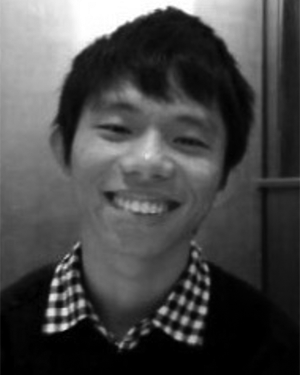 Hok Shing Wong合作论文数Department of Mathematics, The Chinese University of Hong Kong1Mingyi Chen合作论文数1
 Yingying Fang合作论文数Department of Emergency MedicineBeijing Chao-Yang HospitalCapital Medical UniversityBeijingChina1
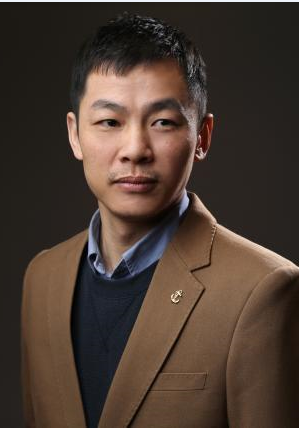 Qinchuan Zhang (张沁川)合作论文数School of Automation Engineering, University of Electronic Science and Technology of China1
 Xiangqian Jiang (姜向前)合作论文数School of Physics, Harbin Institute of Technology1
 Huiyu Weng (翁惠玉)合作论文数Department of Computer Science and Engineering, Shanghai Jiao Tong University1
 Wenhan Zeng合作论文数Centre for Precision Technologies, University of Huddersfield1




