Hybridisation between divergent populations can lead to various outcomes, including potentially increased invasiveness. In this study, we investigated the genetic background of a recent outbreak of a tramp ant species in southern Taiwan. Combining morphological data and a global Technomyrmex phylogeny, based on 1,796 newly-generated and publicly-available cytochrome c oxidase I (COI) barcodes, we identified the species responsible for the outbreak as Technomyrmex albipes. Further haplotype network analysis, based on 399 T. albipes samples, revealed two major geographic groups corresponding to the Indian Ocean Region and Southeast Asia. Population structure inferred from ultra-conserved element sequence data revealed that two genetically similar lineages are geographically separated by a third lineage in western Taiwan, indicating a potential human-mediated dispersal event. We found that one of the contact zones between these lineages coincides with the region where outbreaks were reported. Several individuals in this area exhibited admixed genotypes and this potential hybridisation was further supported by simulations. Based on these findings, we proposed that the outbreaks are potentially attributable to recent admixture between lineages in southern Taiwan.
Ants originated over 150 million years ago through an irreversible transition to superorganismal colony life. Comparative analyses of 163 ant genomes, including newly generated whole-genome sequences of 145 ant species, reveal extensive genome rearrangements correlated with speciation rates. Meanwhile, conserved syntenic blocks are enriched with co-expressed genes involved in basal metabolism and caste differentiation. Gene families related to digestion, endocrine signaling, cuticular hydrocarbon synthesis, and chemoreception expanded in the ant ancestor, while many caste-associated genes underwent positive selection in the formicoid ancestor. Elaborations and reductions of queen-worker dimorphism and other social traits left convergent signatures of intensified or relaxed selection in conserved signaling and metabolic pathways, suggesting that a core gene set was used to diversify organizational complexity. Previously uncharacterized genetic regulators of caste development were confirmed by functional experiments. This study reconstructs the genetic underpinning of social traits and their integration within gene-regulatory networks shaping caste phenotypes.
Symbiotic relationships shape the evolution of organisms. Fungi in the genus Escovopsis share an evolutionary history with the fungus-growing "attine" ant system and are only found in association with these social insects. Despite this close relationship, there are key aspects of Escovopsis evolution that remain poorly understood. To gain further insight into the evolutionary history of these unique fungi, we delve deeper into Escovopsis' origin and distribution, considering the largest sampling, so far, across the Americas. Furthermore, we investigate Escovopsis' trait evolution, and relationship with attine ants. We demonstrate that, while the genus originated approximately 56.9 Mya, it only became associated with 'higher attine' ants in the last 38 My. Our results, however, indicate that it is likely that the ancestor of Escovopsis lived in symbiosis with early-diverging fungus-growing ants. Since then, the fungi have evolved morphological and physiological adaptations that have increased their reproductive efficiency, possibly to overcome barriers mounted by the ants and their other associated microbes. Taken together, these results provide new clues as to how Escovopsis has evolved within the context of this complex symbiosis and shed light on the evolutionary history of the fungus-growing ant system.
The ability to recognize nestmates is critical to the ecological success of social insects. Fungus-farming “attine” ants (Formicidae: Myrmicinae: Attini: Attina) can recognize their nestmates and symbiotic fungi via chemoreception. Although it has been shown that mutualistic fungi release volatile compounds that elicit responses in fungus-farming ants, the compounds and the sensory mechanisms involved remain little studied. Here, we characterize compounds found in attine fungus gardens and explore the correlations between those compounds, fungal substrates, and the laboratory environment. We also characterize ant cuticular hydrocarbons from Atta cephalotes colonies of the same species maintained in the same laboratory conditions for two or more years. Using gas chromatography associated with mass spectrometry, we verified that both substrate (i.e., the food on which fungus gardens grow) and environmental origin may influence the volatiles the fungus releases. We found compounds related to the environment, including naphthalene. We show that the volatile profiles of fungal strains grown by Atta cephalotes are most similar to each other, whereas the profile of the fungus grown by ants in the genus Cyphomyrmex is more similar to that of their substrate than to the profiles of other cultivated fungi. Regarding cuticular hydrocarbons, we found that ants collected in the same location have more similar hydrocarbon profiles than ants of the same species collected in a different location, even if all the colonies had been maintained under the same conditions (temperature, substrate) for extended periods. Our results provide strong evidence that a combination of species genetics and environmental factors shape variations in the volatile chemical profiles of cultivated fungi. After long homogenization, ants still demonstrate a solid difference among the cuticular profiles.
Colonies of Atta and Acromyrmex leafcutter ants provide niches for diverse insect species, but few such organisms have evolved obligate myrmecophilous associations inside host colonies. We report a remarkable pselaphine rove beetle myrmecophile, Hamotus heidiae sp. nov., discovered in galleries of Acromyrmex histrix Latreille in lowland tropical rainforest within Tambopata National Reserve, Peruvian Amazonia. Presence of adults and putative larvae inhabiting the central nest implies an obligate relationship, with development of the beetle likely occurring inside the colony environment. Phylogenetic analysis of four genomic loci confirms that H. heidiae is a morphologically derived member of the New World Hamotus-generic complex and is tentatively placed into Hamotus Aubé on morphological grounds. The new species is phylogenetically distant to the genus Attapsenius Bruch—previously, the only pselaphine taxon known with certainty to be an obligate myrmecophile of leafcutter ants. Both H. heidiae and Attapsenius emerge from a newly recognized “Tyrine-group” within Pselaphinae—a major radiation that includes multiple independent origins of myrmecophily and termitophily. We were unable to detect cuticular hydrocarbons (CHCs) on the body surface of H. heidiae adults. Chemical insignificance may form part of the strategy that this myrmecophile, and possibly other pselaphines, employ to infiltrate host colonies.
Macroscale environmental gradients can have contrasting effects on organisms that occupy different vertical niches, but we have little understanding of how this might result in different macroscale diversity patterns in ground and arboreal communities. We also have little understanding of how different dimensions of diversity, such as functional and phylogenetic diversity, vary along macroscale environmental gradients. Here we examine latitudinal and elevational patterns of different dimensions of diversity for both ground and arboreal assemblages in Neotropical savanna ants. The study was based on ant species occurring at 32 sites covering a 22° range of latitude and > 1000 m range in elevation in Brazil. Functional and phylogenetic richness were positively correlated with species richness, all increasing with latitude. However, the greater phylogenetic richness on the ground than in trees did not simply reflect differences in species richness. The mean functional and phylogenetic divergence among species was also greater on the ground than in trees, indicating a stronger role of competition. Both mean functional and phylogenetic divergence showed negative correlations with elevation in trees but not on the ground. In trees, the standardized effect size (taking into account differences in species richness) of mean functional divergence was negatively related to elevation and mean phylogenetic divergence was negatively related to both latitude and elevation. These findings suggest that as temperature decreases the relative importance of environmental filtering in arboreal but not ground communities increases (and that of competition and niche partitioning decreases). Overall, we show that the macroecological patterns of ant species richness that have previously been reported for Brazilian savannas do not adequately represent other dimensions of diversity, and that the representativeness differs between vertical strata. Macroecological patterns of functional and phylogenetic divergence indicate that the relative importance of competition and environmental filtering also differs between vertical strata.
Fungus-farming ants cultivate multiple lineages of fungi for food, but, because fungal cultivar relationships are largely unresolved, the history of fungus-ant coevolution remains poorly known. We designed probes targeting >2000 gene regions to generate a dated evolutionary tree for 475 fungi and combined it with a similarly generated tree for 276 ants. We found that fungus-ant agriculture originated similar to 66 million years ago when the end-of-Cretaceous asteroid impact temporarily interrupted photosynthesis, causing global mass extinctions but favoring the proliferation of fungi. Subsequently, similar to 27 million years ago, one ancestral fungal cultivar population became domesticated, i.e., obligately mutualistic, when seasonally dry habitats expanded in South America, likely isolating the cultivar population from its free-living, wet forest-dwelling conspecifics. By revealing these and other major transitions in fungus-ant coevolution, our results clarify the historical processes that shaped a model system for nonhuman agriculture.
Although savanna woody encroachment has become a global phenomenon, relatively little is known about its effects on multiple dimensions and levels of savanna biodiversity. Using a combination of field surveys, a species‐level phylogeny, and functional metrics drawn from a morphological dataset, we evaluated how the progressive increase in tree cover in a fire‐suppressed savanna landscape affects the taxonomic, functional, and phylogenetic diversity of neotropical ant communities, at both the alpha and beta levels. Ants were sampled along an extensive tree cover gradient, ranging from open savannas to forests established in former savanna areas. Variation in tree cover had a significant influence on all facets of diversity at the beta level, whereas at the alpha level tree cover variation affected the taxonomic and functional but not the phylogenetic diversity of the ant communities. In general, ant community responses to variation in tree cover were largely non‐linear as differences in taxonomic alpha diversity and in the taxonomic, functional, and phylogenetic composition of the sampled communities were often much stronger at the savanna/forest transition than at any other part of the gradient. This indicates that savanna ant communities switch rapidly to an alternative state once the savanna turns into forest. Ant communities in the newly formed forest areas lacked many of the species typical of the savanna habitats, suggesting that the maintenance of a fire suppression policy is likely to result in a decrease in ant diversity and in the homogenisation of the ant fauna at the landscape scale.
Abstract The ant genus Nylanderia Emery has a cosmopolitan distribution and includes 150 extant described species and subspecies, with potentially hundreds more undescribed. Global taxonomic revision has long been stalled by strong intra- and interspecific morphological variation, limited numbers of diagnostic characters, and dependence on infrequently collected male specimens for species description and identification. Taxonomy is further complicated by Nylanderia being one of the most frequently intercepted ant genera at ports of entry worldwide, and at least 15 globetrotting species have widespread and expanding ranges, making species-level diagnoses difficult.Three species complexes (‘bourbonica complex’, ‘fulva complex’, and ‘guatemalensis complex’) include globetrotting species. To elucidate the phylogenetic positions of these three complexes and delimit species boundaries within each, we used target enrichment of ultraconserved elements (UCEs) from 165 specimens representing 98 Nylanderia morphospecies worldwide. We also phased the UCEs, effectively doubling sample size and increasing population-level sampling. After recovering strong support for the monophyly of each complex, we extracted COI barcodes and SNPs from the UCE data and tested within-complex morphospecies hypotheses using three molecular delimitation methods (SODA, bPTP, and STACEY). This comparison revealed that most methods tended to over-split taxa, but results from STACEY were most consistent with our morphospecies hypotheses. Using these results, we recommend species boundaries that are conservative and most congruent across all methods.This work emphasizes the importance of integrative taxonomy for invasive species management, as globetrotting occurs independently across at least nine different lineages across Nylanderia.
The standard latitudinal diversity gradient (LDG), in which species richness decreases from equator to pole, is a pervasive pattern observed in most organisms. Some lineages, however, exhibit inverse LDGs. Seemingly problematic, documenting and studying contrarian groups can advance understanding of LDGs generally. Here, we identify one such contrarian clade and use a historical approach to evaluate alternative hypotheses that might explain the group's atypical diversity pattern. We focus on the biogeographical conservatism hypothesis (BCH) and the diversification rate hypothesis (DRH).
Atta Fabricius is an ecologically dominant leaf‐cutting ant genus, the major herbivore of the Neotropics, and an agricultural pest of great economic importance. Phylogenetic relationships within Atta have until now remained uncertain, and the delimitation and identification of a subset of Atta species are problematic. To address these phylogenetic uncertainties, we reconstruct the most comprehensive phylogenetic estimate to date of Atta by employing ultraconserved elements (UCEs). We recovered 2340 UCE loci from 224 Atta specimens, which include 14 out of the 15 identifiable species from across their geographic distributions, and 49 outgroup specimens. Our results strongly support the monophyly of Atta and of the four clades that coincide with the previously recognized subgenera Archeatta Gonçalves, Atta s.s. Emery, Epiatta Borgmeier, and Neoatta Gonçalves. The Archeatta clade contains three species occurring in North and Central America and the Caribbean and is the sister group of the remainder of all other Atta species. The Atta s.s. clade is composed of two species occupying North, Central, and South America. The Epiatta clade contains seven entirely South American species and the two species of the Neoatta clade occur in Central and South America. Divergence‐dating analyses identify a series of major events in the Miocene, such as the divergence of Acromyrmex Mayr and Atta 16.7 million years ago (Ma) and the crown‐group origin of Atta around 8.5 Ma. Extant Atta species evolved very recently, originating in the early Pleistocene, approximately 1.8–0.3 Ma (crown‐group ages). We provide the first evidence that Atta goiana Gonçalves belongs to the Epiatta clade and that Atta robusta Borgmeier is the species with the youngest crown‐group age of 0.3 Ma. The very young ages of Atta and its component species indicate a recent, rapid radiation. Biogeographic analyses suggest that the range of the most recent common ancestor of Atta consisted of the combined North/Central America and NW South America bioregions and that one daughter lineage subsequently dispersed into South America, rapidly diversifying in the newly formed Cerrado biome and Chaco, and further dispersing into the Atlantic Forest, Caatinga, and Pampas bioregions.
Fungi shape the diversity of life. Characterizing the evolution of fungi is critical to understanding symbiotic associations across kingdoms. In this study, we investigate the genomic and metabolomic diversity of the genus Escovopsis, a specialized parasite of fungus-growing ant gardens. Based on 25 high-quality draft genomes, we show that Escovopsis forms a monophyletic group arising from a mycoparasitic fungal ancestor 61.82 million years ago (Mya). Across the evolutionary history of fungus-growing ants, the dates of origin of most clades of Escovopsis correspond to the dates of origin of the fungus-growing ants whose gardens they parasitize. We reveal that genome reduction, determined by both genomic sequencing and flow cytometry, is a consistent feature across the genus Escovopsis, largely occurring in coding regions, specifically in the form of gene loss and reductions in copy numbers of genes. All functional gene categories have reduced copy numbers, but resistance and virulence genes maintain functional diversity. Biosynthetic gene clusters (BGCs) contribute to phylogenetic differences among Escovopsis spp., and sister taxa in the Hypocreaceae. The phylogenetic patterns of co-diversification among BGCs are similarly exhibited across mass spectrometry analyses of the metabolomes of Escovopsis and their sister taxa. Taken together, our results indicate that Escovopsis spp. evolved unique genomic repertoires to specialize on the fungus-growing ant-microbe symbiosis.
Abstract Uncovering the evolutionary history of the subfamilies Ectatomminae and Heteroponerinae, or ectaheteromorphs, is key to understanding a major branch of the ant tree of life. Despite their diversity and ecological importance, phylogenetic relationships in the group have not been well explored. One particularly suitable tool for resolving phylogeny is the use of ultraconserved elements (UCEs), which have been shown to be ideal markers at a variety of evolutionary time scales. In the present study, we enriched and sequenced 2,127 UCEs from 135 specimens of ectaheteromorph ants and investigated phylogeny using a variety of model-based phylogenomic methods.Trees recovered from partitioned maximum-likelihood and species-tree analyses were well resolved and largely congruent.The results are consistent with an expanded concept of Ectatomminae that now includes the subfamily Heteroponerinae new synonym and its single tribe Heteroponerini new combination. Eleven monophyletic groups are recognized as genera: Acanthoponera, Alfaria status revived, Boltonia Camacho and Feitosa new genus, Ectatomma, Gnamptogenys, Heteroponera, Holcoponera status revived, Poneracantha status revived, Rhytidoponera, Stictoponera status revived, and Typhlomyrmex.The new phylogenetic framework and classification proposed here will shed light on the study of Ectatomminae taxonomy and systematics, as well as on the morphological evolution of the groups that it comprises.
Abstract The evolutionary history of fungus-farming ants has been the subject of multiple morphological, molecular phylogenetic, and phylogenomic studies. Due to its rarity, however, the phylogenetic position, natural history, and fungal associations of the monotypic genus Paramycetophylax Kusnezov have remained enigmatic. Here we report the first excavations of colonies of Paramycetophylax bruchi (Santschi) and describe its nest architecture and natural history. Utilizing specimens from these collections, we generated ultraconserved-element (UCE) data to determine the evolutionary position of Paramycetophylax within the fungus-farming ants and ribosomal ‘fungal barcoding’ ITS sequence data to identify the fungal cultivar. A maximum-likelihood phylogenomic analysis indicates that the genus Paramycetophylax is the sister group of the yeast-cultivating Cyphomyrmex rimosus group, an unexpected result that renders the genus Cyphomyrmex Mayr paraphyletic. A Bayesian divergence-dating analysis indicates that Paramycetophylax diverged from its sister group around 36 mya (30–42 mya, HPD) in the late Eocene-early Oligocene, a period of global cooling, expansion of grasslands, and large-scale extinction of tropical organisms. Bayesian analysis of the fungal cultivar ITS gene fragment indicates that P. bruchi practices lower agriculture and that the cultivar grown by P. bruchi belongs to the Clade 1 group of lower-attine fungi, a clade that, interestingly, also includes the C. rimosus-group yeast cultivars. Based on these results, we conclude that a better understanding of P. bruchi and its fungal cultivar, including whole-genome data, is critical for reconstructing the origin of yeast agriculture, a major transition in the evolution of fungus-farming ants.
We present a phylogeny of the trap-jaw ant genera Anochetus and Odontomachus with dense taxon sampling representing all biogeographical regions and all species groups for both genera. Four nuclear protein-coding genes (Long-wavelength rhodopsin, Topoisomerase I, Wingless and Rudimentary) and one mitochondrial gene (cytochrome oxidase I) were sequenced for 221 individuals of Anochetus (44 species) and Odontomachus (38 species). Analyses using Bayesian and maximum-likelihood criteria recovered essentially the same phylogenetic relationships, including strongly supported reciprocal monophyly of both genera. The analyses recovered nine of the 12 species groups previously proposed for Odontomachus and nine of the 22 species groups previously proposed for Anochetus. Based on these results, species groups are redefined. Anochetus contained an additional new, previously unrecognized group defined here as the hohenbergiae group. Divergence-time analyses estimated the clade composed of Odontomachus + Anochetus arose during the early Paleocene, with Odontomachus and Anochetus diverging during the Eocene. Biogeographic analyses suggest that the most recent common ancestor (MRCA) of Odontomachus and Anochetus occupied either the Neotropical or Afrotropical region during the late Cretaceous and that the two genera radiated during the early Paleocene. The ancestor of Odontomachus originated in the Neotropical or Afrotropical regions, giving rise to lineages that radiated during the late Eocene, and the ancestor of Anochetus originated in the Neotropical region, giving rise to lineages that radiated during the early Eocene.
The fungus-growing ant Mycetomoellerius (previously Trachymyrmex) zeteki (Weber 1940) has been the focus of a wide range of studies examining symbiotic partners, garden pathogens, mating frequencies, and genomics. This is in part due to the ease of collecting colonies from creek embankments and its high abundance in the Panama Canal region. The original description was based on samples collected on Barro Colorado Island (BCI), Panama. However, most subsequent studies have sampled populations on the mainland 15 km southeast of BCI. Herein we show that two sibling ant species live in sympatry on the mainland: Mycetomoellerius mikromelanos Cardenas, Schultz, & Adams and M. zeteki. This distinction was originally based on behavioral differences of workers in the field and on queen morphology (M. mikromelanos workers and queens are smaller and black while those of M. zeteki are larger and red). Authors frequently refer to either species as "M. cf. zeteki,'' indicating uncertainty about identity. We used an integrative taxonomic approach to resolve this, examining worker behavior, chemical profiles of worker volatiles, molecular markers, and morphology of all castes. For the latter, we used conventional taxonomic indicators from nine measurements, six extrapolated indices, and morphological characters. We document a new observation of a Diapriinae (Hymenoptera: Diapriidae) parasitoid wasp parasitizing M. zeteki. Finally, we discuss the importance of vouchering in dependable, accessible museum collections and provide a table of previously published papers to clarify the usage of the name T. zeteki. We found that most reports of M. zeteki or M. cf. zeteki-including a genome-actually refer to the new species M. mikromelanos.
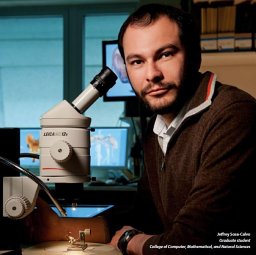 Jeffrey Sosa-Calvo合作论文数Maryland Center for Systematic Entomology;Department of Entomology;University of Maryland;Maryland Center for Systematic Entomology, University of Maryland31
 Sean Brady合作论文数Department of Microbiology and Immunology, Weill Cornell Medical College;Laboratory of Genetically Encoded Small Molecules, The Rockefeller University21
 Ulrich Mueller合作论文数Department of Integrative Biology, School of Biological Sciences, College of Natural Sciences, University of Texas at Austin18
 Ana Jesovnik合作论文数Smithsonian Inst, Dept Entomol, Natl Museum Nat Hist, NHB 169, Washington, DC 20560 USA17
 Christian Rabeling合作论文数Sect Integrat Biol, Univ Texas Austin14
 Maurício Bacci合作论文数UNESP, Univ Estadual Paulista13
 Heraldo L. Vasconcelos合作论文数Instituto de Biologia, Universidade Federal de Uberlandia13
 Rachelle Adams合作论文数11
 Philip S. Ward合作论文数Department of Entomology and Nematology, University of California, Davis11
 Cameron Currie合作论文数Department of Bacteriology, University of Wisconsin-Madison10
 Jacobus J. Boomsma合作论文数Section for Ecology and Evolution, Department of Biology, University of Copenhagen9Jones Tappey H合作论文数8
 Branstetter Michael G合作论文数8
 Michael W. Lloyd合作论文数8
 Brian L. Fisher合作论文数Department of Entomology, California Academy of Sciences;San Francisco State University;Madagascar Biodiversity Center7
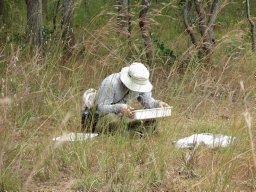 John S. Lapolla合作论文数Department of Entomology NHB, Smithsonian Institution7
 Cody Raul Cardenas合作论文数6
 Andre Rodrigues合作论文数6Amy Rongyan Luo合作论文数5
 Scott Solomon合作论文数Department of Biosciences, Wiess School of Natural Sciences, Rice University5Fernando Fernández合作论文数4
 Agosti Donat合作论文数Plazi;Division of Inverterbrate Zoology, American Museum of Natural History;Institute for Environmental Analysis and Development, Los Angeles;Naturhistorisches Museum der Burgergemeinde Bern;Center for Tropical Studies, University of California, Los Angeles4
 Guojie Zhang (张国捷)合作论文数Center for Evolutionary & Organismal Biology, School of Medicine, Zhejiang University4Lopes Cauê T合作论文数4Wilkerson Richard C合作论文数4
 Palle Villesen合作论文数Bioinformatics Research Centre, University of Aarhus4Leeanne Alonso合作论文数4Mam Sallum合作论文数3
 Karen Neves合作论文数3
 Jonathan Z. Shik合作论文数Department of Biology, Faculty of Science, University of Copenhagen3
 Gary Churchill合作论文数Graduate School of Biomedical Sciences, Genetics, Molecular and Cellular Biology, The Jackson Laboratory, Tufts University;School of Medicine, Developmental, Molecular and Chemical Biology, Tufts University3Rehner Stephen A合作论文数3
 James Wetterer合作论文数Wilkes Honors College, Florida Atlantic University3
 William T. Wcislo合作论文数Smithsonian Tropical Research Institute3
 Jonathan Majer合作论文数Faculty of Science and Engineering, Curtin University3
 Blaimer Bonnie B合作论文数Department of Entomology, Smithsonian Institution3
 John Longino合作论文数School of Biological Sciences, University of Utah3
 Michael S. Engel合作论文数Department of Geology, University of Kansas;American Museum of Natural History3
 Nicole Gerardo合作论文数Graduate Division of Biological and Biomedical Sciences, Department of Biology, College of Arts and Sciences, Emory University3
 Rodrigo Machado Feitosa合作论文数Museu de Zoologia;Universidade de São Paulo;Museu de Zoologia, Universidade de São Paulo3
 Morten Schiott合作论文数3Anna G Himler合作论文数2Rmm Adams合作论文数2
 Henrik Hjarvard de Fine Licht合作论文数Department of Plant and Environmental Sciences, Exercise and Sports, Faculty of Science, University of Copenhagen2
 David Richard Nash合作论文数Department of Biology, Faculty of Science, University of Copenhagen2
 Jason L. Williams合作论文数Entomol & Nematol Dept, Univ Florida2
 Caio A Leal-Dutra合作论文数Department of Biology, University of Copenhagen2Caitlin M. Carlson合作论文数Univ Wisconsin, Dept Bacteriol, Madison, WI 53706 USA2
 Jacques H C Delabie合作论文数Entomology Section, Cocoa Research Centre;Departamento de Ciências Agrárias e AMbientais, State University of Santa Cruz2




