Mobile devices are increasingly used for social networking applications, which share data between devices belonging to different users. Today, such applications are implemented as centralized services, forcing users to trust corporations with their personal data. Although decentralized designs for such applications can provide privacy, these designs are difficult to achieve on current devices due to constraints on connectivity, energy, and bandwidth. Contrail is a communication platform that allows decentralized social networks to overcome these challenges. In Contrail, users install content filters that express their interests on their friends' devices; they subsequently receive new data generated by their friends that match the filters. Both data and filters are exchanged between devices via cloud-based relays in encrypted form, giving the cloud no visibility into either. In addition to providing privacy, Contrail enables applications that are highly efficient in terms of both energy and bandwidth.
A string of recent attacks against the global public key infrastructure (PKI) has brought to light weaknesses in the certification authority (CA) system. In response, the CA/Browser Forum, a consortium of certification authorities and browser vendors, published in 2011 a set of requirements applicable to all certificates intended for use on the Web and issued after July 1st, 2012, following the successful adoption of the extended validation guidelines in 2007. We evaluate the actual level of adherence to the CA/Browser Forum guidelines over time, as well as the impact of each violation, by inspecting a large collection of certificates gathered from Web crawls. We further refine our analysis by automatically deriving profile templates that characterize the makeup of certificates per issuer. By integrating these templates with violation statistics, we are able to depict the practices of certification authorities worldwide, and thus to monitor the PKI and proactively detect major violations. Our method also provides new means of assessing the trustworthiness of SSL certificates used on the Web.
Distributed systems are easier to build than ever with the emergence of new, data-centric abstractions for storing and computing over massive datasets. However, similar abstractions do not exist for storing and accessing meta-data. To fill this gap, Tango provides developers with the abstraction of a replicated, in-memory data structure (such as a map or a tree) backed by a shared log. Tango objects are easy to build and use, replicating state via simple append and read operations on the shared log instead of complex distributed protocols; in the process, they obtain properties such as linearizability, persistence and high availability from the shared log. Tango also leverages the shared log to enable fast transactions across different objects, allowing applications to partition state across machines and scale to the limits of the underlying log without sacrificing consistency.
With the advent in the 1980's of truly global hierarchical naming (via the Domain Name Service), security researchers realized that the trust relationships needed to authenticate principals would often not follow the naming hierarchy [1,13]. The most successful non-hierarchical authentication schemes are based on X.509 and RFC 5280, as used for example in TLS and Authenticode. These are extremely widely deployed, and are trusted for most people's everyday use of the Internet. Unfortunately several incidents in the last few years have proved that this trust is misplaced [9,14]. We explore the weaknesses of this machinery, helped by a large database of X.509 certificates, and we offer an analysis technique and a suggestion for how the trust could be enhanced.
The basic block I/O interface used for interacting with storage devices hasn't changed much in 30 years. With the advent of very fast I/O devices based on solid-state memory, it becomes increasingly attractive to make many devices directly and concurrently available to many clients. However, when multiple clients share media at fine grain, retaining data consistency is problematic: SCSI, IDE, and their descendants don't offer much help. We propose an interface to networked storage that reduces an existing software implementation of a distributed shared log to hardware. Our system achieves both scalable throughput and strong consistency, while obtaining significant benefits in cost and power over the software implementation.
Coordination services provide the means for distributed applications to share resources. Many coordination services provide a hierarchical namespace with strongly consistent semantics that applications utilize to build basic primitives such as locks and queues. In this paper, we explore a fresh approach which uses a shared log as a flexible, raw substrate for implementing coordination primitives. We show that we can reduce an existing coordination service, ZooKeeper, to use a shared log, and show that a shared log offers benefits such as high performance and dynamic reconfigurability. Our design comprises several desirable properties that were recently introduced as enhancements to ZooKeeper, such as reconfiguration and client scale-out.
CORFU is a global log which clients can append-to and read-from over a network. Internally, CORFU is distributed over a cluster of machines in such a way that there is no single I/O bottleneck to either appends or reads. Data is fully replicated for fault tolerance, and a modest cluster of about 16--32 machines with SSD drives can sustain 1 million 4-KByte operations per second. The CORFU log enabled the construction of a variety of distributed applications that require strong consistency at high speeds, such as databases, transactional key-value stores, replicated state machines, and metadata services.
Coordination services provide the means for distributed applications to share resources. Many coordination services provide a hierarchical namespace with strongly consistent semantics that applications utilize to build basic primitives such as locks and queues. In this paper, we explore a fresh approach which uses a shared log as a flexible, raw substrate for implementing coordination primitives. We show that we can reduce an existing coordination service, ZooKeeper, to use a shared log, and show that a shared log offers benefits such as high performance and dynamic reconfigurability. Our design comprises several desirable properties that were recently introduced as enhancements to ZooKeeper, such as reconfiguration and client scale-out.
CORFU organizes a cluster of flash devices as a single, shared log that can be accessed concurrently by multiple clients over the network. The CORFU shared log makes it easy to build distributed applications that require strong consistency at high speeds, such as databases, transactional key-value stores, replicated state machines, and metadata services. CORFU can be viewed as a distributed SSD, providing advantages over conventional SSDs such as distributed wear-leveling, network locality, fault tolerance, incremental scalability and geo-distribution. A single CORFU instance can support up to 200K appends/sec, while reads scale linearly with cluster size. Importantly, CORFU is designed to work directly over network-attached flash devices, slashing cost, power consumption and latency by eliminating storage servers.
research-article Share on From paxos to CORFU: a flash-speed shared log Authors: Dahlia Malkhi Microsoft Research, Silicon Valley Microsoft Research, Silicon ValleyView Profile , Mahesh Balakrishnan Microsoft Research, Silicon Valley Microsoft Research, Silicon ValleyView Profile , John D. Davis Microsoft Research, Silicon Valley Microsoft Research, Silicon ValleyView Profile , Vijayan Prabhakaran Microsoft Research, Silicon Valley Microsoft Research, Silicon ValleyView Profile , Ted Wobber Microsoft Research, Silicon Valley Microsoft Research, Silicon ValleyView Profile Authors Info & Claims ACM SIGOPS Operating Systems ReviewVolume 46Issue 1January 2012 pp 47–51https://doi.org/10.1145/2146382.2146391Online:16 February 2012Publication History 12citation290DownloadsMetricsTotal Citations12Total Downloads290Last 12 Months11Last 6 weeks3 Get Citation AlertsNew Citation Alert added!This alert has been successfully added and will be sent to:You will be notified whenever a record that you have chosen has been cited.To manage your alert preferences, click on the button below.Manage my AlertsNew Citation Alert!Please log in to your account Save to BinderSave to BinderCreate a New BinderNameCancelCreateExport CitationPublisher SiteGet Access
In this paper, we describe the design and use of Cimetric, a file synchronization application that supports scholarly collaboration. The system design incorporates results of earlier studies that suggest replicating content on a user's personal devices may have different characteristics than replicating content to share it with collaborators. To realize this distinction, Cimetric performs bi-level synchronization: it synchronizes local copies of a versioned repository among collaborators' computers, while it separately synchronizes private working files between each user's personal devices. Through a year's worth of in-house use of Cimetric in a variety of configurations, we were able to investigate key file synchronization issues, including the role of cloud storage given the ability to sync between peers; the strengths and weaknesses of a bi-level design; and which aspects of the synchronization process to reveal to users.
Flash storage is making inroads into data centers, enabling a new class of applications that require persistence as well as extreme performance. Clusters of flash can satisfy millions of I/Os per second at sub-millisecond latencies while consuming significantly less power than disk clusters. Unfortunately, current designs for scalable storage systems are predicated on the properties of hard disks, and can be inefficient or unreliable when used with flash clusters. New abstractions are required to fully realize the potential of flash clusters. We drew foundational lessons from designing Falcon, a new transactional storage cluster which works at the speed of flash. In this keynote, we describe the challenges and design choices we made.
Mobile devices are increasingly used for social networking applications, where data is shared between devices belonging to different users. Today, such applications are implemented as centralized services, forcing users to trust corporations with their personal data. While decentralized designs for such applications can provide privacy, they are difficult to achieve on current devices due to constraints on connectivity, energy and bandwidth. Contrail is a communication platform that allows decentralized social networks to overcome these challenges. In Contrail, a user installs content filters on her friends' devices that express her interests; she subsequently receives new data generated by her friends that match the filters. Both data and filters are exchanged between devices via cloud-based relays in encrypted form, giving the cloud no visibility into either. In addition to providing privacy, Contrail enables applications that are very efficient in terms of energy and bandwidth.
CONFIGURAcaO DE EXTENSoES ISOLADAS E ACIONADORES DE DISPOSITIVO Descritas aqui estao uma ou mais implementacoes para descrever e/ou abordar as exigencias de configuracao de aplicacoes, extensoes, acionadores de dispositivo (300) , e outros componentes de um sistema de software.
Flash storage is making inroads into data centers, enabling a new class of applications that require persistence as well as extreme performance. Clusters of flash can satisfy millions of IOs per second at submillisecond latencies while consuming significantly less power per IO than disk clusters. Unfortunately, current designs for scalable storage systems are predicated on the properties of hard disks, and can be inefficient or unreliable when used with flash clusters. For example, replacing hard disks in high-end servers with expensive PCI-E flash drives (e.g., Fusion-io [10]) can result in a rigid architecture which is hard to scale incrementally and may be susceptible to network bottlenecks. Furthermore, scaling techniques such as data partitioning (e.g., FAWN [2]) can age drives at difference rates, resulting in uneven reliability and performance across the cluster. The upshot is that new abstractions are required to fully realize the potential of flash clusters. Accordingly, Corfu1 is a new storage system for flash clusters. The key idea in Corfu is to expose a cluster of network-attached flash devices as a single, shared log to clients running within the data center. Applications running on the clients can append data to this log or read entries from its middle. Internally, this shared log is implemented as a distributed log spread over the flash cluster. This design makes sense for two reasons:
We present Griffin, a hybrid storage device that uses a hard disk drive (HDD) as a write cache for a Solid State Device (SSD). Griffin is motivated by two observations: First, HDDs can match the sequential write bandwidth of mid-range SSDs. Second, both server and desktop workloads contain a significant fraction of block overwrites. By maintaining a log-structured HDD cache and migrating cached data periodically, Griffin reduces writes to the SSD while retaining its excellent performance. We evaluate Griffin using a variety of I/O traces from Windows systems and show that it extends SSD lifetime by a factor of two and reduces average I/O latency by 56%.
Collaborative applications running on 3G devices often rely on cloud-based servers for computation and storage. A peerto-peer approach to building these applications can provide benefits such as enhanced privacy and bandwidth efficiency. We propose Contrail, an asynchronous network architecture that uses the cloud to relay messages between 3G devices. Contrail employs selective receiver-specific filters at sending devices to ensure that only relevant data consumes precious bandwidth. Our framework offers pull-based communications primitives suitable for mobile devices that are often either inactive or subject to poor network connectivity. Contrail enables robust mobile applications without making assumptions about the security of individual cloud providers. We have implemented Contrail within Windows Azure and demonstrate several sample applications executing across Windows Mobile devices.
 Vijayan Prabhakaran合作论文数Databricks14
 John D. Davis合作论文数11
 Dahlia Malkhi合作论文数Department of Computer Science, University of California, Santa Barbara;Chainlink Labs;Espresso Systems11
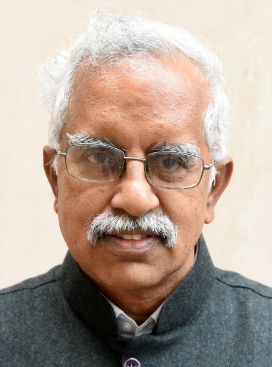 M. Balakrishnan合作论文数Department of Computer Science and Engineering, Indian Institute of Technology Delhi10
 Douglas Terry合作论文数Amazon Web Services10
 Martín Abadi合作论文数Department of Computer Science and Engineering, Baskin School of Engineering, University of California, Santa Cruz;Google9Venugopalan Ramasubramanian合作论文数8
 Andrew Birrell合作论文数Microsoft Research8
 Mahesh Balakrishnan合作论文数Confluent7
 Michael Wei合作论文数University of California, San Diego5Thomas Lee Rodeheffer合作论文数5
 Patrick Stuedi合作论文数IBM Research4
 David Tarditi合作论文数IonQ4
 Catherine C. Marshall合作论文数Department of Computer Science and Engineering, College of Engineering, Texas A&M University4
 Galen Hunt合作论文数Microsoft4
 James R. Larus合作论文数School of Computer and Communication Sciences, Ecole Polytechnique Federale de Lausanne4steven p levi合作论文数3
 Z. Morley Mao (茅斫青)合作论文数Department of Electrical Engineering and Computer Science, College of Engineering, University of Michigan;Michigan Institute for Data Science, University of Michigan3
 Yinglian Xie合作论文数DataVisor, Inc.3
 Chris Hawblitzel合作论文数Systems Research Group, Microsoft Research3Mark Aiken合作论文数3
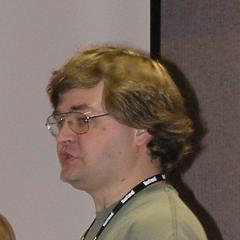 Bjarne Steensgaard合作论文数Microsoft Research3
 Orion Hodson合作论文数Microsoft Research (UK).3
 Iqbal Mohomed合作论文数Multimodal Situational Awareness Lab, Samsung AI Centre Toronto3
 Murphy Nick合作论文数Department of Astronomy, Harvard University2
 Ilya Mironov合作论文数Meta2
 Meg Walraed-Sullivan合作论文数University of California, San Diego2Brian Zill合作论文数Microsoft Corporation2
 Paul Barham合作论文数Google DeepMind2
 Úlfar Erlingsson合作论文数Google2
 Manuel Fahndrich合作论文数Meta2eliot c gillum合作论文数1Mike Burrows合作论文数1Tao Zou合作论文数1Rama Ramasubramanian合作论文数1michael b ribet合作论文数1
 Ming Wu (伍鸣)合作论文数0G1
 Kaushik Veeraraghavan合作论文数Meta1
 Amin M. Vahdat合作论文数Google;Department of Computer Science and Engineering, University of California San Diego1
 Tom Roeder合作论文数Google1Fang Yu合作论文数1
 Antoine Delignat-Lavaud合作论文数Microsoft1
 Rina Panigrahy合作论文数Google1
 Michael Isard合作论文数Google DeepMind1
 Nitin Agrawal合作论文数Storage Systems group at NEC Labs in Princeton1
 Gokul Soundararajan合作论文数Amazon Web Services1
 Ramakrishna Kotla合作论文数Amazon1
 Krishna P. N. Puttaswamy合作论文数Science Department, Computer1
 Moises Goldszmidt合作论文数Apple1




