The Space PlasmA Diagnostic suitE (SPADE) instrument, developed by the U.S. Naval Research Laboratory (NRL), is a plasma impedance probe designed to monitor background space plasma conditions and provide early warning of the onset of hazardous levels of spacecraft charging. The NRL SPADE-3 experiment is the next generation instrument and was launched to the International Space Station in April 2025 as part of the Department of Defense Space Test Program’s STP-H10 mission. The SPADE-3 experiment consists of an active dipole antenna used to excite the local plasma. The probe is swept across a range of frequencies and DC voltage biases to determine the plasma impedance spectrum. The impedance measurements yield properties of the plasma, such as density, plasma potential, and electron temperature, while also providing data indicating the charging level of the ISS relative to the local plasma. SPADE responds to slight changes in the plasma sheath that forms around a charged object, providing a unique method for the early detection of charging. Upgrades from the SPADE-2 instrument and the initial SPADE-3 measurements of ionospheric plasma parameters, ISS charging, and comparisons to measurements made using other in situ and ground-based diagnostics will be presented.
Localized transverse electric fields are known to arise in the near-Earth plasma environment. These fields can induce plasma flows perpendicular to the ambient magnetic field and the resulting sheared flow layers can support a variety of plasma instabilities [1]. These phenomena have been the topic of extensive theoretical and experimental study both at the Naval Research Laboratory (NRL) and within the broader scientific community. Numerous laboratory experiments have been performed in the Space Physics Simulation Chamber (SPSC) at NRL to study both the associated transverse velocity shear-driven instabilities [2] and, more recently, soliton generation by object immersed in these flows. Traditionally, these experiments have utilized cylindrical ExB flows produced by applying a radial electric field within a larger uniform domain of axial magnetic field. The resulting flow profiles have been determined indirectly from electric field measurements within the flow layer [3]. Recently, experiments have been performed in the SPSC to directly map the velocity distribution function (VDF) in cylindrical flow regions using laser induced fluorescence (LIF). Two co-axial arrays of concentric mesh rings are used to establish a cylindrical domain of plasma flow within the SPSC. The rings are sequentially biased so as to induce a constant radial electric field. The well-known 668.6138 nm Ar II LIF scheme beginning with the $3 \mathrm{~d}^{4} \mathrm{~F}_{7 / 2}$ metastable state [4] is used to measure the VDF of argon ions, while laser injection and fluorescence collection are implemented using in-vacuum optics mounted to a linear positioning system with mutual focal points aligned to $\sim 1 \mathrm{~mm}$ spatial resolution. The flow velocity is mapped as a function of both z and r, as well as with respect to the applied electric and magnetic fields. Preliminary results are compared to the flow velocity predicted indirectly via emissive probe measurements of the electric field, and ramifications of the chosen geometry are discussed.
The near-Earth space environment is growing ever more cluttered and has led to an exponential growth of orbital debris. Collisions with these objects traveling at orbital speeds has resulted in serious malfunctions or the disabling of satellite systems. Orbital debris down to a cm are catalogued and tracked to aid in collision avoidance. However, NASA reports that a collision with an object as small as a millimeter traveling at orbital speeds can be mission ending. Consequently, there has been a concerted effort to develop innovative detection techniques that can track the multitude of sub-centimeter sized debris and provide enough warning time for a satellite to react.
This abstract presents a supervised deep learning framework, centered on a Convolutional Neural Network (CNN), trained to identify and classify simulated orbital debris using electron saturation Langmuir probe data obtained from the Space Physics Simulation Chamber (SPSC) [1]. The CNN is capable of analyzing both spatial (from moving the probe) and temporal information (from leaving the probe at one place), the model achieved a detection accuracy of over 99% able to determine the presence of debris generated signatures or the absence (determined by a low probe voltage) on a training set of 1550784 samples (80%) and a test set of 387696 (20%) events.
We present detailed observations of bursting wave behavior at f≃fpe/2 driven by an electron beam in a laboratory plasma, including high-time-resolution measurements of the wave bursts' interaction with the electron beam. A burst of wave activity is observed when a threshold electron beam density relative to the background plasma density is exceeded. Wave bursts varying in their time duration are observed, but the fundamental structure of the bursts appears to be structures with a symmetric time envelope. Wave bursts with amplitudes large enough to substantially heat the electron beam, disrupt the beam, and eventually trap beam electrons at the phase speed of the waves are observed. These behaviors observed in the laboratory are able to be reproduced via numerical simulations. The laboratory results are applicable to a variety of conditions in space plasmas.
The Space PlasmA Diagnostic suitE (SPADE) instrument, developed by the U.S. Naval Research Laboratory (NRL), is a plasma impedance probe designed to monitor background space plasma conditions and provide early warning of the onset of hazardous levels of spacecraft charging. SPADE operated on the International Space Station (ISS) from May 2019 until November 2021 as part of the Department of Defense Space Test Program's STP-H6 mission. The SPADE experiment consisted of two dipole antennas, one active antenna that is used to excite the local plasma and another passive dipole antenna that observes the excitation. The active probe is swept across a range of frequencies and DC voltage biases to determine the plasma impedance spectrum. The impedance measurements yield properties of the plasma, such as density, plasma potential, and electron temperature, while also providing data indicating the charging level of the ISS relative to the local plasma. SPADE responds to slight changes in the plasma sheath that forms around a charged object, providing a unique method for the early detection of charging. SPADE active dipole measurements of ionospheric plasma parameters, ISS charging, and comparisons to measurements made using other in situ and ground-based diagnostics will be presented.
Excitation of precursor solitons in a flowing plasma is reported. Theoretical studies have suggested that when a charged object moves through a plasma at a speed higher than a threshold, it triggers the periodic formation of ion acoustic solitons. These solitons emerge ahead of the object and propagate faster than the object, thereby giving early warning of the object's approach. In experiments reported here, an E × B flow is created in a plasma that passes over an object to which a surface charge is applied with a square wave voltage pulse. We observe the periodic excitation of precursor solitons that propagate in the upstream direction of the flow. Detection of these solitons in space may enable the tracking of small-scale space debris in the Earth's ionosphere and lower magnetosphere.
The Space Plasma Diagnostic Suite (SPADE) is composed of a Langmuir probe and a plasma impedance probe for high-frequency measurements and measures plasma density and plasma electron temperature in the Earth's ionosphere. A transimpedance amplifier comprises the heart of the Langmuir probe and measures the low-frequency probe current in response to a sawtooth voltage stimulus. The plasma impedance probe uses direct digital synthesis and a pair of gilbert cell mixers to measure the high-frequency probe current and voltage, from which the antenna impedance is derived. Two conductive elements comprise the active surface of the sensor, driven at the same potential for Langmuir probe measurements and used as a short dipole antenna for impedance probe measurements.
The mechanisms that control magnetospheric whistler wave generation have been investigated by ground based VLF ($3-30 \mathrm{kHz}$) wave-injection experiments such as at Siple Station and HAARP. Coherent signals were shown to routinely trigger the generation of new coherent waves known as “triggered emissions”. VLF triggered emissions are long-lived, many times the length of the triggering signal, and exhibit spectral characteristics that closely resemble natural magnetospheric chorus waves. These controlled injection experiments have produced a wealth of data, but at the same time, comparison of this dataset to theory is difficult since the ground observations are at the end of the interaction region, giving access only to cumulative effects of the wave-particle interaction.
Plasma impedance probes measuring the self-impedance of the antenna-plasma system have been shown to provide accurate measurements of electron plasma density for space and laboratory plasmas. Plasma impedance probes measuring the mutual-impedance between two antennas and a plasma dielectric have been successfully flown on sounding rockets and satellites to measure electron flows. At the US Naval Research Laboratory, we have recently developed a noninvasive method for generating real-time images of plasma density and magnetic field. The method consists of measurements of the complex self- and mutual-impedance between elements of an antenna array. The impedance spectra are collected after a short pulse has been applied to each element in sequence. These spectra provide path-dependent information about the plasma dielectric that are used to reconstruct images of plasma density and magnetic field. Numerical models have been developed to predict the expected antenna measurements from an arbitrary spatial dielectric map. These forward models are used to approximate the Jacobian of the system, which can be used in single step or iterative reconstruction methods. The goal of this project is to develop a system capable of providing tomographic reconstructions at a rate of approximately 1% of the peak plasma frequency of the system. The forward models, reconstruction algorithm, and antenna array construction will be presented as well as initial air and plasma experimental results.
Plasma impedance probes measure the impedance spectrum of an antenna immersed in a plasma. The 1964 work of Balmain remains the standard method to interpret these data, using the peak in the magnitude at the upper-hybrid frequency to infer plasma electron density. The primary limitations of Balmain's model are the assumption of a homogenous plasma and a cylindrical dipole. This work presents a numerical model applicable to inhomogeneous plasma and arbitrary antenna geometry based on the cold, fluid approximation given by Balmain. This model solves Poisson's equation using the finite element method and accounts for the effects of the dipole using the plasma complete electrode model (PCEM). The PCEM is developed in this article and accounts for the voltage shunting effects of the dipole elements, the discrete current to the dipole, and the plasma sheath surrounding the dipole. The sheath is incorporated as a contact impedance between the dipole and the plasma in a manner analogous to the complete electrode model of electrical impedance tomography. The first portion of this paper presents the mathematical framework of the PCEM, starting from Maxwell's equations. The second part of the paper compares the output of this numerical method to Balmain's work and to data collected by an impedance probe in the Space Physics Simulation Chamber at the U.S. Naval Research Laboratory. The PCEM results agree with both the observed data and the prior modeling done by Balmain. An additional consequence of the numerical study is the observation that some second-order resonances not predicted by Balmain's model can be attributed to the presence of the plasma sheath.
Plasma impedance probes (PIPs) are a type of RF probe that primarily measures electron density. This work introduces two advancements: a streamlined analytical model for interpreting PIP-monopole measurements and techniques for achieving ≥1 MHz time-resolved PIP measurements. The model's improvements include introducing sheath thickness as a measurement and providing a more accurate method for measuring electron density and damping. The model is validated by a quasi-static numerical simulation, which compares the simulation with measurements, identifies sources of error, and provides probe design criteria for minimizing uncertainty. The improved time resolution is achieved by introducing higher-frequency hardware, updated analysis algorithms, and a more rigorous approach to RF calibration. Finally, the new model and high-speed techniques are applied to two datasets: a 4 kHz plasma density oscillation resolved at 100 kHz with densities ranging between 2 × 10¹⁴ and 3 × 10¹⁵ m-3, and a 150 kHz oscillation resolved at 4 MHz with densities ranging between 4 × 10¹⁴ and 6 × 10¹⁴ m-3.
A unique feature of whistler chorus wave observations is the power gap at frequencies near half the electron gyrofrequency, which is observed approximately 2/3 of the time. 1 Additionally, some of these observations have multiple power gaps, which are typically oblique chorus waves. 2 A variety of theories have been developed over the decades to explain these power gaps, including excitation by two separate electron populations, 3 damping due to nonlinear wave-particle interactions, 2 , 4 and lower band cascade generating the upper band through coupling between electrostatic and electromagnetic components of lower band waves. 5 Recently, Gao et al . 5 published a statistical survey of the whistler chorus power gap using seven years of chorus observations from THEMIS. The results of the survey are that the theories involving damping due to nonlinear wave-particle interactions are the most consistent with the observations, but that they do not each explain all the observations. This led the authors to conclude that the power gaps may be a result of a combination of mechanisms or may require new mechanisms. We are currently conducting laboratory experiments coupled with numerical simulations to test the theories most consistent with observations: nonlinear Landau damping and nonlinear sub-cyclotron damping.
Half a century of human exploration and exploitation of the near-earth space environment has resulted in an exponential growth of orbital debris, which now threatens assured continuous access to space. Serious malfunction or disabling of critical on-orbit satellite systems or sensors can result from a collision with a debris fragment traveling at hypervelocity speeds. Hence, collision avoidance with orbital debris is essential for survival of satellites. Optical tracking of the small sub-centimeter size debris is difficult at best, but according to NASA, a collision with even a millimeter-size debris at orbital speed is mission ending. Therefore, innovative detection techniques are needed for accurate tracking of the debris distribution and timely implementation of collision avoidance maneuvers to protect satellites.
Plasma impedance probes are often used in laboratory experiments as well as in space to make measurements of important plasma parameters such as the electron density. Conventional impedance probe methods involve sweeping the frequency applied to the probe through a range containing the plasma frequency, which can take on the order of a second to complete. This acquisition time leads to very low spatial resolution when making measurements from sounding rockets in the ionosphere. A high-time resolution impedance probe is under development at the U.S. Naval Research Laboratory with the goal of increasing the spatial resolution of measurements in space. To achieve this, a short-time Gaussian monopulse with a center frequency of 40 MHz and containing a full spectrum of frequencies is applied to an electrically short dipole antenna. Laboratory experiments were performed with the Gaussian monopulse triggered once every 10 µs and averaged over ten shots, equating to a spatial resolution of 13 cm for a typical sounding rocket speed. This paper discusses the development of the new high-time/spatial resolution self-impedance probe and illustrates that the short-time pulse method yields results that match well with data taken using conventional methods. It is shown that plasma parameters such as the electron density, sheath frequency, and electron–neutral collision frequency can also be derived from the data. In addition, data from the high-time/spatial resolution impedance probe are shown to compare well with those from theoretical impedance models.
 Crabtree, Chris合作论文数Plasma Physics Division, Naval Research Laboratory;c;Plasma Physics Division, Naval Research Laboratory43
 William E Amatucci合作论文数29
 Gurudas I. Ganguli合作论文数24
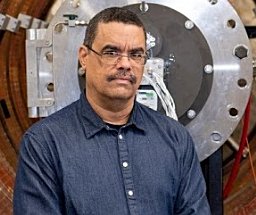 David D. Blackwell合作论文数Department of Geological Sciences;Southern Methodist University;Department of Geological Sciences, Southern Methodist University21Bill Amatucci合作论文数20G. Ganguli合作论文数20
 George Gatling合作论文数16
 William E. Amatucci合作论文数14
 DuBois, A.M.合作论文数Auburn Univ.;c;Auburn Univ.13C. D. Cothran合作论文数13C. Lon Enloe合作论文数10
 D. N. Walker合作论文数10C. L. Enloe合作论文数9L. Rudakov合作论文数8Alex C. Fletcher合作论文数8
 Gillman, E.D.合作论文数Dept. of Nucl. Eng. & Radiol. Sci., Univ. of Michigan;c;Dept. of Nucl. Eng. & Radiol. Sci., Univ. of Michigan7
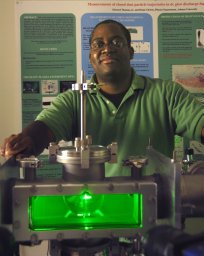 Edward Thomas合作论文数Dept Phys, Auburn Univ7
 Jose Martin Taccetti合作论文数7W. J. Waganaar合作论文数6
 Thomas Intrator合作论文数Los Alamos National Laboratory6Ashley Eadon合作论文数6christopher douglas cothran合作论文数5Vladimir Sotnikov合作论文数5
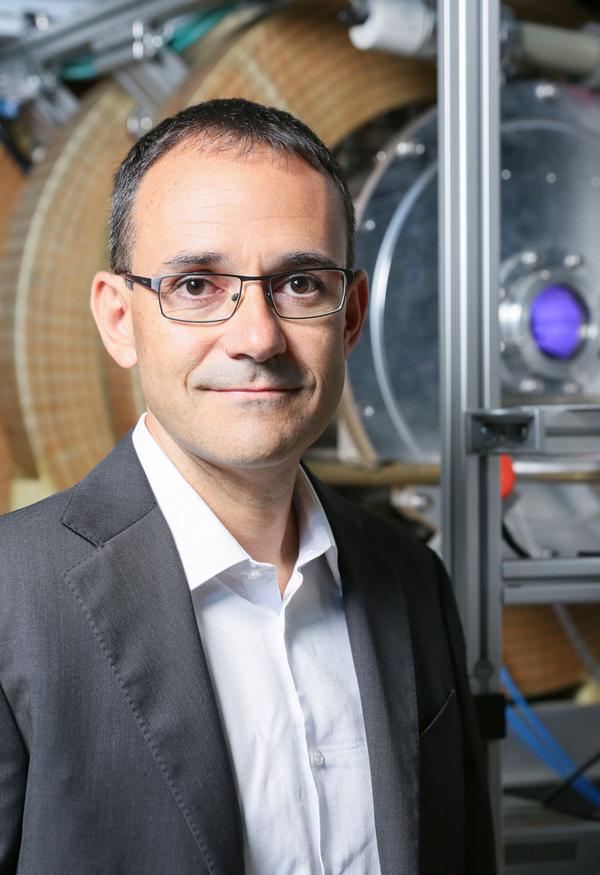 Ivo Furno合作论文数Swiss Plasma Center, School of Basic Sciences, Ecole Polytechnique Fédérale de Lausanne5George R. Gatling合作论文数4
 Manish Jay Mithaiwala合作论文数4
 Glen Wurden合作论文数Los Alamos National Laboratory4
 Christopher A. Grabowski合作论文数4
 Edward L. Ruden合作论文数4
 Christopher S. Compton合作论文数3
 David Malaspina合作论文数Department of Astrophysical and Planetary Sciences, College of Arts and Sciences, University of Colorado Boulder3
 Scott C. Hsu合作论文数Lowercarbon Capital3GA Wurden合作论文数2Guru Ganguli合作论文数2Royce James合作论文数2stephen c y hsu合作论文数2R.J. Maqueda合作论文数2Richard Freeman合作论文数2
 Vijay Harid合作论文数2
 Shouyin Zhang合作论文数2
 Mehlhorn T A合作论文数sandia national laboratories2
 Fred Skiff合作论文数2
 M. Tuszewski合作论文数2Matthew C. Langner合作论文数2
 Wayne A. Scales合作论文数Department of Electrical and Computer Engineering;Virginia Polytechnic Institute, State University;Department of Electrical and Computer Engineering, Virginia Polytechnic Institute and State University2K. J. Scott合作论文数2P. N. Assmus合作论文数2
 Carl L. Siefring合作论文数2




