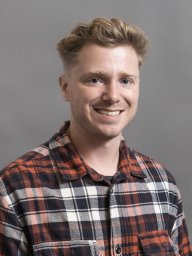
Fragments of a Map explores the journey towards completion for two women. Their journey is mirrored in the narrative by the women’s attempt to unravel the provenance of the Vinland Map. Central to the narrative is the question: “Is the Vinland Map a valuable 15th century map or a clever forgery?” The novel, through its concerns and structure, plays with the notion of research in the creative arts. This exegesis comments upon the concerns of the novel, and the writing and research processes.
Paris is burning. They riot in the streets. My daughter tells me she has begun work on a documentary critiquing the government’s new sedition laws - we both know the danger. Would they dare arrest the film makers? The phones are playing up - too many noises, clunks, echoes, static: are they being bugged, again? This is Australia. This is 2005…
The Australian/Vogel Literary Award, administered by the Australian publishers, Allen and Unwin, is a privately sponsored major Australian literary award for young writers. It has been operating for over 20 years and in that time has, I will argue, greatly enhanced the literary community of Australia. The preliminary results of the study illustrate the importance of such awards in the development of Australia’s literary cultural industry and further indicate the pressing need for the collation of data associated with literary awards and government grants and assistance.
This paper was delivered at the Centre for Professional and Public Communication,University of South Australia, Crime Colloquium, 20 April 2001.
In this paper I wish to draw together two on-going debates which are being played out, at least in part, in TEXT. These debates concern the nature of research for the discipline of Creative Writing and those dealing with problems associated with awarding and assessing research higher degrees - MAs, MA(Hons), MPhils and PhDs. In particular I wish to suggest that the combination of these two debates sheds considerable light on the nature and role of the research higher degree’s exegesis which accompanies the creative product.
This paper explores some of the challenges facing writers working in hypertext. It does so by focussing on a third year creative arts student project, led by the CD ROM artist Richard Jones. The project produced the CD ROM Artyfact. .
Writing seeks extremes, any extremes; beauty, awe, structure or lack thereof, enormous weight or lightness, expense or economy, detail, complexity, uniqueness - the ideals it can’t always attain. It is a turning away from the realistic representation of a known reality. But that reality must first be known: its bones and tissue, the lump and foundation of it, the cell and sinew. You must first inhale it and breathe through it. You must enter the library.
Note: Still extant on the old TEXT site for this issue, was the Index (or List of Articles by Author) which continued to be updated until 2010 - at which time a Google Search box was introduced on the TEXT home page. Originally, two indexes were provided - one alphabetical by title of article, and the one included here - by author. For the historical record, the Index is reproduced here.