We propose an effective framework for multi-phase image segmentation and semi-supervised data clustering by introducing a novel region force term into the Potts model. Assume the probability that a pixel or a data point belongs to each class is known a priori. We show that the corresponding indicator function obeys the Bernoulli distribution and the new region force function can be computed as the negative log-likelihood function under the Bernoulli distribution. We solve the Potts model by the primal-dual hybrid gradient method and the augmented Lagrangian method, which are based on two different dual problems of the same primal problem. Empirical evaluations of the Potts model with the new region force function on benchmark problems show that it is competitive with existing variational methods in both image segmentation and semi-supervised data clustering.
Rafael Molina Departamento de Ciensas de la Computacion e I. A., Universidad de Granada, Granada, Spain e-mail: rms@decsai.ugr.esImages are ubiquitous and indispensable in science and everyday life. Mirroring the abilities of our own human visual system, it is natural to displayobservations of the world in graphical form. Images are obtained in areas ranging from everyday photography to astronomy, remote sensing, medical imaging, and microscopy. In each case, there is an underlying object or scene we wish to observe; the original or true image is the ideal representation of the observed scene. Yet the observation process is never perfect: there is uncertainty in the mea-surements, occurring as blur, noise, and other degradations in the recorded images. Digital image restoration aims to recover an estimate of the original image from the degraded observations. The key to being able to solve this ill-posed inverse problem is proper incorporation of prior knowledge about the original image into the restoration process. Classical image restoration seeks an estimate of the true image assumingthe blur is known. In contrast, blind image restoration tackles the much more difficult, but realistic, problem where the degradation is unknown. In general, the degradation is nonlinear (including, for example, saturation and quantization) and spatially varying (non-uniform motion, imperfect optics); however, for most of the work, it is assumed that the observed image is the output of a Linear Spatially Invariant (LSI) system to which noise is added. Therefore it becomes a Blind Deconvolution (BD) problem, with the unknown blur represented as a Point Spread Function (PSF). Classical restoration has matured since its inception, in the context of spaceexploration in the 1960s, and numerous techniques can be found in the literature (for recent reviews see [1, 2]). These differ primarily in the prior information about the image they include to perform the restoration task. The earliest algorithms to tackle the BD problem appeared as long ago as the mid-1970s [3,4], and attempted to identify known patterns in the blur; a small but dedicated effort followed through the late 1980s (see for instance [5-9]), and a resurgence was seen in the 1990s (see the earlier reviews in [10, 11]). Since then, the area has been extensively explored by the signal processing, astronomical, and optics communities. Many of the BD algorithms have their roots in estimation theory, linear algebra, and numerical analysis. An important question one may ask is why is BD useful? Could we notsimply use a better observation procedure in the first place? Perhaps, but there always exist physical limits, such as photonic noise, diffraction, or an observation channel outside of our control, and often images must be captured in suboptimal conditions. Also there are existing images of unique events that cannot be retaken that we would like to be able to recover (for instance with forensics or archive footage); furthermore in these cases it is often infeasible to measure properties of the imaging system directly. Another reason is that of cost. High-quality optics and sensing equipment are expensive. However, processing power is abundant today and opens the door to the application of increasingly sophisticated models. Thus BD represents a valuable tool that can be used for improving image quality without requiring complicated calibrations of the real-time image acquisition and processing system (i.e., in medical imaging, video conferencing, space exploration, x-ray imaging, bio-imaging, and so on). The BD problem is encountered in many different technical areas, such asastronomical imaging [12, 13], remote sensing [14], microscopy [15], medical imaging [16], optics [17,18], photography [19,20], superresolution applications [21], and motion tracking applications [22], among others. For example, astronomical imaging is one of the primary applications of BDalgorithms [12,13]. Ground-based imaging systems are subject to blurring due to the rapidly changing index of refractions of the atmosphere. Extraterrestrial observations of the Earth and the planets are degraded by motion blur as a result of slow camera shutter speeds relative to the rapid spacecraft motion.
In tandem with the rise in prominence of university rankings and the internationalization of higher education over the past decade, institutions globally have had to respond to increasing competition for faculty, students, funding and international standing.
We establish theoretical recovery guarantees of a family of Riemannian optimization algorithms for low rank matrix recovery, which is about recovering an $m\times n$ rank $r$ matrix from $p < mn$ number of linear measurements. The algorithms are first interpreted as iterative hard thresholding algorithms with subspace projections. Based on this connection, we show that provided the restricted isometry constant $R_{3r}$ of the sensing operator is less than $C_\kappa /\sqrt{r}$, the Riemannian gradient descent algorithm and a restarted variant of the Riemannian conjugate gradient algorithm are guaranteed to converge linearly to the underlying rank $r$ matrix if they are initialized by one step hard thresholding. Empirical evaluation shows that the algorithms are able to recover a low rank matrix from nearly the minimum number of measurements necessary.
Reconstructing transparent objects is a challenging problem. While producing reasonable results for quite complex objects, existing approaches require custom calibration or somewhat expensive labor to achieve high precision. When an overall shape preserving salient and fine details is sufficient, we show in this paper a significant step toward solving the problem when the object's silhouette is available and simple user interaction is allowed, by using a video of a transparent object shot under varying illumination. Specifically, we estimate the normal map of the exterior surface of a given solid transparent object, from which the surface depth can be integrated. Our technical contribution lies in relating this normal estimation problem to one of graph-cut segmentation. Unlike conventional formulations, however, our graph is dual-layered, since we can see a transparent object's foreground as well as the background behind it. Quantitative and qualitative evaluation are performed to verify the efficacy of this practical solution.
Recently, many variational models using high order derivatives have been proposed to accomplish advanced tasks in image processing. Even though these models are effective in fulfilling those tasks, it is very challenging to minimize the associated high order functionals. In [33], we focused on a recently proposed mean curvature based image denoising model and developed an efficient algorithm to minimize it using augmented Lagrangian method, where minimizers of the original high order functional can be obtained by solving several low order functionals. Specifically, these low order functionals either have closed form solutions or can be solved using FFT. Since FFT yields exact solutions to the associated equations, in this work, we consider to use only approximations to replace these exact solutions in order to reduce the computational cost. We thus employ the Gauss-Seidel method to solve those equations and observe that the new strategy produces almost the same results as the previous one but needs less computational time, and the reduction of the computational time becomes salient for images of large sizes.
this paper with a large-scale example problem that highlights the advantagesof FETI-DP. The following problem is a shell model of a wheel rim composedof over 313856 elements, 156017 nodes, and containing 936, 102 degrees of freedom.Three points were fixed along the inner rim, e#ectively constraining the model. Thena gravity load was applied to the model which was decomposed into 500 subdomains.A DUAL-PRIMAL FETI METHOD 427Figure 4: Finite element model of wheel rimAs one can see, the...
The active contour segmentation model of Chan and Vese has been widely used and generalized in different contexts in the literature. One possible modification is to employ Euler’s elastica as the regularization of active contour. In this paper, we study the new effects of this modification and validate them numerically using the augmented Lagrangian method.
We introduce a framework for outdoor photometric stereo utilizing natural environmental illumination. Our framework extends beyond existing photometric stereo methods intended for laboratory environments to encompass robust outdoor operation in the real world. In this paper, we motivate our framework, describe the components of its processing pipeline, and assess its performance in synthetic experiments as well as in natural experiments including objects in outdoor environments with complex real-world illuminations.
this paper we continue development of the DirichletDirichletpreconditioner [DA99, KV99]. We extend the method to the case of arbitrarytype of Lagrange multiplier space and large jumps of coe#cients. The proposed algorithmpossesses natural parallelism. It is illustrated on a set of numerical experiments.The mortar element method with Lagrange multipliers
this paper is trying to find an e#ective way to remove as many ofthe geologic non-matching grids as possible from the interfaces. The operator splitmethod, not a very new technique, proposed by Douglas and Dupont[JD71], can solvethis problem. Because, for quite a few reservoir problems, thereservoir#can be takento be unions of right prisms. Or,mathematically,#=
In this paper we shall consider the construction of the solution by the method of lines coupled with a fictitious domain for the following Dirichlet problem (1) in a bounded domain Omega of R&sup2;...
 Olivier Pironneau合作论文数Université Pierre-et-Marie-Curie23
 Paul M. Thompson合作论文数Imaging Genetics Center, Lab of Neuro Imaging, Institute for Neuroimaging and Informatics, Keck School of Medicine, University of Southern California21
 Hideo Kawarada合作论文数21
 Takashi Kako合作论文数18
 Yalin Wang合作论文数Department of Neorology;Department of Mathematics17J. Shen合作论文数14
 Xianfeng David Gu合作论文数Department of Computer Science, Stony Brook University;Department of Applied Mathematics, Stony Brook University14
 Shing-Tung Yau (丘成桐)合作论文数Yau Mathematical Sciences Center, Tsinghua University;Department of Mathematics, Harvard University;The Institute of Mathematical Sciences, The Chinese University of Hong Kong13
 Stanley Osher合作论文数Department of Mathematics, University of California, Los Angeles;Institute for Pure and Applied Mathematics, University of California, Los Angeles12
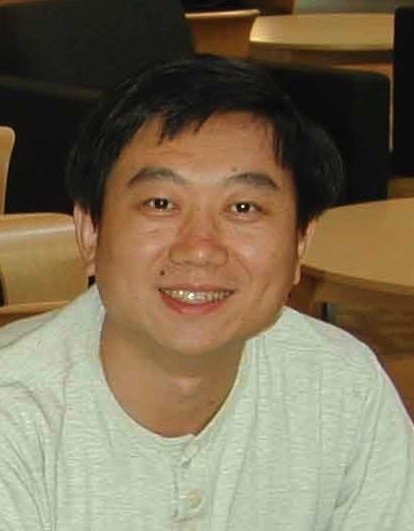 Haomin Zhou合作论文数School of Mathematics, College of Sciences, Georgia Institute of Technology11
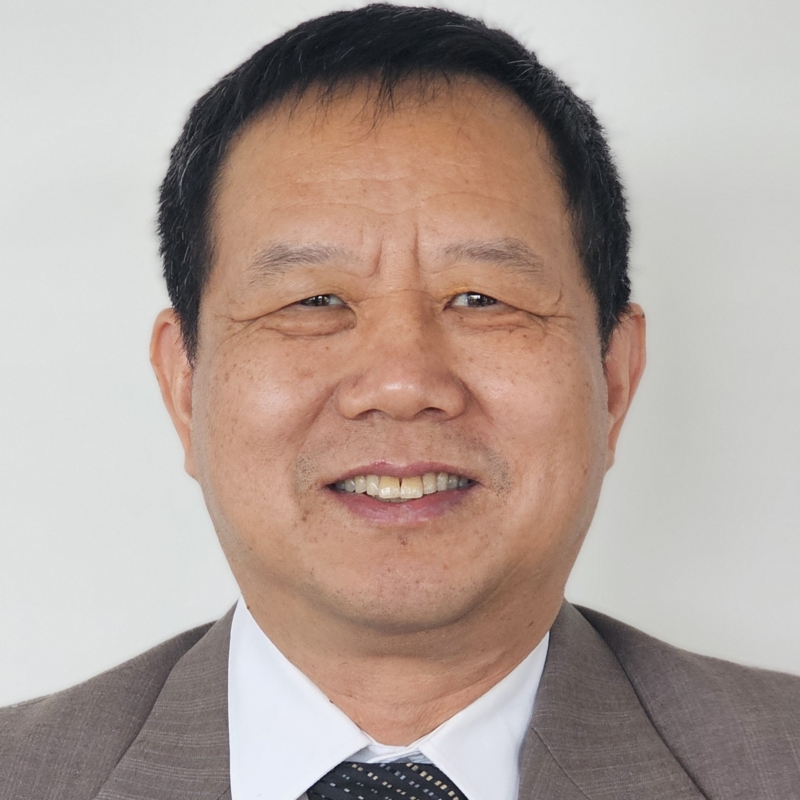 Xue-Cheng Tai (台雪成)合作论文数Norwegian Research Center11
 Ronald Lui合作论文数Center for Mathematical Artificial Intelligence, Department of Mathematics, Faculty of Science, The Chinese University of Hong Kong;The Institute of Mathematical Sciences, The Chinese University of Hong Kong10
 Arthur W. Toga合作论文数Laboratory of Neuro Imaging, Keck School of Medicine, University of Southern California10
 Selim Esedoglu合作论文数Department of Mathematics, College of Literature, Science, and the Arts, University of Michigan8
 Luminita Aura Vese合作论文数Department of Mathematics, University of California, Los Angeles8
 Jason Cong (丛京生)合作论文数VLSI Architecture, Synthesis, and Technology Laboratory, University of California, Los Angeles;Computer Science Department, University of California, Los Angeles7
 Joseph R. Shinnerl合作论文数7Kenton Sze合作论文数7W. L. Wan合作论文数7
 Raymond Chan (陳漢夫)合作论文数Department of Mathematics, City University of Hong Kong6
 Min Xie (謝旻)合作论文数Department of Systems Engineering, College of Engineering, City University of Hong Kong;School of Data Science, City University of Hong Kong6
 Andy M. Yip合作论文数Department of Mathematics, University of California6Pep Mulet合作论文数Departament de Matemítica Aplicada, Universitat de València6Diana C. Resasco合作论文数5
 C.-C. Jay Kuo合作论文数Thomas Lord Department of Computer Science, Viterbi School of Engineering, University of Southern California;Media Communications Lab, Viterbi School of Engineering, University of Southern California5Peter Blomgren合作论文数Department of Mathematics
San Diego State University5
C.-C. Jay Kuo合作论文数Thomas Lord Department of Computer Science, Viterbi School of Engineering, University of Southern California;Media Communications Lab, Viterbi School of Engineering, University of Southern California5Peter Blomgren合作论文数Department of Mathematics
San Diego State University5 Sung Ha Kang合作论文数School of Mathematics, College of Sciences, Georgia Institute of Technology5
 Roland Glowinski合作论文数Department of Mathematics, College of Natural Sciences and Mathematics, University of Houston;Department of Mechanical Engineering, Cullen College of Engineering, University of Houston5Charles H. Tong合作论文数5
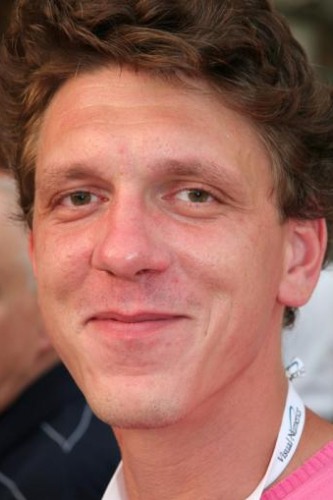 Jerome Darbon合作论文数Division of Applied Mathematics, Brown University5
 Yousef Saad合作论文数Department of Computer Science & Engineering, College of Science and Engineering, University of Minnesota4
 Stefano Soatto合作论文数Department of Computer Science, Samueli School of Electrical & Computer Engineering, University of California, Los Angeles;Amazon Web Services4
 Ke Chen合作论文数Department of Computer Science, The University of Manchester4
 Gene H. Golub合作论文数Stanford University4Timothy J. Barth合作论文数4Kangyu Ni合作论文数4
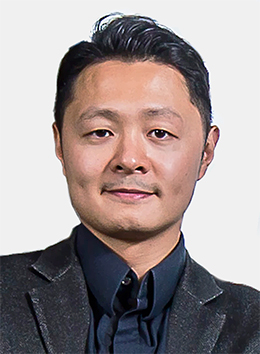 Sai-Kit Yeung (楊世傑)合作论文数Division of Integrative Systems and Design, Hong Kong University of Science and Technology;Department of Computer Science and Engineering, Hong Kong University of Science and Technology;Department of Ocean Science, Hong Kong University of Science and Technology4Ding Lee合作论文数4Longjun Shen合作论文数4
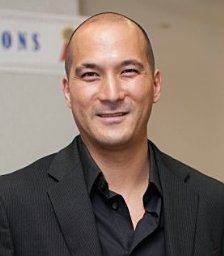 Frederick E. Park合作论文数Department of Mathematics, University of California4
 Raymond H. Chan合作论文数Department of Mathematics,The Chinese University of Hong Kong4S. R. Elkington合作论文数4David M. Strong合作论文数4
 Berta Sandberg合作论文数4
 Boris Gutman合作论文数Natera;Department of Biomedical Engineering, Armour College of Engineering, Illinois Institute of Technology4Jianhong (Jackie) Shen合作论文数3
 Yonggang Shi合作论文数Keck School of Medicine, University of Southern California3
 Per Christian Hansen合作论文数Department of Applied Mathematics and Computer Science, Technical University of Denmark3




