We present an algorithm that reformulates existing methods to construct higher-order mimetic differential operators. Constrained linear optimization is the key idea of this resulting algorithm. The authors exemplified this algorithm by constructing an eight-order-accurate one-dimensional mimetic divergence operator. The algorithm computes the weights that impose the mimetic condition on the constructed operator. However, for higher orders, the computation of valid weights can only be achieved through this new algorithm. Specifically, we provide insights on the computational implementation of the proposed algorithm, and some results of its application in different test cases. Results show that for all of the proposed test cases, the proposed algorithm effectively solves the problem of computing valid weights, thus constructing higher-order mimetic operators.
We describe a computational framework for the quantitative assessment of contractile responses of isolated neonatal cardiac myocytes. To the best of our knowledge, this is the first report on a practical and accessible method for the assessment of contractility in neonatal cardiocytes. The proposed methodology is comprised of digital video recording of the contracting cell, signal preparation, representation by polar Fourier descriptors, and contractility assessment. The different processing stages are variants of mathematically sound and computationally robust algorithms very well established in the scientific community. The described computational approach provides a comprehensive assessment of the neonatal cardiac myocyte contraction without the need of elaborate instrumentation. The versatility of the methodology allows it to be employed in determining myocyte contractility almost simultaneously with the acquisition of the Ca2+ transient and other correlates of cell contraction. The proposed methodology can be utilized to evaluate changes in contractile behavior resulting from drug intervention, disease models, transgeneity, or other common applications of neonatal cardiocytes.
Background We are exploring the viability of a novel approach to cardiocyte contractility assessment based on biomechanical properties of the cardiac cells, energy conservation principles, and information content measures. We define our measure of cell contraction as being the distance between the shapes of the contracting cell, assessed by the minimum total energy of the domain deformation (warping) of one cell shape into another. To guarantee a meaningful vis-à-vis correspondence between the two shapes, we employ both a data fidelity term and a regularization term. The data fidelity term is based on nonlinear features of the shapes while the regularization term enforces the compatibility between the shape deformations and that of a hyper-elastic material. Results We tested the proposed approach by assessing the contractile responses in isolated adult rat cardiocytes and contrasted these measurements against two different methods for contractility assessment in the literature. Our results show good qualitative and quantitative agreements with these methods as far as frequency, pacing, and overall behavior of the contractions are concerned. Conclusions We hypothesize that the proposed methodology, once appropriately developed and customized, can provide a framework for computational cardiac cell biomechanics that can be used to integrate both theory and experiment. For example, besides giving a good assessment of contractile response of the cardiocyte, since the excitation process of the cell is a closed system, this methodology can be employed in an attempt to infer statistically significant model parameters for the constitutive equations of the cardiocytes.
We study the existence and stability of heteroclinic connections near "hopping" cellular flame patterns. These are dynamic patterns in which individual cells make sequential, and abrupt, changes in their angular positions while they rotate nonuniformly about the center of a circular domain. Normal form analysis and experimental works have shown that these patterns are associated with a homoclinic cycle connecting group related equilibria. In fact, they emerge through a codimension three steady-state bifurcation of three modes with wave numbers in a 2:3:4 ratio. While cycles are known to exist in the mode-2 and mode-4 interactions, here we show that mode-3 destabilizes the connection so that only remnants, i.e. intermittent flame patterns of the cycles can be observed.
We introduce the use of mimetic methods to the imaging community, for the solution of the initial-value problems ubiquitous in the machine vision and image processing and analysis fields. PDE-based image processing and analysis techniques comprise a host of applications such as noise removal and restoration, deblurring and enhancement, segmentation, edge detection, inpainting, registration, motion analysis, etc. Because of their favorable stability and efficiency properties, semi-implicit finite difference and finite element schemes have been the methods of choice (in that order of preference). We propose a new approach for the numerical solution of these problems based on mimetic methods. The mimetic discretization scheme preserves the continuum properties of the mathematical operators often encountered in the image processing and analysis equations. This is the main contributing factor to the improved performance of the mimetic method approach, as compared to both of the aforementioned popular numerical solution techniques. To assess the performance of the proposed approach, we employ the Catte-Lions-Morel-Coll model to restore noisy images, by solving the PDE with the three numerical solution schemes. For all of the benchmark images employed in our experiments, and for every level of noise applied, we observe that the best image restored by using the mimetic method is closer to the noise-free image than the best images restored by the other two methods tested. These results motivate further studies of the application of the mimetic methods to other imaging problems.
We study the effects of multiplicative noise on a spatio-temporal pattern forming nonlinear Partial Differential Equation (PDE) model for premixed flame instability, known as the Kuramoto-Sivashinsky equation, in a circular domain. Modifications of a previously developed numerical integration scheme allow for longer time integration in the presence of noise. In order to gain additional insight, we focus on a region of parameter space where hopping patterns of the deterministic system arise as well as the region of parameter space where the transition between a single ring to multiple rings of cells appears. We discuss the numerical challenges in the integration of the Kuramoto-Sivashinsky equation in polar coordinates with the addition of the noise term. We also study the effects of additive and multiplicative noise on the normal forms or amplitude equations that describe the dynamics of hopping patterns. Finally we show some results of the implementation of the numerical scheme to solve both the PDE and the normal form equations and discuss preliminary findings.
We introduce the use of mimetic methods to the imaging community, for the solution of the initial-value problem ubiquitous in the machine vision and image processing and analysis fields. PDE-based image processing and analysis techniques comprise a host of applications such as noise removal and restoration, deblurring and enhancement, segmentation, edge detection, inpainting, registration, motion analysis, etc. In these applications, the digital images are given on discrete (regular) grids. This lends itself for discretizing the PDEs to obtain numerical schemes that can be solved on a computer. Because of their favorable stability and efficiency properties, semi-implicit fi-nite difference and finite element schemes have been the methods of choice (in that order of preference). We propose a new approach for the numerical solution of these problems based on mimetic methods. The mimetic discretization scheme preserves the continuum properties of the mathematical operators often encountered in the image processing and analysis equations. This is the main contributing factor to the improved performance of the mimetic method approach, as compared to both of the aforementioned popular numerical solution techniques. To assess the performance of the proposed approach, we employ the Catt´e-Lions-Morel-Coll model to restore noisy images, by solving the PDE with the three numerical solution schemes. For all of the benchmark images employed in our experiments, and for every level of noise applied, we observe that the best image restored by
The interpretation and measurement of the architectural organization of mitochondria depend heavily upon the availability of good software tools for filtering, segmenting, extracting, measuring, and classifying the features of interest. Images of mitochondria contain many flow-like patterns and they are usually corrupted by large amounts of noise. Thus, it is necessary to enhance them by denoising and closing interrupted structures. We introduce a new approach based on anisotropic nonlinear diffusion and bilateral filtering for electron tomography of mitochondria. It allows noise removal and structure closure at certain scales, while preserving both the orientation and magnitude of discontinuities without the need for threshold switches. This technique facilitates image enhancement for subsequent segmentation, contour extraction, and improved visualization of the complex and intricate mitochondrial morphology. We perform the extraction of the structure-defining contours by employing a variational level set formulation. The propagating front for this approach is an approximate signed distance function which does not require expensive re-initialization. The behavior of the combined approach is tested for visualizing the structure of a HeLa cell mitochondrion and the results we obtain are very promising.
In this paper, we study a multiple-input-single-output (MISO) underwater communication system that applies time reversal (TR) to transmit signals so that they focus spatially and compress temporally on the intended receiver. Our simulations model an underwater acoustic channel as a waveguide, and we investigate the cases of a waveguide both with and without random inhomogeneities. We investigate physical TR metrics and communications related performance indicators. The results of our simulations show that spatial focusing depends strongly on the delay spread (DS), as has been seen in experiments. This physical property of TR could be exploited in communication systems where signal coherence is desired only at the receiver location. However, in the simulations, we find that while spatial compression increases with DS in a robust way (i.e., even when inhomogeneities exist), time compression does not increase with DS. Moreover, physical measures of the temporal compression (temporal pealk-to-sidelobe ratio) do not improve with waveguide inhomogeneities. Nevertheless, TR reduces intersymbol interference (ISI) at the receiver as DS increases for both types of waveguides, which is an important effect for efficient, high-speed communication. In addition to TR, preequalization at the transmitter can ideally eliminate ISI without significantly affecting spatial compression. However, this preequalization causes a reduction of received power, which may be acceptable when the signal-to-noise ratio (SNR) at the receiver is high.
We present an overview of recent advances in numerical simulations of the 2+1-dimensional Kuramoto-Sivashinsky equation, describing the flame-front deformation in a combustion experiment. Algorithmic development includes a second-order unconditionally A-stable Crank-Nicolson scheme, using distributed approximating functionals (DAFs) for well-tempered, highly accurate, representation of the physical quantity and its derivatives. The simulator reproduces a multitude of patterns observed in experiments-in-the-wild, including rotating 2-cell, 3-cell, hopping 3-cell. stationary 2, 3, 4, 5-cell, stationary 5/1, 6/1, 7/1, 8/2 two-ring patterns, etc. The numerical observation of hopping flame patterns - characterized by non-uniform rotations of a ring of cells, in which individual cells make abrupt changes in their angular positions while they rotate around the ring - is the first outside of physical experiments. We show modal decomposition analysis of the simulated patterns, via the singular value decomposition (SVD), which exposes the spatio-temporal behavior in which the overall temporal dynamics is similar to that of equivalent experimental states. Symmetry-based arguments are used to derive normal form equations for the temporal behavior, and a bifurcation analysis of the associated normal form equations quantifies the complexity of hopping patterns. Conditions for their existence and their stability are also derived from the bifurcation analysis. Further, we study the effects of thermal noise in a stochastic formulation of the Kuramoto-Sivashinsky equation. Numerical integration reveals that the presence of noise increases the propensity of dynamic cellular states, which seems to explain the generic behavior of related laboratory experiments. Most importantly, we also report on observations of certain dynamic states, homoclinic intermittent states, previously only observed in physical experiments. (C) 2008 IMACS. Published by Elsevier B.V. All rights reserved.
Fluidization processes have many important applications in industry, in particular, in chemical, fossil, and petrochemical industries where good gas-solid mixing is required. Such mixing is commonly achieved through bubbles which are formed spontaneously and whose time-evolution appears to be governed by low-dimensional deterministic dynamics. Understanding the space and time dynamics in more detail is critical to future development of technologies that rely on the fluidization phenomenon—transport of solid particles by fluids—such as chemical reactors. In response to this need, we use a low-dimensional, computational agent-based bubble model to study the changes in the global bubble dynamics in response to changes in the frequency of the rising bubbles. A computationally-based bifurcation analysis shows that the collective bubble dynamics undergoes a series of transitions from equilibrium points to highly periodic orbits, chaotic attractors, and even intermittent behavior between periodic orbits and chaotic sets. Using ideas and methods from nonlinear dynamics and time series analysis, we are able to approximate nonlinear models that allow for long-terra predictions and the possibility of developing control algorithms. Additionally, we employ the Proper Orthogonal Decomposition to better understand the bubble dynamics generated by multiple injectors.
We use symmetry-based arguments to derive normal form equations for studying the temporal behavior of a particular spatio-temporal dynamic cellular pattern, called "hopping" state, which we have recently discovered in computer simulations of a generic example of an extended, deterministic, pattern-forming system in a circular domain. Hopping states are characterized by cellular structures that sequentially make abrupt changes in their angular positions while they rotate, collectively, about the center of the circular domain. A mode decomposition analysis suggests that these patterns are created from the interaction of three steady-state modes. A bifurcation analysis of associated normal form equations, which govern the time-evolution of the steady-state modes, helps us quantify the complexity of hopping patterns. Conditions for their existence and their stability are also derived from the bifurcation analysis. The overall ideas and methods are generic, so they can be readily applied to study other type of spatio-temporal pattern-forming dynamical systems with similar symmetry properties.
We introduce total variation{based methods for the reduction of noise and the enhancement of mi- tochondrion structure for electron tomography. We perform a comparative study between two total variation-based image noise removal techniques, applied to electron microscopic imaging of a mitochon- drion. Our tests show that both methods perform extremely well at removing the multiplicative noise present in this type of imagery. The methods facilitate the segmentation that will allow extraction and rendering of a 3D structural model of the mitochondrion. The structural information contributes to the better interpretation, measurement, and understanding of the intricate mitochondrial architecture and its relation to functionality.
In this paper we propose a new image smoothing and edge detection technique that employs a combination of nonlinear diffusion and bilateral filtering. The model is based upon two very well established methodologies in the image processing community, which makes the method easy to understand and implement. Our numerical experiments show that the proposed model is capable of achieving more accurate reconstructions from noisy images, as compared to two other popular nonlinear diffusion models in the literature. We also propose a new and simple diffusion stopping criterion, based on the moving average of the second derivative of the correlation between the noisy image and the filtered image. This indirect measure allows stopping the diffusion process very close to the maximum correlation between the noise-free image and the reconstructed image, in the absence of the former. The stopping criterion is sufficiently general to be applied with most nonlinear diffusion methods normally used for image noise removal.
We use a low-dimensional, agent-based bubble model to study the changes in the global dynamics of fluidized beds in response to changes in the frequency of the rising bubbles. The computationally based bifurcation analysis shows that at low frequencies, the global dynamics is attracted towards a fixed point since the bubbles interact very little with one another. As the frequency of injection increases, however, the global dynamics undergoes a series of bifurcations to new behaviors that include highly periodic orbits, chaotic attractors, and intermittent behavior between periodic orbits and chaotic sets. Using methods from time-series analysis, we are able to approximate nonlinear models that allow for long-term predictions and the possibility of developing control algorithms.
We study the effects of thermal noise in a stochastic, Langevin formulation, of a spatio-temporal pattern-forming Partial Differential Equation (PDE) model with circular domain. Modification of a recently developed numerical integration scheme reveals that the pattern-forming model exhibits, in the presence of noise, a greater tendency towards dynamic states and towards intermittent patterns in which ordered states appear randomly, preceded and succeeded by disorganized states. In order to gain additional insight, we focus on a region of parameter space where the patterns of the deterministic system arise from the steady-state interaction of two pairs of modes with wave numbers in a 1:2 ratio. Analysis of the associated stochastic normal form equations allows us to explain the underlying bifurcations of the noise-induced patterns, some of which had only been observed, until now, in laboratory experiments.
An adaptive finite element strategy is employed to solve the Perona-Malik model as modified by Catté, Lions, Morel and Coll for image processing by (often highly) nonlinear diffusion. FEMLAB® and MATLAB® are used to implement the experiments and they prove to be very suitable tools to run this type of problem. Refinement and coarsening of the grids are used as needed and the approach leads to unstructured grids where the efficiency of the remeshing strategy is demonstrated by obtaining very similar results as in the regular grid case, though with fewer unknowns.
tert-Butyldithiomethyl (DTM), a novel hydroxyl protecting group, cleavable under reductive conditions, was developed and applied for the protection of 2'-OH during solid-phase RNA synthesis. This function is compatible with all standard protecting groups used in oligonucleotide synthesis, and allows for fast and high-yield synthesis of RNA. Oligonucleotides containing the 2'-O-DTM groups can be easily deprotected under the mildest possible aqueous and homogeneous conditions. The preserved 5'-O-DMTr function can be used for high-throughput cartridge RNA purification.
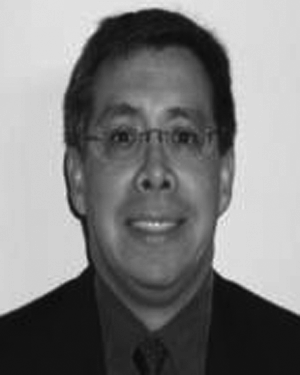 Antonio Palacios合作论文数linear Dynamics Group, Non;Department of Mathematics;San Diego State University;Nonlinear Dynamics Group, San Diego State University10
 Tony F. Chan (陳繁昌)合作论文数Department of Computer Science & Engineering, School of Engineering, The Hong Kong University of Science and Technology;Computer, Electrical and Mathematical Science and Engineering Division, King Abdullah University of Science and Technology7
 Scott Gasner合作论文数6
 Carlos Bazan合作论文数Computational Science Research Center, San Diego State University5
 George C. Papanicolaou合作论文数Department of Mathematics, School of Humanities & Sciences, Stanford University3Pep Mulet合作论文数Departament de Matemítica Aplicada, Universitat de València3
 Jose E. Castillo合作论文数2
 Hongkai Zhao (赵宏凯)合作论文数Department of Mathematics, University of California, Irvine2
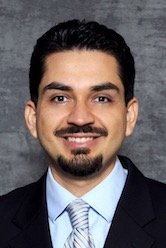 David Torres Barba合作论文数Computational Science Research Center, San Diego State University2András Földesi合作论文数2Mohammad Abouali合作论文数Computational Science Research Center, San Diego State University2
 Marek Kwiatkowski合作论文数Defence Science and Technology2Joan Manuel Martinez合作论文数2Andrey Semenyuk合作论文数2Paul Paolini合作论文数2Camilla Estmer-Nilsson合作论文数2Leif A Kirsebom合作论文数1
 Eduardo Sanchez合作论文数1Tommy Johansson合作论文数1
 Bing Zhu合作论文数1Hawkins Trevor合作论文数1
 Anders Hanning合作论文数1Yong Hao合作论文数1Michelle Miller合作论文数1
 Arnold D. Kim合作论文数Department of Mathematics, Stanford University1Matilda Ahnfelt合作论文数1
 Charles Finney合作论文数University of Tennessee;Oak Ridge National Laboratory;Oak Ridge National Laboratory, University of Tennessee1
 Luminita Aura Vese合作论文数Department of Mathematics, University of California, Los Angeles1Sreekanth Pannala合作论文数Oak Ridge National Laboratory
Research Staff Member of the Computational Mathematics Group
of the Computer Science and Mathematics Division of Oak Ridge National Laboratory1
Luminita Aura Vese合作论文数Department of Mathematics, University of California, Los Angeles1Sreekanth Pannala合作论文数Oak Ridge National Laboratory
Research Staff Member of the Computational Mathematics Group
of the Computer Science and Mathematics Division of Oak Ridge National Laboratory1 Stuart Daw合作论文数Oak Ridge National Laboratory1
 Mathias Brannvall合作论文数1John S. Halow合作论文数1Cecilia Lundström合作论文数1Carl Bruder合作论文数1W. L. Wan合作论文数1
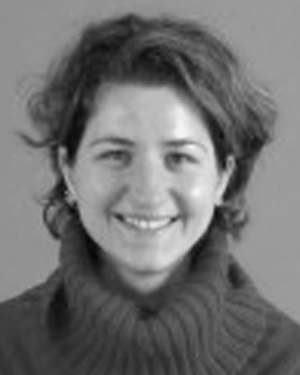 Persefoni Kyritsi合作论文数1Carolin Axelsson合作论文数1
 Christopher Paolini合作论文数San Diego State University;Department of Mechanical Engineering;Department of Mechanical Engineering, San Diego State University1David M. Strong合作论文数1




