In this paper, we review parallel search techniques for approximating the global optimal solution of combinatorial optimization problems. Recent developments on parallel implementation of genetic algorithms, simulated annealing, tabu search, and greedy randomized adaptive search procedures (GRASP) are discussed.
Credit cards constitute one of the most common forms of credit, which is mainly used by consumers to cover their daily expenses. The increasing demand for credit cards during the last two decades, has necessitated the development of evaluating systems to reduce the credit risk. Generally, decisions regarding credit card evaluation involve the acceptance or the rejection of a credit card application on the basis of the applicant's personal and business profile, which is usually described through both quantitative and qualitative factors. The objective of this paper is to present the application of multicriteria decision aid (MCDA) in credit card evaluation. For this purpose, three preference disaggregation methodologies are applied in a sample consisting of 150 credit card applications which were submitted for consideration to the National Bank of Greece during the period 1995-1996.
The biquadratic assignment problem (BiQAP) is a generalization of the quadratic assignment problem (QAP). It is a nonlinear integer programming problem where the objective function is a fourth degree multivariable polynomial and the feasible domain is the assignment polytope. BiQAP problems appear in VLSI synthesis. Due to the difficulty of this problem, only heuristic solution approaches have been proposed. In this paper, we propose a new heuristic for the BiQAP, a greedy randomized adaptive search procedure (GRASP). Computational results on instances described in the literature indicate that this procedure consistently finds better solutions than previously described algorithms.
 Panos M. Pardalos合作论文数Center for Applied Optimization, University of Florida;Department of Industrial and Systems Engineering, University of Florida4
 Leonidas S. Pitsoulis合作论文数Aristotle University of Thessaloniki2
 Mgc Resende合作论文数1
 Mauricio G. C. Resende合作论文数Department of Industrial and Systems Engineering, University of Washington;Faculty of Center for Applied Optimization, University of Florida1
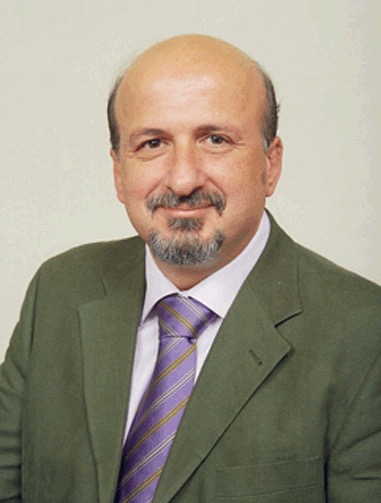 Constantin Zopounidis合作论文数Financial Engineering Laboratory, Technical University of Crete1
 Michael Doumpos合作论文数Department of Production Engineering and Management Financial Engineering Laboratory, Technical University of Crete1




