This is a case report of a femoral artery infection with fatal outcome after using a percutaneous suture mediated closure device: A 77-year old patient underwent diagnostic angiography of his thoracic and abdominal aortic aneurysm, the puncture site was closed with the Perclose system. He developed a staphylococcal femoral artery infection with groin abscess, requiring surgical intervention with debridement and removal of the Perclose suture. After stent graft exclusion of the thoracic and abdominal aortic aneurysm a staphylococcal sepsis occurred and the patient died of aneurysm rupture months later despite long term antibiotic therapy. Since the use of the Perclose device carries an increased risk of femoral artery infection with septic endarteritis and bacteremia, it should not be used in routine diagnostic angiography.
PURPOSE:The purpose is to report our experience and revise our previously published results in endovascular repair of short-necked thoracic aortic aneurysms or aortic type B dissections, in which the left subclavian artery (LSA) was occluded by the stent graft intentionally. METHODS:Seven patients with an aortic type B dissection and three patients who had a thoracic aortic aneurysm were treated endovascularly with stent grafts. In all patients the ostium of the LSA was occluded by the stent graft, only in two patients a primary, prophylactic revascularization of the LSA was performed by transposition to the left common carotid artery (LCA). Two types of stent grafts were used: the Talent (Medtronic) and the Excluder (Gore) stent graft. RESULTS:In all patients the sealing of the entry tear in aortic dissections and the exclusion of existing thoracic aortic aneurysms were achieved. No immediate neurological deficit or left arm ischemia occurred. Nevertheless, during a mean follow-up of 18 months (2 to 31 months) in three patients a second surgical intervention had to be performed due to subclavian steal syndrome, left arm ischemia, or continuing perfusion of the dissected false aortic channel. CONCLUSION:Intentional occlusion of the LSA in stent-graft repair of thoracic aortic diseases seems to be a safe procedure. Close follow-up is needed due to arising subclavian steal syndrome, arm ischemia, or persistent perfusion of the false channel via LSA in aortic dissections after patients' discharge, requiring surgical intervention.
BACKGROUND: A well-working vascular access is the precondition for a sufficient hemodialysis. Rising age and increasing co-morbidity of hemodialysis patients require additional alternatives to the usual vascular accesses. The Dialock® hemodialysis access system (Biolink Corporation, Norwell, MA, USA) is a subcutaneously implantable device that unites the advantages of a central venous access with the percutaneous puncture. METHODS: We implanted 32 Dialock® devices at our department within 36 months. 20 patients were male, 12 female. This access system was chosen for 15 patients due to internal indications, in 17 cases the implantation was done because of persisting graft problems with long-term hemodialysis patients. The catheters were preferably placed in the right internal jugular vein. In a comparable reference group we observed 25 hemodialysis patients who required 50 vascular accesses in the same period of time. RESULTS: On an average the first puncture was carried out one week post implant (1–10 days). The medium blood flow rate amounted to 300 ml/min. In 4900 hemodialysis access days (HAD) the infection rate was 0.7/1000 HAD, the rate of malfunctions with subsequent catheter lysis was 3.6/1000 HAD. Pocket hematoms had to be treated in 6 cases. The catheters were exchanged in 4 patients, thus resulting in a rate of 0.8/1000 access days. Three port systems were explanted, one port had to be repositioned. Six patients died within the period of observation of causes not related to the access system. CONCLUSIONS: The Dialock® hemodialysis access system represents a safe vascular access device with few complications when applied carefully within the framework of a hemodialysis center. Comparably low infection and complication rates make this access system an interesting alternative for vascular access in hemodialysis.
Zusammenfassung Einleitung. Endoleaks nach endovaskulärer Therapie abdomineller Aortenaneurysmen stellen unverändert ein ungelöstes Problem dar. Wir berichten über ein sekundäres “Endoleak” nach konventioneller, offener Aneurysmaoperation, einer bislang weitgehend unbekannten Komplikation. Methoden und Ergebnisse. 5 Wochen nach offener Operation eines abdominellen Aortenaneurysmas bei einem 64-jährigen, antikoagulierten Patienten kam es zum Auftreten von Bauch- und Rückenschmerzen. Eine CT-Kontrolle ergab eine Perfusion des Aneurysmasacks mit neuerlicher Expansion. Wegen des fehlenden angiographischen Nachweises des Endoleaks sowie des reduzierten Allgemeinzustands wurde der Patient konservativ durch vorübergehende Bettruhe mit Blutdrucksenkung und Gerinnungsoptimierung behandelt. 4 Monate später ist der Patient beschwerdefrei. MRT-Kontrollen zeigten den Aneurysmasack vollständig thrombosiert und deutlich geschrumpft. Schlussfolgerung. Bei Patienten mit Bauch- und Rückenschmerzen nach konventioneller Operation eines Bauchaortenaneurysmas sollte neben anderen Pathologien ein Endoleak als Ursache der Beschwerden durch eine Computertomographiekontrolle ausgeschlossen werden.
Grundlagen: Aufgrund ihrer weitreichenden Folgezustände durch Blutverlust, ischämischer Organschädigung und Extremitätenverlust sind Verletzungen der Gefäße von großer Bedeutung im Management des traumatisierten Patienten, nicht zuletzt auch deswegen, da es sich bei Patienten mit schweren Verletzungen oft um junge Menschen handelt, für die das Gefäßtrauma das Ende der Berufsfähigkeit bedeuten kann. Die rasche Erkennung, Erstversorgung und die endgültige Behandlung der Gefäßverletzung durch den Spezialisten im Rahmen des prognostisch günstigen Zeitfensters sind für ein gutes Ergebnis wesentlich.
Biosynthetische Gefäßprothesen stellen sowohl für den femoropoplitealen oder -cruralen Gefäßabschnitt als auch für die Shuntanlage den Gefäßersatz der zweiten oder dritten Wahl dar (7). Besonders die Neigung zur Aneurysmabildung veranlasste viele gefäßchirurgische Zentren, die Verwendung biosynthetischen Materials aufzugeben (4,5). Der Prozentsatz aneurysmatischer Ausweitungen betrug beispielsweise bei bovinen Implantaten (SOLCOGRAFT P) nach 2 Jahren 16,9% und nach 4 Jahren bereits 42,6% (2, 11). Auch bei homologen Nabelschnurvenen wurden anfangs nach nur 2 Jahren 57% Prothesendilatationen festgestellt. Günstigere Ergebnisse erzielte man mit der sogenannten DARDIK-Prothese, welche eine mit einem Dacronnetz umhüllte Nabelschnurvene darstellt. Die Aneurysmafrequenz konnte in einem Beobachtungszeitraum von 5 Jahren auf 1,2 bis 3,5% gesenkt werden (3, 10). Unsere eigenen Erfahrungen beziehen sich in erster Linie auf die OMNIFLOW®-Prothese, welche aus denaturiertem Schafskollagengewebe mit einem integrierten Polyesternetz besteht (6,8). Wir haben diese Transplantate 318-mal im femoropoplitealen- und cruralen Bereich und 35-mal als Dialyseshuntprothese eingesetzt. Bei einer mittleren Nachbeobachtungszeit von 4,8 Jahren konnten 9 (2,55%) Aneurysmen festgestellt werden. Sämtliche Aneurysmen wurden operativ saniert und mit einer Ausnahme konnte bei sämtlichen Fällen durch rechtzeitige Diagnostik eine gutes klinische Ergebnis erzielt werden.
Biosynthetic grafts are the material of the second or third choice in femoropopliteal or -crural vascular reconstructions [7]. Our own experience is based on the OMNIFLOW(R)- prosthesis, which is an ovine collagen graft reinforced with a polyester mesh [6, 8]. We used these grafts in 318 infrainguinal reconstructions After a medium observation time of 4.8 years 9 aneurysms [2.55%] were observed. All of them were treated surgically and in all except one case the clinical outcome was satisfactory. Early detection and elective surgical treatment of graft aneurysms is mandatory for a good clinical result.
The clinical relevance of mild chronic anemia in patients after heart transplantation (HTX) has not yet been demonstrated. Forty-five outpatients who had undergone HTX 2–99 months prior to investigation and who had not received blood transfusions or erythropoietin (EPO) before data acquisition were observed over a period of 37 months. Anemia was found in 36 of the 45 patients and was normocytic, normochromic, and slightly anisocytotic (coefficient of variation = 16 ± 2, normal 11.5–14.5). Anemic patients showed elevated EPO levels, whereas in nonanemic patients EPO levels were normal. Survival after HTX differed significantly in anemic and nonanemic patients (P < 0.02), with 100 % survival in the nonanemic and 85 % in the anemic group. Chronic anemia in patients after HTX shows a typical pattern. Even when mild, anemia in patients after HTX seems to be of prognostic value and thus might be an indicator of chronic disorders.
Prostaglandins and analogues for therapeutic use gained importance in the early eighties, when a substantial number of clinical studies about their therapeutical effects was published6, 12, 17, 22. Out of the huge family of prostanoids, prostaglandins E1 (PG E1) and I2 and their synthetical analogues are the most important substances in clinical practice in the field of solid organ transplantation. Organ procurement and organ preservation4, 5, 9, 15, 19 as well as treatment of primary graft failure8, 10 have been described as possible indications for PG E1. Vasodilating effects of prostaglandins are mediated by increasing cAMP levels in vascular smooth muscle cells. This mediation by cAMP is shared with beta-agonists and phosphodiesterase-inhibitors, but not with nitrates and nitric oxide3, 14, 21. Treatment of elevated pulmonary vascular resistance (PVR), which is frequently needed after heart transplantation (HTX), and in the pretransplant evaluation as well as bridging to transplan-tation1, 7, 20 has been the indication for PG E1 in our patient cohort.
Heart transplant recipients with secondary pulmonary hypertension (PH) are prone to acute right ventricular (RV) graft failure after orthotopic heart transplantation (oHTX). A suitable donor heart of a healthy individual is not adapted to elevated RV afterload caused by PH. In contrast, the majority of potential heart transplant recipients suffer from chronic left ventricular (LV) failure. LV insufficiency requires elevated filling pressures to maintain cardiac output (CO), (LV backwards failure) and causes systemic hypotension (LV forward failure) which induces systemic and pulmonary vasoconstriction. This increases systemic (SVR) and pulmonary vascular resistance (PVR), induces RV hypertrophy and secondary PH. After oHTX, the unadapted transplanted RV is exposed to the recipients PVR, RV afterload mismatch results in acute RV failure when the patient is weaned from cardiopulmonary bypass. RV volume overload, dilatation and structural damage are followed by RV failure and death. The preoperative estimation of PVR and of the reactivity of the pulmonary vascular bed to pulmonary vasodilators permits the selection of patients with reversible PH that are still suitable for oHTX. Many attempts failed to define a clear borderline beyond which oHTX is not feasible. In fact, RV failure after oHTX is caused by both, the elevated RV afterload of the recipient and by insufficient RV performance. Reduction of RV afterload by pulmonary vasodilator therapy reduces the risk of RV failure resulting from RV forward failure. The risk of inadequate myocardial function remains.
Computerized Heart Allograft Rejection Monitoring (CHARM), used for noninvasive rejection monitoring in heart transplant recipients, is based on the analysis of ventricular evoked response (VER) signals. This study evaluated the prognostic validity of the TslewC, a parameter extrapolated from the VER.During orthotopic heart transplantation (OHT) 2 unipolar, fractally coated, screw-in leads implanted epimyocardially were connected to a telemetric pacemaker. Recordings of IEGMs were performed routinely at hospital and at outpatient visits. Data processing yielded trend curves. TslewC was calculated from the tangent of VER. One hundred five patients divided into survivors and nonsurvivors, were compared using a two-tailed Student’s t test.In the final follow-up a significant lower TslewC was observed among patients in the nonsurvivor compared with the other group (P < .001). Tests to find an optimal prognostic threshold of the TslewC yielded the value of 26 mV.TslewC functioned as a prognostic factor after OHT. Further studies must provide a prognostic threshold to avoid patient visits all 4 weeks. Patients would only have to be admitted to the hospital if the TslewC was under this prognostic threshold.
In this prospective study, cytomegalovirus (CMV) antigenemia was defined as the marker for initiation and episodes of antigenemia as the indicator for the duration of antiviral therapy (CMV hy-perimmune globulin and ganciclovir). The CMV antigenemia assay and CMV-specific IgM and IgG antibody tests were used to monitor CMV infection in 22 heart transplant recipients who, between October 1992 and July 1994, were followed up for 6 months. A total of 178 out of 627 antigenemia assays tested positive. The highest number of positive cells was greater after primary infection than after either reactivation (43.3 vs 0.3; P < 0.01) or reinfection (43.3 vs 9.3; P = NS). Sixty episodes of antigenemia were observed. More episodes of antigenemia were seen after primary infection than after either reactivation (4.6 vs 0.2; P< 0.01) or reinfection (4.6 vs 2.2; P = NS). The detection of antigenemia indicated the initiation of antiviral therapy within 24 h after the blood sample was harvested. Therapy was stopped immediately after a subsequent negative result became available. Our experience indicates that antigenemia directed antiviral therapy prevents CMV disease after primary and secondary infection in heart transplant recipients.
Due to immunosuppressive therapy, organ transplant patients suffer from an impaired host defence and are, therefore, threatened by infections. A new method that measures polymorphonuclear leucocyte (PMN) migration in whole blood was used for the estimation of an infection risk. Spontaneous migration of PMNs assessed by their percentage in whole blood migrating into a membrane filter was markedly reduced in immunosuppressed orthotopic heart transplantation patients who later developed septicaemia. The PMN blood counts of these patients were within the normal range and are not therefore a useful indicator of reduced host resistance to pathogens. Blood PMN functional tests promise to be a better marker for determining immunodeficiency caused by over-immunosuppression.
 Maurice Tomka合作论文数11
 B Petutschnigg合作论文数9Kurt Tiesenhausen合作论文数8A Wasler合作论文数7B Grasser合作论文数7
 Florian Iberer合作论文数5Alexander Baumann合作论文数5Silvia Schaffellner合作论文数5G. Prenner合作论文数5Wilfried Amann合作论文数4Michael Hessinger合作论文数4J Fruhwirth合作论文数3H Müller合作论文数3T Auer合作论文数2H Holzer合作论文数2Zitta Sabine合作论文数2Wasler Andre合作论文数2
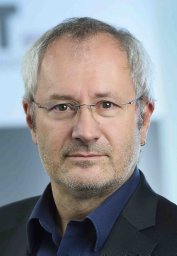 Gunter Schreier合作论文数Institute of Biomedical Engineering, Technical University2Karlheinz Tscheliessnigg合作论文数2
 Michael Thalhammer合作论文数2Peter Rehak合作论文数2
 Helmut Hutten合作论文数2H. Portugaller合作论文数1Günther Prenner合作论文数1KA Hausegger合作论文数1K Sabin合作论文数1R Vujicic合作论文数1Horina Jörg H合作论文数1Max Schaldach合作论文数1Gabriele Halwachs合作论文数1Klaus Armin Hausegger合作论文数1Peter J Oberwalder合作论文数1
 Herwig Holzer合作论文数1Siegfried Rodl合作论文数1Reingard Aigner合作论文数1Elisabeth Mahla合作论文数1
 Sabine Zitta合作论文数1




