Since 2005 ESO has been working with its community and industry to develop an extremely large optical/infrared telescope. ESO's Extremely Large Telescope, or ELT for short, is a revolutionary ground-based telescope that will have a 39-metre main mirror and will be the largest visible and infrared light telescope in the world. To address specific topics that are needed for the science operations and calibrations of the telescope, thirteen specific working groups were created to coordinate the effort between ESO, the instrument consortia, and the wider community. We describe here the goals of these working groups as well as their achievements so far.
The European Southern Observatory (ESO) implemented a new paradigm called Distributed Peer Review (DPR) as part of its proposal evaluation process in Period 110. Under DPR, Principal Investigators who submit proposals agree to review a certain number of proposals submitted by their peers and accept that their own proposal(s) are reviewed by their peers who have also submitted proposals in the same cycle. This article presents a brief overview of the DPR process at ESO, and its outcomes based on data from periods 110 and 111.
ESO’s La Silla Paranal Observatory uses a set of integrated tools for preparation and execution of Service and Visitor Mode (SM and VM, respectively) observations. The web interface for the observation preparation (p2) provides a versatile and robust environment for users to efficiently design their observations. The software architecture of p2 enabled implementation of new services, modeled according to the instruments’ specifications and operational standards. The automatic creation of Finding Charts is integrated within p2 and the Observation Preparation (ObsPrep) tool enables interactive observing strategy configuration including for example fine-tuning of the science field pointings, selection of blind offset and guide stars as well as selection of auxiliary stars for instruments using Adaptive Optics. Through the Visitor Execution Sequence, observers can plan and monitor in real-time their (on-site or remote) observations. For Service Mode runs the use of scheduling containers, recently extended to include nesting of containers, enables design of complex observing strategies that are machine readable, which allows programmatic preparation of short term scheduling for execution and planning of the night at the observatory.
ESO's VLT interferometer (VLTI) is a general-user optical/infrared interferometric facility. Its operations scheme is fully integrated into the well-established scheme of all VLT instruments and profits enormously from this experience and the implemented infrastructure to offer a unique service to the community. Based on the greatly improved capabilities of the 2nd generation VLTI instruments and taking advantage of a further development of ESO's Observation Handling Tools, we have evolved the VLTI operations scheme as well. We have offered to VLTI investigators the possibility to indicate baseline configurations in a more flexible way and have introduced nested scheduling containers to better formalize the observational strategy. We have prepared for dedicated support of different types of interferometric observations. For imaging observations specifically, we have introduced an improved workflow to fill the uv plane and to handle time-critical imaging.
Observatory end-to-end science operations is the overall process starting with a scientific question, represented by a proposal requesting observing time, and ending with the analysis of observation data addressing that question, and including all the intermediate steps needed to plan, schedule, obtain, and process these observations. Increasingly complex observing facilities demand a highly efficient science operations approach and at the same time be user friendly to the astronomical user community and enable the highest possible scientific return. Therefore, this process is supported by a collection of tools. In this paper, we describe the overall end-to-end process and its implementation for the three upcoming extremely large telescopes (ELTs), ESO’s ELT, the Thirty Meter Telescope (TMT), and the Giant Magellan Telescope (GMT).
During the last years, ESO has undertaken the re-definition of all its front-end interfaces, from the preparation and submission of observing proposals up to their final scientific review by the ESO Observing Programmes Committee (OPC). Because of its overall complexity, ESO decided to go for a staged approach, which on one hand allowed us to offer the new proposals interface as soon as it was available, but on the other hand it has been challenging us in the operational handling of two simultaneous systems, the old and the new one. In 2019, we successfully deployed the new, web-based, Phase1 user interface for proposals preparation and submission (p1ui) and in 2021 we were able to offer for the first time a web-based, proposals grading system, that supported the proposals review and Expert Panel discussions, albeit online due to the COVID19 pandemic. In this presentation, we describe the overall project, focusing on the successful deployments of the new Phase 1 User Interface (for proposals submission), of the Proposal Evaluation Interface (for the proposals review process) and their subsequent improvements, made possible by closing the loop very effectively with our users’ community. We will then conclude by presenting ESO future plans in the Phase1 area, including new proposal submission channels and new review schemes.
Monitoring and prediction of astronomical observing conditions are essential for planning and optimizing observations. For this purpose, ESO, in the 90s, developed the concept of an Astronomical Site Monitor (ASM), as a facility fully integrated in the operations of the VLT observatory[1]. Identical systems were installed at Paranal and La Silla, providing comprehensive local weather information. By now, we had very good reasons for a major upgrade: • The need of introducing new features to satisfy the requirements of observing with the Adaptive Optics Facility and to benefit other Adaptive Optics systems. • Managing hardware and software obsolescence. • Making the system more maintainable and expandable by integrating off-the-shelf hardware solutions. The new ASM integrates: • A new Differential Image Motion Monitor (DIMM) paired with a Multi Aperture Scintillation Sensor (MASS) to measure the vertical distribution of turbulence in the high atmosphere and its characteristic velocity. • A new SLOpe Detection And Ranging (SLODAR) telescope, for measuring the altitude and intensity of turbulent layers in the low atmosphere. • A water vapour radiometer to monitor the water vapour content of the atmosphere. • The old weather tower, which is being refurbished with new sensors. The telescopes and the devices integrated are commercial products and we have used as much as possible the control system from the vendors. The existing external interfaces, based on the VLT standards, have been maintained for full backward compatibility. All data produced by the system are directly fed in real time into a relational database. A completely new web-based display replaces the obsolete plots based on HP-UX RTAP. We analyse here the architectural and technological choices and discuss the motivations and trade-offs.
We present the data model utilised in maintaining the lifecycle of astronomical frames in the ESO Archive activities. The principal concept is that complete file metadata are managed separately from the data and merged only upon delivery of the data to the end user. This concept is now applied to all ESO Archive assets: raw observation frames originated in ESO telescopes in all Chilean sites, reduced frames generated intra-ESO using pipeline processing, as well as the processed data generated by the PIs and delivered to the ESO Archive through “Phase 3” infrastructure. We present the implementation details of the model and discuss future applications.
We present the data model utilised in maintaining the lifecycle of astronomical frames in the ESO Archive activities. The principal concept is that complete file metadata are managed separately from the data and merged only upon delivery of the data to the end user. This concept is now applied to all ESO Archive assets: raw observation frames originated in ESO telescopes in all Chilean sites, reduced frames generated intra-ESO using pipeline processing, as well as the processed data generated by the PIs and delivered to the ESO Archive through "Phase 3" infrastructure. We present the implementation details of the model and discuss future applications.
Observational astronomy is in an era of surveys, with the Sloan Digital Sky Survey (SDSS), UKIRT Infrared Deep Sky Survey (UKIDSS), Panoramic Survey Telescope & Rapid Response System (Pan-STARRS), SkyMapper and the Large Synoptic Survey Telescope (LSST) to name only a few of the major projects. All of these are large investments in survey systems, ranging from dedicated telescopes and instruments to data distribution. The goal common to all these projects is to target new science in a vast variety of fields and serving broad communities. The VISTA and VST public surveys are ESO’s response to these new demands.
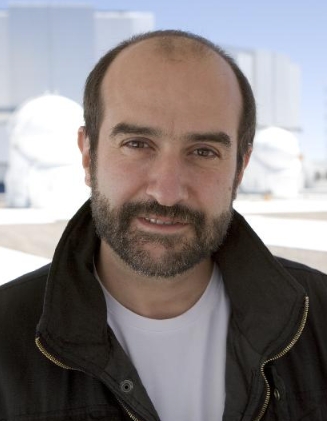 Olivier Hainaut合作论文数European Southern Observatory5
 Dario Dorigo合作论文数5Vincenzo Forchi合作论文数3Michael Pruemm合作论文数3Francesca Primas合作论文数3
 Marina Rejkuba合作论文数User Support Department, European Southern Observatory3Fabio Sogni合作论文数3Ignacio Vera合作论文数2Cristiano Da Rocha合作论文数2my ha vuong合作论文数2stefano zampieri合作论文数2Nathalie Fourniol合作论文数2
 Stephane Marteau合作论文数2Christophe Moins合作论文数2Lucas Astolfi合作论文数2Fabio Rossi合作论文数2John Pritchard合作论文数2
 R. Fetick合作论文数ONERA French Aerosp Lab2
 Guido Agapito合作论文数Oss. Astrofis. di Arcetri;c;Oss. Astrofis. di Arcetri2Correia, C.M.B.A.合作论文数2Plantet C合作论文数2
 Nando Patat合作论文数European Southern Observatory2
 Markus Wittkowski合作论文数European Southern Observatory2G. Beccari合作论文数2
 Thierry Fusco合作论文数ONERA - The French Aerospace Lab/Laboratoire d'Astrophysique de Marseille2
 Michele Cirasuolo合作论文数European Southern Observatory2
 Joël Vernet合作论文数European Southern Observatory2
 Steffen Mieske合作论文数European Southern Observatory2Adam Dobrzycki合作论文数2Benoit Neichel合作论文数R&D Group, Laboratoire d'Astrophysique de Marseille2S. Brillant合作论文数European Southern Observatory2Pierre Baudoz合作论文数1m j neeser合作论文数1paulo augusto lourenco dias nunes合作论文数1Bw Miller合作论文数1Mark Neeser合作论文数1Benoit Serra合作论文数1Frederic Lemmel合作论文数1
 Julio A. Castro-Almazan合作论文数1David Lucsanyi合作论文数1Ignacio Vera Sequeiros合作论文数1M. Andersen合作论文数1J. P. Emerson合作论文数1julio navarrete合作论文数1James Osborn合作论文数1Diego Del Valle合作论文数1Hans Smit合作论文数1Christophe Dumas合作论文数1Lars Lundin合作论文数1




