Reticular frameworks are crystalline porous materials that form via the self-assembly of molecular building blocks (i.e., nodes and linkers) in different topologies. Many of them have high internal surface areas and other desirable properties for gas storage, separation, and other applications. The notable variety of the possible building blocks and the diverse ways they can be assembled endow reticular frameworks with a near-infinite combinatorial design space, making reticular chemistry both promising and challenging for prospective materials design. Here, we propose an automated nanoporous materials discovery platform powered by a supramolecular variational autoencoder (SmVAE) for the generative design of reticular materials with desired functions. We demonstrate the automated design process with a class of metal-organic framework (MOF) structures and the goal of separating CO2 from natural gas or flue gas. Our model exhibits high fidelity in capturing structural features and reconstructing MOF structures. We show that the autoencoder has a promising optimization capability when jointly trained with multiple top adsorbent candidates identified for superior gas separation. MOFs discovered here are strongly competitive against some of the best-performing MOFs/zeolites ever reported. This platform lays the groundwork for the design of reticular frameworks for desired applications.
Postcombustion CO2 capture and storage (CCS) is a key technological approach to reducing greenhouse gas emission while we transition to carbon-free energy production. However, current solvent-based CO2 capture processes are considered too energetically expensive for widespread deployment. Vacuum swing adsorption (VSA) is a low-energy CCS that has the potential for industrial implementation if the right sorbents can be found. Metal-organic framework (MOF) materials are often promoted as sorbents for low-energy CCS by highlighting select adsorption properties without a clear understanding of how they perform in real-world VSA processes. In this work, atomistic simulations have been fully integrated with a detailed VSA simulator, validated at the pilot scale, to screen 1632 experimentally characterized MOFs. A total of 482 materials were found to meet the 95% CO2 purity and 90% CO2 recovery targets (95/90-PRTs)-365 of which have parasitic energies below that of solvent-based capture (∼290 kWhe/MT CO2) with a low value of 217 kWhe/MT CO2. Machine learning models were developed using common adsorption metrics to predict a material's ability to meet the 95/90-PRT with an overall prediction accuracy of 91%. It was found that accurate parasitic energy and productivity estimates of a VSA process require full process simulations.
Using a simple hard–soft acid–base concept we have deliberately designed gas-specific and pressure dependent porosity into a non-porous solid via coordination flexibility.
Coordinatively unsaturated Fe-III metal sites were successfully incorporated into the iconic MOF-5 framework. This new structure, Fe-III-iMOF-5, is the first example of an interpenetrated MOF linked through intercalated metal ions. Structural characterization was performed with single-crystal and powder XRD, followed by extensive analysis by spectroscopic methods and solid-state NMR, which reveals the paramagnetic ion through its interaction with the framework. EPR and Mossbauer spectroscopy confirmed that the intercalated ions were indeed FeIII, whereas DFT calculations were employed to ascertain the unique pentacoordinate architecture around the FeIII ion. Interestingly, this is also the first crystallographic evidence of pentacoordinate ZnII within the MOF-5 SBU. This new MOF structure displays the potential for metal-site addition as a framework connector, thus creating further opportunity for the innovative development of new MOF materials.
A series of nine commonly used density functional methods were assessed to accurately predict the oxidation potential of the (C2H2S2(-2)/C2H2S2(•-)) redox couple. It was found that due to their greater tendency for charge delocalization the GGA functionals predict a structure where the radical electron is delocalized within the alkene backbone of C2H2S2(•-), whereas the hybrid functionals and the reference QCISD/cc-pVTZ predict that the radical electron remains localized on the sulfurs. However, chemical intuition suggests that the results obtained with the GGA functionals should be correct. Indeed, with the use of the geometries obtained at the HCTH/6-311++G(3df,3pd) level of theory both the QCISD and hybrid DFT methods yield a molecule with a delocalized electron. Notably, this new molecule lies at least 53 kJ mol(-1) lower in energy than the previously optimized one that had a localized radical. Using these new structures the calculated oxidation potential was found to be 2.71-2.97 V for the nine DFT functionals tested. The M06-L functional provided the best agreement with the QCISD/cc-pVTZ reference oxidation potential of 3.28 V.
Herein we present an assessment to determine which of nine well-established DFT functionals best describes the reduction of C2H2Se2(-)˙. In addition, we have also studied the effects of changing the substituents bound to the alkene functional group of dithiolene and diselenolene ligands. Such ligands are important due to their unique electrochemical and physical properties when ligated to metals. The M06-L functional shows best agreement with the QCISD/cc-pVTZ value of -2.45 V for the reduction potential of the (C2H2Se2˙(-)/C2H2Se2(-2)) redox couple. At the M06-L/6-311+G(d,p) level of theory the calculated reduction potential for the (C2H2Se2˙(-)/C2H2Se2(-2)) redox couple is only 0.09 V in error. However, as a result of the nature of the oxidized species for the respective ligands the absolute reduction potential of the (C2H2Se2˙(-)/C2H2Se2(-2)) redox couple is 0.57 V more oxidizing than the (C2H2S2˙(-)/C2H2S2(-2)) redox couple. This is due to the radical electron in C2H2S2˙(-) being delocalized within the alkene backbone, whereas in C2H2Se2˙(-) the electron is largely localized on the Se atoms. The relative reducing power of the S- and Se-containing redox couples is shown to vary depending on the choice of substituents. In particular the reduction potential of the various S-containing redox couples range from being 0.34 V more reducing to 0.28 V more oxidizing than the analogous Se-containing redox couples. This difference in the relative reducing power appears to be a result of the nature of the oxidized ligand. Thus, depending on the choice of moiety very different chemistry is seen between the analogous dithiolate and diselenolate ligands.
 Tom K. Woo合作论文数Ctr Catalysis Res & Innovat, Univ Ottawa4
 Sean P. Collins合作论文数2
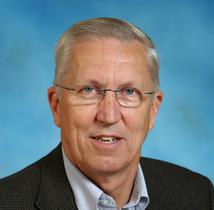 Russell Jaye Boyd合作论文数Department of Chemistry, Faculty of Science, Dalhousie University2
 Eric Andre Charles Bushnell合作论文数2
 Sai Gokul Subraveti合作论文数1
 Kasturi Nagesh Pai合作论文数Donadeo Innovation Centre for Engineering (ICE),, University of Alberta12th Floor1Sai Govind Hari Kumar合作论文数Univ Toronto, Dept Chem, Solar Fuels Cluster, Mat Chem & Nanochem Res Grp, 80 St George St, Toronto, ON M5S 3H6, Canada1
 Benjamin Sanchez-Lengeling合作论文数Google1
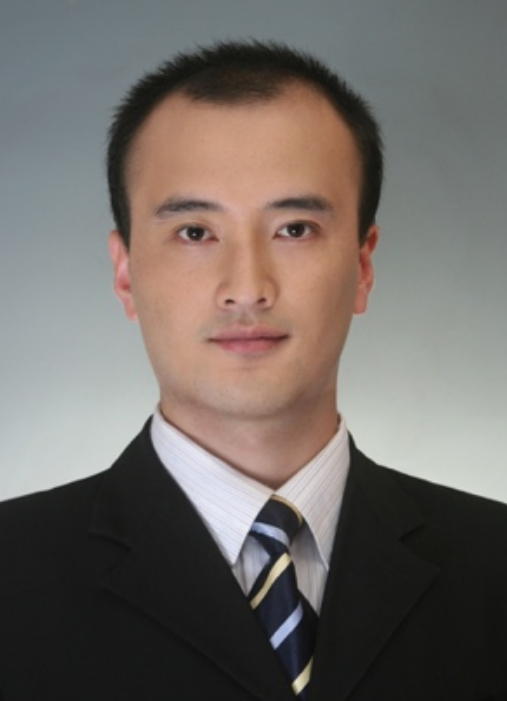 Zhenpeng Yao (姚振鹏)合作论文数Center of Hydrogen Science, School of Materials Science and Engineering, Shanghai Jiao Tong University1Debanjan Chakraborty合作论文数1
 Rahul Maity合作论文数Dept Chem, Indian Inst Sci Educ & Res1
 Stephen Hill合作论文数Department of Physics, College of Arts and Sciences, Florida State University;The National High Magnetic Field Laboratory1
 Kobera Libor合作论文数Inst Macromol Chem, Acad Sci Czech Republ1
 Bucior Benjamin J合作论文数1
 Shyamapada Nandi合作论文数Department of Chemistry, Indian Institute of Science Education and Research (IISER),1
 Bobbitt N Scott合作论文数Department of Chemical Engineering, The University of Texas at Austin1
 Holmberg Rebecca J合作论文数1
 Muralee Murugesu合作论文数Department of Chemistry and Biomolecular Sciences, University of Ottawa1
 Phil De Luna合作论文数CURA1
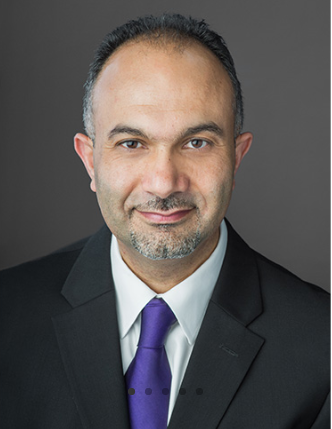 Omar K. Farha合作论文数Department of Chemistry, Northwestern University;International Institute for Nanotechnology, Northwestern University1
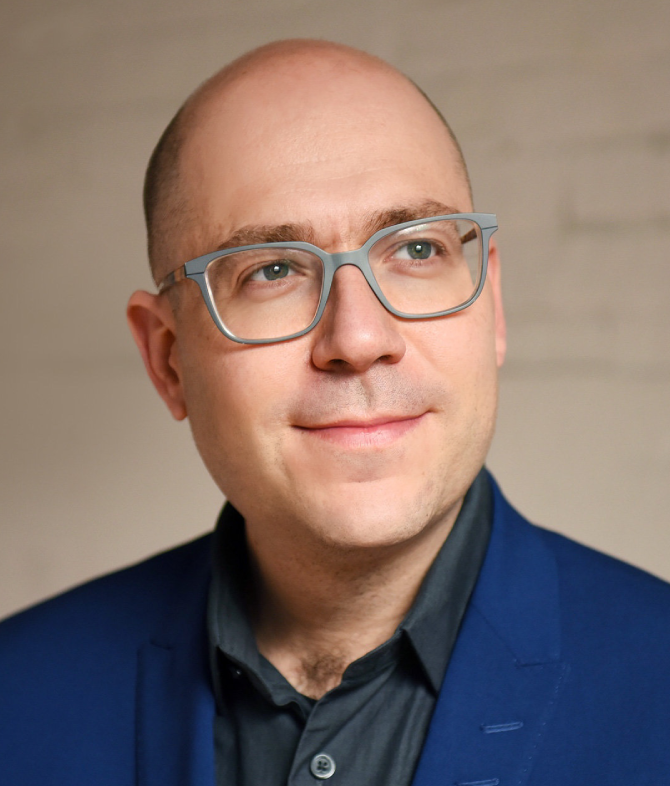 Alán Aspuru-Guzik合作论文数Department of Chemistry, Faculty of Arts & Science, University of Toronto;NVIDIA;Kebotix, Inc.1
 Sebastian Stoian合作论文数1Ilia Korobkov合作论文数1
 Thomas D. Daff合作论文数1
 Mykhaylo Krykunov合作论文数Department of Chemistry, University of Calgary1
 David L. Bryce合作论文数Bryce Lab, Department of Chemistry and Biomolecular Sciences, Faculty of Science, University of Ottawa1
 Samuel M. Greer合作论文数Department of Chemistry and Biochemistry, Miami University1
 Randall Q. Snurr合作论文数Department of Chemical & Biological Engineering, Robert R. McCormick School of Engineering and Applied Science, Northwestern University1
 Arvind Rajendran合作论文数ETH Zurich Institute of Process Engineering1
 Ramanathan Vaidhyanathan合作论文数Dept Chem, Indian Inst Sci Educ & Res1




