Benign chemistry will require companies to develop holistic approaches that manage chemicals from three different perspectives that focus on chemicals, products and the organization.
In Bogotá, as around the world, sustainability is currently a topic of high interest in business theory. But in practice, the companies have lagged in the adoption of this issue, mainly because there are not many requirements in the markets in which they participate. Companies also have a reductionist point of view in setting priorities for day-to-day activities. Further, business managers lack a clear concept of the business value of sustainability initiatives. Thus, only a group of large companies and some media companies carry out sustainability programs and publish formal reports. This article presents a brief description of how Colombian companies have tackled the concept of sustainability and an analysis of barriers in the implementation process. The main conclusion presented is the need to integrate sustainability into the routine process improvement efforts and into the business strategy, as a tool for improved innovation, efficiency and associativity. In addition, it proposes the sustainability as a managerial tool.
The sections in this article are Introduction Substitution of Safer Chemicals Missing Inventory Data and Characterization Factors Linking LCA and Chemical Risk Design Material and Energy‐Efficient Processes Introduction System Boundaries and Design Guidance Impact Categories and Green Metrics Policy Implications Promote Renewable Materials and Energy Introduction Glycerol Case Study Biochemicals Production Life Cycle Stages of Biochemical Production Environmental Implications of Biomass Production Carbon Accounting and Land Use Change Global Availability of Arable Land Conclusion and Recommendations
Pharmaceutical chemicals are complex, high value added products that typically impose significantly greater impacts on the environment per kilogram compared to basic chemicals.
The UNEP/SETAC Life Cycle Initiative has been promoting the development and dissemination of a life cycle management capability maturity model (LCM CMM) to fully operationalize and eventually mainstream LCA into all facets of business, including product development, marketing, and strategic decision-making business processes. The capability framework defines a logical sequence of skill building based on the experiences of sustainability leaders that can speed learning for companies with less mature programs. Business improvement projects are designed to incrementally expand the span of concern from company objectives, to value chain viability, and ultimately to societal needs, while broadening the base of information and engaging a wider set of stakeholder views.
Corporations are being pressured to integrate life cycle thinking and practices across global supply chains. The UNEP/SETAC Life Cycle Initiative has been developing a life cycle management capability maturity model (LCM CMM) to help mainstream life cycle assessment (LCA) and life cycle management (LCM). Pilot projects in small-to-medium-sized enterprises (SMEs) to apply the model showed the companies were able to identify and implement projects that delivered both near-term business value and developed the organizational capability for LCM. A key benefit of the life cycle approach was enhanced cross-functional integration and collaboration with suppliers and customers. The projects did identify a need for more guidance on how to interpret the business impact of environmental concerns and to align LCM efforts with company business strategy. Collaborative networks where more advanced companies can share their knowledge are a key enabler, particularly in developing economies.
There has been steady progress advancing life cycle assessment methods. However, application of LCA in business decision making has lagged. UNEP and SETAC are collaborating on development of a life cycle management capability maturity model to address this gap, particularly in small-to-medium sized enterprises (SME) with limited life cycle experience. The model provides a structured sequence of improvement actions that can speed organisational learning and deliver near- term business results. The framework also complements existing efforts to develop quantified sustainability performance measures by building the capacity of lower tier suppliers to make effective decisions based on their understanding of the local situation and according to their priorities. This should ensure the quality of the data provided as well as help further the development of sustainability indicators.
1 IntroductionSociety of Environmental Toxicology and Chemistry(SETAC) has published a code of practice for environmentallife-cycle costing (LCC), which provides a framework forevaluating decisions with consistent, but flexible systemsboundaries as a component of product sustainabilityassessments (Swarr et al. 2011). The code of practicebuilds on an earlier monograph that summarized 3 years ofeffort by the SETAC-Europe Working Group on Life-Cycle Costing (Hunkeler et al.2008).Thecodeofpracticeis grounded in a conceptual framework for life-cyclesustainability assessment (LCSA) of products that usesdistinct analyses for each of the three pillars of sustainability,environment, economy, and social equity.LCSA ¼ LCAþ LCCþ SLCA ð1ÞLife-cycle assessment (LCA) is the only pillar that has beenstandardized to date (ISO 2006a, b). UNEP (2009)haspublished guidelines for social LCAs and is currentlydeveloping methodological sheets for impact subcategories.The code of practice reviews historical development of life-cycle methods, outlines the technical requirements and guide-lines for LCC, and illustrates various methodological choiceswith a detailed case study. The objective of the code of practiceis to provide readers with a solid understanding of how to applyLCC in parallel with LCA to stimulate additional case studiesand peer-reviewed research to further refine the methodology.The ultimate goal is to build consensus for an internationalstandard that parallels the ISO 14040 standard for LCA.2 DiscussionLCC predates LCA, and distinct and different conceptualfoundations and methodological approaches can betraced to its developmental roots in systems engineering(Blanchard 1978). There has been limited integration ofthese methods, although the value of LCC for sustainabilityassessmentshasbeenrecognized(Norris2001;Hunkelerand
While there is a broad consensus supporting the principles of sustainable development, it has been difficult to achieve a similar consensus on an operational definition that can be used to assess the effectiveness of specific actions. Sustainable development has been described as more a journey of learning than a particular destination (Boons and Wagner 2009; Kates et al. 2005; National Research Council 1999; van Kleef and Roome 2007). Companies have struggled to define key performance indicators that describe causal linkages that can be leveraged to drive sustainability initiatives (Epstein and Roy 2001). Stakeholders want common measures of sustainability performance that can be used to hold companies accountable and inform consumer choices, and therefore push for consensus standards, such as the Global Reporting Initiative G3 guidelines or the proposed ULE-880 sustainability for manufacturing organizations standard. Thus, companies are faced with conflicting demands to develop flexible metrics for learning and standardized metrics for accountability (Swarr and Fava 2007). It has also been argued that because sustainability is a complex goal that is viewed (and evaluated) differently by different stakeholders, it is necessary to move beyond the need for a consensus on definitions and quantified measures and focus on developing a practical process for action that acknowledges the irreducible plurality of perspectives and modes of understanding (Frame and Brown 2008; Meppem and Gill 1998). Simon (1978) noted that when the rationality of an action depends upon the actions of other independent stakeholders, then there can be no consensus on what constitutes rational or appropriate behavior. A rational process is as important as a rational outcome. This suggests that efforts to assess sustainability initiatives must consider both the process used as well as the outcomes achieved.
It is generally accepted that life cycle assessment (LCA) is the predominant methodology for evaluating the environmental impacts of a product system. It is also recognized that it is important to integrate the three pillars of sustainability—ecology, economics, and social equity—using the same functional unit and system boundaries and preferably in quantitative terms in order to evaluate whether alternative product systems are “more or less sustainable.” (Klopffer 2003, 2008; Reap et al. 2008b). Numerous methodological challenges might lead us to question the feasibility of societal life cycle assessment (SLCA), even though a United Nations Environment Programme (UNEP) work group determined there were no fundamental barriers (Grieshammer et al. 2006). Social concerns are highly diverse and have spawned more than 200 indicators that are weighted differently by different interest groups (Hunkeler and Rebitzer 2005). Many social indicators either describe impacts or behaviors that predispose a specific impact and not fundamental behaviors that would parallel flows in LCA (Joergensen et al. 2008). It has also been argued that social impacts are not directly related to process flows, but rather to the way a particular company interacts with its stakeholders (Dreyer et al. 2006; Hauschild et al. 2008). This would emphasize the need for companyand location-specific data and further complicate allocating impacts to specific products. Many indicators are difficult to quantify and can be assessed only in qualitative terms. The additional steps of data collection and modeling necessary to link midpoint attributes to specific damages can introduce large uncertainties. The variability of externality estimates for electric power generation caused by methodological uncertainties is comparable to that caused by alternative technologies as different as solar and coal, suggesting that the approach can only give unambiguous answers when the choice is so obvious that no analysis is necessary (Lenzen 2006). Einstein warned, “Not everything that can be counted counts, and not everything that counts can be counted.” Klopffer (2003, 2008) highlighted that the goal of SLCA or life cycle sustainability assessments is to provide reliable results that can inform decisions (and facilitate learning) at multiple levels of society. People do not need—or often use—detailed knowledge of impact pathways or damage Int J Life Cycle Assess (2009) 14:285–289 DOI 10.1007/s11367-009-0088-2
 Oscar Alberto Vargas Moreno合作论文数3
 Daniele Cespi合作论文数Dept Ind Chem Toso Montanari, Univ Bologna3
 richard c nickols合作论文数2myron krasij合作论文数2
 Anne Asselin合作论文数2
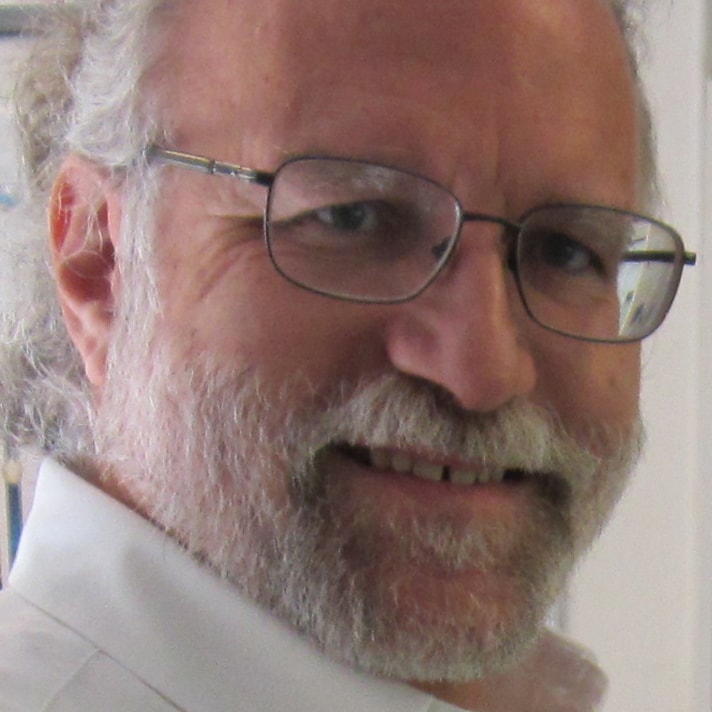 David Hunkeler合作论文数AQUA+TECH Specialties SA2
 Llorenc Mila i Canals合作论文数2Sonia Valdivia合作论文数2
 Hanna-Leena Pesonen合作论文数University of Jyväskylä, University of Jyväskylä2Robert Pagan合作论文数1
 Angela Fisher合作论文数1Archana Datta合作论文数1
 Kinga Grenda合作论文数AQUA+TECH Special1
 Tracey Colley合作论文数Quantitat Sustainabil Assessment QSA Grp, Tech Univ Denmark1
 Philip Nuss合作论文数Center for Industrial Ecology, Yale University1
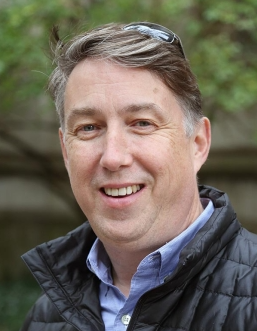 Paul Anastas合作论文数Environmental Health Sciences Department, School of Public Health, Yale University;School of Forestry and Environmental Studies, Yale University;School of the Environment, Yale University1
 William Flanagan合作论文数1
 Raffaele Cucciniello合作论文数Dipartimento di Chimica e Biologia "Adolfo Zambelli", University of Salerno1
 Walter Klopffer合作论文数1Peter Dunn合作论文数Pfizer1
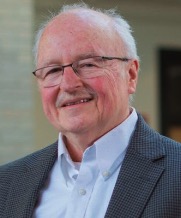 Harry L. Tuller合作论文数Department of Materials Science and Engineering, Massachusetts Institute of Technology1James A. Fava合作论文数1
 Evan Beach合作论文数Ctr Green Chem & Green Engn, Yale Univ1
 Andreas Ciroth合作论文数1
 Ivano Vassura合作论文数Università di Bologna - Polo Scientifico-Didattico di Rimini1
 Stephane Morel合作论文数Domaine de l’Hermitage Lab. de Rhéologie du Bois de Bordeaux, Univ. Bordeaux. 1)1
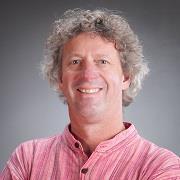 Alan Brent合作论文数School of Engineering and Computer Science, Victoria University of Wellington1Donald L. Maricle合作论文数1Bruce Vigon合作论文数1
 Maria Graca Rasteiro合作论文数1
 Alessandra Zamagni合作论文数LCA & Ecodesign Laboratory, Italian National Agency for New Technologies, Energy and Sustainable Economic Development (ENEA),1
 Fabrizio Passarini合作论文数Branch Industrial Chemistry Department Italy, University of Bologna – Rimini1




