Through optimization of terminal frequencies and effective sampling rates, we have developed nonlinear sawtooth-shaped frequency sweeps for efficient Fourier transform ion mobility mass spectrometry (FT-IM-MS) experiments. This is in contrast to conventional FT-IM-MS experiments where ion gates are modulated according to a linear frequency sweep. Linear frequency sweeps are effective but can be hindered by the amount of useful signal obtained using a single sweep over a large frequency range imposed by ion gating inefficiencies, particularly small ion packets, and gate depletion. These negative factors are direct consequences of the inherently low gate pulse widths of high-frequency ion gating events, placing an upper bound on FT-IM-MS performance. Here, we report alternative ion modulation strategies. Sawtooth frequency sweeps may be constructed for the purpose of either extending high-SNR transients or conducting efficient signal-averaging experiments for low-SNR transients. The data obtained using this approach show high-SNR signals for a set of low-mass tetraalkylammonium salts (<1000 m/z) where resolving powers in excess of 500 are achieved. Data for low-SNR obtained for multimeric protein complexes streptavidin (53 kDa) and GroEL (800 kDa) also reveal large increases in the signal-to-noise ratio for reconstructed arrival time distributions.
Interactions of the peptide substance P (SP) (RPKPQQFFGLM-NH2) with trimethylamine N-oxide (TMAO) were investigated by using cryo-ion mobility-mass spectrometry (cryo-IM-MS), variable-temperature (278-358 K) electrospray ionization (vT-ESI) MS, and molecular dynamics (MD) simulations. Cryo-IM-MS provides evidence that cold solutions containing SP and TMAO yield abundant hydrated SP dimer ions, but dimer formation is inhibited in solutions that also contain urea. In addition, we show that SP dimer formation at cold solution temperatures (<298 K) is favored when TMAO interacts with the hydrophobic C-terminus of SP and is subject to reduced entropic penalty when compared to warmer solution conditions (>298 K). MD simulations show that TMAO lowers the free energy barrier for dimerization and that monomers dimerize by forming hydrogen bonds (HBs). Moreover, differences in oligomer abundances for SP mutants (P4A, P2,4A, G9P, and P2,4A/G9P) provide evidence that oligomerization facilitated by TMAO is sensitive to the cis/trans orientation of residues at positions 2, 4, and 9.
Digital mass filters are advantageous for the analysis of large molecules due to the ability to perform ion isolation of high-m/z ions without the generation of very high radio frequency (RF) and DC voltages. Experimentally determined Mathieu stability diagrams of stability zone 1,1 for capacitively coupled digital waveforms show a voltage offset between the quadrupole rod pairs is introduced by the capacitors which is dependent on the voltage magnitude of the waveform and the duty cycle. This changes the ion's a value from a = 0 to a < 0. These effects are illustrated for isolation for single-charge states for various protein complexes up to 800 kDa (GroEL) for stability zone 1,1. Isolation resolving power (m/Δm) of approximately 280 was achieved for an ion of m/z 12,315 (z = 65+ for 800.5 kDa GroEL D398A), which corresponds to an m/z window of 44.
Variable-temperature electrospray ionization (vT-ESI) native mass spectrometry (nMS) is used to determine the thermodynamics for stepwise binding of up to 14 ATP molecules to the 801 kDa GroEL tetradecamer chaperonin complex. Detailed analysis reveals strong enthalpy-entropy compensation (EEC) for the ATP binding events leading to formation of GroEL-ATP7 and GroEL-ATP14 complexes. The observed variations in EEC and stepwise free energy changes of specific ATP binding are consistent with the well-established nested cooperativity model describing GroEL-ATP interactions, viz., intraring positive cooperativity and inter-ring negative cooperativity (Dyachenko A.; Proc. Natl. Acad. Sci. U.S.A.2013, 110, 7235-7239). Entropy-driven ATP binding is to be expected for ligand-induced conformational changes of the GroEL tetradecamer, though the magnitude of the entropy change suggests that reorganization of GroEL-hydrating water molecules and/or expulsion of water from the GroEL cavity may also play key roles. The capability for determining complete thermodynamic signatures (ΔG, ΔH, and -TΔS) for individual ligand binding reactions for the large, nearly megadalton GroEL complex expands our fundamental view of chaperonin functional chemistry. Moreover, this work and related studies of protein-ligand interactions illustrate important new capabilities of vT-ESI-nMS for thermodynamic studies of protein interactions with ligands and other molecules such as proteins and drugs.
The analysis of large molecules is challenging, as they often have salts and adducts retained through the electrospray process, which increase the observed mass and compromise the achievable mass resolution. Mild collisional activation has been shown to be very effective for the removal of adducts and increases both measurement accuracy and mass resolution of large (>100 kDa) protein complexes. Collisionally activated protein ions are more completely desolvated due to the increased number of collisions when trapped following activation. A short square quadrupole maintained at 300 mTorr by a mechanical pump was added between the ion funnel and transmission quadrupole. This configuration and operation effectively removed adducts from the 800 kDa tetradecamer GroEL as well as fragmented smaller protein complexes like C-reactive protein. Due to the gas high pressure, ions of low size-to-charge ratio, such as those in charge reducing buffers, had low ejection efficiency. We show that segmenting the quadrupole rods greatly improves signal intensity for charge reduced GroEL D398A mutant compared to nonsegmented rods when operating at high pressure.
TRAAK and TREK2 are two-pore domain K+ (K2P) channels and are modulated by diverse factors including temperature, membrane stretching, and lipids, such as phosphatidic acid. In addition, copper and zinc, both of which are essential for life, are known to regulate TREK2 and a number of other ion channels. However, the role of ions in the association of lipids with integral membrane proteins is poorly understood. Here, we discover cupric ions selectively modulate the binding of phosphatidylserine (PS) to TRAAK but not TREK2. Other divalent cations (Ca2+, Mg2+, and Zn2+) bind both channels but have no impact on binding PS and other lipids. Additionally, TRAAK binds more avidly to Cu2+ and Zn2+ than TREK2. In the presence of Cu2+, TRAAK binds similarly to PS with different acyl chains, indicating a crucial role of the serine headgroup in coordinating Cu2+. High-resolution native mass spectrometry (MS) enables the determination of equilibrium binding constants for distinct Cu2+-bound stoichiometries and uncovered the highest coupling factor corresponds to a 1:1 PS-to-Cu2+ ratio. Interestingly, the next three highest coupling factors had a ∼1.5:1 PS-to-Cu2+ ratio. Our findings bring forth the role of cupric ions as an essential cofactor in selective TRAAK-PS interactions.
Charge reduction reactions are important for native mass spectrometry (nMS) because lower charge states help retain native-like conformations and preserve noncovalent interactions of protein complexes. While mechanisms of charge reduction reactions are not well understood, they are generally achieved through the addition of small molecules, such as polyamines, to traditional nMS buffers. Here, we present new evidence that surface-active, charge reducing reagents carry away excess charge from the droplet after being emitted due to Coulombic repulsion, thereby reducing the overall charge of the droplet. Furthermore, these processes are directly linked to two mechanisms for electrospray ionization, specifically the charge residue and ion evaporation models (CRM and IEM). Selected protein complexes were analyzed in solutions containing ammonium acetate and selected trialkylamines or diaminoalkanes of increasing alkyl chain lengths. Results show that amines with higher surface activity have increased propensities for promoting charge reduction of the protein ions. The electrospray ionization (ESI) emitter potential was also found to be a major contributing parameter to the prevalence of charge reduction; higher emitter potentials consistently coincided with lower average charge states among all protein complexes analyzed. These results offer experimental evidence for the mechanism of charge reduction in ESI and also provide insight into the final stages of the ESI and their impact on biological ions.
Biomolecules exist in the ever-changing environment of solution, which defines their structure, stability, dynamics, and function. Moreover, these effects are manifested in protein folding, protein-protein, and protein-ligand interactions. Thermodynamic studies, especially changes in heat capacity ( D C p ), are used to monitor the effects of solution temperature, concentration, ligands and/or co-solutes, but it can be challenging to relate such changes to molecular level reactions. Native mass spectrometry (nMS) has emerged as a complimentary technique to the traditional methods of structural and mechanistic characterization of biomolecules. Coupling of variable-temperature electrospray ionization (vT-ESI) to nMS affords mapping these changes to specific reactants and/or products using m/z -dispersion, whereas traditional thermodynamic measurements provide an ensemble-average of products. Here, we utilize vT-ESI-nMS to quantitate the thermodynamic contributions of stepwise binding of individual ATP or ADP ligands to GroEL—a tetradecamer chaperonin complex capable of binding up to 14 ATP molecules. We also show that small ions ( viz. NH 4+ ) are important contributors to the binding mechanisms of ATP and ADP to GroEL tetradecamer. The thermodynamic measurements reveal extensive enthalpy-entropy compensation (EEC) as well as increased cooperative effects for the formation of GroEL-ATP 14 , whereas similar cooperativity for ADP binding is absent. The thermodynamic data demonstrate that ATP binding in the cis ring (GroEL-ATP 1-7 ) is largely entropic compared with more enthalpically driven reactions for ATP binding to the trans ring (GroEL-ATP 8-14 ), owing to negative inter-ring cooperativity. The overall entropic effects for ATP binding to GroEL tetradecamer are attributed to conformational changes of the GroEL tetradecamer, but the magnitude of the entropy is also attributable to reorganization of GroEL-hydrating water molecules and/or expulsion of water from the GroEL cavity. This study reveals new pathways, viz. nMS, for experimental studies aimed at expanding our understanding of biologically relevant chaperonin functions. that reveal new about stability and stoichiometry GroEL-ATP/GroES interactions. Using variable-temperature electrospray ionization (vT-ESI) GroEL-ATP was and ATP-concentration dependent, indicating that the thermodynamics of this vital interaction for the GroEL nanomachine might reveal new to how the GroEL nanomachine operates. This could provide new strategies for analysis of thermodynamics of individual binding reactions for multi-dentate systems which is especially challenging and remains difficult to achieve with current methods.
Chaperonins are nanomachines that harness ATP hydrolysis to power and catalyze protein folding, chemical action that is directly linked to the maintenance of cell function through protein folding/refolding and assembly. GroEL and the GroEL-GroES complex are archetypal examples of such protein folding machines. Here, variable-temperature-electrospray ionization (vT-ESI) native mass spectrometry is used to delineate the effects of solution temperature and ATP concentrations on the stabilities of GroEL and GroEL/GroES complexes. The results show clear evidences for destabilization of both GroEL14 and GroES7 at temperatures of 50 oC and 45 oC, respectively, substantially below the previously reported melting temperature (Tm ~ 70 oC). This destabilization is accompanied by temperature-dependent reaction products that have previously unreport-ed stoichiometries, viz. GroEL14-GroESx-ATPy, where x = 1, 2, 8 and y = 0, 1, 2, that are also dependent on Mg2+ and ATP concentrations. Variable-temperature native mass spectrometry reveals new insights about the stability of GroEL in response to several environmental effects: (i) temperature-dependent ATP binding to GroEL (ii) effects of temperature as well as Mg2+ and ATP concentrations on the stoichiometry of the GroEL-GroES complex, with Mg2+ showing greater effects compared to ATP; and, (iii) a change in the temperature-dependent stoichiometries of the GroEL-GroES complex (GroEL14-GroES7 vs GroEL14-GroES8) between 24 to 56 oC. The similarities between results obtained using native MS and cryo-EM (Clare et al., An expanded protein folding cage in the GroEL-gp31 complex. J Mol Biol 2006, 358, 905-11; Ranson et al., Allosteric signaling of ATP hydrolysis in GroEL–GroES complexes. Nat. Struct. Mol. Biol. 2006, 13, 147-152.) underscores the util-ity of native MS for investigations of molecular machines as well as identification of key intermediates involved in the chaperone-assisted protein folding cycle.
Stabilities and structure(s) of proteins are directly coupled to their local environment or Gibbs free energy landscape as defined by solvent, temperature, pressure, and concentration. Solution pH, ionic strength, cofactors, chemical chaperones, and osmolytes perturb the chemical potential and induce further changes in structure, stability, and function. At present, no single analytical technique can monitor these effects in a single measurement. Mass spectrometry and ion mobility-mass spectrometry play increasingly essential roles in studies of proteins, protein complexes, and even membrane protein complexes; however, with few exceptions, the effects of the solution temperature on the stability and structure(s) of analytes have not been thoroughly investigated. Here, we describe a new variable-temperature electrospray ionization (vT-ESI) source that utilizes a thermoelectric chip to cool and heat the solution contained within the static ESI emitter. This design allows for solution temperatures to be varied from ∼5 to 98 °C with short equilibration times (<2 min) between precisely controlled temperature changes. The performance of the apparatus for vT-ESI-mass spectrometry and vT-ESI-ion mobility-mass spectrometry studies of cold- and heat-folding reactions is demonstrated using ubiquitin and frataxin. Instrument performance for studies on temperature-dependent ligand binding is shown using the chaperonin GroEL.
Understanding the molecular driving forces that underlie membrane protein-lipid interactions requires the characterization of their binding thermodynamics. Here, we employ variable-temperature native mass spectrometry to determine the thermodynamics of lipid binding events to the human G-protein-gated inward rectifier potassium channel, Kir3.2. The channel displays distinct thermodynamic strategies to engage phosphatidylinositol (PI) and phosphorylated forms thereof. The addition of a 4'-phosphate to PI results in an increase in favorable entropy. PI with two or more phosphates exhibits more complex binding, where lipids appear to bind two nonidentical sites on Kir3.2. Remarkably, the interaction of 4,5-bisphosphate PI with Kir3.2 is solely driven by a large, favorable change in entropy. Installment of a 3'-phosphate to PI(4,5)P-2 results in an altered thermodynamic strategy. The acyl chain of the lipid has a marked impact on binding thermodynamics and, in some cases, enthalpy becomes favorable.
Here, we describe a digital-waveform dual-quadrupole mass spectrometer that enhances the performance of our drift tube FT-IMS high-resolution Orbitrap mass spectrometer (MS). The dual-quadrupole analyzer enhances the instrument capabilities for studies of large protein and protein complexes. The first quadrupole (q) provides a means for performing low-energy collisional activation of ions to reduce or eliminate noncovalent adducts, viz., salts, buffers, detergents, and/or endogenous ligands. The second quadrupole (Q) is used to mass-select ions of interest for further interrogation by ion mobility spectrometry and/or collision-induced dissociation (CID). Q is operated using digital-waveform technology (DWT) to improve the mass selection compared to that achieved using traditional sinusoidal waveforms at floated DC potentials (>500 V DC). DWT allows for increased precision of the waveform for a fraction of the cost of conventional RF drivers and with readily programmable operation and precision (Hoffman, N. M. . A comparison-based digital-waveform generator for high-resolution duty cycle. Review of Scientific Instruments 2018, 89, 084101).
Studies of large proteins, protein complexes, and membrane protein complexes pose new challenges, most notably the need for increased ion mobility (IM) and mass spectrometry (MS) resolution. This review covers evolutionary developments in IM‐MS in the authors' and key collaborators' laboratories with specific focus on developments that enhance the utility of IM‐MS for structural analysis. IM‐MS measurements are performed on gas phase ions, thus “structural IM‐MS” appears paradoxical— do gas phase ions retain their solution phase structure? There is growing evidence to support the notion that solution phase structure(s) can be retained by the gas phase ions. It should not go unnoticed that we use “structures” in this statement because an important feature of IM‐MS is the ability to deal with conformationally heterogeneous systems, thus providing a direct measure of conformational entropy. The extension of this work to large proteins and protein complexes has motivated our development of Fourier‐transform IM‐MS instruments, a strategy first described by Hill and coworkers in 1985 ( Anal Chem , 1985, 57 , pp. 402–406) that has proved to be a game‐changer in our quest to merge drift tube (DT) and ion mobility and the high mass resolution orbitrap MS instruments. DT‐IMS is the only method that allows first‐principles determinations of rotationally averaged collision cross sections (CSS), which is essential for studies of biomolecules where the conformational diversities of the molecule precludes the use of CCS calibration approaches. The Fourier transform‐IM‐orbitrap instrument described here also incorporates the full suite of native MS/IM‐MS capabilities that are currently employed in the most advanced native MS/IM‐MS instruments. © 2020 John Wiley & Sons Ltd. Mass Spec Rev
Rotationally averaged collision cross section (CCS) values for a series of proteins and protein complexes ranging in size from 8.6 to 810 kDa are reported. The CCSs were obtained using a native electrospray ionization drift tube ion mobility-Orbitrap mass spectrometer specifically designed to enhance sensitivity while having high-resolution ion mobility and mass capabilities. Periodic focusing (PF)-drift tube (DT)-ion mobility (IM) provides first-principles determination of the CCS of large biomolecules that can then be used as CCS calibrants. The experimental, first-principles CCS values are compared to previously reported experimentally determined and computationally calculated CCS using projected superposition approximation (PSA), the Ion Mobility Projection Approximation Calculation Tool (IMPACT), and Collidoscope. Experimental CCS values are generally in agreement with previously reported CCSs, with values falling within ∼5.5%. In addition, an ion mobility resolution (CCS centroid divided by CCS fwhm) of ∼60 is obtained for pyruvate kinase (MW ∼ 233 kDa); however, ion mobility resolution for bovine serum albumin (MW ∼ 68 kDa) is less than ∼20, which arises from sample impurities and underscores the importance of sample quality. The high resolution afforded by the ion mobility-Orbitrap mass analyzer provides new opportunities to understand the intricate details of protein complexes such as the impact of post-translational modifications (PTMs), stoichiometry, and conformational changes induced by ligand binding.
 David Russell合作论文数Department of Chemistry, Texas A&M University13
 Arthur Laganowsky合作论文数College of Natural Sciences;California State University;College of Natural Sciences, California State University9
 Jacob W McCabe合作论文数Dept Chem, Texas A&M Univ6
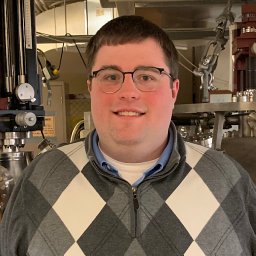 Robert L Schrader合作论文数Department of Chemistry, Texas A&M University4
 Mehdi Shirzadeh合作论文数Dept Chem, Texas A&M Univ4
 Jixing Lyu合作论文数3
 David Clemmer合作论文数Department of Chemistry, The College of Arts + Sciences, Indiana University;Clemmer Group, Indiana University3
 Vicki Wysocki合作论文数Department of Chemistry and Biochemistry, Ohio State University3He Mirabel Sun合作论文数2Michael J Hebert合作论文数2Christopher S Mallis合作论文数2Samantha Schrecke合作论文数2
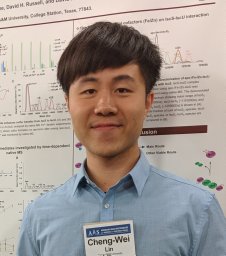 Cheng-Wei Lin合作论文数Department of Chemistry, Texas A & M University2Tianqi Zhang合作论文数2Yun Zhu合作论文数2
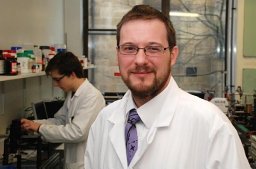 Benjamin J Jones合作论文数School of Applied Sciences, Abertay University2
 Gordon A. Anderson合作论文数Environmental Molecular Sciences Laboratory, Pacific Northwest National Laboratory2
 Peter T. A. Reilly合作论文数Department of Chemistry;University of Illinois at Chicago;Department of Chemistry, University of Illinois at Chicago2
 Hays S. Rye合作论文数Howard Hughes Medical Institute, Yale School of Medicine2
 Xin Yan合作论文数Department of Chemistry, Texas A&M University1Lauren Stover合作论文数1Smriti Kumar合作论文数1Carter Lantz合作论文数1Pei Qiao合作论文数1Tiffany Gunnels合作论文数1Sumeet Chakravorty合作论文数1Liqi Fan合作论文数Department of Chemistry, Texas A&M University1Shuli Tang合作论文数Dept Chem, Texas A&M Univ1
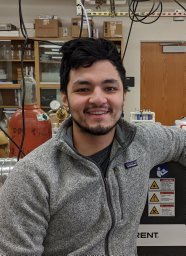 Elvin R Cabrera合作论文数Department of Chemistry, Washington State University1
 Melanie Odenkirk合作论文数1Klaudia I Kocurek合作论文数Dept Chem, Texas A&M Univ1Zahra Moghadamchargari合作论文数Texas A&M Univ, Dept Chem, College Stn, TX 77843 USA1Andrew Roth合作论文数Texas A&M Univ, Dept Biochem & Biophys, College Stn, TX 77845 USA1Adam P Huntley合作论文数Biological Sciences Division, Pacific Northwest National Laboratory1
 David P Barondeau合作论文数Dept Chem, Texas A&M Univ1
 Xueyun Zheng合作论文数Biological Sciences Division, Pacific Northwest National Laboratory1
 Shiyu Dong合作论文数Nanjing University, Nanjing University1Hoffman Nathan M合作论文数1Poltash Michael L合作论文数1
 Brian Clowers合作论文数Department of Chemistry, College of Arts & Sciences, Washington State University1




