Radio Frequency (RF) sensing is an emerging technology paradigm to utilize electromagnetic signals scattered off objects or subjects for sensing. The technology repurposes existing wireless communication networks for imaging and computer vision applications, namely ambient human sensing. For communication systems (i.e., cellular, Wi-Fi), this results in a ubiquitous sensing infrastructure, able to "photograph" an environment, connect stimuli to a larger local, national or global picture, and to track subjects seamlessly. The possible social and ethical implications may be surprising and drastic and are currently underexplored. The article showcases promising research directions in this new field and lays the groundwork for ethically compliant technology design, highlighting the challenges and potential solutions that can stimulate new research.
Microwave imaging is commonly based on the solution of linearized inverse scattering problems by matched-filtering algorithms, i.e., by applying the adjoint of the forward scattering operator to the observation data. A more rigorous approach is the explicit inversion of the forward scattering operator, which is performed in this work for quasi-monostatic imaging scenarios based on a planar plane-wave representation according to the Weyl-identity and hierarchical acceleration algorithms. The inversion is achieved by a regularized iterative linear system of equations solver, where irregular observations as well as full probe correction are supported. In the spatial image generation, low-pass filtering can be considered in order to reduce imaging artifacts. A corresponding spectral back-projection algorithm (BPA) and a spatial BPA together with improved focusing operators are also introduced, and the resulting image generation algorithms are analyzed and compared for a variety of examples, comprising both simulated and measured observation data. It is found that the inverse source solution generally performs better in terms of robustness, focusing capabilities, and image accuracy compared with the adjoint imaging algorithms either operating in the spatial or spectral domain. This is especially demonstrated in the context of irregular sampling grids with nonideal or truncated observation data and by evaluating all reconstruction results based on a rigorous quantitative analysis.
A 3D near-field (NF) passive radar imaging approach for complex environments is presented. It utilizes frequency domain inverse source solutions and spatial image generation by coherent superposition of the automatically phase corrected single-frequency images. The fields scattered from the imaging scene together with the fields radiated from the illuminating transmitter (Tx) are captured through NF measurements. The single-frequency inverse source solutions reconstruct simultaneously equivalent surface sources for the (Tx), the targets of interest (TOIs), and possibly present echo scatterers, which are subsequently separated due to its spatial localization. Spectral representations are computed for the Tx and TOI sources and single-frequency 3D images are obtained by hierarchical disaggregation. Finally, the single-frequency images are coherently superimposed utilizing an appropriate phase correction methodology. The phase correction is derived from the reconstructed Tx sources and compensates for the spatially varying phase shifts between the Tx and the scatterers, as well as for delays caused by the measurement instrumentation. Both numerical simulations and experimental measurement results are shown to validate the feasibility of the approach.
Automotive near-field (NF) antenna measurements above a dielectric, possibly lossy halfspace enable an accurate characterization of the antenna radiation especially for frequencies below around 300 MHz, where mutual interactions between the automobile with integrated antenna and the ground become relevant. In order to correctly consider these effects, an inverse source solver with exact Sommerfeld integral representation of the pertinent Green's functions is presented. The Sommerfeld integrals are numerically evaluated for a mixed-potential integral representation of the fields with real-axis integration and quasistatic image extraction. As such, the inverse source operator is pre-computed as a system matrix, in order to allow for an efficient iterative solution of the inverse source problem and the related antenna field transformation. The accuracy of the approach is demonstrated for hemispherical observation data of a backlight broadcast antenna on a metallic car body.
To reconstruct equivalent electric surface currents from irregularly distributed observations of the fields radiated by a device under test (DUT), we investigate a low-frequency stabilized formulation based on a quasi-Helmholtz decomposition: Rao-Wilton-Glisson (RWG) basis functions are employed for the equivalent surface currents, dipoles as probe antennas, and the relation between probes and sources is established via integral operators. Since, in general, a rectangular linear system of equations (LSE) is obtained, we analyze both the normal-residual system of equations (NRE) and the normal-error system of equations (NEE) for an iterative solution with a generalized minimum residual (GMRES) solver. Specifically, our analysis shows that a self-adaptive normalization scheme is needed in both cases, where the scheme itself can remain the same.
In order to better understand the wet antenna attenuation (WAA) effect in opportunistic rainfall estimation using commercial microwave links (CMLs), near-field measurements of a standard CML antenna under test (AUT) are performed under dry and wet conditions, and equivalent surface currents (ESCs) on the antenna radome are reconstructed. The far field (FF) of the wet AUT shows an overall reduced electric field magnitude around the boresight direction compared to the dry AUT. We deduce a simple and intuitive absorption-based electromagnetic drop model for corresponding local manipulations of the dry antenna ESC distribution at individual drops and show the consistency of the modeled WAA with corresponding measurements. After validation, the model is applied to synthetic but realistic drop distributions as they accumulate during dew and rain. For both cases, justifiable WAA values are obtained, and a linear relation between WAA and the approximate radome area occupied by drops is demonstrated.
Based on a plane-wave expansion of the observation data in quasi-planar multi-static scattering scenarios, an improved formalism for image creation utilizing back-projection in the spatial domain is derived. The underlying integral expressions for different focusing operators are derived analytically leading to magnitude correction factors, which are mostly relevant for reconstructing microwave images when the distance from the scattering object to the aperture plane is small. It is shown that the derived imaging procedure is superior to the traditional back-projection only compensating the phase delay of the measurement signals and validate our findings based on simulated as well as measured data. Since the derived focusing operators correspond to a low-pass filtering of the spatial images, the resulting modified multi-static back-projection algorithms effectively suppress imaging artifacts as well.
Reconstructed equivalent currents on the surface of an antenna under test (AUT) can indicate local defects of the antenna structure. An accurate analysis of electrically large AUTs commonly requires a large number of potentially redundant measurement samples causing prolonged acquisition times. We combine the prior knowledge of sparsely localized defects with the pronounced directivity of large antennas. Employing local basis functions, the difference of the equivalent sources of the AUT with and without defects can be expected to be sparse. Cognizant of the large directivity of the AUT, we additionally employ spectral filtering of the radiated far field in the reconstruction process. Measurement results indicate the potential to significantly reduce the required number of samples while retaining reasonably accurate diagnostic information. A reduction of the number of measurement samples from 16 960 to 3000, i.e., by more than 80 percent, has been achieved with a real-world setup.
The two- and three-antenna methods are well established measurement techniques for determining the gains of unknown antennas under test (AUTs) without the need for a known probe antenna. In its original versions, both approaches require far-field (FF) conditions and can only be approximately applied to near-field (NF) antenna measurements. We present a three-antenna method suitable for any measurement distance, including NF measurements. Based on an inverse-source formulation, nonlinear systems of equations corresponding to an NF $\mathbf{FF}$ transformation (NFFFT) with unknown probe behavior are formulated and solved via two iterative approaches. Simulations indicate that accurate results can be obtained despite the inherent nonconvexity of the problem even at close distances where the classical three-antenna method is highly imprecise.
A ray tracing framework based on the utilization of multiple Huygens surfaces is introduced and evaluated. As such, complex propagation environments are divided into smaller subdomains, thereby restricting rays to traverse within a smaller, simpler space. The subdomains are surrounded by the Huygens surfaces and equivalent Huygens sources interconnect the ray based field representations in neighboring subdomains. Compared to conventional shooting and bouncing rays (SBR) based ray tracing simulations, which rely on reception spheres to identify ray hits, this approach reduces the errors caused by ray misses, because Huygens surfaces can have larger sizes than reception spheres, and rays need to travel shorter distances within each subdomain. Related to diffraction computations, which rely conventionally on the uniform theory of diffraction (UTD), the flexibility of choosing Huygens surfaces allows to separate diffraction edges into different subdomains, thus, eliminating the need for consecutive UTD evaluations and the corresponding exponential increase in the number of diffracted rays. Together with smart ray launching strategies and quickly converging integration methods, the presented approach allows to evaluate more than 10 successive diffractions with reasonable accuracy. The implementation is based on graphics processing units (GPUs), which enable massively parallelized simulations.
In quantitative precipitation estimation with point-to-point commercial microwave links, the observed path attenuation of interest can be strongly influenced by wetness on the antenna radomes. Wet antenna attenuation (WAA) can, therefore, cause considerable overestimation of rain rates. In order to better understand WAA, we investigate full-wave electromagnetic reflection and transmission simulations of randomly wetted antenna radomes utilizing a doubly-periodic unit cell model. The physical effects of scattering and absorption of energy by individual water residuals are fully considered in the simulation. We show minimum-maximum ranges of plane-wave transmission and reflection coefficients of the wet radome for different drop densities.
In order to low-frequency stabilize the isogeometrically discretized electric field integral equation (EFIE) based on B-splines, we derive quasi-Helmholtz projectors to form a preconditioner. To this end, we show how the projectors can be obtained efficiently for arbitrary polynomial orders of the basis functions. The approach is valid for single- and multi-patch descriptions of the geometry, which can be open or closed as well as simply or multiply connected without the need to search for global loops. Numerical results demonstrate the derived preconditioner's effectiveness in obtaining accurate scattered and radiated fields.
The hitherto first conforming higher-order discretization of the magnetic field integral equation (MFIE) is presented. Non-conforming discretizations of the MFIE lead to a loss of accuracy and make it impossible to obtain low-frequency stable formulations. So far, however, only a lowest-order conforming discretization of the MFIE has been presented by leveraging Buffa-Christiansen (BC) functions, which are dual to the lowest-order Rao-Wilton-Glisson (RWG) functions, limiting the speed of convergence. We obtain a conforming high-order discretization by utilizing B-spline-based basis functions and establishing a set of dual basis functions, which can be regarded as a generalization of the (low-order) BC functions known from triangular meshes. Numerical results demonstrate the effectiveness of the proposed discretization scheme.
In order to low-frequency stabilize the electric field integral equation (EFIE) when discretized with divergence conforming B-spline-based basis and testing functions in an isogeometric approach, we propose a corresponding quasi-Helmholtz preconditioner. To this end, we derive i) a loop-star decomposition for the B-spline basis in the form of sparse mapping matrices applicable to arbitrary polynomial orders of the basis as well as to open and closed geometries described by single-patch or multipatch parametric surfaces (as an example, nonuniform rational B-splines (NURBS) surfaces are considered). Based on the loop-star analysis, we show ii) that quasi-Helmholtz projectors can be defined efficiently. This renders the proposed low-frequency stabilization directly applicable to multiply-connected geometries without the need to search for global loops and results in better-conditioned system matrices compared with directly using the loop-star basis. Numerical results demonstrate the effectiveness of the proposed approach.
A highly flexible, stencil-printed coplanar waveguide (CPW) attached to a rugged nylon 66 substrate for carrying radio frequency (RF) signals up to 6 GHz is presented. In a manual, facile, and cost-effective printing process, this transmission line is applied directly on a car airbag's textile substrate with a highly elastic, strong adhesive, silver-based ink. The design idea, the manufacturing process, and microscope images are presented and discussed. Measured and full-wave simulated scattering parameters of this two-port waveguide demonstrate the effectiveness of the design approach and reveal expected shortcomings primarily due to limited conductivity and considerable surface roughness. Despite the rough, woven, coated, very lossy dielectric nylon substrate, the simple manufacturing process, the limited conductivity of the ink, and the glued-on connectors, a flexible yet stretchable RF planar transmission line is obtained.
The quality of antenna and radar cross section measurement chambers is strongly dependent on the absorption behavior of the installed wave absorbers.It is demonstrated that the behavior of the absorbers can be assessed and illustrated with excellent spatial resolution by powerful microwave imaging techniques.When the absorbers are subjected to an illumination source, the fast irregular antenna field transformation algorithm (FIAFTA) enables simultaneous reconstruction of equivalent sources for both the illuminating source and the scatterers from near-field measurements.This process effectively implements echo suppression, allowing for the isolation of weakly scattered fields, primarily caused by the wave absorbers.Building upon this foundation, the application of microwave imaging technology enables the visual representation and examination of the absorbers.Experimental measurement results are shown to validate the feasibility of the approach.
The radiation model of inverse source solvers representing an antenna under test (AUT) relies on a discretized spatial equivalent source distribution and the source expansion coefficients are found such that their radiation reproduces known field observations. The required number of field observations, where in particular its spatial density is of interest, depends on the number of degrees of freedom of the radiation fields and, thus, on the spatial extent of the sources. For source distributions producing a narrow far-field radiation pattern, the number of degrees of freedom is reduced as compared to the general case and the spatial observation density can, thus, be reduced considerably. Since a general purpose inverse source solver requires the full set of observation samples as possibly supported by its spatial source distribution, we consider a solver with a spectrally filtered radiation operator, where the filtering is performed in the translation step of the underlying propagating plane-wave representation as known from the multilevel fast multipole method. The spectrally filtered inverse source solver is shown to reliably work with observation data with considerably reduced sample densities as compared to the commonly necessary sample densities, thus, allowing also considerably reduced acquisition times in antenna measurements. The spectral filtering can, moreover, lead to considerable computational speed-ups and it is still possible to identify possibly occurring problems of the AUT, which destroy the assumption of the narrow far-field radiation pattern and which do need to be detected in antenna testing.
The electric field integral equation (EFIE) is widely employed to determine the field that is scattered from perfectly electrically conducting (PEC) structures. However, it is known to suffer from a low-frequency breakdown. In order to overcome this breakdown for a B-spline based (isogeometric) discretization of arbitrary polynomial order of the EFIE employing the method of moments, we propose a loop-star decomposition of the discretized surface current density resulting in a preconditioner involving solely sparse matrices. The proposed decomposition is applicable to open and closed simply-connected surfaces described by a single or by multiple patches. To verify the correctness of the proposed method, numerical examples are provided.
We present a multiplicative Calderon preconditioner for the electric field integral equation (EFIE) when discretized with B-spline-based basis functions, that is, the resulting formulation is free from the dense-discretization breakdown. We obtain the preconditioner by establishing a set of suitable dual basis functions, which can be explicitly expressed as a superposition of a refined discretization, as is known from the (low-order) Buffa-Christiansen (BC) functions. In contrast to the BC functions, our approach applies to arbitrary polynomial degrees of the basis functions for single- and multi-patch (curvilinear) descriptions of the geometry, which can be open or closed. Numerical results demonstrate the optimal nature of the derived preconditioner.
 Uwe Siart合作论文数74
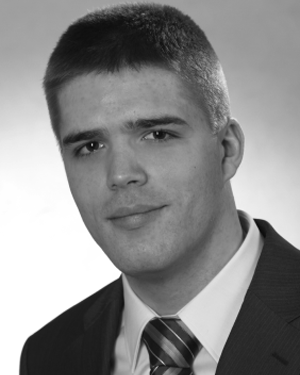 Carsten H. Schmidt合作论文数44
 Jonas Kornprobst合作论文数School of Computation, Information and Technology, Technical University of Munich37
 Simon Adrian合作论文数Lehrstuhl fur Hochfrequenztech., Tech. Univ. Munchen;c;Lehrstuhl fur Hochfrequenztech., Tech. Univ. Munchen34
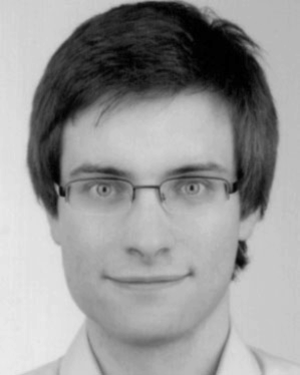 Mauermayer, R.A.M.合作论文数33
 Francesco Paolo Andriulli合作论文数Institut Mines-Telecom Atlantique30
 Josef Knapp合作论文数26
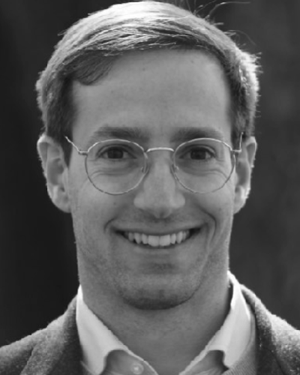 Alexander Paulus合作论文数26
 Kun Wang (王昆)合作论文数School of Microelectronics, Northwestern Polytechnical University24
 Gerhard F. Hamberger合作论文数Rohde & Schwarz GmbH & Co. KG23
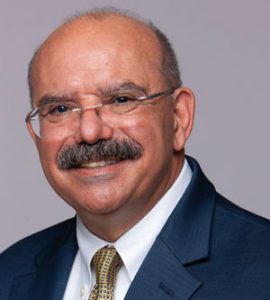 John L. Volakis合作论文数Department of Electrical & Computer Engineering, College of Engineering and Computing, Florida International University20
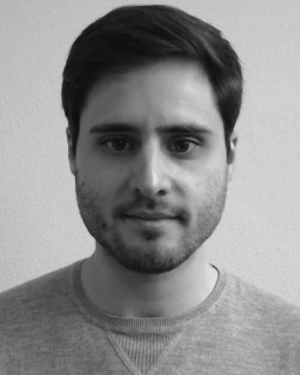 Bernd Hofmann合作论文数19
 Mehmet Mert Taygur合作论文数Technical University Munich18
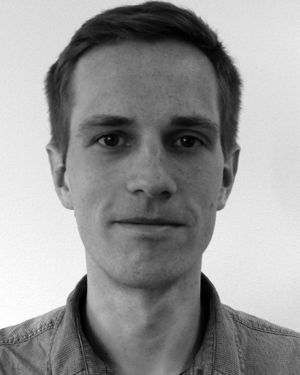 Ole Neitz合作论文数17
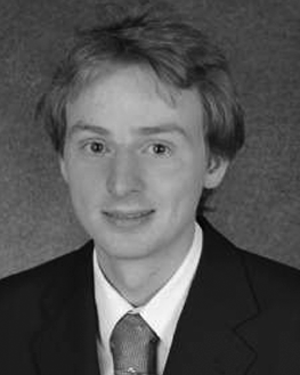 Georg Schnattinger合作论文数16
 Buddendick, H.合作论文数14
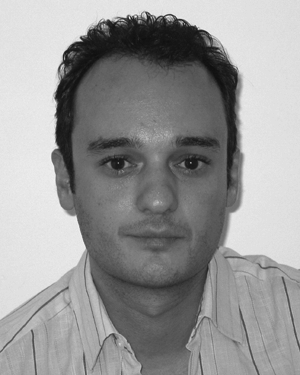 Andreas Tzoulis合作论文数14
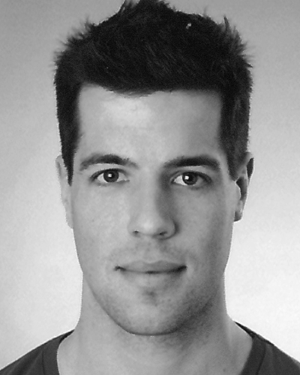 Christian Koenen合作论文数13
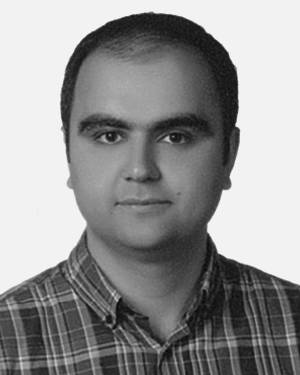 Emre Kilic合作论文数13
 V. Hansen合作论文数11
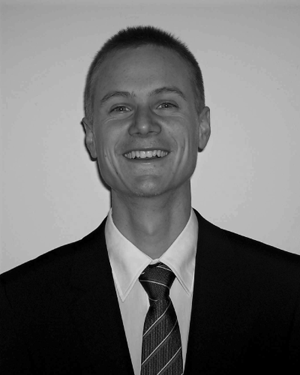 Stefan Trummer合作论文数11
 Yvonne Weitsch合作论文数11
 Fabian T. Faul合作论文数Dept Elect & Comp Engn, Tech Univ Munich10
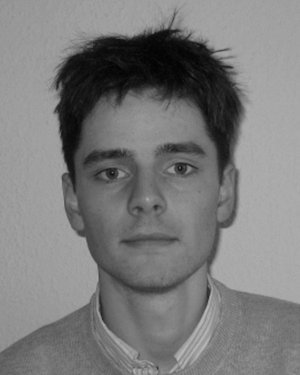 Robert Brem合作论文数10
 Leibfritz, M.合作论文数10Thomas J. Mittermaier合作论文数9
 Matthias G. Ehrnsperger合作论文数9
 Christoph J Eisner合作论文数9
 Marcel D. Blech合作论文数9
 Thomas Vaupel合作论文数9Stefan Punzet合作论文数8
 Torsten Fritzel合作论文数8
 Dennis T Schobert合作论文数8
 Arndt T Ott合作论文数8M. E. Gruber合作论文数8
 Andrey Osipov合作论文数Institute of Radiophysics, The St. Petersburg State University8
 Harald Kunstmann合作论文数Karlsruhe Institute of Technology, Institute of Meteorology and Climate Research (IMK-IFU);Institute of Geography, University of Augsburg8
 Hicham Tazi合作论文数7
 Matthias M. Saurer合作论文数7
 Han Na合作论文数7S Hipp合作论文数7
 Safiullah Khan合作论文数Department of IT Convergence Engineering, Gachon University, Seongnam 13120, Korea.7
 Hansjürgen Steiner合作论文数7
 Hossein Azodi合作论文数Fac. of EEMCS, Delft Univ. of Technol.;c7
 Ulrich Stroth合作论文数7
 Yunus E. Erdemli合作论文数Electronics and Computer Education Department7
 m ayyaz qureshi合作论文数6Ezgi Özis合作论文数6Tooni, Sakineh合作论文数6




