Context. In 2003, the Sun and the Earth passed through both the equatorial plane of Jupiter and therefore the orbital planes of its main satellites.Aims. During this period, mutual eclipses and occultations were observed and we present the data collected.Methods. Light curves of mutual eclipses and occultations were recorded by the observers of the international campaign PHEMU03 organized by the Institut de mecanique celeste, Paris, France.Results. We completed 377 observations of 118 mutual events from 42 sites and the corresponding data are presented in this paper. For each observation, information about the telescope, receptor, site, and observational conditions are provided.Conclusions. This paper gathers all data and indicates a first estimate of its precision. This catalogue of these rare events should constitute an improved basis for accurate astrometric data useful in the development of dynamical models.
In 1997 the Sun and the Earth passed through the equatorial plane of Jupiter and therefore through the orbital planes of its main satellites. During this period, mutual eclipses and occultations occurred and were observed. We investigate the precision of the catalogue to produce improved data for the development of dynamical models. Light curves of mutual eclipses and occultations were recorded by the observers of the international campaign PHEMU97 organized by the Institut de Mecanique Celeste, Paris, France. We made 275 observations of 148 mutual events from 42 sites. For each observation, information is given about the telescope, the receiver, the site and the observational conditions. This paper gathers together the data and gives a first estimate of the precision. The catalogue of these rare events represents a collection of improved accurate astrometric data useful for the development of dynamical models.
In this paper, all the light-curves obtained during the PHEMU91 campaign of observations of the mutual phenomena of the Galilean satellites are presented. These observations give accurate astrometric positions of major interest for dynamical studies of the motion of the Galilean satellites. The aim of this work is to give observational data directly usable for theoretical studies. We made 374 observations of 111 mutual events from 56 sites. The corresponding data are given in this paper(1). The accuracy of each observation has been deduced from a comparison with the theoretical predictions. For each observation, information is given about the telescope, the receptor, the site and the observational conditions.
 j j sacre合作论文数7Jean-Eudes Arlot合作论文数7
 Pascal Descamps合作论文数Institut de mécanique céleste et de calcul des éphémérides 77, Observatoire de Paris7
 William Thuillot合作论文数7
 Ricard Casas合作论文数6
 R. Vasundhara合作论文数5ch ruatti合作论文数4F. Colas合作论文数4g helmer合作论文数4Jerome Berthier合作论文数Institut de mécanique céleste/BDL, URA 707 du CNRS 77 avenue Denfert Rochereau F-75014 Paris France 77 avenue Denfert Rochereau F-75014 Paris France4C. Blanco合作论文数4Gerard Dourneau合作论文数4Jean Lecacheux合作论文数4Vlad Turcu合作论文数4h denzau合作论文数4A Mallama合作论文数3j gerbos合作论文数3m appakutty合作论文数3d chis合作论文数3S. Foglia合作论文数3E. Bredner合作论文数3A. Amossé合作论文数3d t vu合作论文数3V. Priban合作论文数3P. Vingerhoets合作论文数3C. Ruatti合作论文数3J. Garlitz合作论文数3e m trunkovsky合作论文数3
 c bauer合作论文数Inst Kernphys, Tech Univ Darmstadt3g oprescu合作论文数3M. Rapaport合作论文数3Victor G Tejfel合作论文数3Sirko Molau合作论文数3
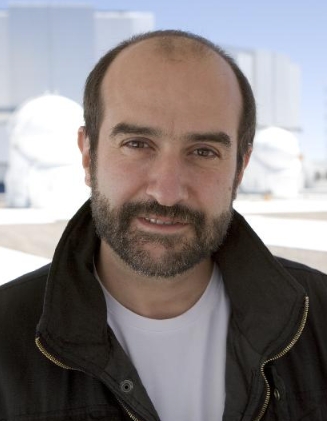 Olivier Hainaut合作论文数European Southern Observatory3Apostolos A. Christou合作论文数3N. V. Emelianov合作论文数3J.-F. Le Campion合作论文数3N. I. Dorokhov合作论文数3
 Flavio Salvaggio合作论文数Department of Clinical Medicine, University of Insubria3D. Fiel合作论文数3B. Nicolet合作论文数3R. Burchi合作论文数3J. M. Desbats合作论文数3Jan Cuypers合作论文数3
 Agnes Fienga合作论文数Astronomie et Systemes Dynamiques3J. Bourgeois合作论文数3A DIPAOLANTONIO合作论文数3F. Bosq合作论文数3G. Montignac合作论文数3




