The exploratory and interactive visualization of big spatial data is becoming increasingly important in business, science, and many other application areas. In this paper, we discuss the Circle Merging Quadtree, an efficient method for aggregating and visualizing big spatial point data on commodity hardware.
The visualization of spatial data is becoming increasingly important in science, business and many other areas. There are two main reasons for this: First, the amount of spatial data is growing continuously, making it impossible for people to manually process the data in raw form. Secondly, users have very high demands on the interactive processing of big spatial data in visual form. For instance in geography, data often corresponds to a large number of point observations that should be displayed on a constrained screen with limited resolution. This causes two crucial problems: drawing a lot of points is expensive at runtime and leads to a loss of information due to an overloaded and occluded visualization. In this paper we present a new efficient visualization algorithm that avoids these problems by aggregating point data into a set of non-overlapping circles with the following properties: (i) they follow the distribution of the data, (ii) they represent the cardinality of the underlying point subset by the circle area, (iii) they reveal hot spots while simultaneously keeping outliers, and (iv) the number of circles is typically much smaller than the number of points. Based on a quadtree, our algorithm computes the circles in linear time with respect to the number of points. Experimental results confirm its excellent runtime and quality in comparison to competitors.
In this paper, we present a novel approach to solve the labeled point cloud superpositioning problem for performing structural comparisons of protein binding sites. The solution is based on a parallel evolution strategy that operates on large populations and runs on GPU hardware. The proposed evolution strategy reduces the likelihood of getting stuck in a local optimum of the multimodal real-valued optimization problem represented by labeled point cloud superpositioning. The performance of the GPU-based parallel evolution strategy is compared to a previously proposed CPU-based sequential approach for labeled point cloud superpositioning, indicating that the GPU-based parallel evolution strategy leads to qualitatively better results and significantly shorter runtimes, with speed improvements of up to a factor of 1,500 for large populations. Binary classification tests based on the ATP, NADH, and FAD protein subsets of CavBase, a database containing putative binding sites, show average classification rate improvements from about 92 percent (CPU) to 96 percent (GPU). Further experiments indicate that the proposed GPU-based labeled point cloud superpositioning approach can be superior to traditional protein comparison approaches based on sequence alignments.
The efficient management of metric data is extremely important in many challenging applications as they occur e.g. in the life sciences. Here, data typically cannot be represented in a vector space. Instead, a distance function only allows comparing individual elements with each other to support distance queries. As high-dimensional data suffers strongly from the curse of dimensionality, distance-based techniques also allow for better handling of such data. This has already led to the development of a plethora of metric indexing and processing techniques. So far, the important problem of cardinality estimation on metric data has not been addressed in the literature. Standard vector-based techniques like histograms require an expensive and error-prone embedding. Thus, random sampling seems to be the best choice for selectivity estimation so far, but errors are very high for moderately small queries. In this paper, we present a native cardinality estimation technique for distance queries on metric data based on kernel-density estimation. The basic idea is to apply kernels to the one-dimensional distance function among metric objects and to use novel global and local bandwidth optimization methods. Our results on real-world data sets show the clear advantage of our method in comparison to its competitors.
Visualizing large amounts of point data in a way that resembles the density of the distribution is a complex problem if the size of the drawing area is constrained. Naïvely drawing points on top of each other leads to occlusion and therefore a loss of information. An intuitive approach is combining close points as clusters that resemble their size as well as their geographic location. However, traditional clustering algorithms are not designed for visual clusterings rather than minimizing an error function independent of a graphical representation. This paper introduces measures for the quality of circle representations based on clustering outputs. Our experimental evaluation revealed that all methods had weaknesses regarding at least one of these criteria.
The visualization of spatial data becomes increasingly important in science, business and many other domains. In geography, data often corresponds to a large number of point observations that should be displayed on a constrained screen with limited resolution. This causes, however, a loss of information due to an overloaded and occluded visualization. In this paper we present a new visualization algorithm that avoids this problem by aggregating point data into a set of non-overlapping circles that capture all important information. Our algorithm based on a quadtree computes the circles in linear time with respect to the number of points.
CavBase is a database containing information about the three-dimensional geometry and the physicochemical properties of putative protein binding sites. Analyzing CavBase data typically involves computing the similarity of pairs of binding sites. In contrast to sequence alignment, however, a structural comparison of protein binding sites is a computationally challenging problem, making large scale studies difficult or even infeasible. One possibility to overcome this obstacle is to precompute pairwise similarities in an all-against-all comparison, and to make these similarities subsequently accessible to data analysis methods. Pairwise similarities, once being computed, can also be used to equip CavBase with a neighborhood structure. Taking advantage of this structure, methods for problems such as similarity retrieval can be implemented efficiently. In this paper, we tackle the problem of performing an all-against-all comparison using CavBase, consisting of more than 200,000 protein cavities, by means of parallel computation and cloud computing techniques. We present the conceptual design and technical realization of a large-scale study to create a similarity database called CavSimBase. We illustrate how CavSimBase is constructed, is accessed, and is used to answer biological questions by data analysis and similarity retrieval.
Methods for comparing protein binding sites are frequently validated on data sets of pockets that were obtained simply by extracting the protein area next to the bound ligands. With this strategy, any unoccupied pocket will remain unconsidered. Furthermore, a large amount of ligand-biased intrinsic shape information is predefined, inclining the subsequent comparisons as rather trivial even in data sets that hardly contain redundancies in sequence information. In this study, we present the results of a very simplistic and shape-biased comparison approach, which stress that unrestricted cavity extraction is essential to enable unexpected cross-reactivity predictions among proteins and function annotations of orphan proteins.
Enzyme sequences and structures are routinely used in the biological sciences as queries to search for functionally related enzymes in online databases. To this end, one usually departs from some notion of similarity, comparing two enzymes by looking for correspondences in their sequences, structures or surfaces. For a given query, the search operation results in a ranking of the enzymes in the database, from very similar to dissimilar enzymes, while information about the biological function of annotated database enzymes is ignored. In this work we show that rankings of that kind can be substantially improved by applying kernel-based learning algorithms. This approach enables the detection of statistical dependencies between similarities of the active cleft and the biological function of annotated enzymes. This is in contrast to search-based approaches, which do not take annotated training data into account. Similarity measures based on the active cleft are known to outperform sequence-based or structure-based measures under certain conditions. We consider the Enzyme Commission (EC) classification hierarchy for obtaining annotated enzymes during the training phase. The results of a set of sizeable experiments indicate a consistent and significant improvement for a set of similarity measures that exploit information about small cavities in the surface of enzymes.
To calculate similarities between molecular structures, measures based on the maximum common subgraph are frequently applied. For the comparison of protein binding sites, these measures are not fully appropriate since graphs representing binding sites on a detailed atomic level tend to get very large. In combination with an NP-hard problem, a large graph leads to a computationally demanding task. Therefore, for the comparison of binding sites, a less detailed coarse graph model is used building upon so-called pseudocenters. Consistently, a loss of structural data is caused since many atoms are discarded and no information about the shape of the binding site is considered. This is usually resolved by performing subsequent calculations based on additional information. These steps are usually quite expensive, making the whole approach very slow. The main drawback of a graph-based model solely based on pseudocenters, however, is the loss of information about the shape of the protein surface. In this study, we propose a novel and efficient modeling formalism that does not increase the size of the graph model compared to the original approach, but leads to graphs containing considerably more information assigned to the nodes. More specifically, additional descriptors considering surface characteristics are extracted from the local surface and attributed to the pseudocenters stored in Cavbase. These properties are evaluated as additional node labels, which lead to a gain of information and allow for much faster but still very accurate comparisons between different structures.
We propose a generic approach to evolutionary optimization that is suitable for problems in which candidate solutions are difficult to assess: Instead of a deterministic, numerical evaluation of the fitness of individual candidates, we proceed from stochastic, qualitative evaluations in the form of pairwise comparisons between competing candidates. Our extension is based on a proper specification of the selection operator under these conditions and makes use of a preference-based version of an adaptive sampling scheme known as racing algorithms.
Structural databases storing information about geometrical and physicochemical properties of proteins are becoming increasingly important in the field of bioinformatics, where they complement sequence databases in a reasonable way. Structural information is especially important for applications in computational chemistry and pharmacy, such as drug design. A functionality commonly offered by a structural database is similarity retrieval : Given a novel protein structure with unknown function, one is interested in finding similar proteins stored in the database— the known function of the latter may then provide an indication of the function of the query protein. In this paper, we make use of the recently developed methodology of preference-based CBR to support similarity retrieval in a protein structure database called CavBase. The efficacy of our approach is shown by means of an experimental study.
We develop a novel similarity measure for node-labeled and edge-weighted graphs, which is an extension of the well-known maximum common subgraph (MCS) measure. Despite its common usage and appealing properties, the MCS also exhibits some disadvantages, notably a lack of flexibility and tolerance toward structural variation. In order to address these issues, we propose a generalization which is based on so-called quasi-cliques. A quasi-clique is a relaxation of a clique in the sense of being an “almost” complete subgraph. Thus, it increases flexibility and robustness toward structural variation. To construct a quasi-clique, we make use of a heuristic approach, in which so-called local cliques are determined first and combined into larger (quasi-)cliques afterward. We also present applications of our novel similarity measure to the retrieval and classification of protein binding sites.
 Eyke Hüllermeier合作论文数Heinz Nicdorf Institute, Paderborn University;Department of Computer Science, Paderborn University;Institute of Informatics, Faculty of Mathematics, Informatics and Statistics, Ludwig-Maximilians-Universität München26
 Marco Mernberger合作论文数16
 Gerhard Klebe合作论文数Philipps-Universität14
 Bernhard Seeger合作论文数Department of Mathematics and Computer Science, Philipps-Universitat Marburg6
 Christian Beilschmidt合作论文数University of Marburg5Michael Mattig合作论文数University of Marburg5
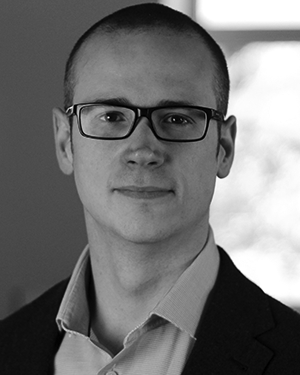 Leinweber, M.合作论文数Dept. of Math. & Comput. Sci., Univ. of Marburg;c3
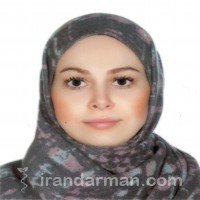 Maryam Nasiri合作论文数Department of Textile Engineering3
 Robin Senge合作论文数Department of Mathematics;Computer Science, and;University of Marburg;Department of Mathematics|and Computer Science, University of Marburg3
 Serghei Glinca合作论文数CrystalsFirst GmbH2
 Marc Strickert合作论文数Institute of Plant Genetics and Crop Plant Research2
 Lars Baumgartner合作论文数2Bernhard Freisleben (Bernd)合作论文数Department of Mathematics and Computer Science, Philipps-Universitat Marburg2Ralph Moritz合作论文数2
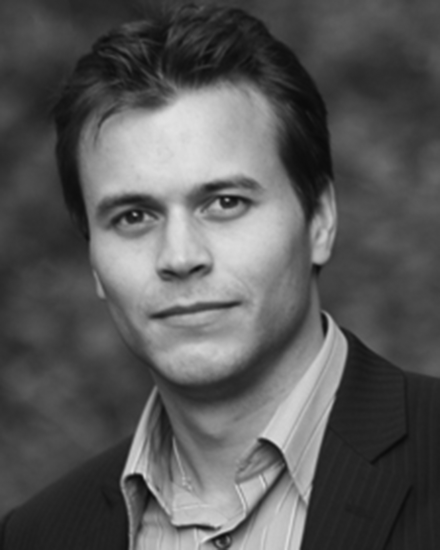 Timo Krotzky合作论文数2
 Robert Busa-Fekete合作论文数Google Research1Thomas Rickmeyer合作论文数1Yu Yi合作论文数1
 Tapio Pahikkala合作论文数Department of Computing, University of Turku1
 Willem Waegeman合作论文数Department of Data Analysis and Mathematical Modelling, Faculty of Bioscience Engineering, Ghent University1
 Sebastian Link合作论文数School of Computer Science, Faculty of Science, The University of Auckland1
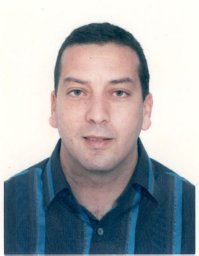 Zied Elouedi合作论文数Inst Super Gest Tunis, Univ Tunis1Philipps-University Marburg合作论文数1
 Weiwei Cheng (程蔚蔚)合作论文数Zalando1Amira Abdel-Aziz合作论文数1
 Imen Boukhris合作论文数Université de Tunis, Université d'Artois1
 Michiel Stock合作论文数Department of Mathematical Modelling, Statistics and Bioinformatics, Ghent University1Vitalik Melnikov合作论文数Department of Mathematics;Computer Science, and;Marburg University;Department of Mathematics|and Computer Science, Marburg University1Patrick Pfeffer合作论文数Institut fur Pharmazeutische Chemie, Philipps-Universitat Marburg1
 Bernard De Baets合作论文数Department of Data Analysis and Mathematical Modelling, Faculty of Bioscience Engineering, Ghent University;KERMIT1
 Antti Airola合作论文数Turku Centre for Computer Science (TUCS) and the Department of IT, University of Turku1




