Understanding the dynamic changes in soil moisture (SM) is crucial for studying land-atmosphere interactions in hydrometeorology. While numerous SM datasets have been developed for passive microwave remote sensing systems operating at various frequencies, the consistency of SM dry-down patterns observed by different sensors remains uncertain. Additionally, the use of distinct algorithms across SM products complicates direct comparisons. This study addresses these issues by producing two new enhanced-resolution (approximately 10-km) SM datasets using the same multi-channel collaborative algorithm (MCCA). These datasets are retrieved from the L-band brightness temperature (Tb) from Soil Moisture Active Passive (SMAP) and the C/X/Ku-band Tb from Advanced Microwave Scanning Radiometer 2 (AMSR2), referred to as MCCA SMAP and MCCA AMSR2. The satellite-derived SM data are evaluated and compared using 40 globally distributed SM observation networks at both regional (dense network) and grid scales. The results indicate that the Pearson correlation coefficients (R) of MCCA SMAP and MCCA AMSR2 SM in 23 dense networks are 0.795 and 0.664, respectively, with unbiased root-mean-square deviation (ubRMSD) of 0.041 m3/m3 and 0.048 m3/m3, respectively. Both datasets perform better at the regional scale than at the grid scale. The analysis shows that SMAP outperforms AMSR2 overall, although the sensing capabilities of both payloads decline with increasing vegetation water content (VWC). Further analysis of global SM dry-down patterns reveals minimal differences in the magnitude of SM dry-down between the two payloads, but slightly larger differences in the effective wilting point. A notable disparity was observed in SM memory, with SMAP exhibiting a significantly longer memory than AMSR2. Analysis of SM loss rates shows that SMAP has a lower loss rate compared to AMSR2, consistent with the theoretical expectation that lower-frequency observations, such as those from SMAP, observes deeper soil layers. These results highlight the importance of considering differences in payload configurations when using remote sensing SM products for studies of land-atmosphere interactions in hydrometeorology and for improving land surface models (LSMs).
INTRODUCTION:Febrile neutropenia (FN) episodes in sarcoma patients may be due to potentially life-threatening microbiologically defined infection (MDI). Clinical decision rules (CDRs) such as the Australian-UK-Swiss (AUS) rule have been developed to risk-stratify FN episodes, allowing for early discharge of patients at low risk of MDI. The AUS rule was validated in the multicentre Predicting Infectious Complications in Children with Cancer (PICNICC) FN episode dataset. However, similar paediatric CDRs perform poorly in teenage and young adult (TYA) cohorts, which comprise most young sarcoma patients. METHODS:Data were retrospectively collected for FN episodes of London Sarcoma Service patients aged 1-25 years diagnosed from 1 April 2020 to 31 March 2023. MDI rate was compared to the standard-risk (acute lymphoblastic leukaemia) patients in published PICNICC data. Sensitivity and specificity for likely bacterial infection (LBI) with 95% confidence intervals were calculated for an AUS score ≤1. RESULTS:A total of 157 patients met inclusion criteria (median age 15.4 years, range: 5.2-25.9 years). Outcomes were available for 159/160 FN episodes in 82 patients. IVADo had the highest rate of FN episodes per cycle: 23.5% [15.0%-34.9%] versus 18.8% [15.1%-23.1%] for MAP and 7.0% [5.4%-9.1%] for VDC/IE. Twenty-five of 159 (16%) FN episodes were blood culture-positive, significantly lower than standard-risk patients in the PICNICC dataset. The AUS score had a sensitivity of 62.9% [45.7%-78.2%] and a specificity of 29.8%[22.2%-39.0%] for LBI, with 13/35 (38%) LBI episodes missed. CONCLUSIONS:Overall, children and TYA with sarcomas are at lower risk of complications from FN, but the AUS rule performs poorly in this cohort. Better biomarker-driven CDRs are needed for risk-stratified FN management of these patients.
Objective To evaluate a new protocol of risk stratification and early discharge for children with febrile neutropenia (FN). Design Prospective service evaluation from 17 April 2020 to 16 April 2021. Setting 13 specialist centres in the UK. Patients 405 children presenting with FN. Intervention All children received intravenous antibiotics at presentation. Risk stratification was determined using the Australian-UK-Swiss (AUS) rule and eligibility for homecare assessed using criteria including disease, chemotherapy, presenting features and social factors. Those eligible for homecare could be discharged on oral antibiotics after a period of observation proportional to their risk group. Main outcome measures Median duration of admission and of intravenous antibiotics, and percentage of patients with positive blood cultures, significant infection, readmission within 7 days of initial presentation, intensive care unit (ICU) admission, death from infection and death from other causes. Results 13 centres contributed 729 initial presentations of 405 patients. AUS rule scores were positively correlated with positive blood cultures, significant infection, ICU admission and death. 20% of children were eligible for homecare with oral antibiotics, of which 55% were low risk (AUS 0–1). 46% low-risk homecare eligible patients were discharged by 24 hours vs 2% homecare ineligible. Homecare readmission rates were 14% overall and 16% for low-risk cases (similar to a meta-analysis of previous studies). No child eligible for homecare was admitted to ICU or died. Conclusions Use of the AUS rule and homecare criteria allow for safe early outpatient management of children with FN.
Accurately curated routinely collected healthcare data (RCD) provides real-world, representative information across large populations over an extended follow-up period [1]. This is challenging to achieve using dedicated research studies, especially for rare diseases such as paediatric cancers.
AbstractMicrowave remote sensing technology has been applied to produce soil moisture (SM) retrievals on a global scale for various studies and applications. However, due to the limitations of current technology, the native spatial resolution of currently available passive microwave SM products is on the order of tens of kilometers, and this resolution cannot be used to characterize SM variability on a regional scale. To overcome this limitation, a downscaling algorithm based on the thermal inertia theory–derived relationship between SM and temperature difference was developed using outputs from the Global Land Data Assimilation System–Noah Land Surface Model and the land long‐term data record–Advanced Very High Resolution Radiometer normalized difference vegetation index (NDVI) dataset and applied to the Aqua Moderate Resolution Imaging Spectroradiometer land surface temperature/NDVI data to produce a downscaled 1‐km Soil Moisture Active Passive (SMAP) radiometer daily SM product, respectively, at 6:00 a.m. and 6:00 p.m. on a global scale from 2015 to 2020. The evaluation results reveal that the downscaling model performs better in the middle or low latitudes than in high latitudes. It also performs better in warm months than in cold months. The in situ SM observations from dense networks around the world were used to validate the 1‐km and enhanced 9‐km SMAP SM data. The validation metrics indicated that both the 1‐km and 9‐km SM data have overall overestimation trends, and the unbiased RMSE (0.063 m3m–3on average), mean absolute error (0.052 m3m–3on average), and spatial standard deviation (0.025 m3m–3on average) of the 1 km data are generally more accurate than the metrics of the 9‐km SM data, which indicates that the downscaled data provide reliable observed SM information.
The International Society of Paediatric Oncology Renal Tumour Study Group (SIOP‐RTSG) advocate treating children with Wilms tumour (WT) with preoperative chemotherapy, whereas the Renal Tumor Committee of the Children's Oncology Group (COG) advocates primary nephrectomy (without biopsy) when feasible. Successive SIOP‐RTSG trial protocols recommended pretreatment biopsy of children with unilateral tumours only where there were features to suggest an increased probability of a non‐WT requiring a change in management. The UK experience in the SIOP WT 2001 trial showed that an alternate approach of performing biopsies on all children with renal tumour masses to determine histology at diagnosis rarely changes management, and can result in misdiagnosis (particularly patients in the age range typical for WT). Although a more selective approach to biopsy has been routine practice in all other countries participating in SIOP‐RTSG trials, there was variation between national groups. To address this variation and provide evidence‐based recommendations for the indications and recommended approach to renal tumour biopsy within the SIOP paradigm, an international, multidisciplinary working group of SIOP‐RTSG members was convened. We describe the resulting recommendations of this group, which are to be incorporated in the ongoing SIOP‐RTSG UMBRELLA study.
Objective To improve success rates of children requiring sedation for MRI. Methods Audits of sedation success for children attending planned MRI using three different approaches: (1) National Institute for Health and Care Excellence (NICE) guidance (chloral hydrate if <15 kg and oral midazolam if >= 15 kg), (2) Chloral hydrate for all patients, (3) Chloral hydrate +/- intranasal dexmedetomidine if <15 kg and intranasal dexmedetomidine alone if >= 15kg. Results 74 patients had 85 MRI scan attempts. Overall success rates were significantly higher when using intranasal dexmedetomidine compared with following NICE guidance (81% vs 52% p=0.017). Dexmedetomidine performed better than oral midazolam for the same indication (76% vs 33% p=0.026). The side effect profile for dexmedetomidine was as reported in larger studies. Conclusions Intranasal dexmedetomidine is an effective alternative to oral midazolam for sedation for MRI and as a rescue medication where chloral hydrate has been ineffective.
This narrative review describes efforts to improve the care and prevention of fragility fractures in New Zealand from 2012 to 2022. This includes development of clinical standards and registries to benchmark provision of care, and public awareness campaigns to promote a life-course approach to bone health. This review describes the development and implementation of a systematic approach to care and prevention for New Zealanders with fragility fractures, and those at high risk of first fracture. Progression of existing initiatives and introduction of new initiatives are proposed for the period 2022 to 2030. In 2012, Osteoporosis New Zealand developed and published a strategy with objectives relating to people who sustain hip and other fragility fractures, those at high risk of first fragility fracture or falls and all older people. The strategy also advocated formation of a national fragility fracture alliance to expedite change. In 2017, a previously informal national alliance was formalised under the Live Stronger for Longer programme, which includes stakeholder organisations from relevant sectors, including government, healthcare professionals, charities and the health system. Outputs of this alliance include development of Australian and New Zealand clinical guidelines, clinical standards and quality indicators and a bi-national registry that underpins efforts to improve hip fracture care. All 22 hospitals in New Zealand that operate on hip fracture patients currently submit data to the registry. An analogous approach is ongoing to improve secondary fracture prevention for people who sustain fragility fractures at other sites through nationwide access to Fracture Liaison Services. Widespread participation in national registries is enabling benchmarking against clinical standards as a means to improve the care of hip and other fragility fractures in New Zealand. An ongoing quality improvement programme is focused on eliminating unwarranted variation in delivery of secondary fracture prevention.
Objectives According to the Renal Tumor Study Group (RTSG) of the International Society of Paediatric Oncology (SIOP), diagnostic biopsy of renal tumors prior to neoadjuvant chemotherapy is not mandatory unless the presentation is atypical for a Wilms tumor (WT). This study addresses the relevance of this strategy as well as the accuracy and safety of image-guided needle biopsy. Methods Clinical, radiological, and pathological data from 317 children (141 males/176 females, mean age: 4 years, range, 0-17.6) consecutively treated in one SIOP-affiliated institution were retrospectively analyzed. Results Presumptive chemotherapy for WT was decided for 182 patients (57% of the cohort), 24 (8%) were operated upfront, and 111 (35%) were biopsied at diagnosis. A non-WT was confirmed after surgery in 5/182 (3%), 11/24 (46%), and 28/111 (25%), respectively. Age at diagnosis was the most commonly (46%) used criterion to go for biopsy but a nine-year threshold should be retrospectively considered more relevant. Tumor volumes of clear cell sarcoma of the kidney and WT were significantly higher than those of other tumors (P = 0.002). The agreement between core-needle biopsy (CNB) and final histology was 99%. No significant morbidity was associated with CNB. Conclusion The use of SIOP criteria to identify patients eligible for presumptive WT neoadjuvant chemotherapy or upfront surgery avoided biopsy in 65% of children and led to a 97% rate of appropriate preoperative chemotherapy. Image-guided CNB is a safe and accurate diagnostic procedure. The relevance of SIOP biopsy criteria might be improved by using an older age threshold (9 years instead of 6 years) and by adding initial tumor volume.
Introduction The International Society of Paediatric Oncology (SIOP) protocols recommend preoperative chemotherapy appropriate for Wilms tumors (WTs) in children with renal tumors aged >= 6 months, reserving biopsy for "atypical" cases. The Children's Cancer and Leukaemia Group (CCLG) joined the SIOP-WT-2001 study but continued the national practice of biopsy at presentation. Method Retrospective study of concordance between locally reported renal tumor biopsies and central pathology review nephrectomy diagnoses of children enrolled by CCLG centers in the SIOP-WT-2001 study. Results Biopsy reports were available for 552/787 children with unilateral tumors. 36 of 552 (6.5%) were nondiagnostic: 2 normal tissue, 12 necrotic, 9 insufficient sample, and 13 indeterminate results (disproportionately non-WTs). The sensitivity and specificity of biopsy to identify tumors that did not require SIOP empirical preoperative chemotherapy were 86.0% and 99.6%, respectively. 13 of 548 (2.4%) biopsy results were discordant with nephrectomy; non-WTs other than renal cell carcinoma and clear cell sarcoma of the kidney (CCSK) were poorly recognized. In children aged 6-119 months, 480 of 518 (91.6%) had WT or nephroblastomatosis. 5 of 518 (1%) had benign tumors, and only one diagnosed on biopsy. Biopsy results correctly changed clinical management in 25 of 518 (4.8%), including identifying 19 of 20 CCSKs, but would have led to overtreatment in 5 of 518 (1%) or undertreatment in 4 of 518 (0.8%). In children aged >= 10 years, biopsy correctly changed management in 5 of 19 (26%) cases with no discordance. Conclusion Biopsy is less effective at identifying non-WTs than WTs and rarely changes management in younger children. Biopsy should be reserved in SIOP protocols for children >= 10 years and in younger children with clinical or radiological features inconsistent with WT.
The validation of the soil moisture retrievals from the recently launched National Aeronautics and Space Administration (NASA) Soil Moisture Active/Passive (SMAP) satellite is important prior to their full public release. Uncertainty in attempts to characterize footprint-scale surface-layer soil moisture using point-scale ground observations has generally limited past validation of remotely sensed soil moisture products to densely instrumented sites covering an area approximating the satellite ground footprint. However, by leveraging independent soil moisture information obtained from land surface modeling and/or alternative remote sensing products, triple collocation (TC) techniques offer a strategy for characterizing upscaling errors in sparser ground measurements and removing the impact of such error on the evaluation of remotely sensed soil moisture products. Here, we propose and validate a TC-based strategy designed to utilize existing sparse soil moisture networks (typically with a single sampling point per satellite footprint) to obtain an unbiased correlation validation metric for satellite surface soil moisture retrieval products. Application of this TC strategy at five SMAP core validation sites suggests that unbiased estimates of correlation between the satellite product and the true footprint average can be obtained—even in cases where ground observations provide only one single reference point within the footprint. An example of preliminary validation results from the application of this TC strategy to the SMAP Level 2 Soil Moisture Passive (beta release version) product is presented.
Internal ribosome entry is a key mechanism for viral protein synthesis in a subset of RNA viruses. Cricket paralysis virus (CrPV), a member of Dicistroviridae, has a positive-sense single strand RNA genome that contains two internal ribosome entry sites (IRES), a 5′untranslated region (5′UTR) and intergenic region (IGR) IRES, that direct translation of open reading frames (ORF) encoding the viral non-structural and structural proteins, respectively. The regulation of and the significance of the CrPV IRESs during infection are not fully understood. In this study, using a series of biochemical assays including radioactive-pulse labelling, reporter RNA assays and ribosome profiling, we demonstrate that while 5′UTR IRES translational activity is constant throughout infection, IGR IRES translation is delayed and then stimulated two to three hours post infection. The delay in IGR IRES translation is not affected by inhibiting global translation prematurely via treatment with Pateamine A. Using a CrPV replicon that uncouples viral translation and replication, we show that the increase in IGR IRES translation is dependent on expression of non-structural proteins and is greatly stimulated when replication is active. Temporal regulation by distinct IRESs within the CrPV genome is an effective viral strategy to ensure optimal timing and expression of viral proteins to facilitate infection.
 Rajat Bindlish合作论文数Hydrol & Remote Sensing Lab, USDA ARS10
 Michael H Cosh合作论文数Hydrology and Remote Sensing Laboratory, Beltsville Agricultural Research Center, Agricultural Research Service, U.S. Department of Agriculture9
 Andreas Colliander合作论文数NASA Jet Propulsion Laboratory, California Institute of Technology7
 Kathy Pritchard-Jones合作论文数Developmental Biology and Cancer Research & Teaching Department, Great Ormond Street Institute of Child Health, University College London5
 John P. Kerekes合作论文数Lincoln Laboratory;Massachusetts Institute of Technology;Lincoln Laboratory, Massachusetts Institute of Technology4
 David Kunkee合作论文数4
 Anne Willis合作论文数Department of Pharmacology, University of Cambridge;MRC Toxicology Unit, University of Cambridge4
 William Emery合作论文数Department of Ann and H.J. Smead Aerospace Engineering Sciences, College of Engineering and Applied Science, University of Colorado Boulder4
 Tanzina Iveen Chowdhury合作论文数3
 Gordan M Vujanic合作论文数Department of Pathology and Laboratory Medicine, Weill Cornell Medicine - Qatar3
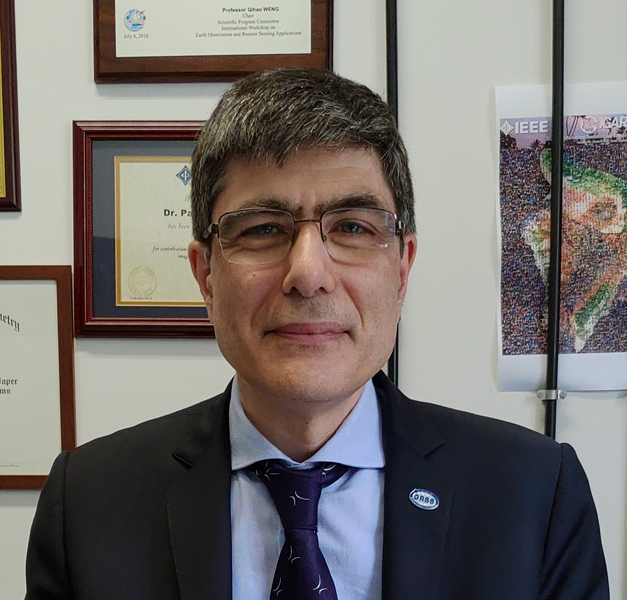 Gamba Paolo合作论文数University of Pavia3
 Kamal Sarabandi合作论文数Radiation Laboratory, Department of Electrical Engineering and Computer Science, The University of Michigan3
 Irena Hajnsek合作论文数Institute of Environmental Engineering, Department of Civil, Environmental and Geomatic Engineering, Eidgenössische Technische Hochschule Zürich3
 Wooil M. Moon合作论文数University of Manitoba3
 John S. Kimball合作论文数Department of Ecosystem and Conservation Sciences, WA Franke College of Forestry and Conservation, University of Montana3
 Steven C. Reising合作论文数Department of Electrical and Computer Engineering;Colorado State University;Department of Electrical and Computer Engineering, Colorado State University3
 Rolf H Reichle合作论文数Global Modeling and Assimilation Office, Goddard Space Flight Center, National Aeronautics and Space Administration3
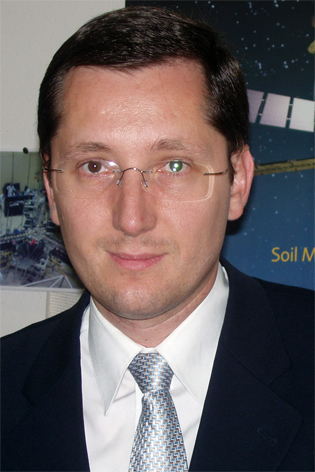 Adriano Camps合作论文数Remote Sensing Laboratory, Universitat Politecnica de Catalunya;Department of Signal Theory and Communications, Universitat Politecnica de Catalunya3
 Eileen Lach合作论文数2Joseph Lillie合作论文数2
 Gabriel Chow合作论文数2Reem Al-Saadi合作论文数UCL Great Ormond Street Institute of Child Health, London, UK2
 E. Natasha Stavros合作论文数Cooperative Institute for Research in Environmental Sciences, University of Colorado Boulder2
 John R P Knight合作论文数2
 Jiancheng Shi (施建成)合作论文数National Space Science Center, Chinese Academy of Sciences;University of Chinese Academy of Sciences2Spriggs Ruth V合作论文数2
 Thomas Siegert合作论文数Fakultät für Physik und Astronomie, Julius-Maximilians-Universitat Würzburg;Institut für Theoretische Physik und Astrophysik, Julius-Maximilians-Universitat Würzburg2Hayden Leigh合作论文数2
 Wade Crow合作论文数USDA-ARS Hydrology and Remote Sensing Laboratory2
 Toshio Fukuda (福田敏男)合作论文数Nagoya University;Meijo University2
 Madani Nima合作论文数2
 José M. F. Moura合作论文数Department of Electrical and Computer Engineering, Carnegie Mellon University2
 David Bosch合作论文数College of Engineering, University of Georgia2
 Lorenzo Bruzzone合作论文数Remote Sensing Laboratory, Department of Information Engineering and Computer Science, University of Trento2
 David C. Goodrich合作论文数USDA-ARS, Southwest Watershed Research Center2Charles Stiller合作论文数2
 Zhongbo Su (Bob)合作论文数Department of Water Resources, Faculty of Geo-Information and Earth Observation, University of Twente/ITC Netherlands2Mark S. Seyfried (Mark Seyfried)合作论文数Northwest Watershed Research Center, United States Department of Agriculture-Agricultural Research Service2Joseph M. Glassy合作论文数2
 Patrick J. Starks合作论文数2
 Oscar van der Velde合作论文数Departament d'Enginyeria Elèctrica, Polytechnic University of Catalonia2
 Steven Tsz K. Chan合作论文数Jet Propulsion Laboratory, California Institute of Technology2
 Tianjie Zhao (赵天杰)合作论文数National Key Laboratory of Remote Sensing and Digital Earth, Aerospace Information Research Institute, Chinese Academy of Sciences;University of Chinese Academy of Sciences2
 Jón Atli Benediktsson合作论文数Faculty of Electrical and Computer Engineering, University of Iceland2Martin Bushell合作论文数2
 Jinyang Du (杜今阳)合作论文数University of Montana2Business Administration合作论文数2Sandra Candy合作论文数1Alexander Pasik合作论文数1




