Quantum simulation based on ultra cold atomic lattice gases is one of the most promising platforms to investigate high-T_c superconductivity beyond the limited capabilities of quantum many body numerics on classical computers. Yet, despite enormous progress since the field's inception, realizing a high-T_c superconducting state still remains out of reach. The present work lays the groundwork to purpose the recently proposed, and already partly realized, mixed-dimensional (mixD) models, towards this end. These systems offer the proven capability to realize very high pairing energies while retaining appreciable mobility of pairs. We specifically investigate the potential of 2D mixD-models with anisotropic tunneling, using the matrix product state plus mean field theory (MPS+MF) for fermions, and show that these models may enter a high-T_c superconducting phase. These simulations in turn are based on a comprehensive characterization of the 1D mixD-systems, which are the sub-units of which the 2D system is comprized. In this, we cover the range of currently experimentally relevant system sizes, and establish practical heuristics to determine when finitesize effects preclude the use of a 1D mixD-system to build the 2D ones.
Simulating strongly correlated systems in two dimensions is notoriously challenging due to rapid entanglement growth and frustration. Here, we introduce the adaptive projected-purified pseudoboson density-matrix renormalization group (A3P-DMRG) tailored to explore the ground states of dilute lattice models. The method compresses cluster Hilbert spaces by retaining only the most probable low-occupation Fock states, identified via probabilistic bounds and refined through a self-consistent mean-field basis optimization. We demonstrate that A3P-DMRG is advantageous in low-filling and weak-coupling regimes for large system sizes where conventional DMRG struggles. This establishes the method as a versatile tool for studying dilute quantum many-body systems relevant to ultra-cold atom quantum simulators, photonic lattices, Moiré materials and quantum chemistry.
We present a matrix-product state (MPS) based band-Lanczos method as solver for quantum cluster methods such as the variational cluster approximation (VCA). While a na\"ive implementation of MPS as cluster solver would barely improve its range of applicability, we show that our approach makes it possible to treat cluster geometries well beyond the reach of exact diagonalization methods. The key modifications we introduce are a continuous energy truncation combined with a convergence criterion that is more robust against approximation errors introduced by the MPS representation and provides a bound to deviations in the resulting Green's function. The potential of the resulting cluster solver is demonstrated by computing the self-energy functional for the single-band Hubbard model at half filling in the strongly correlated regime, on different cluster geometries. Here, we find that only when treating large cluster sizes, observables can be extrapolated to the thermodynamic limit, which we demonstrate at the example of the staggered magnetization. Treating clusters sizes with up to $6\times 6$ sites we obtain excellent agreement with quantum Monte-Carlo results.
Materials with strong electronic correlations often exhibit a superconducting phase in close competition with other insulating phases, which is outstandingly difficult to resolve, e.g., for a group of quasi-two-dimensional (Q2D) materials such as the cuprates, even for the simplified minimal model of these materials, the doped 2D Hubbard model. The present work shows how quasi-one-dimensional (Q1D) systems, 2D and three-dimensional (3D) arrays of weakly coupled 1D correlated electrons, are much more amenable to resolving such competition, treating both instabilities on equal footing. Using the recently established matrix product state plus mean field (MPS+MF) approach for fermions [Bollmark et al., Phys. Rev. X 13, 011039 (2023)], we demonstrate that large systems can be reached readily in these systems, which opens up the thermodynamic regime via extrapolation. Focusing on basic model systems, 3D arrays of negative-U Hubbard chains with additional nearest-neighbor interaction V, we show that despite the MF component of the MPS+MF technique, we can reproduce the expected coexistence of the superconductivity and charge density wave at V = 0 for density n = 1. We then show how we can tune away from coexistence by both tuning V and doping the system. This work thus paves the way to deploy two-channel MPS+MF theory on some highly demanding high-Tc superconducting systems, such as 3D arrays of repulsive-U doped Hubbard ladders; we recently characterized the properties of such arrays in single-channel MPS+MF calculations [Bollmark et al., Phys. Rev. X 13, 011039 (2023)].
Breaking the error-threshold would mark a milestone in establishing quantum advantage for a wide range of relevant problems. One possible route is to encode information redundantly in a logical qubit by combining several noisy qubits, providing an increased robustness against external perturbations. We propose a setup for a logical qubit built from superconducting qubits (SCQs) coupled to a microwave cavity-mode. Our design is based on a recently discovered geometric stabilizing mechanism in the Bose-Hubbard wheel (BHW), which manifests as energetically well-separated clusters of many-body eigenstates. We investigate the impact of experimentally relevant perturbations between SCQs and the cavity on the spectral properties of the BHW. We show that even in the presence of typical fabrication uncertainties, the occurrence and separation of clustered many-body eigenstates is extremely robust. Introducing an additional, frequency-detuned SCQ coupled to the cavity yields duplicates of these clusters, that can be split up by an on-site potential. We show that this allows to (i) redundantly encode two logical qubit states that can be switched and read out efficiently and (ii) can be separated from the remaining many-body spectrum via geometric stabilization. We demonstrate at the example of an X-gate that the proposed logical qubit reaches single qubit-gate fidelities $>0.999$ in experimentally feasible temperature regimes $\sim10-20\,\mathrm{mK}$.
Correlated electron states are at the root of many important phenomena including unconventional superconductivity (USC), where electron-pairing arises from repulsive interactions. Computing the properties of correlated electrons, such as the critical temperature $T_c$ for the onset of USC, efficiently and reliably from the microscopic physics with quantitative methods remains a major challenge for almost all models and materials. In this theoretical work we combine matrix product states (MPS) with static mean field (MF) to provide a solution to this challenge for quasi-one-dimensional (Q1D) systems: Two- and three-dimensional (2D/3D) materials comprised of weakly coupled correlated 1D fermions. This MPS+MF framework for the ground state and thermal equilibrium properties of Q1D fermions is developed and validated for attractive Hubbard systems first, and further enhanced via analytical field theory. We then deploy it to compute $T_c$ for superconductivity in 3D arrays of weakly coupled, doped and repulsive Hubbard ladders. The MPS+MF framework thus enables the reliable, quantitative and unbiased study of USC and high-$T_c$ superconductivity - and potentially many more correlated phases - in fermionic Q1D systems from microscopic parameters, in ways inaccessible to previous methods. It opens the possibility of designing deliberately optimized Q1D superconductors, from experiments in ultracold gases to synthesizing new materials.
The large practical potential of exotic quantum states is often precluded by their notorious fragility against external perturbations or temperature. Here, we introduce a mechanism stabilizing a one-dimensional quantum many-body phase exploiting an emergent ℤ_2 -symmetry based on a simple geometrical modification, i.e. a site that couples to all lattice sites. We illustrate this mechanism by constructing the solution of the full quantum many-body problem of hardcore bosons on a wheel geometry, which are known to form Bose-Einstein condensates. The robustness of the condensate against interactions is shown numerically by adding nearest-neighbor interactions, which typically destroy Bose-Einstein condensates. We discuss further applications such as geometrically inducing finite-momentum condensates. Since our solution strategy is based on a generic mapping, our findings are applicable in a broader context, in which a particular state should be protected, by introducing an additional center site.
Materials with strong electronic correlations may exhibit a superconducting (SC) phase when tuning some parameters, but they almost always also have multiple other phases, typically insulating ones, that are in close competition with SC. It is highly challenging to resolve this competition with quantitative numerics for the group of quasi-two-dimensional materials such as the cuprates. This is the case even for the simplified minimal models of these materials, the doped 2D Hubbard model with repulsive interactions, where clusters of sufficient size to determine the phase in the thermodynamic limit can be hard-to-impossible to treat in practice. The present work shows how quasi-one-dimensional systems, 2D and 3D arrays of weakly coupled 1D correlated electrons, are much more amenable to resolve the competition between SC and insulating orders on an equal footing using matrix-product states (MPS). Using the recently established MPS plus mean field (MPS+MF) approach for fermions, we demonstrate that large systems are readily reachable in these systems, and thus the thermodynamic regime by extrapolation. Focusing on basic model systems, 3D arrays of negative-U Hubbard chains with additional nearest-neighbor interaction V, we show that despite the MF component of the MPS+MF technique we can reproduce the expected coexistence of SC and charge-density wave at V=0 for density n=1. We then show how we can tune away from coexistence by both tuning V and doping the system. This work paves the way to deploy two-channel MPS+MF theory on some highly demanding high-$T_c$ SC systems, such as 3D arrays of repulsive-U doped Hubbard ladders, where we have recently characterized the properties of such arrays in single-channel MPS+MF calculations. The present approach could thus conclusively show that this SC order would actually be obtained, by explicitly comparing SC against its insulating competitors.
We combine matrix-product-state (MPS) and mean-field (MF) methods to model the real-time evolution of a three-dimensional (3D) extended Hubbard system formed from one-dimensional (1D) chains arrayed in parallel with weak coupling in-between them. This approach allows us to treat much larger 3D systems of correlated fermions out-of-equilibrium over a much more extended real-time domain than previous numerical approaches. We deploy this technique to study the evolution of the system as its parameters are tuned from a charge-density wave phase into the superconducting regime, which allows us to investigate the formation of transient non-equilibrium superconductivity. In our ansatz, we use MPS solutions for chains as input for a self-consistent time-dependent MF scheme. In this way, the 3D problem is mapped onto an effective 1D Hamiltonian that allows us to use the MPS efficiently to perform the time evolution, and to measure the BCS order parameter as a function of time. Our results confirm previous findings for purely 1D systems that for such a scenario a transient superconducting state can occur.
Fermion systems with flat bands can boost superconductivity by enhancing the density of states at the Fermi level. We use quasiexact numerical methods to show that repulsive interactions between spinless fermions in a one-dimensional (1D) flat-band system, the Creutz ladder, give a finite pairing energy that increases with repulsion, though charge quasi-order (QO) remains dominant. Adding an attractive component shifts the balance in favor of superconductivity and the interplay of two flat bands further yields a remarkable enhancement of superconductivity, well outside of known paradigms for 1D fermions.
Lattice models consisting of high-dimensional local degrees of freedom without global particle-number conservation constitute an important problem class in the field of strongly correlated quantum many-body systems. For instance, they are realized in electron-phonon models, cavities, atom-molecule resonance models, or superconductors. In general, these systems elude a complete analytical treatment and need to be studied using numerical methods where matrix-product states (MPS) provide a flexible and generic ansatz class. Typically, MPS algorithms scale at least quadratic in the dimension of the local Hilbert spaces. Hence, tailored methods, which truncate this dimension, are required to allow for efficient simulations. Here, we describe and compare three state-of-the-art MPS methods each of which exploits a different approach to tackle the computational complexity. We analyze the properties of these methods for the example of the Holstein model, performing high-precision calculations as well as a finite-size-scaling analysis of relevant ground-state obervables. The calculations are performed at different points in the phase diagram yielding a comprehensive picture of the different approaches.
Quantum lattice models with large local Hilbert spaces emerge across various fields in quantum many-body physics. Problems such as the interplay between fermions and phonons, the BCS-BEC crossover of interacting bosons, or decoherence in quantum simulators have been extensively studied both theoretically and experimentally. In recent years, tensor network methods have become one of the most successful tools to treat such lattice systems numerically. Nevertheless, systems with large local Hilbert spaces remain challenging. Here, we introduce a mapping that allows to construct artificial U(1) U(1) symmetries for any type of lattice model. Exploiting the generated symmetries, numerical expenses that are related to the local degrees of freedom decrease significantly. This allows for an efficient treatment of systems with large local dimensions. Further exploring this mapping, we reveal an intimate connection between the Schmidt values of the corresponding matrixproductstate representation and the singlesite reduced density matrix. Our findings motivate an intuitive physical picture of the truncations occurring in typical algorithms and we give bounds on the numerical complexity in comparison to standard methods that do not exploit such artificial symmetries. We demonstrate this new mapping, provide an implementation recipe for an existing code, and perform example calculations for the Holstein model at half filling. We studied systems with a very large number of lattice sites up to L=501 L=501 while accounting for N_{\rm ph}=63 phonons per site with high precision in the CDW phase.
We describe the formation of charge- and spin-density patterns induced by spin-selective photoexcitations of interacting fermionic systems in the presence of a microstructure. As an example, we consider a one-dimensional Hubbard-like system with a periodic magnetic microstructure, which has a uniform charge distribution in its ground state, and in which a long-lived charge-density pattern is induced by the spin-selective photoexcitation. Using tensor-network methods, we study the full quantum dynamics in the presence of electron-electron interactions and identify doublons as the main decay channel for the induced charge pattern. Our setup is compared to the OISTR mechanism, in which ultrafast optically induced spin transfer in Heusler and magnetic compounds is associated to the difference of the local density of states of the different elements in the alloys. We find that applying a spin-selective excitation there induces spatially periodic patterns in local observables. Implications for pump-probe experiments on correlated materials and experiments with ultracold gases on optical lattices are discussed.
Recent pump-probe experiments on underdoped cuprates and similar systems suggest the existence of a transient superconducting state above T-c. This poses the question of how to reliably identify the emergence of long-range order, in particular superconductivity, out of equilibrium. We investigate this point by studying a quantum quench in an extended Hubbard model and by computing various observables, which are used to identify (quasi-)long-range order in equilibrium. Our findings imply that, in contrast to current experimental studies, it does not suffice to study the time evolution of the optical conductivity to identify superconductivity. In turn, we suggest to utilize time-resolved angle-resolved photoemission spectroscopy experiments to probe for the formation of a condensate in the two-particle channel.
Matrix-product states have become the de facto standard for the representation of one-dimensional quantum many body states. During the last few years, numerous new methods have been introduced to evaluate the time evolution of a matrix-product state. Here, we will review and summarize the recent work on this topic as applied to finite quantum systems. We will explain and compare the different methods available to construct a time-evolved matrix-product state, namely the time-evolving block decimation, the MPO W-I,W-II method, the global Krylov method, the local Krylov method and the one- and two-site time-dependent variational principle. We will also apply these methods to four different representative examples of current problem settings in condensed matter physics. (C) 2019 The Author(s). Published by Elsevier Inc.
We investigate the evolution of a photoexcitation in correlated materials over a wide range of time scales. The system studied is a one-dimensional model of a manganite with correlated electron, spin, orbital, and lattice degrees of freedom, which we relate to the three-dimensional material Pr1-x Ca-x MnO3. The ground-state phases for the entire composition range are determined and rationalized by a coarse-grained polaron model. At half doping a pattern of antiferromagnetically coupled Zener polarons is realized. Using time-dependent density-matrix renormalization group (tDMRG), we treat the electronic quantum dynamics following the excitation. The emergence of quasiparticles is addressed, and the relaxation of the nonequilibrium quasiparticle distribution is investigated via a linearized quantum-Boltzmann equation. Our approach shows that the magnetic microstructure caused by the Zener polarons leads to an increase of the relaxation times of the excitation.
We present an algorithmic construction scheme for matrix-product-operator (MPO) representations of arbitrary $U(1)$-invariant operators whenever there is an expression of the local structure in terms of a finite-states machine (FSM). Given a set of local operators as building blocks, the method automatizes two major steps when constructing a $U(1)$-invariant MPO representation: (i) the bookkeeping of auxiliary bond-index shifts arising from the application of operators changing the local quantum numbers and (ii) the appearance of phase factors due to particular commutation rules. The automatization is achieved by post-processing the operator strings generated by the FSM. Consequently, MPO representations of various types of $U(1)$-invariant operators can be constructed generically in MPS algorithms reducing the necessity of expensive MPO arithmetics. This is demonstrated by generating arbitrary products of operators in terms of FSM, from which we obtain exact MPO representations for the variance of the Hamiltonian of a $S=1$ Heisenberg chain.
The emergence of order in materials with strongly-correlated electrons in out-of-equilibrium situations inspires a lot of new research, both experimental and theoretical. The main goal of this theoretical research project is to better understand related questions in the dynamics in a strongly correlated many-body state after a photoexcitation has occured. Such situations are usually not fully explainable in a mean-field picture nor analytically solvable. Hence, advanced numerical techniques are necessary. In this work, we investigate non-equilib- rium situations after photoexcitations. In order to model a hypothetical one-dimensional (1D) manganite, we chose the 1D Hubbard model with nearest-neighbor interaction and a staggered magnetic field. The photoexcitation is modeled in two different ways: First we investigate sud- den, local excitations, and afterwards we study a semi-classical approach by applying the Peierls substitution, which leads to a time-dependent Hamiltonian. All simulations are performed with an implementation of the time-dependent density-matrix renormalization group (DMRG), which is formulated by tensor-network states (TNSs), namely matrix-product states (MPSs) and matrix-product operators (MPOs). The framework used offers the possibility that every MPO can be externally described by finite-state machines (FSMs), hence it is extremely flexible. In this thesis, we explain how to perform exact FSM arithmetics, and how to compress the resulting FSMs. Based on MPSs and FSMs, a quantum-computer simulator (QCS) is introduced, which is mainly used as a universal tool for (MPS)-quantum- state manipulations. From the investigations with the sudden, local excitations, we learned that the electron-electron interaction is responsible for a rapid relaxation of the magnetic moment of the individual bands. Nevertheless, this relaxation can be stalled via a stronger magnetic microstructure. By applying a spin-selective photoexcitation via the Peierls substitution, we are able to induce a meta-stable charge-density wave (CDW) pattern if a magnetic microstructure is present. For a small, but finite interaction, we find a decay channel for the doublon-based part of the CDW, which still leaves a finite pattern. For large interaction, nearly no doublons are created by the photoexcitation. In the opposite limit, i.e., the non-interacting case, the two spin species are decoupled. Hence, in both limits the decay channel does not weaken the CDW and we find the pattern to be stable up to the times we can treat.
 Sebastian Paeckel合作论文数Dept Phys, Ludwig Maximilians Univ Munchen11
 Salvatore R. Manmana合作论文数Institut für Theoretische;Physik III;Fachbereich Physik;Fachbereich Physik, Institut für Theoretische|Physik III8
 Adrian Kantian合作论文数Institute of Photonics and Quantum Sciences, School of Engineering and Physical Sciences, Heriot-Watt University5Gunnar Bollmark合作论文数3Jan Stolpp合作论文数3
 Hasib Reja合作论文数2
 Ulrich Schollwöck合作论文数Department for Physics, Ludwig-Maximilians Universität München2
 Eric Jeckelmann合作论文数Institute of Theoretical Physics, Faculty of Mathematics and Physics, Leibniz University Hannover2
 Fabian Heidrich-Meisner合作论文数Faculty of Physics, Georg-August-Universität Göttingen;Institut für Theoretische Physik, Georg-August-Universität Göttingen2Sangeeta Rajpurohit合作论文数1S. R. Manmana合作论文数1A. Kantian合作论文数1
 Fabian R. A. Biebl合作论文数1Svenja Marten合作论文数1Alexander Osterkorn合作论文数1
 Lorenzo Pizzino合作论文数1Yi-Qi Yang合作论文数1Benjamin Lenz合作论文数1Felix A. Palm合作论文数Department of Physics and Arnold Sommerfeld Center for Theoretical Physics (ASC), Ludwig-Maximilians-Universität München;Munich Center for Quantum Science and Technology (MCQST) , Schellingstr. 4, D-80799 München, Germany;Munich Center for Quantum Science and Technology (MCQST), Ludwig-Maximilians-Universität München1Iman Mahyaeh合作论文数1
 Ole Schumann合作论文数Mercedes-Benz AG, and Development1
 Claudius Hubig合作论文数Max Planck Inst Quantum Opt1
 Mohsen Sotoudeh合作论文数Inst Theoret Chem, Ulm Univ1
 Stephan Kramer合作论文数Department of Earth Science and Engineering, Faculty of Engineering, Imperial College London1
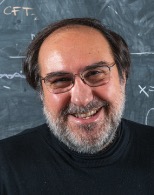 Thierry Giamarchi合作论文数Department of Quantum Matter Physics, University of Geneva1
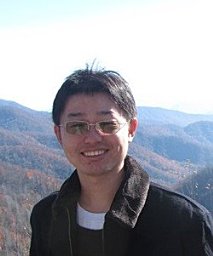 Hao Shi合作论文数1
 Johannes Hofmann合作论文数Condensed Matter Theory Center and Joint Quantum Institute, University of Maryland1
 Benedikt Fauseweh合作论文数Department of Physics, TU Dortmund University1Shiwei Zhang合作论文数1
 Peter E. Blöchl合作论文数Department of Applied Theoretical Physics, Institute of Theoretical Physics, Clausthal University of Technology;Faculty of Physics, Georg-August Universität Göttingen1
 Dirk Manske合作论文数Max Planck Institute for Solid State Research;Free University Berlin1
 Stefan Kehrein合作论文数Faculty of Physics, Georg-August-Universitat Gottingen1




