In collaboration between strangers, group formation and familiarization often take a lot of time. To facilitate this, icebreaking activities are commonly utilized, aiming at a positive and relaxing social atmosphere. To explore how interactive technology could serve as a tool in such social activity, we developed Who's Next, a multiplayer quiz-based mobile game intended to break the ice in a group of strangers. The design utilizes the information asymmetry between people, aiming to encourage joint activity between them. We conducted six evaluation sessions where four to six participants in each played the game together and were interviewed. Who's Next was found to be a promising support for icebreaking. It was considered to offer a comfortable way of sharing information about oneself and getting to know newly-met strangers. We conclude that interactive technology could successfully support the facilitator role in encouraging interaction and creating a relaxed atmosphere between strangers.
The purpose of this thesis is to examine the views of internet stakeholders in Sweden, from the perspective of net neutrality. There does not exist one single definition of the principle, which makes defining net neutrality in the context of this thesis important. The basic concept of net neutrality is that all similar internet content should be treated equally. However there are several technical, economical and legal aspects to consider, and that makes an exploration of those aspects a part of our background. What peaked our interest was the combination of the high profile in the debate, complex topic and the result of a small survey we conducted that showed a low level of awareness. In this qualitative study, eight different respondents answered our questions, coming from three major categories of stakeholders (ISPs, CPs, and legal authorities). The analysis was based on interpretations of the answers and fitting them into a theoretical framework constructed by the authors to compare the views of the respondents. The reported views on net neutrality contains a wide range of concerns covering several disciplines. There is a mix of past, present and future concerns being lifted, with both technical, economical and legal aspects. The depth of the answers vary from shallow to very complex. To be able to comment on the findings we state our view of net neutrality as a starting point for our discussion. We found that the delicate and complex topic, high profile in the debates, and ongoing legal changes has led to a low response rate. From the responses received, the view of the stakeholders are more homogeneous among ISPs, and more varied among CPs. The respondents are pro net neutrality, more so from a theoretical perspective. The legal authorities has a pragmatic view and provided us with a deeper understanding. It would provide further insights to see how the view of the stakeholders might change when the guidelines from BEREC are presented in the late summer of 2016.
As people possess increasing numbers of information devices, situations where several devices are combined and used together have become more common. We present a user study on people's current practices in combining multiple information devices in their everyday lives, ranging from pragmatic tasks to leisure activities. Based on diaries and interviews of 14 participants, we characterize the usage practices of the most common devices, including smartphones, computers, tablets, and home media centers. We analyze 123 real-life multi-device use cases and identify the main usage patterns, including Sequential Use, Resource Lending, Related Parallel Use, and Unrelated Parallel Use. We discuss the practical challenges of using several information devices together. Finally, we identify three levels of decisions that determine which devices are used in a particular situation, including acquiring, making available, and selecting the devices for use.
User's expectations are identified as a factor affecting the actual user experience in human-computer interaction. Considering the context of emerging and future technologies, users' expectations can become increasingly diverse, especially in terms of where they stem from. This paper presents an early framework for understanding different layers of expectations that people might have of technologies in the near future: for example, "desires" and "social and societal norms". The framework provides understanding of the spectrum of user expectations and what different aspects of them could be identified in user inquiries and evaluations. For concretization and credibility of this work-in-progress framework, examples from recent research on user expectations of mobile augmented reality are provided.
User experience (UX) has been recognized as an important quality factor of interactive products and services. Current design practices aim at ensuring a generally pleasurable or satisfying UX. However, approaches and methods for designing for specific experiences are still scarce. This paper addresses experience-driven design (EDD) by reflecting upon a study where playful experiences (PLEX) were utilized as design targets in a practical design assignment of a post-graduate seminar. The outcomes and learning experiences imply that utilizing PLEX as target experiences in the EDD approach is a sound way to provide design inspiration and guidance, and help refining early design ideas. The pre-defined playful experiences were considered as fruitful starting points for brainstorming as well as constant reminders of the rationale of the design. The paper concludes with reflections on applying EDD and four roles in which it was found beneficial: guiding & framing, inspiring, evaluating and communicating.
We present a case study with user evaluation of the usefulness of a mobile augmented reality (AR) system for visualizing urban plans of an area reconstruction project. The project plans included several new buildings amid existing buildings that have a high cultural and historical value. Participants, including city officers in the decision-making body, used the mobile AR system along with paper visualizations of the plans and evaluated the usefulness and overall strengths and weaknesses of the AR system. The results indicate that AR was found to be a highly useful instrument to visualize building plans in a holistic and intuitive way from the first-person point of view. The system facilitated decision making and enriched the understanding of the plan, thus having a clear additional value over the traditional printout-based visualizations. Additionally, perceived weaknesses and ideas for improving the system are presented.
Redan i samband med Kreugerkraschen i borjan av 1930-talet borjade man ifragasatta och stalla krav pa revisorers oberoende. Problematiken kring revisorers oberoende ar an idag en hogst aktuell frag ...
Revisioner anvands for att avgora om verksamheter och deras resultatutfall overensstammer med planerade atgarder, om atgarderna har genomforts pa ett effektivt satt och om de ar anvandbara for att ...
People increasingly share online information with the communities they belong to. This paper presents an empirical field study of four communities on how they interact with collective content. Our results reveal users' motivations for creating collective content. The results indicate the defining characteristics by which collective content can be described: semantic content of the content item, the level of sharing and the community's contribution. Furthermore, we found that collectivity of content is not primarily an ownership issue but more a matter of users' perceptions of communality of content.
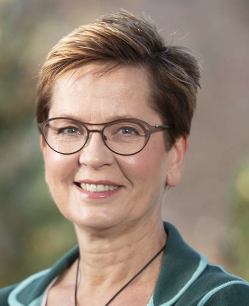 Kaisa Väänänen合作论文数Tampere University3
 daniel hultgren合作论文数2Juha Arrasvuori合作论文数Nokia Research Center2Jasmina Gržinić合作论文数1
 Anssi Savisalo合作论文数1
 Saara Ala-Luopa合作论文数Faculty of Information Technology and Communication, Tampere University1
 Aris Malapaschas合作论文数Tampere University of Technology, Tampere, Finland1
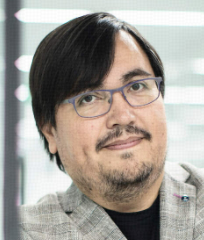 Andres Lucero合作论文数Department of Art and Media, Aalto University;Department of Design, Aalto University1
 Timo Saari合作论文数School of Economics, Helsinki;Information Technology;School of Economics, Helsinki1
 Hannu Karkkainen合作论文数Tampere University of Technology, Tampere1
 Pradthana Jarusriboonchai合作论文数Tampere University of Technology1Jarno Ojala合作论文数1
 Tero Jokela合作论文数Nokia Research Center1
 Minna Maarika Kynsilehto合作论文数1Hannu Toivola合作论文数1
 Heli Väätäjä合作论文数Tampere University of Technology1
 Mika Hakkarainen合作论文数1




