We present status and results of AstroGrid-D, a joint effort of astrophysicists and computer scientists to employ grid technology for scientific applications AstroGrid-D provides access to a network of distributed machines with a set of commands as well as software interfaces. It allows simple use of computer and storage facilities and to schedule or monitor compute tasks and data management. Iris based on the Globus Toolkit middleware (GT4).Chapter 1 describes the context which led to the demand for advanced software solutions in Astrophysics. and we state the goals of the projectWe then present characteristic astrophysical applications that have been implemented on AstroGrid-D in chapter 2 We describe simulations of different complexity, compute-intensive calculations running on multiple sites (Section 2 1), and advanced applications for specific scientific purposes (Section 2 2), such as a connection to robotic telescopes (Section 2.2.3) We can show from these examples how grid execution improves e g the scientific workflowChapter 3 explains the software tools and services that we adapted or newly developed Section 3 I is focused on the administrative aspects of the infrastructure. to manage users and monitor activity Section 3.2 characterises the central components of our architecture The AstroGrid-D information service to collect and store metadata. a file management system, the data management system, and a job manager for automatic submission of compute tasksWe summarise the successfully established infrastructure in chapter 4, concluding with our future plans to establish AstroGrid-D as a platform of modern e-Astronomy (C) 2010 Elsevier B V. All rights reserved.
This paper motivates how collaborative tools are needed to support modern computational science, using the case study of a distributed team of numerical relativists developing and running codes to model black holes and other astrophysical objects. We describe a summary of previous tools developed within the collaboration, and how they are integrated and used with their simulation codes which are built using the Cactus framework. We also describe new Cactus tools which use the Twitter and Flickr services. These tools are fundamentally integrated with the code base as Cactus modules and provide reliable, real-time information about simulations that can be easily shared across a collaboration.
Real-time access to accurate and reliable timing information is necessary to profile scientific applications, and crucial as simulations become increasingly complex, adaptive, and large-scale. The Cactus Framework provides flexible and extensible capabilities for timing information through a well designed infrastructure and timing API . Applications built with Cactus automatically gain access to built-in timers, such as gettimeofday and getrusage , system-specific hardware clocks, and high-level interfaces such as PAPI. We describe the Cactus timer interface, its motivation, and its implementation. We then demonstrate how this timing information can be used by an example scientific application to profile itself, and to dynamically adapt itself to a changing environment at run time.
Gamma Ray Bursts (GRBs) are intense narrowly-beamed flashes of gamma-rays of cosmological origin. They are among the most scientifically interesting astrophysical systems, and the riddle concerning their central engines and emission mechanisms is one of the most complex and challenging problems of astrophysics today. In this article we outline our petascale approach to the GRB problem and discuss the computational toolkits and numerical codes that are currently in use and that will be scaled up to run on emerging petaflop scale computing platforms in the near future. Petascale computing will require additional ingredients over conventional parallelism. We consider some of the challenges which will be caused by future petascale architectures, and discuss our plans for the future development of the Cactus framework and its applications to meet these challenges in order to profit from these new architectures.
Erik Schnetter, 2 Christian D. Ott, Gabrielle Allen, Peter Diener, 2 Tom Goodale, 4 Thomas Radke, Edward Seidel, and John Shalf Center for Computation & Technology, 216 Johnston Hall, Louisiana State University, LA 70803, USA∗ Department of Physics and Astronomy, 202 Nicholson Hall, Louisiana State University, Baton Rouge, LA 70803, USA Steward Observatory and Department of Astronomy, The University of Arizona, 933 N. Cherry Ave., Tucson, AZ 85721, USA School of Computer Science, Cardiff University, The Parade, Cardiff, CF24 3AA, UK Max-Planck-Institut für Gravitationsphysik, Albert-Einstein-Institut, Am Mühlenberg 1, D-14476 Golm, Germany Lawrence Berkeley National Laboratory, 1 Cyclotron Rd., Berkeley, CA 94720, USA (Dated: June 30, 2007)
We present AstroGrid-D, a project bringing together astronomers and experts in Grid technology to enhance astronomic science in many aspects. First, by sharing currently dispersed resources, scientists can calculate their models in more detail. Second, by developing new mechanisms to e‐ciently access and process existing datasets, scientiflc problems can be investigated that were until now impossible to solve. Third, by adopting Grid technology large instruments such as robotic telescopes and complex scientiflc work∞ows from data aquisition to analysis can be managed in an integrated manner. In this paper, we present prominent astronomic use cases, discuss requirements on a Grid middleware and present our approach to extend/augment existing middleware to facilitate the improvements mentioned above.
. . . . . . . . . . . . . . . . . . . . . . . . . . . . . . . . . . . . . . . . . . 2 Change History . . . . . . . . . . . . . . . . . . . . . . . . . . . . . . . . . . . . . . . 3
The size of data sets produced on remote supercomputer facilities frequently exceeds the processing capabilities of local visualization workstations. This phenomenon increasingly limits scientists when analyzing results of large-scale scientific simulations. That problem gets even more prominent in scientific collaborations, spanning large virtual organizations, working on common shared sets of data distributed in Grid environments. In the visualization community, this problem is addressed by distributing the visualization pipeline. In particular, early stages of the pipeline are executed on resources closer to the initial (remote) locations of the data sets. This paper presents an efficient technique for placing the first two stages of the visualization pipeline (data access and data filter) onto remote resources. This is realized by exploiting the extended retrieve feature of GridFTP for flexible, high performance access to very large HDF5 files. We reduce the number of network transactions for filtering operations by utilizing a server side data processing plugin, and hence reduce latency overhead compared to GridFTP partial file access. The paper further describes the application of hierarchical rendering techniques on remote uniform data sets, which make use of the remote data
We describe Cactus, a framework for building a variety of computing applications in science and engineering, including astrophysics, relativity and chemical engineering.We first motivate by example the need for such frameworks to support multi-platform, high performance applications across diverse communities. We then describe the design of the latest release of Cactus (Version 4.0) a complete rewrite of earlier versions, which enables highly modular, multi-language, parallel applications to be developed by single researchers and large collaborations alike. Making extensive use of abstractions, we detail how we are able to provide the latest advances in computational science, such as interchangeable parallel data distribution and high performance IO layers, while hiding most details of the underlying computational libraries from the application developer. We survey how Cactus 4.0 is being used by various application communities, and describe how it will also enable these applications to run on the computational Grids of the near future.
We present a synopsis of the Grid Application Toolkit, under development in the EU GridLab project, along with some of the new application scenarios which it will enable.
Grid technology is widely emerging. Still, there is an eminent shortage of real Grid users, due to the absence of two important catalysts: First, a widely accepted vision on how applications can substantially benefit from Grids, and second a toolkit of higher-level Grid services, tailored to application needs. The GridLab project aims to provide fundamentally new capabilities for applications to exploit the power of Grid computing, thus bridging the gap between application needs and existing Grid middleware. We present an overview of GridLab, a largescale, EU-funded Grid project spanning over a dozen groups in Europe and the US. We first outline our vision of Grid-empowered applications and then discuss GridLab's general architecture.
 Edward Seidel合作论文数University of Wyoming16
 Gabrielle Allen合作论文数School of Computing, University of Wyoming;Department of Mathematics & Statistics, University of Wyoming;Department of Physics & Astronomy, University of Wyoming11
 Tom Goodale合作论文数Enabling Applications on the Grid. In Lecture Notes in Computer Science, Vol. 2536:39-45, 2002. [Comment] Bibtex entry10
 Andre Merzky合作论文数Zuse Institut Berlin8
 John Shalf合作论文数Department of Computer Science, Lawrence Berkeley National Laboratory7
 F. Breitling合作论文数Institut fur Physik;Humboldt-Universitat zu Berlin;Institut fur Physik, Humboldt-Universitat zu Berlin6
 Mikael Högqvist合作论文数Zuse Institute Berlin6
 Hege, Hans-Christian合作论文数Division of Mathematics of Complex Systems, Department of Visual and Data-Centric Computing, Zuse Institute Berlin6
 Erik Schnetter合作论文数Perimeter Institute for Theoretical Physics5Werner Benger合作论文数Louisiana State University5Gerd Lanfermann合作论文数4a carlson合作论文数3
 Ralf Kähler合作论文数3Thomas Dramlitsch合作论文数3
 Christian Ott合作论文数University of Turku3
 Peter Diener合作论文数Department of Physics & Astronomy, College of Science, Louisiana State University3michael e russell合作论文数2iliya nickelt合作论文数2Tobias Scholl合作论文数2
 Angelika Reiser合作论文数Institut für Informatik, Technische Universität München, 85748 Garching bei München, Germany2
 Ian Taylor合作论文数Department of Computer Science and Engineering, College of Engineering, University of Notre Dame;SIMBA Chain2
 Thilo Kielmann合作论文数Department of Computer Science, Faculty of Science, Vrije Universiteit Amsterdam2Harry Enke合作论文数2
 Matthias Steinmetz合作论文数Leibniz Institute for Astrophysics Potsdam;University of Potsdam2Andrei Hutanu合作论文数Center for Computation and Technology, Louisiana State University2Oliver Wehrens合作论文数2
 Juliusz Pukacki合作论文数Enabling Applications on the Grid. In Lecture Notes in Computer Science, Vol. 2536:39-45, 2002. [Comment] Bibtex entry2Thomas Röblitz合作论文数2
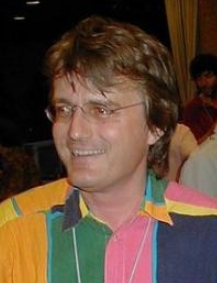 Rainer Spurzem合作论文数The Kavli Institute for Astronomy and Astrophysics at Peking University2Arthur Carlson合作论文数2
 Brygg Ullmer合作论文数Human-Centered Computing Division, Clemson University2
 Joan Masso合作论文数1T. Brüsemeister合作论文数1H. Enke合作论文数1
 Kelly Davis合作论文数1Dylan T. Stark合作论文数1
 Joachim Wambsganss合作论文数Department of Physics and Astronomy, Heidelberg University/Astronomisches Rechen-Institut, Zentrum für Astronomie der Universität Heidelberg1Steve White合作论文数1
 Jarek Nabrzyski合作论文数Poznan Supercomputing and Networking Center1
 Alexander Reinefeld合作论文数1
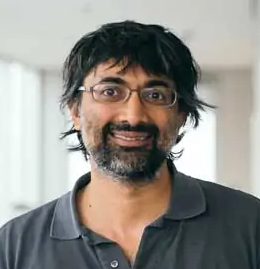 Kashif Rasul合作论文数Zalando Se1
 Frank Löffler合作论文数Louisiana State University1Jason Novotny合作论文数NAT’L CENTER FORMICROSCOPY FOR MICROSCOPY RESEARCH,
UNIV. CALIFORNIA, SAN DIEGO1Alexander Beck-Ratzka合作论文数1
Frank Löffler合作论文数Louisiana State University1Jason Novotny合作论文数NAT’L CENTER FORMICROSCOPY FOR MICROSCOPY RESEARCH,
UNIV. CALIFORNIA, SAN DIEGO1Alexander Beck-Ratzka合作论文数1 Wolfgang Voges合作论文数1
 Ian Kelley合作论文数Cardiff University1Jürgen Steinacker合作论文数1
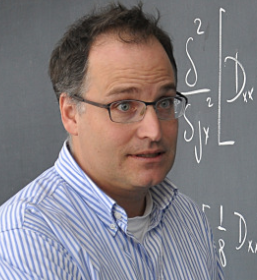 Torsten Enßlin合作论文数Max-Planck-Institut für Astrophysik;The International Max Planck Research School on Astrophysics, Ludwig Maximilians University1
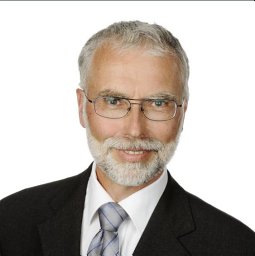 Hans-Martin Adorf合作论文数Max-Planck-Institut fur Astrophysik1




