The invention relates to a process for the preparation of primary amines comprising the steps of A) providing a solution of a secondary alcohol in a fluid, non-gaseous phase, B) contacting the phase with free ammonia and / or at least one ammonia-releasing compound and of a homogeneous catalyst and optionally C) Isolation of the primary amine formed in step B), characterized in that the volume ratio of the volume of the liquid phase is greater than or equal to 0.25 to the volume of the gas phase in step B and / or that the ammonia in step B) with respect to the hydroxyl groups in the secondary alcohol in a molar ratio of at least 5 is used: 1.
AbstractChemInform is a weekly Abstracting Service, delivering concise information at a glance that was extracted from about 200 leading journals. To access a ChemInform Abstract of an article which was published elsewhere, please select a “Full Text” option. The original article is trackable via the “References” option.
Primary (1°) fatty amines are used for cationic surfactants (textile softeners, dyeing aids, anti-static agents, germicides, bactericides and pigment aids), amphoteric surfactants (detergents and shampoos), corrosion inhibitors, asphalt emulsifiers, releasing agents for molded rubber parts, antrcaking agents for fertilizers, fuel additives and sludge inhibitors. They are made by hydrogenating unsaturated fatty nitriles with activated Ni catalysts and their required level of olefin retention is dependent on their use. This work describes a new catalyst that selectively converts unsaturated fatty nitriles to 1° fatty amines with very high levels of olefin retention, so that the resulting product will be suitable for the higher value liquid applications.
Fructose was hydrogenated over sponge-type Ni and Cu. Cu is less active than Ni, yielding a ~ 2:1 mannitol: sorbitol ratio. Ni generates a ~ 1:1 ratio and adding Mo to Ni increased its activity more and gave 44.1% mannitol selectivity (%M). Lower activity, weaker fructose adsorption, less zero order behavior, optimally smaller ensembles and higher activation energies favor a higher %M. We propose that mannitol is yielded by the preferred hydrogenation of the sparser, least sterically hindered x-furanose with retention at C2.
A heuristic method (so called "profiling analysis") was developed. The method is based on a large library of precious metal powder catalysts with different metal loading, metal dispersion, degree of reduction and functionalities of support materials and a data base comprising activity data from hydrogenation of mono-functional substrates. The data base allows the fast identification of potential catalysts for hydrogenation of multifunctional substrates from the library. In the presentation the usage of the profiling method is demonstrated for identification of a highly selective catalyst for hydroxyl-olefin hydrogenation to the hydroxy-alkane.
Fructose hydrogenations have been performed with various sponge-type Ni and Cu catalysts and the reaction data have been correlated to the catalysts' properties. Cu is less active than Ni and it favors the production of mannitol over sorbitol by a similar to 2:1 ratio, while Ni generates them on a similar to 1:1 basis. Promoting Ni with Mo increased the rate of hydrogenation, and decreased the mannitol selectivity to 44.1%. The data show that the least active catalysts adsorb fructose weaker, have less zero order behavior and higher activation energies leading to higher mannitol selectivities from the preferred hydrogenation of the sparser less sterically hindered alpha-furanose with retention at the anomeric carbon. Highly active catalysts adsorb fructose stronger for a more competitive, but still not favored, adsorption of the more abundant beta-furanose leading to more sorbitol. Depositing carbonaceous residues onto the catalyst prior to the reaction showed that smaller ensembles favor mannitol, thereby confirming its source to be the readily adsorbed alpha-furanose.
 helmfried krause合作论文数14thomas haas合作论文数13Peter Panster合作论文数10Andreas Freund合作论文数8Florian Klasovsky合作论文数7Pfeffer Jan合作论文数7Klaus-Dieter Vorlop合作论文数7h g j lansinkrotgerink合作论文数5peter schinke合作论文数5reinhold brand合作论文数5roland burmeister合作论文数5Baoshu Chen合作论文数5michael volland合作论文数4uwe ohlrogge合作论文数4hermanus lansink rotgerink合作论文数4inge beul合作论文数4lansinkrotgerink hans dr合作论文数4michael rimbach合作论文数4Ralf W Mayer合作论文数4Uwe Rodemerck合作论文数4Daniel J. Ostgard合作论文数4Hans Lansink Rotgerink合作论文数4Emmanuel Auer合作论文数4Ralf Hausmann合作论文数4K.-D. Vorlop合作论文数4martin bankmann合作论文数3heike riedemann合作论文数3olivier zehnacker合作论文数3johannes ohmer合作论文数3francis p daly合作论文数3M. Sell合作论文数3monika berweiler合作论文数3martin reisinger合作论文数3Andreas Geißelmann合作论文数3stefan wieland合作论文数3
 Dorit Wolf合作论文数3
 Stefan Röder合作论文数Department of Environmental Immunology, Helmholtz Centre for Environmental Research3
 Roger Sheldon合作论文数School of Chemistry, University of the Witwatersrand;Delft University of Technology3Roman Renneke合作论文数3Michiel H. A. Janssen合作论文数3
 Venu Arunajatesan合作论文数Evonik Degussa Corporation3
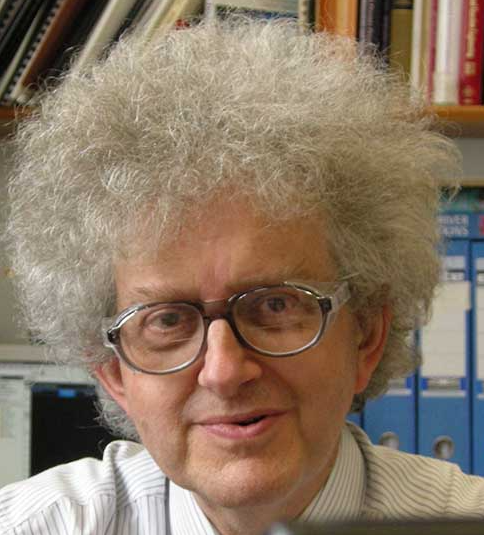 Martyn Poliakoff (马丁·波利亚科夫)合作论文数School of Chemistry, Faculty of Science, University of Nottingham3Martin G. Hitzler合作论文数3steffen seebald合作论文数2michael sell合作论文数2thomas m swan合作论文数2stefan roeder合作论文数2Angela Koeckritz合作论文数2Marisa Cruz合作论文数2




