A bstract A search for the exclusive decays of the Higgs and Z bosons to a ϕ or ρ meson and a photon is performed with a pp collision data sample corresponding to an integrated luminosity of up to 35 . 6 fb −1 collected at $$ \sqrt{s}=13 $$ s = 13 TeV with the ATLAS detector at the CERN Large Hadron Collider. These decays have been suggested as a probe of the Higgs boson couplings to light quarks. No significant excess of events is observed above the background, as expected from the Standard Model. Upper limits at 95% confidence level were obtained on the branching fractions of the Higgs boson decays to ϕ γ and ρ γ of 4 . 8 × 10 −4 and 8 . 8 × 10 −4 , respectively. The corresponding 95% confidence level upper limits for the Z boson decays are 0 . 9 × 10 −6 and 25 × 10 −6 for ϕ γ and ρ γ, respectively.
A search for leptoquarks decaying into the bτ final state is performed using Run 2 proton-proton collision data from the Large Hadron Collider, corresponding to an integrated luminosity of 139 fb−1 at √(s) = 13 TeV recorded by the ATLAS detector. The benchmark models considered in this search are vector leptoquarks with electric charge of 2/3e and scalar leptoquarks with an electric charge of 4/3e. No significant excess above the Standard Model prediction is observed, and 95
The total and differential Higgs boson production cross-sections are measured through a combined statistical analysis of the H → ZZ* → 4ℓ and H → γγ decay channels. The results are based on a dataset of 139 fb−1 of proton–proton collisions at a centre-of-mass energy of 13 TeV, recorded by the ATLAS detector at the Large Hadron Collider. The measured total Higgs boson production cross-section is 55.5_-3.8^+4.0 pb, consistent with the Standard Model prediction of 55.6 ± 2.5 pb. All results from the two decay channels are compatible with each other, and their combination agrees with the Standard Model predictions. A combined statistical interpretation of the measured fiducial cross-sections as a function of the Higgs boson transverse momentum is performed in order to probe the Yukawa couplings to the bottom and charm quarks. A similar interpretation is performed by including also the constraints from the measurements of Higgs boson production in association with a W or Z boson in the H → bb and cc decay channels.
Being the state of the art, the Micro-Pattern Gaseous Detectors (MPGD) are widely accepted in almost every particle collider experiment. Micromegas is a type of MPGD which is famous for its simple single-stage amplification, high and stable gain, low ion feedback, and excellent spatial and temporal resolutions. The chance of O 2 contamination in a gaseous detector is not negligible as the abundance of O 2 in air is nearly 21%. Contamination of detector-gas by O 2 may occur due to insufficient gas-tightness or the use of long plastic pipes. Being an electronegative gas, O 2 attach with the electrons inside a gaseous detector and influence the performance. The concern is higher when the detector has a large scale extension. We are reporting our measurements on the diffusion of O 2 through a couple of commonly used plastic pipes. Then, in a hermetic gas system, by infusing O 2 in a controlled and precise way, we have measured the effects of O 2 on the performance of a resistive Micromegas. In pure Ar-CO 2 mixture, we have also compared the gas-gain of the Micromegas with simulation to better estimate the gas-gap. The effects of temperature and pressure fluctuations on our study have also been investigated.
This letter presents a search for narrow, high-mass resonances in the Zγ final state with the Z boson decaying into a pair of electrons or muons. The s=13 TeV pp collision data were recorded by the ATLAS detector at the CERN Large Hadron Collider and have an integrated luminosity of 140 fb−1. The data are found to be in agreement with the Standard Model background expectation. Upper limits are set on the resonance production cross section times the decay branching ratio into Zγ. For spin-0 resonances produced via gluon–gluon fusion, the observed limits at 95% confidence level vary between 65.5 fb and 0.6 fb, while for spin-2 resonances produced via gluon–gluon fusion (or quark–antiquark initial states) limits vary between 77.4 (76.1) fb and 0.6 (0.5) fb, for the mass range from 220 GeV to 3400 GeV.
The first measurement of longitudinal decorrelations of harmonic flow amplitudes v_{n} for n=2-4 in Xe+Xe collisions at sqrt[s_{NN}]=5.44 TeV is obtained using 3 μb^{-1} of data with the ATLAS detector at the LHC. The decorrelation signal for v_{3} and v_{4} is found to be nearly independent of collision centrality and transverse momentum (p_{T}) requirements on final-state particles, but for v_{2} a strong centrality and p_{T} dependence is seen. When compared with the results from Pb+Pb collisions at sqrt[s_{NN}]=5.02 TeV, the longitudinal decorrelation signal in midcentral Xe+Xe collisions is found to be larger for v_{2}, but smaller for v_{3}. Current hydrodynamic models reproduce the ratios of the v_{n} measured in Xe+Xe collisions to those in Pb+Pb collisions but fail to describe the magnitudes and trends of the ratios of longitudinal flow decorrelations between Xe+Xe and Pb+Pb. The results on the system-size dependence provide new insights and an important lever arm to separate effects of the longitudinal structure of the initial state from other early and late time effects in heavy-ion collisions.
Article history: Received 19 March 2021 Received in revised form 11 May 2021 Accepted 25 May 2021 Available online 31 May 2021 Editor: M. Doser A search for the Higgs boson decaying into a photon and a pair of electrons or muons with an invariant mass m < 30 GeV is presented. The analysis is performed using 139 fb−1 of proton–proton collision data, produced by the LHC at a centre-of-mass energy of 13 TeV and collected by the ATLAS experiment. Evidence for the H → γ process is found with a significance of 3.2 over the backgroundonly hypothesis, compared to an expected significance of 2.1 for the Standard Model prediction. The best-fit value of the signal-strength parameter, defined as the ratio of the observed signal yield to the one expected in the Standard Model, is μ = 1.5 ± 0.5. The Higgs boson production cross-section times the H → γ branching ratio for m < 30 GeV is determined to be 8.7+2.8 −2.7 fb. © 2021 The Author. Published by Elsevier B.V. This is an open access article under the CC BY license (http://creativecommons.org/licenses/by/4.0/). Funded by SCOAP3.
This paper presents a search for direct top squark pair production in events with missing transverse momentum plus either a pair of jets consistent with Standard Model Higgs boson decay into b-quarks or a same-flavour opposite-sign dilepton pair with an invariant mass consistent with a Z boson. The analysis is performed using the proton–proton collision data at \n$$\\sqrt{s}=13$$\n\n TeV collected with the ATLAS detector during the LHC Run-2, corresponding to an integrated luminosity of 139 fb\n$$^{-1}$$\n\n. No excess is observed in the data above the Standard Model predictions. The results are interpreted in simplified models featuring direct production of pairs of either the lighter top squark (\n$$\\tilde{t}_1$$\n\n) or the heavier top squark (\n$$\\tilde{t}_2$$\n\n), excluding at 95% confidence level \n$$\\tilde{t}_1$$\n\n and \n$$\\tilde{t}_2$$\n\n masses up to about 1220 and 875 GeV, respectively.
The production cross-sections for W +/- and Z bosons are measured using ATLAS data corresponding to an integrated luminosity of 4.0 pb-1 collected at a centre-ofmass energy v s = 2.76 TeV. The deca ...
This Letter presents a search for new light resonances decaying to pairs of quarks and produced in association with a high-pT photon or jet. The dataset consists of proton–proton collisions with an integrated luminosity of 36.1 fb−1 at a centre-of-mass energy of s=13 TeV recorded by the ATLAS detector at the Large Hadron Collider. Resonance candidates are identified as massive large-radius jets with substructure consistent with a particle decaying into a quark pair. The mass spectrum of the candidates is examined for local excesses above background. No evidence of a new resonance is observed in the data, which are used to exclude the production of a lepto-phobic axial-vector Z′ boson.
Article history: Received 27 December 2018 Received in revised form 16 April 2019 Accepted 6 May 2019 Available online 13 May 2019 Editor: M. Doser An observation of electroweak W ± Z production in association with two jets in proton–proton collisions is presented. The data collected by the ATLAS detector at the Large Hadron Collider in 2015 and 2016 at a centre-of-mass energy of √ s = 13 TeV are used, corresponding to an integrated luminosity of 36.1 fb−1. Events containing three identified leptons, either electrons or muons, and two jets are selected. The electroweak production of W ± Z bosons in association with two jets is measured with an observed significance of 5.3 standard deviations. A fiducial cross-section for electroweak production including interference effects and for a single leptonic decay mode is measured to be σW Z jj−EW = 0.57 +0.14 −0.13 (stat.) +0.07 −0.06 (syst.) fb. Total and differential fiducial cross-sections of the sum of W ± Z j j electroweak and strong productions for several kinematic observables are also measured. © 2019 The Author(s). Published by Elsevier B.V. This is an open access article under the CC BY license (http://creativecommons.org/licenses/by/4.0/). Funded by SCOAP3.
A search is conducted for the electroweak pair production of a chargino and a neutralino pp -> (chi) over tilde (+/-)(1)(chi) over tilde (0)(2), where the chargino decays into the lightest neutralino and a W boson, (chi) over tilde (+/-)(1) -> (chi) over tilde W-0(1)+/- while the neutralino decays into the lightest neutralino and a Standard Model-like 125 GeV Higgs boson,(chi) over tilde (0)(2) -> (chi) over tilde (0)(1)h. Fully hadronic, semileptonic, diphoton, and multilepton (electrons, muons) final. states with missing transverse momentum are considered in this search. Higgs bosons in the final state are identified by either two jets originating from bottom quarks (h -> b (b) over bar), two photons (h -> gamma gamma), or leptons from the decay modes h -> WW, h -> ZZ or h -> tau tau. The analysis is based on 36.1 fb(-1) of s root s = 13 TeV proton-proton collision data recorded by the ATLAS detector at the Large Hadron Collider. Observations are consistent with the Standard Model expectations, and 95% confidence-level limits of up to 680 GeV in (chi) over tilde (+/-)(1)/(chi) over tilde (0)(2) mass are set in the context of a simplified supersymmetric model.
This Letter presents a search for heavy charged long-lived particles produced in proton–proton collisions at √ s = 13 TeV at the LHC using a data sample corresponding to an integrated luminosity of 36 . 1 fb − 1 collected by the ATLAS experiment in 2015 and 2016. These particles are expected to travel with a velocity significantly below the speed of light, and therefore have a specific ionisation higher than any high-momentum Standard Model particle of unit charge. The pixel subsystem of the ATLAS detector is used in this search to measure the ionisation energy loss of all reconstructed charged particles which traverse the pixel detector. Results are interpreted assuming the pair production of R -hadrons as composite colourless states of a long-lived gluino and Standard Model partons. No significant deviation from Standard Model background expectations is observed, and lifetime-dependent upper limits on R -hadron production cross-sections and gluino masses are set, assuming the gluino always decays to two quarks and a 100 GeV stable neutralino. R -hadrons with lifetimes above 1.0 ns are excluded at the 95% confidence level, with lower limits on the gluino mass ranging between 1290 GeV and 2060 GeV. In the case of stable R -hadrons, the lower limit on the gluino mass at the 95% confidence level is 1890 GeV. © 2018 The Author. Published by Elsevier B.V. This is an open access article under the CC BY license (http://creativecommons.org/licenses/by/4.0/). Funded by SCOAP 3 .
This change does not have any impact on the measured helicity fractions, but it changes the obtained limits on the anomalous couplings.
A measurement of off-shell Higgs boson production in the ZZ -> 4l and ZZ -> 2l2v decay channels, where stands for either an electron or a muon, is performed using data from proton-proton collisions at a centre-of-mass energy of root s = 13 TeV. The data were collected by the ATLAS experiment in 2015 and 2016 at the Large Hadron Collider, and they correspond to an integrated luminosity of 36.1 fb(-1). An observed (expected) upper limit on the off-shell Higgs signal strength, defined as the event yield normalised to the Standard Model prediction, of 3.8 (3.4) is obtained at 95% confidence level (CL). Assuming the ratio of the Higgs boson couplings to the Standard Model predictions is independent of the momentum transfer of the Higgs production mechanism considered in the analysis, a combination with the on-shell signal-strength measurements yields an observed (expected) 95% CL upper limit on the Higgs boson total width of 14.4 (15.2) MeV. (C) 2018 The Author. Published by Elsevier B.V.
 Arnulf Quadt合作论文数Faculty of Physics, Georg-August-Universität Göttingen;II. Institute of Physics, Georg-August-Universität Göttingen272
 Ivor Fleck合作论文数Center for Particle Physics Siegen, University of Siegen;Department of Physics, University of Siegen261
 Paul de Jong合作论文数Institute of Physics, Faculty of Science, Universiteit van Amsterdam;Nikhef254
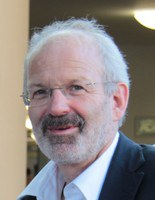 Norbert Wermes合作论文数Physikalisches Institut, Universitat Bonn245
 John A. Parsons合作论文数Department of Physics, Columbia University243
 F. Fiedler合作论文数235Jonas Strandberg合作论文数Department of Physics, The University of Michigan228
 Brigitte Vachon合作论文数Department of Physics, Faculty of Science, McGill University226
 Reinhard Schwienhorst合作论文数Department of Physics and Astronomy, Michigan State University223S. Snyder合作论文数221
 Serban Protopopescu合作论文数Physics Department, Brookhaven National Laboratory221
 Miloš Lokajíček Jr合作论文数Division of Elementary Particle Physics, Particle Physics Department, Institute of Physics of the Czech Academy of Sciences220
 Elizaveta K. Shabalina合作论文数University of Gottingen220
 Alexander Kupčo合作论文数Institute of Physics, Czech Academy of Sciences218
 Horst Severini合作论文数Homer L. Dodge Department of Physics and Astronomy, Dodge Family College of Arts and Sciences, The University of Oklahoma;Oklahoma Center for High Energy Physics216
 Alexander Khanov合作论文数Department of Physics, The College of Arts and Sciences, Oklahoma State University216
 Anna Goussiou合作论文数Department of Physics, University of Washington216
 Elliott Cheu合作论文数College of Science, University of Arizona213
 Aurelio Juste合作论文数Institut de Física d'Altes Energies, The Barcelona Institute of Science and Technology213Michael Begel合作论文数Department of Physics, Brookhaven National Laboratory211
 David Leith合作论文数Stanford Linear Accelerator Center211
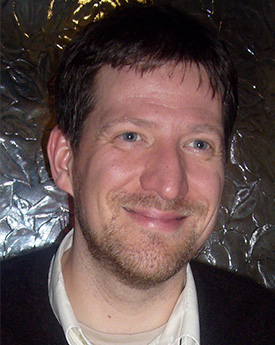 Harald Fox合作论文数Department of Physics, Lancaster University211Oana Vickey Boeriu合作论文数School of Mathematical and Physical Sciences, University of Sheffield211
 F. Filthaut (Frank)合作论文数Department of Experimental High Energy Physics, Radboud University210
 Kaushik De合作论文数Department of Physics, College of Science, Univeristy of Texas at Arlington210
 Dhiman Chakraborty合作论文数Department of Physics, Northern Illinois University210
 Sergey Burdin合作论文数Department of Physics, School of Physical Sciences, Faculty of Science and Engineering, University of Liverpool209M. Vreeswijk合作论文数208
 Yann Coadou合作论文数Centre de Physique des Particules de Marseille206
 Andy Haas合作论文数Department of Physics, College of Arts & Science, New York University206K. Jakobs合作论文数205
 Marc-André Pleier合作论文数Physics Department, Brookhaven National Laboratory205Patrick L. Skubic合作论文数204
 Andrew Brandt合作论文数Department of Physics, College of Science, The University of Texas at Arlington203
 Brad Abbott合作论文数Homer L. Dodge Department of Physics and Astronomy, Dodge Family College of Arts and Sciences, The University of Oklahoma203Mariusz Przybycien合作论文数Department of Particle Interactions and Detection Techniques, Faculty of Physics and Applied Computer Science, AGH University of Science and Technology202A. Schwartzman合作论文数201R. Piegaia合作论文数200
 Sahal Yacoob合作论文数Department of Physics, Faculty of Science, University of Cape Town;CERN200
 Dmitri Tsybychev合作论文数Department of Physics and Astronomy, College of Arts and Sciences, Stony Brook University;Tomsk State University200
 Michael Rijssenbeek合作论文数Department of Physics and Astronomy, Stony Brook University198T. Kuhl合作论文数198
 Peter Mättig合作论文数University of Wuppertal197F. Rizatdinova合作论文数196
 Timothy R Andeen合作论文数Department of Physics, College of Natural Sciences, The University of Texas at Austin195
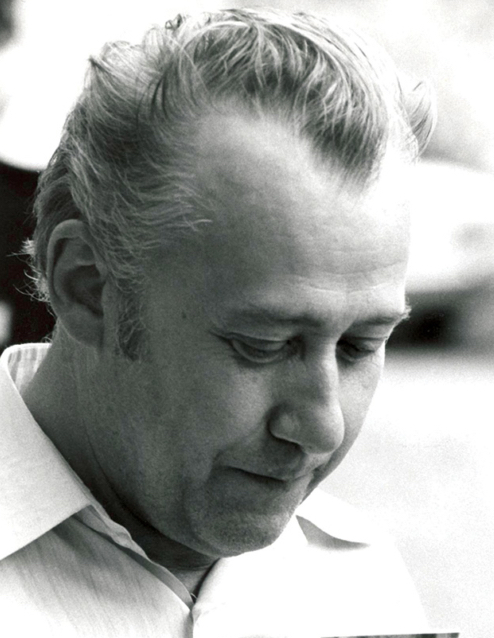 Vladislav Šimák合作论文数Czech Technical University in Prague;Institute of Physics, Czech Academy of Science194
 Christian Zeitnitz合作论文数Fachgruppe Physik, Fakultät für Mathematik und Naturwissenschaften, Bergische Universität Wuppertal194S. Crépé-Renaudin合作论文数193R. Ströhmer合作论文数193




