A relation modification problem gets a logical structure and a natural number k as input and asks whether k modifications of the structure suffice to make it satisfy a predefined property. We provide a complete classification of the classical and parameterized complexity of relation modification problems - the latter w. r. t. the modification budget k - based on the descriptive complexity of the respective target property. We consider different types of logical structures on which modifications are performed: Whereas monadic structures and undirected graphs without self-loops each yield their own complexity landscapes, we find that modifying undirected graphs with self-loops, directed graphs, or arbitrary logical structures is equally hard w. r. t. quantifier patterns. Moreover, we observe that all classes of problems considered in this paper are subject to a strong dichotomy in the sense that they are either very easy to solve (that is, they lie in paraAC^0↑ or TC^0) or intractable (that is, they contain W[2]-hard or NP-hard problems).
A DAG compression of a (typically dense) graph is a simple data structure that stores how vertex clusters are connected, where the clusters are described indirectly as sets of reachable sinks in a directed acyclic graph (DAG). They generalize tree compressions, where the clusters form a tree-like hierarchy, and we give the first proof that DAG compressions can achieve better compressions than tree compressions. Our interest in DAG compression stems from the fact that several simple standard algorithms, like breadth-first search on graphs, can be implemented so that they work directly on the compressed rather than on the original graph and so that, crucially, the runtime is relative to the (typically small) size of the compressed graph. We add another entry to the list of algorithms where this is possible, by showing that Kruskal's algorithm for computing minimum spanning trees can be adapted to work directly on DAG compressions. On the negative side, we answer the central open problem from previous work, namely how hard it is to compute a minimum-size DAG compression for a given graph: This is NP-hard; and this is even the case for the dynamic setting, where we must update the DAG compression optimally when a single edge is added or deleted in the input graph.
The runtime of graph algorithms such as depth-first search or Dijkstra's algorithm is dominated by the fact that all edges of the graph need to be processed at least once, leading to prohibitive runtimes for large, dense graphs. We introduce a simple data structure for storing graphs (and more general structures) in a compressed manner using directed acyclic graphs (dags). We then show that numerous standard graph problems can be solved in time linear in the size of the dag compression of a graph, rather than in the number of edges of the graph. Crucially, many dense graphs, including but not limited to graphs of bounded twinwidth, have a dag compression of size linear in the number of vertices rather than edges. This insight allows us to improve the previous best results for the runtime of standard algorithms from quasi-linear to linear for the large class of graphs of bounded twinwidth, which includes all cographs, graphs of bounded treewidth, or graphs of bounded cliquewidth.
Vertex deletion problems for graphs are studied intensely in classical and parameterized complexity theory. They ask whether we can delete at most k vertices from an input graph such that the resulting graph has a certain property. Regarding k as the parameter, a dichotomy was recently shown based on the number of quantifier alternations of first-order formulas that describe the property. In this paper, we refine this classification by moving from quantifier alternations to individual quantifier patterns and from a dichotomy to a trichotomy, resulting in a complete classification of the complexity of vertex deletion problems based on their quantifier pattern. The more fine-grained approach uncovers new tractable fragments, which we show to not only lie in FPT, but even in parameterized constant-depth circuit complexity classes. On the other hand, we show that vertex deletion becomes intractable already for just one quantifier per alternation, that is, there is a formula of the form ∀x∃y∀z(ψ), with ψ quantifier-free, for which the vertex deletion problem is W[1]-hard. The fine-grained analysis also allows us to uncover differences in the complexity landscape when we consider different kinds of graphs and more general structures: While basic graphs (undirected graphs without self-loops), undirected graphs, and directed graphs each have a different frontier of tractability, the frontier for arbitrary logical structures coincides with that of directed graphs.
The satisfaction probability Pr[$\phi$] := Pr$_{\beta:vars(\phi) \to \{0,1\}}[\beta\models \phi]$ of a propositional formula $\phi$ is the likelihood that a random assignment $\beta$ makes the formula true. We study the complexity of the problem $k$SAT-Pr$_{>p}$ = {$\phi$ is a $k$CNF formula | Pr[$\phi$] > p} for fixed $k$ and $p$. While 3SAT-Pr$_{>0}$ = 3SAT is NP-complete and SAT-Pr$_{>1/2}$ is PP-complete, Akmal and Williams recently showed that 3SAT-Pr$_{>1/2}$ lies in P and 4SAT-Pr$_{>1/2}$ is NP-complete; but the methods used to prove these striking results stay silent about, say, 4SAT-Pr$_{>3/4}$, leaving the computational complexity of $k$SAT-Pr$_{>p}$ open for most $k$ and $p$. In the present paper we give a complete characterization in the form of a trichotomy: $k$SAT-Pr$_{>p}$ lies in AC$^0$, is NL-complete, or is NP-complete. The proof of the trichotomy hinges on a new order-theoretic insight: Every set of $k$CNF formulas contains a formula of maximum satisfaction probability. This deceptively simple statement allows us to (1) kernelize $k$SAT-Pr$_{\ge p}$ for the joint parameters $k$ and $p$, (2) show that the variables of the kernel form a backdoor set when the trichotomy states membership in AC$^0$ or NL, and (3) prove locality properties for $k$CNF formulas $\phi$, by which Pr[$\phi$] < $p$ implies that Pr[$\psi$] < $p$ holds already for a subset $\psi$ of $\phi$'s clauses whose size depends only on $k$ and $p$, and Pr[$\phi$] = $p$ implies $\phi \equiv \psi$ for some $k$CNF formula $\psi$ whose size once more depends only on $k$ and $p$.
Given an undirected graph G = (V, E ), it is a difficult problem (complete for #P) to determine the total number of vertex covers C subset of V of G . In contrast, deciding whether most C cover a graph (meaning, at least half of all possible C subset of V are covers) turns out to be tractable. Intriguingly, this can be proved in very different ways, namely using search trees from FPT theory, using backdoor sets from sAT solving, using randomized sampling in conjunction with gaps in probability spectra, using algorithmic meta- theorems, using forbidden minors from graph minor theory, using forbidden subgraphs in conjunction with bounded tree-depth, and using the construction of algorithmically simple well-quasi-orderings. The present paper explains and celebrates how this diverse crowd of approaches, ideas, and methods, which Theoretical Computer Science has developed over the last fifty years, can be applied to solve a basic problem like "decide whether most vertex sets cover a given graph," but also to solve many (at least superficially) harder counting-threshold problems.
In the maximum satisfiability problem (max-sat) we are given a propositional formula in conjunctive normal form and have to find an assignment that satisfies as many clauses as possible. We study the parallel parameterized complexity of various versions of max-sat and provide the first constant-time algorithms parameterized either by the solution size or by the allowed excess relative to some guarantee. For the dual parameterized version where the parameter is the number of clauses we are allowed to leave unsatisfied, we present the first parallel algorithm for max-2sat (known as almost-2sat). The difficulty in solving almost-2sat in parallel comes from the fact that the iterative compression method, originally developed to prove that the problem is fixed-parameter tractable at all, is inherently sequential. We observe that a graph flow whose value is a parameter can be computed in parallel and develop a parallel algorithm for the vertex cover problem parameterized above the size of a given matching. Finally, we study the parallel complexity of max-sat parameterized by the vertex cover number, the treedepth, the feedback vertex set number, and the treewidth of the input’s incidence graph. While max-sat is fixedparameter tractable for all of these parameters, we show that they allow different degrees of possible parallelization. For all four we develop dedicated parallel algorithms that are constructive, meaning that they output an optimal assignment – in contrast to results that can be obtained by parallel meta-theorems, which often only solve the decision version.
By Fagin's Theorem, NP contains precisely those problems that can be described by formulas starting with an existential second-order quantifier, followed by only first-order quantifiers (ESO formulas). Subsequent research refined this result, culminating in powerful theorems that characterize for each possible sequence of first-order quantifiers how difficult the described problem can be. We transfer this line of inquiry to the parameterized setting, where the size of the set quantified by the second-order quantifier is the parameter. Many natural parameterized problems can be described in this way using simple sequences of first-order quantifiers: For the clique or vertex cover problems, two universal first-order quantifiers suffice ("for all pairs of vertices ... must hold"); for the dominating set problem, a universal followed by an existential quantifier suffice ("for all vertices, there is a vertex such that ..."); and so on. We present a complete characterization that states for each possible sequence of first-order quantifiers how high the parameterized complexity of the described problems can be. The uncovered dividing line between quantifier sequences that lead to tractable versus intractable problems is distinct from that known from the classical setting, and it depends on whether the parameter is a lower bound on, an upper bound on, or equal to the size of the quantified set.
Computing small kernels for the hitting set problem is a well-studied computational problem where we are given a hypergraph with n vertices and m hyperedges, each of size d for some small constant d, and a parameter k. The task is to compute a new hypergraph, called a kernel, whose size is polynomial with respect to the parameter k and which has a size-k hitting set if, and only if, the original hypergraph has one. State-of-the-art algorithms compute kernels of size k^d (which is a polynomial as d is a constant), and they do so in time m· 2^d poly(d) for a small polynomial poly(d) (which is linear in the hypergraph size for d fixed). We generalize this task to the dynamic setting where hyperedges may continuously be added or deleted and one constantly has to keep track of a size- k^d kernel. This paper presents a deterministic solution with worst-case time 3^d poly(d) for updating the kernel upon inserts and time 5^d poly(d) for updates upon deletions. These bounds nearly match the time 2^d poly(d) needed by the best static algorithm per hyperedge. Let us stress that for constant d our algorithm maintains a hitting set kernel with constant, deterministic, worst-case update time that is independent of n, m, and the parameter k. As a consequence, we also get a deterministic dynamic algorithm for keeping track of size-k hitting sets in d-hypergraphs with update times O(1) and query times O(c^k) where c = d - 1 + O(1/d) equals the best base known for the static setting.
The satisfaction probability σ(ϕ) := Pr β :vars(ϕ)→{0,1} [ β |= ϕ] of a propositional formula ϕ is the likelihood that a random assignment β makes the formula true. We study the complexity of the problem k SAT-PROB >δ = {ϕ is a k CNF formula | σ(ϕ) > δ} for fixed k and δ. While 3SAT-PROB >0 = 3SAT is NP-complete and SAT-PROB >1/2 is PP-complete, Akmal and Williams recently showed 3SAT-PROB >1/2 ∈ P and 4SAT-PROB >1/2 ∈ NP-complete; but the methods used to prove these striking results stay silent about, say, 4SAT-PROB >3/4 , leaving the computational complexity of k SAT-PROB >δ open for most k and δ. In the present paper we give a complete characterization in the form of a trichotomy: k SAT-PROB >δ lies in AC 0 , is NL-complete, or is NP-complete; and given k and δ we can decide which of the three applies. The proof of the trichotomy hinges on a new order-theoretic insight: Every set of k CNF formulas contains a formula of maximal satisfaction probability. This deceptively simple result allows us to (1) kernelize k SAT-PROB ≥δ , (2) show that the variables of the kernel form a strong backdoor set when the trichotomy states membership in AC 0 or NL, and (3) prove a locality property by which for every k CNF formula ϕ we have σ(ϕ) ≥ δ iff σ(Ψ) ≥ δ for every fixed-size subset Ψ of ϕ's clauses. The locality property will allow us to prove a conjecture of Akmal and Williams: The majority-of-majority satisfaction problem for k CNFS lies in P for all k.
In the NP-hard Longest Common Subsequence problem (LCS), given a set of strings, the task is to find a string that can be obtained from every input string using as few deletions as possible. LCS is one of the most fundamental string problems with numerous applications in various areas, having gained a lot of attention in the algorithms and complexity research community. Significantly improving on an algorithm by Irving and Fraser [CPM’92], featured as a research challenge in a 2014 survey paper, we show that LCS is fixed-parameter tractable (FPT) when parameterized by the maximum number of deletions per input string. Given the relatively moderate running time of our algorithm (linear time when the parameter is a constant) and small parameter values to be expected in several applications, we believe that our purely theoretical analysis could finally pave the way to a new, exact and practically useful algorithm for this notoriously hard string problem.
Color coding is an algorithmic technique used in parameterized complexity theory to detect “small” structures inside graphs. The idea is to derandomize algorithms that first randomly color a graph and then search for an easily-detectable, small color pattern. We transfer color coding to the world of descriptive complexity theory by characterizing—purely in terms of the syntactic structure of describing formulas—when the powerful second-order quantifiers representing a random coloring can be replaced by equivalent, simple first-order formulas. Building on this result, we identify syntactic properties of first-order quantifiers that can be eliminated from formulas describing parameterized problems. The result applies to many packing and embedding problems, but also to the long path problem. Together with a new result on the parameterized complexity of formula families involving only a fixed number of variables, we get that many problems lie in FPT just because of the way they are commonly described using logical formulas.
Which amount of parallel resources is needed for updating a query result after changing an input? In this work we study the amount of work required for dynamically answering membership and range queries for formal languages in parallel constant time with polynomially many processors. As a prerequisite, we propose a framework for specifying dynamic, parallel, constant-time programs that require small amounts of work. This framework is based on the dynamic descriptive complexity framework by Patnaik and Immerman.
This report documents the program and activities of Dagstuhl Seminar 21121 Computational Complexity of Discrete Problems, which was held online in March 2021. Starting with a description of the organization of the online meeting and the topics covered, we then list the different talks given during the seminar in alphabetical order of speakers, followed by the abstracts of the talks, including the main references and relevant sources where applicable. Despite the fact that only a compressed daily time slot was available for the seminar with participants from time zones spanning the whole globe and despite the fact that informal discussions were harder to hold than in a typical on-site seminar, the rate of participation throughout the seminar was very high and many lively scientific debates were held.
Given a hypergraph H = (V,E), what is the smallest subset $X \subseteq V$ such that e ∩ X≠∅ holds for all e ∈ E? This problem, known as the hitting set problem, is a basic problem in combinatorial optimization and has been studied extensively in both classical and parameterized complexity theory. There are well-known kernelization algorithms for it, which get a hypergraph H and a number k as input and output a hypergraph H′ such that (1) H has a hitting set of size k if and only if $H^{\prime }$ has such a hitting set and (2) the size of $H^{\prime }$ depends only on k and on the maximum cardinality d of hyperedges in H. The algorithms run in polynomial time and can be parallelized to a certain degree: one can easily compute hitting set kernels in parallel time O(k) and not-so-easily in time O(d) – but it was conjectured that these are the best parallel algorithms possible. We refute this conjecture and show how hitting set kernels can be computed in constant parallel time. For our proof, we introduce a new, generalized notion of hypergraph sunflowers and show how iterated applications of the color coding technique can sometimes be collapsed into a single application.
We analyze a reduction rule for computing kernels for the hitting set problem: In a hypergraph, the link of a set c of vertices consists of all edges that are supersets of c. We call such a set critical if its link has certain easy-to-check size properties. The rule states that the link of a critical c can be replaced by c. It is known that a simple linear-time algorithm for computing hitting set kernels (number of edges) at most k^d (k is the hitting set size, d is the maximum edge size) can be derived from this rule. We parallelize this algorithm and obtain the first AC⁰ kernel algorithm that outputs polynomial-size kernels. Previously, such algorithms were not even known for artificial problems. An interesting application of our methods lies in traditional, non-parameterized approximation theory: Our results imply that uniform AC⁰-circuits can compute a hitting set whose size is polynomial in the size of an optimal hitting set.
The following report archives the presentations and activities of the March 2019 Dagstuhl Seminar 19121 “Computational Complexity of Discrete Problems”. Section 1 summarizes the topics and some specific results offered in selected talks during the course of the week. Section 2 provides a table of contents, listing each of the talks given in alphabetical order. Section 3 contains the abstracts, indicating both the main reference and other relevant sources (where applicable) to allow the reader to investigate the topics further. Seminar March 17–22, 2019 – http://www.dagstuhl.de/19121 2012 ACM Subject Classification Theory of computation → Computational complexity and cryptography, Theory of computation → Design and analysis of algorithms
 Max Bannach合作论文数University of Lübeck12
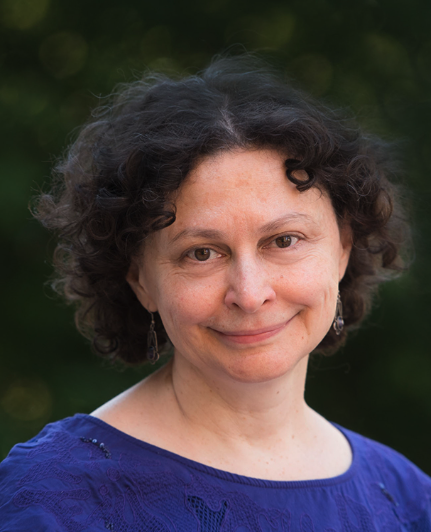 Anna Gál合作论文数Department of Computer Science, College of Natural Sciences, The University of Texas at Austin8
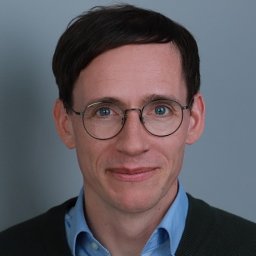 Michael Elberfeld合作论文数Institut fur Theoretische;Universitat zu Lubeck;Institut fur Theoretische, Universitat zu Lubeck8
 Rahul Santhanam合作论文数Department of Computer Science, University of Oxford6
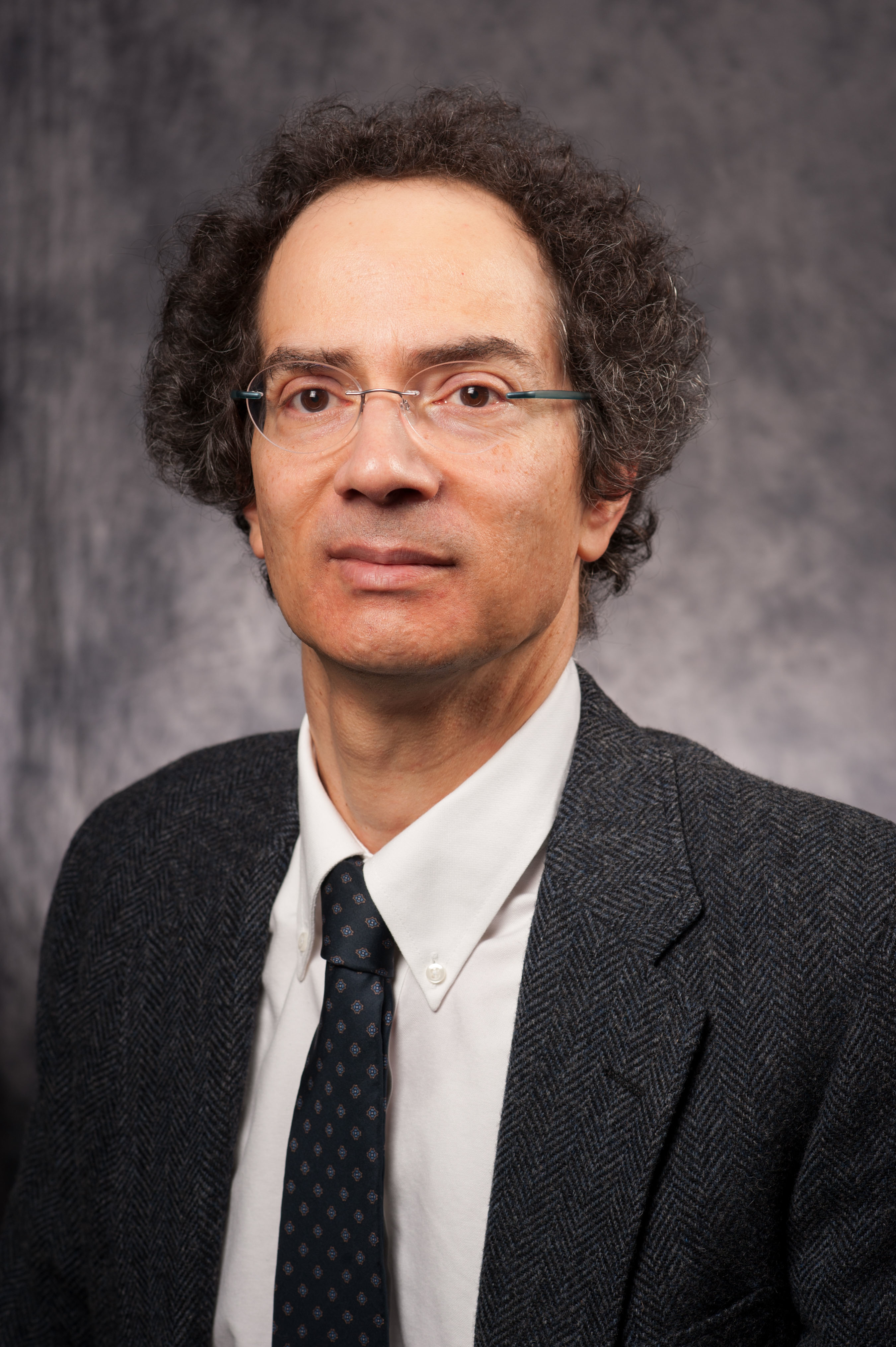 Lane A. Hemaspaandra合作论文数University of Rochester5
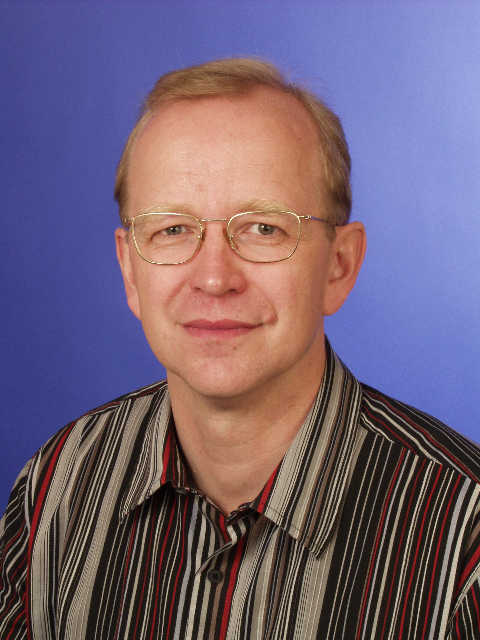 Arfst Nickelsen合作论文数Institut fur Theoretische Informatik5
 Malte Skambath合作论文数4
 Jens Gramm合作论文数4
 Andreas Jakoby合作论文数4
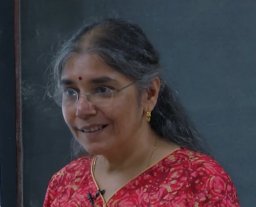 Meena Mahajan合作论文数The Institute of Mathematical Sciences4Till Nierhoff合作论文数4Florian Chudigiewitsch合作论文数3
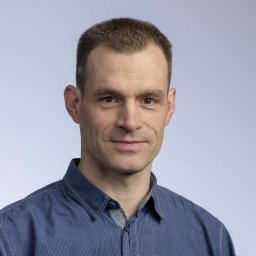 Bodo Manthey合作论文数University of Twente3
 Michal Koucký合作论文数Computer Science Institute, Faculty of Mathematics and Physics, Charles University3Christoph Stockhusen合作论文数Institute for Theoretical Computer Science, Universität zu Lübeck3
 Oded Regev合作论文数Courant Institute of Mathematical Sciences, New York University2
 Christian Scheideler合作论文数Institut für Informatik, Fakultät für Elektrotechnik, Informatik und Mathematik, Universität Paderborn2
 Friedhelm Meyer Auf Der Heide合作论文数Heinz Nixdorf Institute & Department of Computer Science University of Paderborn2
 Roded Sharan合作论文数Tel-Aviv University;School of Computer Science2
 Edith Hemaspaandra合作论文数Department of Computer Science, Golisano College of Computing and Information Sciences, Rochester Institute of Technology2
 Christian Sohler合作论文数Abteilung für Informatik, Faculty of Mathematics and Natural Sciences, University of Cologne2Valentina Damerow合作论文数University of Paderborn2
 Harald Räcke合作论文数School of Computation, Information and Technology, Technische Universität München2Florian Andreas Marwitz合作论文数1Zoë R. Stephenson合作论文数1
 Christian Herzog né Hoffmann合作论文数1Zacharias Heinrich合作论文数1Nils Vortmeier合作论文数1
 Nils Morawietz合作论文数Philipps Univ Marburg, Fachbereich Math & Informat, Marburg, Germany1Jonas Schmidt合作论文数1
 Matti Rossi合作论文数Helsinki Sch Econ, Helsinki, Finland1
 Roman Beck合作论文数European Blockchain Ctr, IT Univ Copenhagen1
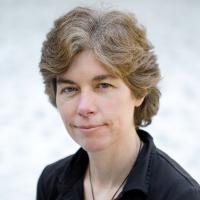 Gail C Murphy合作论文数Department of Computer Science, Faculty of Science, The University of British Columbia;Tasktop Technologies Incorporated1
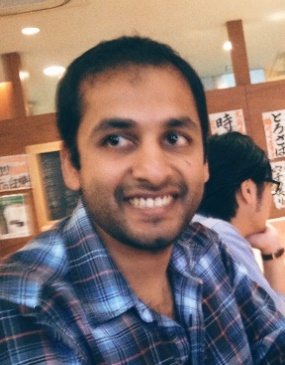 Swastik Kopparty合作论文数Department of Mathematics, Faculty of Arts & Science, University of Toronto;Department of Computer Science, Faculty of Arts & Science, University of Toronto1
 Christian Becker合作论文数Institute for Parallel and Distributed Systems, University of Stuttgart1
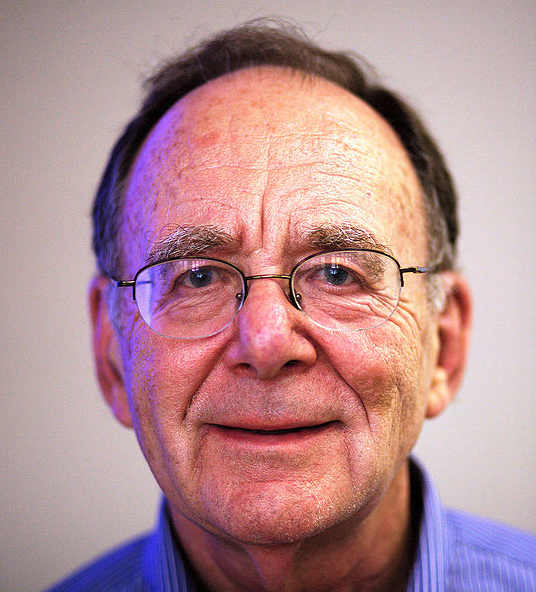 Richard M. Karp合作论文数Department of Electrical Engineering and Computer Sciences, University of California, Berkeley1
 Thomas Fritz合作论文数Department of Informatics, University of Zurich1
 Christian Komusiewicz合作论文数Institute of Computer Science, Faculty of Mathematics and Computer Science, Friedrich-Schiller-Universität Jena1
 Thomas Schwentick合作论文数Department of Computer Science, Technische Universität Dortmund1
 Timur Friedman合作论文数Université Pierre et Marie Curie1
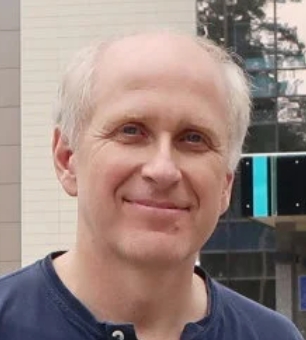 Rolf Niedermeier合作论文数Technische Universitat Berlin1
 Gloria Mark合作论文数Department of Informatics, Donald Bren School of Information and Computer Sciences, University of California, Irvine1Rüdiger Reischuk合作论文数1
 Sampath Kannan合作论文数Department of Computer and Information Science, School of Engineering and Applied Science, University of Pennsylvania1
 Robert Davis合作论文数Department of Computer Science, University of York1
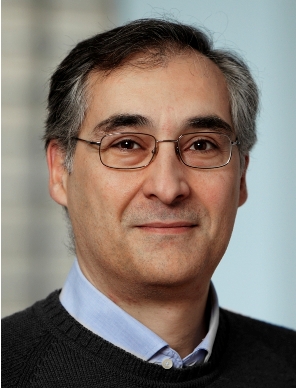 Gustavo Alonso合作论文数Systems Group, Department of Computer Science, ETH Zurich1
 Juho Lindman合作论文数University of Gothenburg1
 Osamu Watanabe合作论文数Department of Mathematical and Computing Science
Tokyo Institute of Technology
Japan Chapter of EATCS, the European Association for Theoretical Computer Science.1
Osamu Watanabe合作论文数Department of Mathematical and Computing Science
Tokyo Institute of Technology
Japan Chapter of EATCS, the European Association for Theoretical Computer Science.1




