How did one archaeologist's combative pursuit of free inquiry transform our understanding of Australia's deep past and the peopling of the Pacific?
This essay very briefly surveys the complex history of thinking about the human history of the continent that evolved from the very late 18 th century though to the foundation of Australia in 1901.This 'long' 19 th century saw the rise of the new disciplines of anthropology, ethnology, physical anthropology, geology, palaeontology and archaeology that either, in whole or in part, provided the framework for an inquiry into the origins of the Australians.It also saw the transformation of Australia from a collection of colonies into a single nation.
Abstract This chapter discusses the broad outcomes of over twenty years of research into the archaeology of two key sites in Sydney and Melbourne. It outlines the development of the theory and the method that was used to unlock the material histories of areas that had been widely regarded as slums and the lairs of the disadvantaged, and sketches the consequences of a reconsideration of life at the margins of two major colonial cities during the nineteenth and early twentieth centuries. Sites discussed in the chapter include a range of places in Sydney and Melbourne’s Little Lon, also known as the Commonwealth Block. The chapter also describes the process of developing documentary and archaeological datasets.
"‘Advancing the historical archaeology of Aboriginal Australia’: Comment on Tutchener and Claudie ‘Beyond ‘contact’ and shared landscapes in Australian archaeology’." Australian Archaeology, ahead-of-print(ahead-of-print), pp. 1–2
In this chapter we examine the historical context of the backfilling of decommissioned cesspits and privies with domestic waste. This is a practice known throughout the modern world in metropolitan cities throughout the Anglophone world. Like many aspects of urbanisation, it was one subject to increasing regulation in the Victorian era as population densities increased and politicians, councillors, engineers and entrepreneurs worked to solve the many problems linked to the management of services and waste.
 Penny Crook合作论文数Archaeology Program, La Trobe University33
 Sophie A Jamal合作论文数7612
 Christine Derzko合作论文数Department of Obstetrics and Gynaecology, Temerty Faculty of Medicine, University of Toronto;St. Michael's Hospital, Unity Health Toronto12
 Jeannette Goguen合作论文数Department of Medicine, Temerty Faculty of Medicine, University of Toronto;St Michael’s Hospital12
 Alice Cheng合作论文数Department of Medicine, Temerty Faculty of Medicine, University of Toronto;Trillium Health Partners;St. Michael's Hospital12
 Robert G. Josse合作论文数Unity Health Toronto;Department of Medicine, University of Toronto;Department of Nutritional Sciences, University of Toronto;Department of Medicine, Osteoporosis Centre, St. Michael’s Hospital12
 Amir Hanna合作论文数St. Michael's Hospital12
 Gillian L. Booth合作论文数Institute of Health Policy, Management and Evaluation, Dalla Lana School of Public Health, University of Toronto12
 Richard Gilbert合作论文数Department of Laboratory Medicine and Pathobiology, Temerty Faculty of Medicine, University of Toronto12William Singer合作论文数12Vlad Vuksan合作论文数12
 Philip W. Connelly合作论文数St. Michael’s Hospital/Department of Medicine, Temerty Faculty of Medicine, University of Toronto/Department of Laboratory Medicine and Pathobiology, Temerty Faculty of Medicine, University of Toronto12TOM WOLEVER合作论文数12
 Loren Grossman合作论文数LMC Endocrinology Centres;University of Toronto;St. Michael’s Hospital11
 David Jenkins合作论文数Department of Nutritional Sciences, Temerty Faculty of Medicine, University of Toronto;Department of Medicine, Temerty Faculty of Medicine, University of Toronto;Clinical Nutrition and Risk Factor Modification Centre, St. Michael’s Hospital;Division of Endocrinology and Metabolism, Department of Medicine, St. Michael’s Hospital;Division of Gastroenterology, Department of Medicine, Toronto General Hospital11Qinghua Wang合作论文数11Maria Kraw合作论文数11
 Dominic Ng合作论文数Department of Laboratory Medicine and Pathobiology, Temerty Faculty of Medicine, University of Toronto11P Hd Minna Woo合作论文数7Alan Mayne合作论文数7Laila Ellmoos合作论文数6
 Minna Woo合作论文数Department of Immunology, Temerty Faculty of Medicine, University of Toronto;Endocrinology Clinics, Toronto General Hospital4
 Catherine Yu合作论文数Clinical Public Health Division, Dalla Lana School of Public Health, University of Toronto4P HD合作论文数4Peter Davies合作论文数3
 Lawrence Alan Leiter合作论文数Department of Nutritional Sciences, Temerty Faculty of Medicine, University of Toronto3Andrew Barker合作论文数2Susan Lawrence合作论文数2Geoffrey R. Clark合作论文数2P Hd Catherine Yu合作论文数2John Salerian合作论文数2Hôpital St合作论文数2J.Peter White合作论文数School of Archaeology, University of Sydney2
 Jim Allen合作论文数La Trobe University2Martin Schreiber合作论文数2Marc-Antoine Kaeser合作论文数1Géraldine Delley合作论文数1u sommer合作论文数1Barbara Minchinton合作论文数1geoff hewitt合作论文数1
 Bronwyn Woff合作论文数1conal tuohy合作论文数1P C Joshi合作论文数1Carsten Paludan-Muller合作论文数1
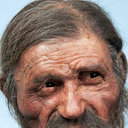 Alessandro Vanzetti合作论文数Sapienza University of Rome1
 Monika Milosavljevic合作论文数1Nathan Schlanger合作论文数1
 Sarah Hayes合作论文数Alfred Deakin Inst Citizenship & Globalisat, Deakin Univ1




