While deep learning has enjoyed significant success in computer vision tasks over the past decade, many shortcomings still exist from a Cognitive Science (CogSci) perspective. In particular, the ability to subitize, i.e., quickly and accurately identify the small (less than 6) count of items, is not well learned by current Convolutional Neural Networks (CNNs) or Vision Transformers (ViTs) when using a standard cross-entropy (CE) loss. In this paper, we demonstrate that adapting tools used in CogSci research can improve the subitizing generalization of CNNs and ViTs by developing an alternative loss function using Holographic Reduced Representations (HRRs). We investigate how this neuro-symbolic approach to learning affects the subitizing capability of CNNs and ViTs, and so we focus on specially crafted problems that isolate generalization to specific aspects of subitizing. Via saliency maps and out-of-distribution performance, we are able to empirically observe that the proposed HRR loss improves subitizing generalization though it does not completely solve the problem. In addition, we find that ViTs perform considerably worse compared to CNNs in most respects on subitizing, except on one axis where an HRR-based loss provides improvement.
Large language models deployed in supportive or advisory roles must balance helpfulness with preservation of user autonomy, yet standard alignment methods primarily optimize for helpfulness and harmlessness without explicitly modeling relational risks such as dependency reinforcement, overprotection, or coercive guidance. We introduce Care-Conditioned Neuromodulation (CCN), a state-dependent control framework in which a learned scalar signal derived from structured user state and dialogue context conditions response generation and candidate selection. We formalize this setting as an autonomy-preserving alignment problem and define a utility function that rewards autonomy support and helpfulness while penalizing dependency and coercion. We also construct a benchmark of relational failure modes in multi-turn dialogue, including reassurance dependence, manipulative care, overprotection, and boundary inconsistency. On this benchmark, care-conditioned candidate generation combined with utility-based reranking improves autonomy-preserving utility by +0.25 over supervised fine-tuning and +0.07 over preference optimization baselines while maintaining comparable supportiveness. Pilot human evaluation and zero-shot transfer to real emotional-support conversations show directional agreement with automated metrics. These results suggest that state-dependent control combined with utility-based selection is a practical approach to multi-objective alignment in autonomy-sensitive dialogue.
This paper presents a framework for deep learning in inherently distributed environments with decentralized data, sparse connectivity, and limited communication bandwidth, in which nodes and links may disappear and reappear over time. We propose an approach that uses distributed consensus to combine locally trained neural networks. These consensus networks effectively result in global models of our data without the prohibitively expensive costs of centralizing data and training a single model on all of it. Empirical results suggest that the above technique helps sparsely connected distributed environments approach the accuracy of centrally trained models, and that the method is robust in dynamic environments such as networks with node ablation or edge ablation, and mobile ad hoc networks.
Standard message-passing graph neural networks (GNNs) often struggle on graphs with low homophily, yet homophily alone does not explain this behavior, as graphs with similar homophily levels can exhibit markedly different performance and some heterophilous graphs remain easy for vanilla GCNs. Recent work suggests that label informativeness (LI), the mutual information between labels of adjacent nodes, provides a more faithful characterization of when graph structure is useful. In this work, we develop a unified theoretical framework that connects curvature-guided rewiring and positional geometry through the lens of label informativeness, and instantiate it in a practical geometry-aware architecture, ASEHybrid. Our analysis provides a necessary-and-sufficient characterization of when geometry-aware GNNs can improve over feature-only baselines: such gains are possible if and only if graph structure carries label-relevant information beyond node features. Theoretically, we relate adjusted homophily and label informativeness to the spectral behavior of label signals under Laplacian smoothing, show that degree-based Forman curvature does not increase expressivity beyond the one-dimensional Weisfeiler–Lehman test but instead reshapes information flow, and establish convergence and Lipschitz stability guarantees for a curvature-guided rewiring process. Empirically, we instantiate ASEHybrid using Forman curvature and Laplacian positional encodings and conduct controlled ablations on Chameleon, Squirrel, Texas, Tolokers, and Minesweeper, observing gains precisely on label-informative heterophilous benchmarks where graph structure provides label-relevant information beyond node features, and no meaningful improvement in high-baseline regimes.
Indoor navigation remains a critical accessibility challenge for the blind and low-vision (BLV) individuals, as existing solutions rely on costly per-building infrastructure. We present an agentic framework that converts a single floor plan image into a structured, retrievable knowledge base to generate safe, accessible navigation instructions with lightweight infrastructure. The system has two phases: a multi-agent module that parses the floor plan into a spatial knowledge graph through a self-correcting pipeline with iterative retry loops and corrective feedback; and a Path Planner that generates accessible navigation instructions, with a Safety Evaluator agent assessing potential hazards along each route. We evaluate the system on the real-world UMBC Math and Psychology building (floors MP-1 and MP-3) and on the CVC-FP benchmark. On MP-1, we achieve success rates of 92.31
We propose Intelligent Schema Memory (ISM), a self-evolving memory-augmented system that improves mathematical reasoning for a frozen LLM under continual learning with hard episodic resets. ISM maintains a compact, self-refined bank of strategy schemas learned from both successful and failed episodes, with symbolic tools that check intermediate steps and certify answers.Without updating model parameters, ISM outperforms passive, retrieval, and reflection baselines on MATH-Hard and OlympiadBench, using 64
Medical experts often manually segment images to obtain diagnostic statistics and discard the resulting annotations. We aim to train segmentation models to alleviate this burden, but constrained to the retained summary statistics (e.g., the area of the annotated region). Empirical results suggest that statistics alone are insufficient for this task, but adding weak information in the form of a few pixels within the area of interest significantly improves performance. We use a novel loss function that combines terms for image reconstruction quality, matching to summary statistics, and overlap between the predicted foreground and the weak supervisory signal. Experiments on standard image, ultrasound (breast cancer), and Computed Tomography (CT) scan (kidney tumors) data demonstrate the utility and potential of the approach.
Reflexion-style agents rely on self-generated reflections as memory, implicitly assuming that agents can accurately diagnose their own failures.We show that this assumption can fail systematically: across ALFWorld and HumanEval, agents store confident but incorrect interpretations of the task and continue acting on them across trials,even though the environment resets to the correct task each time. We call this failure mode memory confabulation and introduce the Reflection Repetition Rate (RRR), a log-based metric that detects repeated reliance on incorrect reflective content.Using RRR, we identify 16 frozen environments in ALFWorld, where 0 of 121 reflections mention the correct target object, and 4 analogous cases in HumanEval. Our mitigation replaces open-ended self-diagnosis with programmatic extraction of trajectory-level failure signals, increasing correct object mention from 0
Indoor navigation remains a critical challenge for people with visual impairments. The current solutions mainly rely on infrastructure-based systems, which limit their ability to navigate safely in dynamic environments. We propose a novel navigation approach that utilizes a foundation model to transform floor plans into navigable knowledge graphs and generate human-readable navigation instructions. Floorplan2Guide integrates a large language model (LLM) to extract spatial information from architectural layouts, reducing the manual preprocessing required by earlier floorplan parsing methods. Experimental results indicate that few-shot learning improves navigation accuracy in comparison to zero-shot learning on simulated and real-world evaluations. Claude 3.7 Sonnet achieves the highest accuracy among the evaluated models, with 92.31
Mental representation, characterized by structured internal models mirroring external environments, is fundamental to advanced cognition but remains challenging to investigate empirically. Existing theory hypothesizes that second-order learning – learning mechanisms that adapt first-order learning (i.e., learning about the task/domain) – promotes the emergence of such environment-cognition isomorphism. In this paper, we empirically validate this hypothesis by proposing a hierarchical architecture comprising a Graph Convolutional Network (GCN) as a first-order learner and an MLP controller as a second-order learner. The GCN directly maps node-level features to predictions of optimal navigation paths, while the MLP dynamically adapts the GCN's parameters when confronting structurally novel maze environments. We demonstrate that second-order learning is particularly effective when the cognitive system develops an internal mental map structurally isomorphic to the environment. Quantitative and qualitative results highlight significant performance improvements and robust generalization on unseen maze tasks, providing empirical support for the pivotal role of structured mental representations in maximizing the effectiveness of second-order learning.
A common observation in the Graph Convolutional Network (GCN) literature is that stacking GCN layers may or may not result in better performance on tasks like node classification and edge prediction. We have found empirically that a graph's algebraic connectivity, which is known as the Fiedler value, is a good predictor of GCN performance. Intuitively, graphs with similar Fiedler values have analogous structural properties, suggesting that the same filters and hyperparameters may yield similar results when used with GCNs, and that transfer learning may be more effective between graphs with similar algebraic connectivity. We explore this theoretically and empirically with experiments on synthetic and real graph data, including the Cora, CiteSeer and Polblogs datasets. We explore multiple ways of aggregating the Fiedler value for connected components in the graphs to arrive at a value for the entire graph, and show that it can be used to predict GCN performance. We also present theoretical arguments as to why the Fiedler value is a good predictor.
Multiple Instance Learning (MIL) tasks impose a strict logical constraint: a bag is labeled positive if and only if at least one instance within it is positive. While this iff constraint aligns with many real-world applications, recent work has shown that most deep learning-based MIL approaches violate it, leading to inflated performance metrics and poor generalization. We propose a novel MIL framework based on Vector Symbolic Architectures (VSAs), which provide a differentiable mechanism for performing symbolic operations in high-dimensional space. Our method encodes the MIL assumption directly into the model's structure by representing instances and concepts as nearly orthogonal high-dimensional vectors and using algebraic operations to enforce the iff constraint during classification. To bridge the gap between raw data and VSA representations, we design a learned encoder that transforms input instances into VSA-compatible vectors while preserving key distributional properties. Our approach, which includes a VSA-driven MaxNetwork classifier, achieves state-of-the-art results for a valid MIL model on standard MIL benchmarks and medical imaging datasets, outperforming existing methods while maintaining strict adherence to the MIL formulation. This work offers a principled, interpretable, and effective alternative to existing MIL approaches that rely on learned heuristics.
We introduce a novel Theory of Mind (ToM) framework inspired by dual-process theories from cognitive science, integrating a fast, habitual graph-based reasoning system (System 1), implemented via graph convolutional networks (GCNs), and a slower, context-sensitive meta-adaptive learning system (System 2), driven by meta-learning techniques. Our model dynamically balances intuitive and deliberative reasoning through a learned context gate mechanism. We validate our architecture on canonical false-belief tasks and systematically explore its capacity to replicate hallmark cognitive biases associated with dual-process theory, including anchoring, cognitive-load fatigue, framing effects, and priming effects. Experimental results demonstrate that our dual-process approach closely mirrors human adaptive behavior, achieves robust generalization to unseen contexts, and elucidates cognitive mechanisms underlying reasoning biases. This work bridges artificial intelligence and cognitive theory, paving the way for AI systems exhibiting nuanced, human-like social cognition and adaptive decision-making capabilities.
Skin carcinoma is the most prevalent form of cancer globally, accounting for over $8 billion in annual healthcare expenditures. Early diagnosis, accurate and timely treatment are critical to improving patient survival rates. In clinical settings, physicians document patient visits using detailed SOAP (Subjective, Objective, Assessment, and Plan) notes. However, manually generating these notes is labor-intensive and contributes to clinician burnout. In this work, we propose skin-SOAP, a weakly supervised multimodal framework to generate clinically structured SOAP notes from limited inputs, including lesion images and sparse clinical text. Our approach reduces reliance on manual annotations, enabling scalable, clinically grounded documentation while alleviating clinician burden and reducing the need for large annotated data. Our method achieves performance comparable to GPT-4o, Claude, and DeepSeek Janus Pro across key clinical relevance metrics. To evaluate this clinical relevance, we introduce two novel metrics MedConceptEval and Clinical Coherence Score (CCS) which assess semantic alignment with expert medical concepts and input features, respectively.
Despite advances in mathematical reasoning capabilities, Large Language Models (LLMs) still struggle with calculation verification when using established prompting techniques. We present MDToC (Metacognitive Dynamic Tree of Concepts), a three-phase approach that constructs a concept tree, develops accuracy-verified calculations for each concept, and employs majority voting to evaluate competing solutions. Evaluations across CHAMP, MATH, and Game-of-24 benchmarks demonstrate our MDToC's effectiveness, with GPT-4-Turbo achieving 58.1% on CHAMP, 86.6% on MATH, and 85% on Game-of-24 - outperforming GoT by 5%, 5.4%, and 4% on all these tasks, respectively, without hand-engineered hints. MDToC consistently surpasses existing prompting methods across all backbone models, yielding improvements of up to 7.6% over ToT and 6.2% over GoT, establishing metacognitive calculation verification as a promising direction for enhanced mathematical reasoning.
Skin carcinoma is the most prevalent form of cancer globally, accounting for over $8 billion in annual healthcare expenditures. In clinical settings, physicians document patient visits using detailed SOAP (Subjective, Objective, Assessment, and Plan) notes. However, manually generating these notes is labor-intensive and contributes to clinician burnout. In this work, we propose a weakly supervised multimodal framework to generate clinically structured SOAP notes from limited inputs, including lesion images and sparse clinical text. Our approach reduces reliance on manual annotations, enabling scalable, clinically grounded documentation while alleviating clinician burden and reducing the need for large annotated data. Our method achieves performance comparable to GPT-4o, Claude, and DeepSeek Janus Pro across key clinical relevance metrics. To evaluate clinical quality, we introduce two novel metrics MedConceptEval and Clinical Coherence Score (CCS) which assess semantic alignment with expert medical concepts and input features, respectively.
Deep neural networks (DNNs) are becoming commonplace in critical applications, making their susceptibility to backdoor (trojan) attacks a significant problem. In this paper, we introduce a novel backdoor attack detection pipeline, detecting attacked models using graph convolution networks (DeBUGCN). To the best of our knowledge, ours is the first use of GCNs for trojan detection. We use the static weights of a DNN to create a graph structure of its layers. A GCN is then used as a binary classifier on these graphs, yielding a trojan or clean determination for the DNN. To demonstrate the efficacy of our pipeline, we train hundreds of clean and trojaned CNN models on the MNIST handwritten digits and CIFAR-10 image datasets, and show the DNN classification results using DeBUGCN. For a true In-the-Wild use case, our pipeline is evaluated on the TrojAI dataset which consists of various CNN architectures, thus showing the robustness and model-agnostic behaviour of DeBUGCN. Furthermore, on comparing our results on several datasets with state-of-the-art trojan detection algorithms, DeBUGCN is faster and more accurate.
Vector Symbolic Architectures (VSAs) are one approach to developing Neuro-symbolic AI, where two vectors in $\mathbb{R}^d$ are 'bound' together to produce a new vector in the same space. VSAs support the commutativity and associativity of this binding operation, along with an inverse operation, allowing one to construct symbolic-style manipulations over real-valued vectors. Most VSAs were developed before deep learning and automatic differentiation became popular and instead focused on efficacy in hand-designed systems. In this work, we introduce the Hadamard-derived linear Binding (HLB), which is designed to have favorable computational efficiency, and efficacy in classic VSA tasks, and perform well in differentiable systems.
Malware detection is an interesting and valuable domain to work in because it has significant real-world impact and unique machine-learning challenges. We investigate existing long-range techniques and benchmarks and find that they're not very suitable in this problem area. In this paper, we introduce Holographic Global Convolutional Networks (HGConv) that utilize the properties of Holographic Reduced Representations (HRR) to encode and decode features from sequence elements. Unlike other global convolutional methods, our method does not require any intricate kernel computation or crafted kernel design. HGConv kernels are defined as simple parameters learned through backpropagation. The proposed method has achieved new SOTA results on Microsoft Malware Classification Challenge, Drebin, and EMBER malware benchmarks. With log-linear complexity in sequence length, the empirical results demonstrate substantially faster run-time by HGConv compared to other methods achieving far more efficient scaling even with sequence length $\geq 100,000$.
Solving long-horizon, temporally-extended tasks using Reinforcement Learning (RL) is challenging, compounded by the common practice of learning without prior knowledge (or tabula rasa learning). Humans can generate and execute plans with temporally-extended actions and quickly learn to perform new tasks because we almost never solve problems from scratch. We want autonomous agents to have this same ability. Recently, LLMs have been shown to encode a tremendous amount of knowledge about the world and to perform impressive in-context learning and reasoning. However, using LLMs to solve real world problems is hard because they are not grounded in the current task. In this paper we exploit the planning capabilities of LLMs while using RL to provide learning from the environment, resulting in a hierarchical agent that uses LLMs to solve long-horizon tasks. Instead of completely relying on LLMs, they guide a high-level policy, making learning significantly more sample efficient. This approach is evaluated in simulation environments such as MiniGrid, SkillHack, and Crafter, and on a real robot arm in block manipulation tasks. We show that agents trained using our approach outperform other baselines methods and, once trained, don't need access to LLMs during deployment.
 Paul R Cohen合作论文数School of Computing and Information, University of Pittsburgh41
 Matthew D. Schmill合作论文数Experimental Knowledge Systems Laboratory, LGRC22
 Ashwinkumar Ganesan合作论文数Computer Science and Electrical Engineering Department, University of Maryland Baltimore County17
 Tinoosh Mohsenin合作论文数University of Maryland17Tom Armstrong合作论文数Wheaton College14
 Edward Raff合作论文数Booz Allen Hamilton Inc;University of Maryland Baltimore County13
 Michael L. Anderson合作论文数Department of Psychology, Western University/Rotman Institute of Philosophy, Western University13
 Zhiguang Wang合作论文数Abel.ai12
 Sunil P Gandhi合作论文数11
 David Jensen合作论文数Manning College of Information & Computer Sciences, University of Massachusetts Amherst11
 Tim Finin合作论文数Department of Computer Science and Electrical Engineering, College of Engineering and Information Technology, University of Maryland, Baltimore County;Center for Artificial Intelligence, University of Maryland, Baltimore County;Human Language Technology Center of Excellence, Johns Hopkins University11Karan Kumar Budhraja合作论文数10Arnold P. Boedihardjo合作论文数10Donald Perlis合作论文数Department of Computer Science and UMIACS.9
 Bharat Prakash合作论文数University of Maryland, Baltimore County, Baltimore, MD, USA8
 Mohammad Mahmudul Alam合作论文数Department of Computer Science and Electrical Engineering, University of Maryland, Baltimore County8
 Don Perlis合作论文数Dept. of Computer Science.University of Maryland8
 Jessica Lin (林虹汎)合作论文数Department of Computer Science, George Mason University8
 Nicholas Waytowich合作论文数Humans and Complex Systems Division, U.S. Army Research Laboratory7Crystal Chen合作论文数7
 Michael Cox合作论文数College of Computing;Georgia Institute of Technology;College of Computing, Georgia Institute of Technology7
 Sourav Mukherjee合作论文数Interactive Research School for Health Affairs (IRSHA),, Bharati Vidyapeeth University7Darsana Josyula合作论文数Department of Computer Science, University of Maryland7
 James Holt合作论文数6
 Hang Gao合作论文数6
 Shomir Wilson合作论文数Carnegie Mellon University6
 Anupam Joshi合作论文数Department of Computer Science and Electrical Engineering, University of Maryland, Baltimore County;Center for Cybersecurity, College of Engineering and Information Technology, University of Maryland, Baltimore County6
 Pavel Senin合作论文数College of Natural Sciences, University of Hawaii;MS M888, Los Alamos National Laboratory;College of Natural Sciences, University of Hawaii6
 Colin de la Higuera合作论文数Laboratoire LS2N, University of Nantes6Soumi Ray合作论文数6Susan Frankenstein合作论文数6matthew paisner合作论文数5Marc S. Atkin合作论文数5
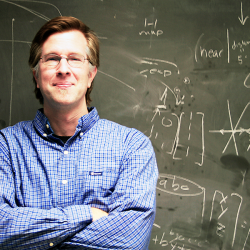 Clayton T. Morrison合作论文数School of Information University of Arizona5
 Marc Pickett合作论文数Merlyn Mind5Scott Fults合作论文数5
 Jeffrey Heinz合作论文数University of Delaware5
 Adam Page合作论文数4
 Francis Ferraro合作论文数Department of Computer Science and Electrical Engineering, University of Maryland, Baltimore County4
 Sergei Nirenburg合作论文数University of Maryland, Baltimore County4
 Pranam Kolari合作论文数Coupang4
 Carole Ruth Beal合作论文数School of Computing and Information, University of Pittsburgh4
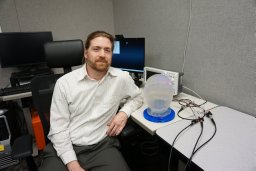 W. David Hairston合作论文数Department of Neurobiology and Anatomy, Wake Forest University4
 Kavita Krishnaswamy合作论文数University of Maryland4
 Dean Wright合作论文数4
 Patricia Ordonez合作论文数University of Maryland4
 James Mayfield合作论文数Human Language Technology Center of Excellence, Johns Hopkins University3Vinay Bhat合作论文数3
 Khondoker Murad Hossain合作论文数University of Maryland Baltimore County3




