This article summarizes the Next Generation Attenuation (NGA) Subduction (NGA-Sub) project, a major research program to develop a database and ground motion models (GMMs) for subduction regions. A comprehensive database of subduction earthquakes recorded worldwide was developed. The database includes a total of 214,020 individual records from 1,880 subduction events, which is by far the largest database of all the NGA programs. As part of the NGA-Sub program, four GMMs were developed. Three of them are global subduction GMMs with adjustment factors for up to seven worldwide regions: Alaska, Cascadia, Central America and Mexico, Japan, New Zealand, South America, and Taiwan. The fourth GMM is a new Japan-specific model. The GMMs provide median predictions, and the associated aleatory variability, of RotD50 horizontal components of peak ground acceleration, peak ground velocity, and 5%-damped pseudo-spectral acceleration (PSA) at oscillator periods ranging from 0.01 to 10 s. Three GMMs also quantified "within-model" epistemic uncertainty of the median prediction, which is important in regions with sparse ground motion data, such as Cascadia. In addition, a damping scaling model was developed to scale the predicted 5%-damped PSA of horizontal components to other damping ratios ranging from 0.5% to 30%. The NGA-Sub flatfile, which was used for the development of the NGA-Sub GMMs, and the NGA-Sub GMMs coded on various software platforms, have been posted for public use.
The Next-Generation Attenuation for subduction zone regions project (NGA-Sub) has developed data resources and ground motion models for global subduction zone regions. Here we describe the NGA-Sub database. To optimize the efficiency of data storage, access, and updating, data resources for the NGA-Sub project are organized into a relational database consisting of 20 tables containing data, metadata, and computed quantities (e.g. intensity measures, distances). A database schema relates fields in tables to each other through a series of primary and foreign keys. Model developers and other users mostly interact with the data through a flatfile generated as a time-stamped output of the database. We describe the structure of the relational database, the ground motions compiled for the project, and the means by which the data can be accessed. The database contains 71,340 three-component records from 1880 earthquakes from seven global subduction zone regions: Alaska, Central America and Mexico, Cascadia, Japan, New Zealand, South America, and Taiwan. These data were processed on a component-specific basis to minimize noise effects in the data and remove baseline drifts. Provided ground motion intensity measures include peak acceleration, peak velocity, and 5%-damped pseudo-spectral accelerations for a range of oscillator periods.
NGA-Sub data resources are organized into a relational database. We describe the Site table within that database structure, which contains metadata for 6502 stations that have recorded earthquakes incorporated into the database. Critical site parameters for ground motion modelling are time-averaged shear-wave velocity (V-S) in the upper 30 m of the site (V-S(30)) and depths to various V-S horizons (1.0 and 2.5 km/s). We compile V-S profiles for the global study regions and use these data to compute V-S(30) where profile data is available from reliable sources. When this is not the case, which is commonly encountered in many regions, we adopt a proxy-based V-S(30)-estimation framework whereby estimates are provided, in order of preference, from locally derived models, models derived for a source region and applied to a different target region with some degree of validation, and global or source-region models applied to a target region without validation. Epistemic uncertainties in category median V-S(30) are provided when proxy-based models are required but their validation is not possible. Sediment depth terms are also evaluated using measured V-S profiles that exceed measured velocity thresholds where available or are estimated for regions having 3D seismic velocity models (e.g. Cascadia, Japan, New Zealand, and Taiwan).
This article documents the earthquake ground motion database developed for the NGA-East Project, initiated as part of the Next Generation Attenuation (NGA) research program and led by the Pacific Earthquake Engineering Research Center (PEER). The project was focused on developing a ground motion characterization model (GMC) model for horizontal ground motions for the large region referred to as Central and Eastern North America (CENA). The CENA region covers most of the U.S. and Canada, from the Rocky Mountains to the Atlantic Ocean and is characterized tectonically as a stable continental region (SCR). The ground-motion database includes the two- and three-component ground-motion recordings from numerous selected events relevant to CENA (M > 2.5, with distances up to 3500 km) that have been recorded since 1976. The final database contains over 27,000 time series from 82 earthquakes and 1271 recording stations. The ground motion database includes uniformly processed time series, 5% damped pseudo-spectral acceleration (PSA) median-component ordinates for 429 periods ranging from 0.01 to 10 s, duration and Arias intensity in 5% increments, and Fourier amplitude spectra for different time windows. Ground motions and metadata for source, path, and site conditions were subjected to quality checks by topical working groups and the ground-motion model (GMM) developers. The NGA-East database constitutes the largest database of processed recorded ground motions in SRCs and is publicly available from the PEER ground-motion database website.
Author(s): Kishida, Tadahiro; Contreras, Victor; Bozorgnia, Yousef; Abrahamson, Norman A; Ahdi, Sean K; Ancheta, Timothy D; Boore, David M; Campbell, Kenneth W; Chiou, Brian SJ; Darragh, Robert B; Gregor, Nicholas; Kuehn, Nico; Kwak, Dong Youp; Kwok, Annie O; Lin, P; Magistrale, Harold; Mazzoni, Silvia; Muin, S; Midorikawa, S; Si, H; Silva, Walter J; Stewart, Jonathan; Wooddell, Katie E; Youngs, Robert R | Abstract: This paper summarizes a ground-motion database developed for the NGA-Sub Project. The database consists of two- and three-component ground-motion recordings from selected earthquakes in subduction zones. The database also includes the supporting data such as source, path, and site metadata. The earthquakes are located in Japan, Taiwan, the Pacific Northwest region of North America, Alaska, Mexico, Central and South America, and New Zealand. The events in the database are classified as interface, intraslab, or outer-rise, and have magnitudes ranging from 4 to 9. The database includes more than 71,000 three-component recordings, most of which are from digital accelerograms. The database includes PGA, PGV, pseudo-spectral acceleration for eleven damping values between 0.5% and 30%, Fourier amplitude spectra for frequencies from 0.1 to 100 Hz, and significant-shaking durations based on Arias Intensity. These data are analyzed in the project to model various ground-motion properties.
Author(s): Kwak, Dong Youp; Ancheta, Timothy D; Mitra, Devjyoti; Ahdi, Sean K; Zimmaro, Paolo; Parker, Grace A; Brandenberg, Scott J; Stewart, Jonathan P
16 th World Conference on Earthquake, 16WCEE 2017 Santiago Chile, January 9th to 13th 2017 Paper N° 3452 Registration Code: S-I1463288831 Development of the NGA-Subduction Database T. Kishida (1) , Y. Bozorgnia (2) , N. Abrahamson (3) , S. Ahdi (4) , T. Ancheta (5) , D. Boore (6) , K. Campbell (7) , B. Chiou (8) , R. Darragh (9) , N. Gregor (10) , R. Kamai (11) , D. Kwak (12) , A. Kwok (13) , P. Lin (14) , H. Magistrale (15) , S. Midorikawa (16) , G. Parker (17) , H. Si (18) , W. Silva (19) , J. Stewart (20) , C. Tsai (21) , K. Wooddell (22) , R. Youngs (23) Assistant Project Scientist, University of California, Berkeley, CA, United States, tkishida@berkeley.edu Professor, University of California, Berkeley, CA, United States, yousef@berkeley.edu Professor, University of California, Berkeley, CA, United States, abrahamson@berkeley.edu Ph.D. Student, University of California, Los Angeles, CA, United States, sahdi@ucla.edu Engineer, Risk Management Solutions, Inc., CA, United States, tim.ancheta@rms.com Emeritus Scientist, United States Geological Survey, Menlo Park, CA, boore@usgs.gov Director, CoreLogic, Inc., Oakland, CA, United States, kcampbell@corelogic.com Seismologist, California Department of Transportation, Sacramento, CA, United States, brian.chiou@dot.ca.gov Seismologist, Pacific Engineering and Analysis, El Cerrito, CA, United States, pacificengineering@juno.com Seismologist, Bechtel Corporation, San Francisco, CA, United States, njgregor@bechtel.com Lecturer, Ben-Gurion University of the Negev, Israel, rkamai@bgu.ac.il Postdoctoral Scholar, University of California, Los Angeles, CA, United States, dykwak@seas.ucla.edu Assistant Professor, National Taiwan University, Taiwan, annieonleikwok@ntu.edu.tw Seismologist, Sinotech Engineering Consultants, Inc., Taiwan, person@sinotech.org.tw Principal Research Scientist, FM Global, Research Division, Norwood, MA, United States, Harold.Magistrale@fmglobal.com Professor, Tokyo Institute Technology, Japan, smidorik@enveng.titech.ac.jp Ph.D. Student, University of California, Los Angeles, CA, United States, parker@seas.ucla.edu Researcher, Tokyo Institute Technology, Japan, si.h.aa@m.titech.ac.jp Senior Seismologist, Pacific Engineering and Analysis, El Cerrito, CA, United States, pacificengineering@juno.com Professor, University of California, Los Angeles, CA, United States, jstewart@seas.ucla.edu Associate Professor, National Chung Hsing University, Taiwan, tsaicc@nchu.edu.tw Student, University of California, Berkeley, CA, United States, wooddell@berkeley.edu Senior Seismologist, AMEC EI database; subduction; ground motion model; response spectra; Fourier spectra
16 th World Conference on Earthquake Engineering, 16WCEE 2017 Santiago Chile, January 9th to 13th 2017 Paper N° 4926 Registration Code: S-X1463264880 NGA-SUBDUCTION SITE DATABASE S.K. Ahdi (1) , T.D. Ancheta (2) , V. Contreras (3) , T. Kishida (4) , D.Y. Kwak (5) , A.O. Kwok (6) , G.A. Parker (7) , Y. Bozorgnia (8) , J.P. Stewart (9) Graduate Student, Civil & Environmental Engineering Department, University of California, Los Angeles, USA, sahdi@ucla.edu Modeler, Risk Management Solutions, Inc., tim.ancheta@rms.com Graduate Student, Civil & Environmental Engineering Department, UCLA, USA, vcontreras@ucla.edu Assistant Project Scientist, University of California, Berkeley, USA, tkishida@berkeley.edu Postdoctoral Scholar, Civil & Environmental Engineering Department, UCLA, USA, dykwak@seas.ucla.edu Assistant Professor, National Taiwan University, Taiwan, annieonleikwok@ntu.edu.tw Graduate Student, Civil & Environmental Engineering Department, UCLA, USA, parker@seas.ucla.edu Professor in Residence, University of California, Berkeley, USA, yousef@berkeley.edu Professor and Chair, Civil & Environmental Engineering Department, UCLA, USA, jstewart@seas.ucla.edu Abstract The NGA-Subduction site database, which is currently in development, contains information on site condition and instrument housing for 5520 strong motion stations with recordings that are being used for ground motion model development. The stations are from coastal and inland regions that have recorded subduction zone earthquakes (both interface and intra-slab), mostly in Japan, Taiwan, South America, and the Pacific Northwest and Alaska regions of North America. The principal site parameter is the time-averaged shear wave velocity in the upper 30 m (V S30 ), which we characterize using geophysical measurements where available (approximately 2486 stations to date) and proxy-based relationships otherwise. A secondary site parameter is basin depth, measured both to the 1.0 and 2.5 km/s shear-wave velocity horizons. Here we document the geophysical data sources that have been leveraged in this process and regional considerations regarding the use of proxies to estimate V S30 . We also describe data sources for basin depth and the protocols for assigning V S30 and its uncertainty to strong motion recording sites. Keywords: Shear-wave velocity, site effects, ground motions, subduction zones
16 th World Conference on Earthquake, 16WCEE 2017 Santiago Chile, January 9th to 13th 2017 Paper N° 3452 Registration Code: S-I1463288831 Development of the NGA-Subduction Database T. Kishida (1) , Y. Bozorgnia (2) , N. Abrahamson (3) , S. Ahdi (4) , T. Ancheta (5) , D. Boore (6) , K. Campbell (7) , B. Chiou (8) , R. Darragh (9) , N. Gregor (10) , R. Kamai (11) , D. Kwak (12) , A. Kwok (13) , P. Lin (14) , H. Magistrale (15) , S. Midorikawa (16) , G. Parker (17) , H. Si (18) , W. Silva (19) , J. Stewart (20) , C. Tsai (21) , K. Wooddell (22) , R. Youngs (23) Assistant Project Scientist, University of California, Berkeley, CA, United States, tkishida@berkeley.edu Professor, University of California, Berkeley, CA, United States, yousef@berkeley.edu Professor, University of California, Berkeley, CA, United States, abrahamson@berkeley.edu Ph.D. Student, University of California, Los Angeles, CA, United States, sahdi@ucla.edu Engineer, Risk Management Solutions, Inc., CA, United States, tim.ancheta@rms.com Emeritus Scientist, United States Geological Survey, Menlo Park, CA, boore@usgs.gov Director, CoreLogic, Inc., Oakland, CA, United States, kcampbell@corelogic.com Seismologist, California Department of Transportation, Sacramento, CA, United States, brian.chiou@dot.ca.gov Seismologist, Pacific Engineering and Analysis, El Cerrito, CA, United States, pacificengineering@juno.com Seismologist, Bechtel Corporation, San Francisco, CA, United States, njgregor@bechtel.com Lecturer, Ben-Gurion University of the Negev, Israel, rkamai@bgu.ac.il Postdoctoral Scholar, University of California, Los Angeles, CA, United States, dykwak@seas.ucla.edu Assistant Professor, National Taiwan University, Taiwan, annieonleikwok@ntu.edu.tw Seismologist, Sinotech Engineering Consultants, Inc., Taiwan, person@sinotech.org.tw Principal Research Scientist, FM Global, Research Division, Norwood, MA, United States, Harold.Magistrale@fmglobal.com Professor, Tokyo Institute Technology, Japan, smidorik@enveng.titech.ac.jp Ph.D. Student, University of California, Los Angeles, CA, United States, parker@seas.ucla.edu Researcher, Tokyo Institute Technology, Japan, si.h.aa@m.titech.ac.jp Senior Seismologist, Pacific Engineering and Analysis, El Cerrito, CA, United States, pacificengineering@juno.com Professor, University of California, Los Angeles, CA, United States, jstewart@seas.ucla.edu Associate Professor, National Chung Hsing University, Taiwan, tsaicc@nchu.edu.tw Student, University of California, Berkeley, CA, United States, wooddell@berkeley.edu Senior Seismologist, AMEC EI database; subduction; ground motion model; response spectra; Fourier spectra
Author(s): Ahdi, Sean K; Stewart, Jonathan P; Kwak, Dong Youp; Ancheta, Timothy D; Mitra, Devjyoti
16 th World Conference on Earthquake Engineering, 16WCEE 2017 Santiago Chile, January 9th to 13th 2017 Paper N° 4926 Registration Code: S-X1463264880 NGA-SUBDUCTION SITE DATABASE S.K. Ahdi (1) , T.D. Ancheta (2) , V. Contreras (3) , T. Kishida (4) , D.Y. Kwak (5) , A.O. Kwok (6) , G.A. Parker (7) , Y. Bozorgnia (8) , J.P. Stewart (9) Graduate Student, Civil & Environmental Engineering Department, University of California, Los Angeles, USA, sahdi@ucla.edu Modeler, Risk Management Solutions, Inc., tim.ancheta@rms.com Graduate Student, Civil & Environmental Engineering Department, UCLA, USA, vcontreras@ucla.edu Assistant Project Scientist, University of California, Berkeley, USA, tkishida@berkeley.edu Postdoctoral Scholar, Civil & Environmental Engineering Department, UCLA, USA, dykwak@seas.ucla.edu Assistant Professor, National Taiwan University, Taiwan, annieonleikwok@ntu.edu.tw Graduate Student, Civil & Environmental Engineering Department, UCLA, USA, parker@seas.ucla.edu Professor in Residence, University of California, Berkeley, USA, yousef@berkeley.edu Professor and Chair, Civil & Environmental Engineering Department, UCLA, USA, jstewart@seas.ucla.edu Abstract The NGA-Subduction site database, which is currently in development, contains information on site condition and instrument housing for 5520 strong motion stations with recordings that are being used for ground motion model development. The stations are from coastal and inland regions that have recorded subduction zone earthquakes (both interface and intra-slab), mostly in Japan, Taiwan, South America, and the Pacific Northwest and Alaska regions of North America. The principal site parameter is the time-averaged shear wave velocity in the upper 30 m (V S30 ), which we characterize using geophysical measurements where available (approximately 2486 stations to date) and proxy-based relationships otherwise. A secondary site parameter is basin depth, measured both to the 1.0 and 2.5 km/s shear-wave velocity horizons. Here we document the geophysical data sources that have been leveraged in this process and regional considerations regarding the use of proxies to estimate V S30 . We also describe data sources for basin depth and the protocols for assigning V S30 and its uncertainty to strong motion recording sites. Keywords: Shear-wave velocity, site effects, ground motions, subduction zones
Models for ergodic site response are frequently conditioned on timeaveraged shear-wave velocity in the upper 30 m of a site (V-S30). However, in the Pacific Northwest (PNW) of North America, only 13% of the seismic recording stations contributing data to the Next Generation Attenuation-Subduction (NGA-Sub) project have measurement-based V-S30 values. We present a shear-wave velocity (V-S) measurement database compiled from public sources from Oregon, Washington, Alaska, and British Columbia to support the development of proxy-based methods for V-S30 estimation. Using this database, we develop two proxy-based V-S30 estimation procedures inspired by their successful implementation elsewhere: (1) a hybrid geology-slope approach that provides the natural log mean and standard deviation of V-S30 for 18 geologic groups representative of the regional geology, including glaciation and volcanism; and (2) a geomorphic terrain-based method that provides V-S30 moments for 16 global categories, 13 of which are well populated in the PNW. Of these, we recommend use of the hybrid geology-slope proxy over the terrain proxy, due to smaller dispersion of residuals and strong correlation between predictions of the two proxies. Based on these findings, we provide estimates of natural log means and standard deviations of V-S30 for NGA-Sub recording stations in (sic) the electronic supplement to this article. In the (sic) electronic supplement, we also provide the estimates of basin depths (vertical depth to various V-S horizons) using available 3D velocity models for the region.
Conditional simulation of spatially variable earthquake ground motion is required to incorporate kinematic interaction effects within response history analysis of structures. We present an approach that takes as input a seed motion and models for Fourier amplitude and phase variability that are functions of frequency and separation distance. The conditional simulation outputs are ground motions modified from the seed on a 2D grid having appropriate non-stationary characteristics while maintaining compatibility with the amplitude and phase variability models. The method applies the Fourier Integral Method to simulate random fields and extends short time Fourier transform analysis and synthesis to account for time and frequency nonstationary characteristics of earthquake time series. We introduce a method to generate 1D, 2D, or even 3D fields of spatially variable ground motions (SVGM) conditioned on one or more input seed motions. Our approach merges shorttime Fourier transform (STFT) analysis and synthesis (Allen and Rabiner, 1977) for nonstationary time series with the Fourier Integral Method (FIM) (Pardo-Iguzquiza and ChicaOlmo, 1993) for generating spatially correlated random fields. Issues addressed in the development of the method include selection of appropriate analysis and synthesis windows, selection of appropriate time-frequency bands, providing adequate scaling and zero padding of windows to ensure time domain weighting of unity, and translation of user-specified Fourier amplitude and phase variability models into covariance functions. The proposed procedure overcomes limitations of previous conditional simulation methods. Methods proposed by Hao et al. (1989), Vanmarcke and Fenton (1991) and Vanmarcke et al. (1993) do not model Fourier amplitude and phase variability separately. The Abrahamson (1992a) method requires a penalty function to ensure a match to the target coherency function as it assumed the incorrect probability density function for the random phase and a high pass filter to remove high frequency noise incorporated during improper short time segment synthesis. The method describe here can model both components of SVGM separately, match the target correlation structures with a single step, and incorporate the non-stationary character of the ground motion without post processing. These improvements come with computation cost and a restriction on simulation locations to a uniformly space grid. The following sections describe components of SVGM, introduce the proposed method, provide a simulation example, and discuss further development requirements. 1. COMPONENTS OF SVGM In the absence of substantial changes in site condition across an observation (or application) region, SVGMs in the context of this paper include stochastic and deterministic components. The deterministic (or constant in space and time) component is called the wave passage effect, which is expressed as time delays in wave arrivals due to inclined vertically propagating plane waves or horizontally propagating surface waves. Wave passage introduces a shift in the Fourier phase (or delay in time) dependent on the 12 International Conference on Applications of Statistics and Probability in Civil Engineering, ICASP12 Vancouver, Canada, July 12-15, 2015 2 wave speed and the separation distance between locations. Stochastic variations of Fourier amplitude and phase unrelated to wave passage occur due to wave scattering and interference along the source-to-site ray paths. Random variations in the Fourier phase are represented through lagged coherency functions (e.g., Harichandran and Vanmarcke, 1986; Luco and Wong, 1986; Abrahamson, 1992b, Ancheta et al., 2011). Random variations of Fourier amplitudes are represented with standard deviation functions derived from Fourier amplitude differences (Abrahamson, 1992b, 2005; Ancheta et al., 2011). Random variations of the wave passage effect are called arrival time perturbations by Zerva and Zervas (2002) and are caused by horizontal variations in the geologic structure encountered along the seismic ray paths. Arrival time perturbations can be measured as time differences from the expected and actual time delay (essentially, taking time delay as a random variable with deterministic mean and dataderived standard deviation) (Boissieres and Vanmarcke, 1995; Ancheta et al., 2011). Alternatively, both sources of random phase variations may be represented together in plane wave coherency (Abrahamson, 1992b). 2. CONDITIONAL SIMULATION OF GROUND MOTION We represent earthquake ground motions in a space-time field as a combination of coherent signals plus noise. Two cases of conditional simulation are considered: when given a single time series as the seed motion or when given time series at all simulation locations. When given a single time series, the simulation creates the coherent and noise signal at all simulated locations. For the later case, the coherent and noise signal is given and the simulation must create a new instance of the space-time field by adding a new noise field. For the case that the original noise field does not match the selected SVGM functions, the simulation will create a matching field. Only the first case (single seed) is considered here. The stationary (entire time series) notation is introduced first followed by the non-stationary (short time series) notation. We denote a r, t as a ground motion field recorded at the surface that consists of a coherent signal (represented by a sum of sinusoids) and noise. This field can be represented as: a r, t = R! r, t cos θ! r, t ! + e r, t (1) where R! r, t and θ! r, t are the amplitude and phase of the n sinusoid at location r and time t , while e r, t is noise at location r and time t. Using X and E as the Fourier transform of the coherent and noise signals, we separate the contributions of various SVGM sources. Eqs. (2) and (3) show the Fourier amplitude and phase components of the signal and noise between two locations k and l for all frequencies considered, a! t = X! e!!!! + E!" e!!!! (2) a! t = R!,!e!,! e!!!! + R!,!"e!,!" e!!!! (3) where ω! is the frequency at index n, R!,! and θ!,! is the coherent signal Fourier amplitude and phase at location k, R!,!" and θ!,!" is the noise of the Fourier amplitude and phase between location k and l. The noise components represent the stochastic sources discussed in Section 1. The statistics of the noise Fourier amplitude and phase between earthquake recordings is described by Ancheta et al. (2011), which enables both to be modeled as Gaussian random numbers. The model for the Gaussian random numbers is described in Sections 3.1-3.2. The stochastic spectral modifications in Eq. (2) and (3) assume a stationary time series. However, earthquake ground motions are nonstationary because of the sequencing of P-, S-, and surface waves having different frequency contents. The stationary signal and noise Fourier components can be replaced with their short-time Fourier transforms (Allen and Rabiner, 1977; Serra and Smith, 1990): X!,! e!!! = w t !!! !!! a! t +mH e!!"# (4) 12 International Conference on Applications of Statistics and Probability in Civil Engineering, ICASP12 Vancouver, Canada, July 12-15, 2015 3 E!,!" e!!! = w t !!! !!! e!" t +mH e!!!!! (5) where w t is the window that selectively determines and weights the portion of a! t being analyzed, t is the time index within the window, m is the index of the segment, and H is the hop size or number of time increments between segments. Suitable windows, hop size, and criteria for window selection are discussed in Section 4. The window width or as per Allen and Rabiner (1977) window duration, T , are discussed within this section. The STFT calculation is the analysis phase. The synthesis phase combines the STFTs to recreate a time series. The consequence of the two stages on the selected window is discussed in Section 4. The synthesis method selected is called Overlap Addition (Allen and Rabiner, 1977). Overlap addition between the signal and noise is computed as: a! t = X!,! e!!! + E!,!" e!!! e!!!! ! ! (6) where the STFT consisting of the signal plus noise is first inversed to form a number of short time segments. Depending on the window selected in Eqs. (4) and (5) the short time segments may or may not overlap but are aligned by their individual absolute start times and summed. We alter the STFT analysis and Overlap Addition synthesis from Allen and Rabiner (1977) to account for the non-stationarity of earthquake ground motions. Whereas Eq (6) uses a single segment width, T, we allow for multiple segment widths as follows: a! t = X!,!,! e!!! + E!,!,!" e!!! e!!!! !_!""#$ !_!"#$% ! ! (7) where f is the index for the different segment widths used and n_lower and n_upper are the upper and lower frequency indices associated with each segment width. The frequencies between the upper and lower indices are modified with the addition of the noise component while frequencies outside are not. The use of the multiple segment widths is motivated by different frequency bands being approximately stationary over different window lengths. For example, a low frequency or large wavelength ground motion will be stationary over a long duration or long segment width. A high frequency or short wavelength ground motion will be stationary over a short duration. Therefore, each segment width is associated with a frequency band for which the Fourier components are assumed to be stationary. Table 1 give example pairings of segment durations and frequency bands. The number of segment durations used will determine the number of time series created with Eq. (7). To create a single time series in which ground motion components at all frequencies are modified, the modified time series from Eq. (7) are transformed into the frequency domain and combined. Only the modified frequencies of each time series are combined to create a full modified spectra. The modified spectra a
The NGA-West2 project database expands on its predecessor to include worldwide ground motion data recorded from shallow crustal earthquakes in active tectonic regimes post-2000 and a set of small-to-moderate-magnitude earthquakes in California between 1998 and 2011. The database includes 21,336 (mostly) three-component records from 599 events. The parameter space covered by the database is M 3.0 to M 7.9, closest distance of 0.05 to 1,533 km, and site time-averaged shear-wave velocity in the top 30 m of VS30= 94 m/s to 2,100 m/s (although data becomes sparse for distances >400 km and VS30> 1,200 m/s or <150 m/s). The database includes uniformly processed time series and response spectral ordinates for 111 periods ranging from 0.01 s to 20 s at 11 damping ratios. Ground motions and metadata for source, path, and site conditions were subject to quality checks by ground motion prediction equation developers and topical working groups.
The NGA-West2 site database (SDB) contains information on site condition and instrument housing for 4,147 strong-motion stations with recordings in the project flatfile. The stations are from active tectonic regions, mainly in California, Japan, Taiwan, China, and the Mediterranean area. The principal site parameter is the time-averaged shear wave velocity in the upper 30 m ( V S30 ), which we characterize using measurements where available (2,013 stations) and proxy-based relationships otherwise. We also provide basin depths from published models for 2,761 sites mostly in California and Japan. We improved the documentation and consistency of site descriptors used as proxies for V S30 estimation (surface geology, ground slope, and geotechnical or geomorphic categories) and analyzed proxy performance relative to V S30 values from measurements. We present protocols for V S30 estimation from proxies that emphasize methods minimizing bias and dispersion relative to data. For each site, we provide the preferred V S30 and its dispersion.
The NGA-West2 project is a large multidisciplinary, multi-year research program on the Next Generation Attenuation (NGA) models for shallow crustal earthquakes in active tectonic regions. The research project has been coordinated by the Pacific Earthquake Engineering Research Center (PEER), with extensive technical interactions among many individuals and organizations. NGA-West2 addresses several key issues in ground-motion seismic hazard, including updating the NGA database for a magnitude range of 3.0–7.9; updating NGA ground-motion prediction equations (GMPEs) for the “average” horizontal component; scaling response spectra for damping values other than 5%; quantifying the effects of directivity and directionality for horizontal ground motion; resolving discrepancies between the NGA and the National Earthquake Hazards Reduction Program (NEHRP) site amplification factors; analysis of epistemic uncertainty for NGA GMPEs; and developing GMPEs for vertical ground motion. This paper presents an overview of the NGA-West2 research program and its subprojects.
 Jonathan P. Stewart合作论文数Department of Civil and Environmental Engineering, Samueli School of Engineering, University of California, Los Angeles23
 Tadahiro Kishida合作论文数Department of Civil and Environmental Engineering;University of California , Davis;Department of Civil and Environmental Engineering, University of California , Davis13
 Sean Ahdi合作论文数Department of Earth, Planetary, and Space Sciences, College of Physical Sciences, University of California12
 Robert Darragh合作论文数10
 Yousef Bozorgnia合作论文数Civil and Environmental Engineering Department, School of Engineering, University of California, Los Angeles10
 Victor Contreras合作论文数Univ Calif Los Angeles8
 David M. Boore合作论文数United States Geological Survey7Walter J. Silva合作论文数7
 Grace A. Parker合作论文数Earthquake Science Center, U.S. Geological Survey6
 Kenneth W. Campbell合作论文数CoreLogic Inc.6Annie O. L. Kwok合作论文数6
 Brian Chiou合作论文数6Dongmin Kwak合作论文数5Robert R. Youngs合作论文数5Silvia Mazzoni合作论文数Univ Calif Los Angeles5
 Dong Youp Kwak合作论文数Dept Civil & Environm Engn, Hanyang Univ5
 Norman Abrahamson合作论文数Department of Civil and Environmental Engineering, College of Engineering, University of California, Berkeley4Harold Magistrale合作论文数4
 Jennifer Donahue合作论文数3Devjyoti Mitra合作论文数3
 Sifat Muin合作论文数Department of Civil and Environmental Engineering, University of California3Hongjun Si合作论文数3
 Emel Seyhan合作论文数Risk Management Solutions, Newark, California, U.S.A.3
 Robert W. Graves合作论文数U.S. Geological Survey3
 Nick Gregor合作论文数3
 Albert Kottke合作论文数University of Texas3Katie E Wooddell合作论文数2
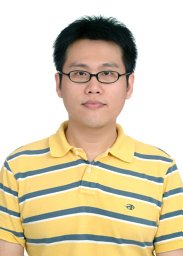 p c lin合作论文数Sinotech Engn Consultants Inc2Robert Nigbor合作论文数Civil and Environmental Engineering Department, School of Engineering, University of California, Los Angeles2Nicolas Kuehn合作论文数2
 Gail Atkinson合作论文数Department of Earth Sciences, University of Western Ontario2
 Sanaz Rezaeian合作论文数2Saburoh Midorikawa合作论文数2Linda Al Atik合作论文数2
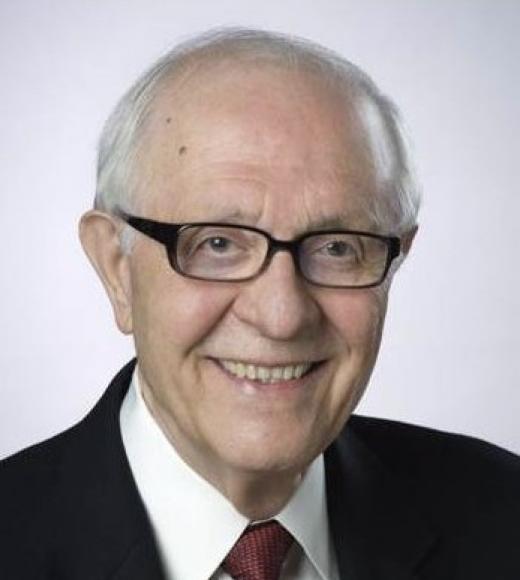 Izzat M. Idriss合作论文数Department of Civil and Environmental Engineering, University of California, Davis2S. Midorikawa合作论文数1kathryn wooddell合作论文数1Badie Rowshandel合作论文数1Francisco Ruz合作论文数1Melanie Walling合作论文数1Nico Kuehn合作论文数1
 shrey k shahi合作论文数Robinhood1
 Joseph Harmon合作论文数Haley & Aldrich, Seattle, WA USA1
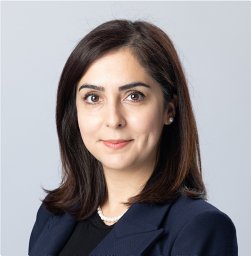 Sahar Derakhshan合作论文数University of CaliforniaInstitute of the Environment and Sustainability1
 Zeynep Gulerce合作论文数Dept Civil Engn, Middle East Tech Univ1
 Paolo Zimmaro合作论文数Civil and Environmental Engineering Department, School of Engineering, University of California, Los Angeles1Christine Goulet合作论文数Civil and Environmental Engineering Department, School of Engineering, University of California, Los Angeles1
 Scott Brandenberg合作论文数Civil and Environmental Engineering Department, School of Engineering, University of California, Los Angeles1




