specreduce is an AstroPy-coordinated python package whose goal is to be a toolbox of functions and utilities that are relevant to the reduction of spectroscopic data. It is largely focused on optical/IR spectroscopy where the raw data consists of an image projected from a spectrograph onto a 2D imaging detector. The way the spectral and spatial information is encoded into these 2D images can be quite complex and varied (e.g. multi-object vs multi-fiber vs integral field spectroscopy). Methods and algorithms for handling this variety of data have been implemented across many previous and existing data pipelines. Specreduce aims to collect these best practices into a common, shared space that facilitates more collaboration and easier development of future spectroscopic pipelines.
The Astropy Project supports and fosters the development of open-source and openly developed Python packages that provide commonly needed functionality to the astronomical community. A key element of the Astropy Project is the core package astropy, which serves as the foundation for more specialized projects and packages. In this article, we summarize key features in the core package as of the recent major release, version 5.0, and provide major updates on the Project. We then discuss supporting a broader ecosystem of interoperable packages, including connections with several astronomical observatories and missions. We also revisit the future outlook of the Astropy Project and the current status of Learn Astropy. We conclude by raising and discussing the current and future challenges facing the Project.
This paper presents pytelpoint, an open-source Python1 package that uses PyMC2 (https://www.pymc.io/) to perform robust analysis of telescope pointing performance. It implements pointing models in a way similar to TPOINT3 and uses compatible parameter names and definitions. This way results can be easily compared with previous TPOINT analysis and implemented in telescope control systems that use TPOINT or TPOINTcompatible pointing models. The Bayesian modeling techniques that PyMC enables allow for much more robust determinations of the uncertainties in model parameters and the correlations between them. Several visualization routines are provided to help assess results and the residuals of the model fits. Some examples will be shown of how this has been used at the MMTO.4 The initial release only supports elevation-azimuth telescopes. Support for other kinds of mounts is planned.
Fundamental coding and software development skills are increasingly necessary for success in nearly every aspect of astronomical and astrophysical research as large surveys and high resolution simulations become the norm. However, professional training in these skills is inaccessible or impractical for many members of our community. Students and professionals alike have been expected to acquire these skills on their own, apart from formal classroom curriculum or on-the-job training. Despite the recognized importance of these skills, there is little opportunity to develop them - even for interested researchers. To ensure a workforce capable of taking advantage of the computational resources and the large volumes of data coming in the next decade, we must identify and support ways to make software development training widely accessible to community members, regardless of affiliation or career level. To develop and sustain a technology capable astronomical and astrophysical workforce, we recommend that agencies make funding and other resources available in order to encourage, support and, in some cases, require progress on necessary training, infrastructure and policies. In this white paper, we focus on recommendations for how funding agencies can lead in the promotion of activities to support the astronomy and astrophysical workforce in the 2020s.
Software is a critical part of modern research, and yet there are insufficient mechanisms in the scholarly ecosystem to acknowledge, cite, and measure the impact of research software. The majority of academic fields rely on a one-dimensional credit model whereby academic articles (and their associated citations) are the dominant factor in the success of a researcher's career. In the petabyte era of astronomical science, citing software and measuring its impact enables academia to retain and reward researchers that make significant software contributions. These highly skilled researchers must be retained to maximize the scientific return from petabyte-scale datasets. Evolving beyond the one-dimensional credit model requires overcoming several key challenges, including the current scholarly ecosystem and scientific culture issues. This white paper will present these challenges and suggest practical solutions for elevating the role of software as a product of the research enterprise.
Software is a critical part of modern research, and those responsible for its development must be retained in the workforce to maximize the scientific return from petabyte-scale datasets. This white paper will present current challenges and suggest practical solutions for elevating the role of software as a product of the research enterprise.
Software is critical to astronomical research. Sharing and sustaining astronomical software has long-term impacts on scientific outcomes. However, support for this has been uneven, creating significant risks. Thus, we highlight changes that will enable a sustainable software sharing system for astronomy and astrophysics in the next decade.
Pandeia is the exposure time calculator (ETC) system developed for the James Webb Space Telescope (JWST) that will be used for creating JWST proposals. It includes a simulation-hybrid Python engine that calculates the two-dimensional pixel-by-pixel signal and noise properties of the JWST instruments. This allows for appropriate handling of realistic point spread functions, MULTIACCUM detector readouts, correlated detector readnoise, and multiple photometric and spectral extraction strategies. Pandeia includes support for all the JWST observing modes, including imaging, slitted/slitless spectroscopy, integral field spectroscopy, and coronagraphy. Its highly modular, data-driven design makes it easily adaptable to other observatories. An implementation for use with WFIRST is also available.
The Astropy Project (http://astropy.org) is, in its own words, "a community effort to develop a single core package for Astronomy in Python and foster interoperability between Python astronomy packages." For five years this project has been managed, written, and operated as a grassroots, self-organized, almost entirely volunteer effort while the software is used by the majority of the astronomical community. Despite this, the project has always been and remains to this day effectively unfunded. Further, contributors receive little or no formal recognition for creating and supporting what is now critical software. This paper explores the problem in detail, outlines possible solutions to correct this, and presents a few suggestions on how to address the sustainability of general purpose astronomical software.
We present ultraviolet, optical, and near-infrared observations of SN 2012ap, a broad-lined Type Ic supernova in the galaxy NGC 1729 that produced a relativistic and rapidly decelerating outflow without a gamma-ray burst signature. Photometry and spectroscopy follow the flux evolution from −13 to +272 days past the B-band maximum of −17.4 ± 0.5 mag. The spectra are dominated by Fe ii, O i, and Ca ii absorption lines at ejecta velocities of v ≈ 20,000 km s−1 that change slowly over time. Other spectral absorption lines are consistent with contributions from photospheric He i, and hydrogen may also be present at higher velocities (v ≳ 27,000 km s−1). We use these observations to estimate explosion properties and derive a total ejecta mass of ∼2.7 M☉, a kinetic energy of ∼1.0 × 1052 erg, and a 56Ni mass of 0.1–0.2 M☉. Nebular spectra (t > 200 days) exhibit an asymmetric double-peaked [O i] λλ6300, 6364 emission profile that we associate with absorption in the supernova interior, although toroidal ejecta geometry is an alternative explanation. SN 2012ap joins SN 2009bb as another exceptional supernova that shows evidence for a central engine (e.g., black hole accretion or magnetar) capable of launching a non-negligible portion of ejecta to relativistic velocities without a coincident gamma-ray burst detection. Defining attributes of their progenitor systems may be related to notable observed properties including environmental metallicities of Z ≳ Z☉, moderate to high levels of host galaxy extinction (E(B − V) > 0.4 mag), detection of high-velocity helium at early epochs, and a high relative flux ratio of [Ca ii]/[O i] >1 at nebular epochs. These events support the notion that jet activity at various energy scales may be present in a wide range of supernovae.
Observations spanning a large wavelength range, from X-ray to radio, of the Type IIb supernova (SN) 2011hs are presented, covering its evolution during the first year after explosion. The optical light curve presents a narrower shape and a fainter luminosity at peak than previously observed for Type IIb SNe. High expansion velocities are measured from the broad absorption H i and He i lines. From the comparison of the bolometric light curve and the time evolution of the photospheric velocities with hydrodynamical models, we found that SN 2011hs is consistent with the explosion of a 3-4 M-circle dot He-core progenitor star, corresponding to a main-sequence mass of 12-15 M-circle dot, that ejected a mass of Ni-56 of about 0.04 M-circle dot, with an energy of E = 8.5 x 10(50) ERG. Such a low-mass progenitor scenario is in full agreement with the modelling of the nebular spectrum taken at similar to 215 d from maximum. From the modelling of the adiabatic cooling phase, we infer a progenitor radius of approximate to 500-600 R-circle dot, clearly pointing to an extended progenitor star. The radio light curve of SN 2011hs yields a peak luminosity similar to that of SN 1993J, but with a higher mass-loss rate and a wind density possibly more similar to that of SN 2001ig. Although no significant deviations from a smooth decline have been found in the radio light curves, we cannot rule out the presence of a binary companion star.
Diffuse interstellar bands (DIBs) are absorption features observed in optical and near-infrared spectra that are thought to be associated with carbon-rich polyatomic molecules in interstellar gas. However, because the central wavelengths of these bands do not correspond to electronic transitions of any known atomic or molecular species, their nature has remained uncertain since their discovery almost a century ago. Here we report on unusually strong DIBs in optical spectra of the broad-lined Type Ic supernova SN 2012ap that exhibit changes in equivalent width over short (less than or similar to 30 days) timescales. The 4428 angstrom and 6283 angstrom DIB features get weaker with time, whereas the 5780 angstrom feature shows a marginal increase. These nonuniform changes suggest that the supernova is interacting with a nearby source of DIBs and that the DIB carriers possess high ionization potentials, such as small cations or charged fullerenes. We conclude that moderate-resolution spectra of supernovae with DIB absorptions obtained within weeks of outburst could reveal unique information about the mass-loss environment of their progenitor systems and provide new constraints on the properties of DIB carriers.
We report on a multisite photometric campaign on the high-amplitude delta Scuti star V2367 Cyg in order to determine the pulsation modes. We also used high-dispersion spectroscopy to estimate the stellar parameters and projected rotational velocity. Time series multicolour photometry was obtained during a 98-d interval from five different sites. These data were used together with model atmospheres and non-adiabatic pulsation models to identify the spherical harmonic degree of the three independent frequencies of highest amplitude as well as the first two harmonics of the dominant mode. This was accomplished by matching the observed relative light amplitudes and phases in different wavebands with those computed by the models. In general, our results support the assumed mode identifications in a previous analysis of Kepler data.
We present results of a multisite photometric campaign on the high-amplitude delta Scuti star KIC 6382916 in the Kepler field. The star was observed over a 85-d interval at five different sites in North America and Europe during 2011. Kepler photometry and ground-based multicolour light curves of KIC 6382916 are used to investigate the pulsational content and to identify the principal modes. High-dispersion spectroscopy was also obtained in order to derive the stellar parameters and projected rotational velocity. From an analysis of the Kepler time series, three independent frequencies and a few hundred combination frequencies are found. The light curve is dominated by two modes with frequencies f(1) = 4.9107 and f(2) = 6.4314 d(-1). The third mode with f(3) = 8.0350 d(-1) has a much lower amplitude. We attempt mode identification by examining the amplitude ratios and phase differences in different wavebands from multicolour photometry and comparing them to calculations for different spherical harmonic degree, l. We find that the theoretical models for f(1) and f(2) are in a best agreement with the observations and lead to value of l = 1 modes, but the mode identification of f(3) is uncertain due to its low amplitude. Non-adiabatic pulsation models show that frequencies below 6 d(-1) are stable, which means that the low frequency of f(1) cannot be reproduced. This is a further confirmation that current models predict a narrower pulsation frequency range than actually observed.
 Robert A. Fesen合作论文数Department of Physics and Astronomy, Dartmouth College18
 Dan Milisavljevic合作论文数Dartmouth11
 Jerod T. Parrent合作论文数8
 Raffaella Margutti合作论文数Department of Astronomy, University of California, Berkeley7Luis Balona合作论文数South African Astronomical Observatory, National Research Foundation7
 Petri Vaisanen合作论文数South African Astronomical Observatory7
 David Buckley合作论文数7
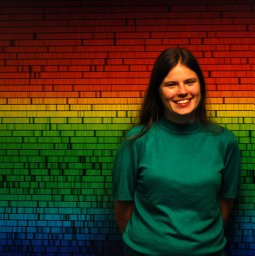 b sipőcz合作论文数IPAC, CALTECH6Alicia Margarita Soderberg合作论文数6
 Wolfgang E. Kerzendorf合作论文数Department of Computational Mathematics, Science and Engineering, College of Natural Science, Michigan State University;Department of Physics & Astronomy, College of Natural Science, Michigan State University6
 Adrian M. Price-Whelan合作论文数NYU6
 Manodeep Sinha合作论文数Department of Physics;Vanderbilt University;Department of Physics, Vanderbilt University6
 Dan Reichart合作论文数Department of Physics and Astronomy, College of Arts & Sciences, The University of North Carolina at Chapel Hill6
 Erik J. Tollerud合作论文数Space Telescope Science Institute6Steven M. Crawford合作论文数University of Wisconsin6c hervias合作论文数5p kotze合作论文数5
 Luis Enrique Gonzalez合作论文数5Francisco I. Aros合作论文数5
 Federico Carrasco合作论文数Max Planck Inst Gravitat Phys, Albert Einstein Inst5Y Apostolovski合作论文数5Alexei Y. Kniazev合作论文数5A. A. S. Gulbis合作论文数5
 Kelle Cruz合作论文数Hunter College, City University of New York;Graduate Center, City University of New York;American Museum of Natural History5
 Gastón Folatelli合作论文数Instituto de Astrofísica de La Plata, Conicet La Plata;Facultad de Ciencias Astronómicas y Geofísicas, Universidad Nacional de la Plata5
 Francisco Förster合作论文数Astronomy Department, Faculty of Physical Sciences and Mathematics, University of Chile;Millennium Institute of Astrophysics;Center for Astrophysics and Associated Technologies5
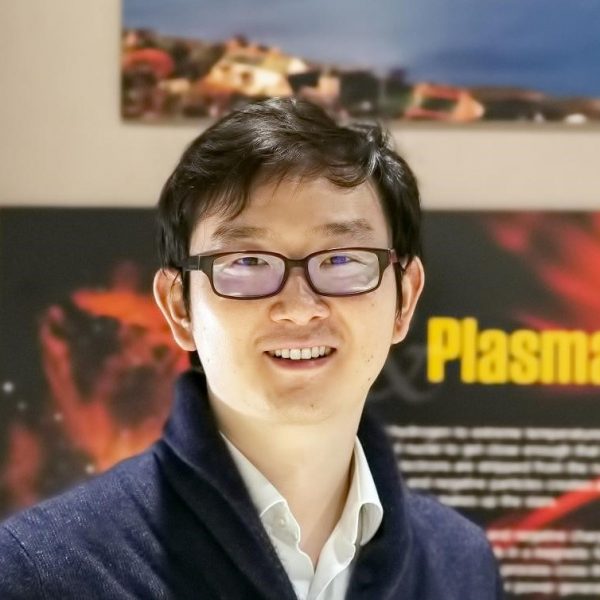 Chuanfei Dong合作论文数Department of Astronomy, Boston University;Discovery Plasma Science Department, Princeton Plasma Physics Laboratory;Department of Astrophysical Sciences, Princeton University4D. Cenadelli合作论文数4M. Alvarez合作论文数4
 Brian Cherinka合作论文数4H. F. Stevance合作论文数4Ceren Ulusoy合作论文数Ege Üniversitesi, Ege University4
 Raul Michel合作论文数National Astronomical Observatories Chinese Academy of Sciences, Chinese Academy of Sciences,National Astronomical Observatories4n e sanders合作论文数4
 Paolo Mazzali合作论文数Astrophysics Research Institute, Faculty of Engineering and Technology, Liverpool John Moores University4
 Benjamin Weiner合作论文数MMT Observatory;Department of Astronomy and Steward Observatory, University of Arizona4Dara Norman合作论文数4Ivelina Momcheva合作论文数4G. H. Marion合作论文数4
 S. B. Potter合作论文数Department of Physics and Astronomy;University of Sheffield;Department of Physics and Astronomy, University of Sheffield4
 Alice Allen合作论文数4
 I. Stateva合作论文数4
 Gautham Narayan合作论文数Department of Astronomy, College of Liberal Arts and Sciences, University of Illinois at Urbana-Champaign4
 Maryam Modjaz合作论文数UC Berkeley, University of California4
 L. Fox Machado合作论文数Instituto de Astrof ´ isica de Canarias4
 Joseph Harrington合作论文数Department of Physics, University of Central Florida;Florida Space Institute, University of Central Florida4
 Adam Ginsburg合作论文数Department of Astronomy, College of Liberal Arts & Sciences, University of Florida4
 I. Kh. Iliev合作论文数Smolyan4E. Romero Colmenero合作论文数4




