Trust, a relational phenomenon that is an important building block of interpersonal relationships and within society, can also be an intermediary outcome of field-based environmental education programs. Trust creates a foundation for collaboration and decision-making, which are core to many ultimate outcomes of environmental education. Yet, understanding how trust develops among environmental education program participants is still nascent, partly because few methods exist for measuring trust in informal contexts, such as those that are common for many environmental education programs. Our study used social network analysis and qualitative data from focus groups, questionnaires, and participant observation to investigate the development of trust among residential environmental education program participants in two school groups, some of whom had initial familiarity with each other. Network data indicated differential increases in peer-to-peer trust among group members when measured at the individual level. Qualitative data from the focus groups highlighted salient dimensions of trust that were particularly relevant in this setting, including friendship, emotional and physical safety, and self-disclosure; reciprocal trust among peers and educators; and aspects of this immersive setting that fostered trust among the participants.
This paper describes an effort to develop a survey instrument capable of measuring important aspects of adolescents’ experiences of interest-related pursuits that are supported by technology. The measure focuses on youths’ experiences of connected learning (Ito et al. in Connected learning: an agenda for research and design. Digital Media and Learning Research Hub, Irvine, 2013 ), an emerging model of learning across settings supported by digital media. Specifically, the instrument aims to measure the depth with which youth are able to engage in an interest-related pursuit, the level of support and encouragement they receive from peers, and the degree to which their pursuit involves performance or media production as an essential feature. The survey also elicits information regarding the connections between youths’ interest-related pursuits and academic goals, the involvement of adults as co-participants in pursuits, and youths’ access to technology tools they deem necessary for their pursuits. The paper reports on results from a pilot study and two rounds of field-testing, in which we evaluated the validity and reliability of the instrument and compared results with evidence from interviews with youth. Our aim was to investigate the feasibility of an approach to measuring youths’ interest-related pursuits to inform future research and evaluation of initiatives focused on digital media and learning.
The current study employs transitional probabilities as a way to classify and trace students’ interactions within an online learning system. Results revealed that students’ interaction patterns within the system varied in relation to their performances on embedded assessments. The results and methodologies presented here are designed to provide practitioners with a starting place for how to extract information concerning how and why their students interact within an online environment.
Technologies used by teachers and students generate vast amounts of data that can be analyzed to provide insights into improving teaching and learning. However, practitioners are left out of the process. We describe the development of an approach by which researchers and practitioners can work together to use data intensive research methods to launch improvement efforts within schools. This paper describes elements of the first year of a researcher-practitioner partnership, highlighting initial findings, challenges, and strategies for overcoming these challenges.
This paper argues that improving learning reliably and at scale requires a specific orientation toward measurement, understood broadly. Drawing on examples from a partnership between SRI International and The Carnegie Foundation for the Advancement of Teaching, this paper describes measures of student behaviors that are being used by researchers and instructors to improve learning environments at more than 50 community colleges and four-year universities for thousands of students.
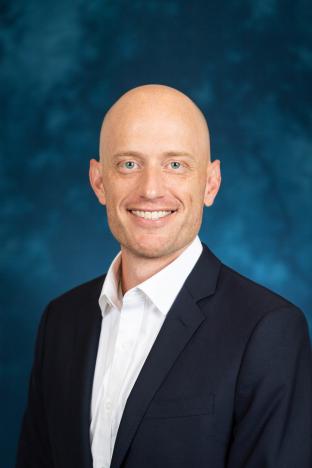 Andrew Krumm合作论文数Department of Learning Health Sciences, Medical School, University of Michigan;School of Information, University of Michigan3
 Mingyu Feng合作论文数Department of Computer Science, Worcester Polytechnic Institute3
 Alex J. Bowers合作论文数Department of Education Leadership, Teachers College, Columbia University2
 Nathan Dadey合作论文数1Emily Price合作论文数1
 Beattie Rachel L合作论文数Department of Psychology, University of Southern California1Heather Hough合作论文数1
 Hiroyuki Yamada合作论文数1
 Andrew Maul合作论文数School of Education, University of Colorado at Boulder Boulder1
 Nicole Ardoin合作论文数Graduate School of Education, Stanford University1
 Lawrence P. Gallagher合作论文数SRI International1
 Cynthia D'Angelo合作论文数Department of Curriculum & Instruction, College of Education, University of Illinois at Urbana-Champaign1
 William Penuel合作论文数School of Education, University of Colorado Boulder;Institute of Cognitive Science, University of Colorado Boulder1
 Christopher Thorn合作论文数1
 Kathleen M. O'Connor合作论文数Graduate School of Management, Cornell University1
 Maria Digiano合作论文数School of Natural Resources and the Environment1
 Erica L. Snow合作论文数Arizona State University1




