Arcus is a high-resolution soft X-ray and far-ultraviolet spectroscopy mission submitted to the National Aeronautics and Space Administration's inaugural Astrophysics Probe solicitation. Arcus makes simultaneous observations in these two critical wavelength regimes to address a broad range of science questions highlighted by the 2020 Astronomy and Astrophysics Decadal Survey, from the temperature and composition of the missing baryons in the intergalactic medium to the evolution of stars and their influence on orbiting planets. We present the science motivation for and performance of the Arcus ultraviolet spectrograph (UVS). UVS comprises a 60-cm, off-axis Cassegrain telescope feeding an imaging spectrograph operating over the 970- to 1580-angstrom bandpass. The instrument employs two interchangeable diffraction gratings to provide medium-resolution spectroscopy (R>20,000 in two grating modes centered at similar to 1110 and 1390 angstrom). The spectra are recorded on an open-face, photon-counting microchannel plate detector. The instrument design achieves an end-to-end sensitivity >10 times that of the Far-Ultraviolet Spectroscopic Explorer over the key 1020- to 1150-angstrom range and offers arcsecond-level angular resolution spectral imaging over a 6-arcminute-long slit for observations of extended sources. We describe the example science investigations for far-ultraviolet spectroscopy on Arcus, the resultant instrument design and predicted performance, and simulated data from potential General Observer programs with Arcus.
The Arcus Probe is designed to measure the feedback cycle of material into and out of galaxies, and the inter-relation between these flows and the central black holes that drive many of these processes. Arcus consists of a high-resolution x-ray spectrometer (led by the Smithsonian Astrophysics Observatory; SAO) with a companion medium resolution (R ~ 24,500) far-ultraviolet imaging spectrograph covering the 970 - 1580 Å bandpass. The Arcus Ultraviolet Spectrograph (UVS) is designed in part to be a sucessor to the successful FUSE mission, with more than five-times the sensitivity in the essential Lyman UV, including rest-frame O VI 1032 ˚A, than any previous medium resolution spectroscopic instrument. The instrument consists of a 60 cm off-axis Cassegrain telescope feeding a two-channel spectrograph, with the spectra recorded on an open-face microchannel plate detector. The channels each consist of a medium resolution grating mounted to a grating selector: the G110M (970 - 1280 Å, optimized for 1000 - 1280 Å) and the G140M (1195 - 1580 Å). The Arcus UVS is led by the University of Colorado Laboratory for Atmospheric and Space Physics (LASP) and incorporates several technologies developed in the more than two decades since F USE, and matured on previous CU-LASP flight programs, including enhanced lithium fluoride protected aluminum mirror coatings (eLiF) and large-format borosilicate glass MCPs. We describe the recent development and TRL advancement of these enabling technologies, and then outline the UVS instrument and projected performance.
Arcus is a high-resolution soft X-ray and far-ultraviolet spectroscopy mission being developed for submission to NASA’s inaugural Astrophysics Probe solicitation. Arcus makes simultaneous observations in these two critical wavelength regimes to address a broad range of science questions highlighted by the 2020 Astronomy and Astrophysics Decadal Survey, from the temperature and composition of the missing baryons in the intergalactic medium to the evolution of stars and their influence on orbiting planets. This proceeding presents the science motivation for and performance of the Arcus UltraViolet spectrograph (UVS). UVS comprises a 60 cm, off-axis Cassegrain telescope feeding an imaging spectrograph operating over the 970 – 1580 ˚A bandpass. The instrument employs two interchangeable diffraction gratings to provide medium-resolution spectroscopy (R ⪆ 20,000 in two grating modes centered at approximately 1110 and 1390 ˚A, respectively). The spectra are recorded on an open-face, photon-counting microchannel plate detector. The instrument design achieves an end-to-end sensitivity ⪆ 10 times that of the Far-Ultraviolet Spectroscopic Explorer over the key 1020 – 1150 ˚A range and offers arcsecond-level angular resolution spectral imaging over a six arcminute long slit for observations of extended sources. We describe example science investigations for FUV spectroscopy on Arcus, the resultant instrument design and predicted performance, and simulated data from potential Guest Observer programs with Arcus.
The Extreme-ultraviolet Stellar Characterization for Atmospheric Physics and Evolution (ESCAPE) mission is an astrophysics Small Explorer employing ultraviolet spectroscopy (EUV: 80 - 825 Å and FUV: 1280 - 1650 Å) to explore the high-energy radiation environment in the habitable zones around nearby stars. ESCAPE provides the first comprehensive study of the stellar EUV and coronal mass ejection environments which directly impact the habitability of rocky exoplanets. In a 20 month science mission, ESCAPE will provide the essential stellar characterization to identify exoplanetary systems most conducive to habitability and provide a roadmap for NASA's future life-finder missions. ESCAPE accomplishes this goal with roughly two-order-of-magnitude gains in EUV efficiency over previous missions. ESCAPE employs a grazing incidence telescope that feeds an EUV and FUV spectrograph. The ESCAPE science instrument builds on previous ultraviolet and X-ray instrumentation, grazing incidence optical systems, and photon-counting ultraviolet detectors used on NASA astrophysics, heliophysics, and planetary science missions. The ESCAPE spacecraft bus is the versatile and high-heritage Ball Aerospace BCP Small spacecraft. Data archives will be housed at the Mikulski Archive for Space Telescopes (MAST).
Extreme-ultraviolet Stellar Characterization for Atmospheric Physics and Evolution (ESCAPE) mission provides the first comprehensive study of the stellar EUV environments that control atmospheric mass-loss and determine the habitability of rocky exoplanets. ESCAPE is a NASA astrophysics Small Explorer mission that completed Phase A in 2021. This ESCAPE mission concept overview highlights designs and implementation plans optimized for an Explorer-class mission architected to launch in late-2025. ESCAPE employs extreme-ultraviolet (EUV) and far-ultraviolet (FUV) spectroscopy (80 – 1650 Angstroms) to characterize the high-energy radiation environment in the habitable zones around nearby stars. ESCAPE will survey over 200 stars, including known planet hosts, to measure EUV irradiance, EUV flare rates, and the properties of stellar coronal mass ejections (CMEs). ESCAPE mission uses a low-risk, high-heritage design to ensure science objectives and mission requirements are met with ample flight system margin. The ESCAPE observatory includes a single instrument with no active mechanisms during science observations which enables a flexible operational concept with a high degree of automation for both science observations and ground station passes. The ESCAPE instrument comprises a grazing incidence telescope feeding four diffraction gratings and photon-counting microchannel plate (MCP) detector. The science instrument will be assembled and tested in the space hardware facilities at the University of Colorado Boulder's Laboratory for Atmospheric and Space Physics (CU-LASP), and employs the versatile and high-heritage Ball Aerospace BCP-Small spacecraft. Data archives will reside at the Mikulski Archive for Space Telescopes (MAST). CU-LASP is the mission prime and PI institution and supplies project system engineering to guide the mission design and development.
The University of Colorado led Extreme-ultraviolet Stellar Characterization for Atmospheric Physics and Evolution (ESCAPE) small explorer mission concept is designed to measure the extreme- and far-ultraviolet (EUV; 80 - 560 A, 600 - 825 A, FUV; 1280 - 1650 A) irradiance and are activity of exoplanet host stars; essential measurements for assessing the stability of rocky planet atmospheres in the liquid-water habitable zone. The ESCAPE design consists of a fixed optical configuration with a grazing incidence Gregorian, or "Hetterick- Bowyer", telescope feeding grazing and normal incidence spectroscopic channels. The telescope is provided by a joint NASA Marshall Space Flight Center and Smithsonian Astrophysics Observatory team. The grazing incidence gratings have a radial profile and are ruled into single-crystal silicon using electron-beam lithography in the nanofabrication laboratory at Pennsylvania State University. Normal incidence gratings have aberration correcting holographic solutions and are supplied by Horiba Jobin Yvon. Spectra are imaged onto a curved microchannel plate detector supplied by the University of California, Berkeley. ESCAPE utilizes the Ball Aerospace BCP spacecraft. The simple, fixed configuration design of ESCAPE is projected to exceed the effective area of the last major EUV astrophysics spectrograph, EUV E-DS/S, by more than a factor of 50, providing unprecedented sensitivity in this essential bandpass for exoplanet host-star characterization. We report on the ESCAPE design, projected performance and mission implementation plan, as well as the trade studies carried out over Phase A to scope the first NASA EUV astrophysics mission in nearly 30 years. If selected, ESCAPE will launch in Fall 2025.
The Extreme-ultraviolet Stellar Characterization for Atmospheric Physics and Evolution (ESCAPE) mission is an astrophysics Small Explorer employing ultraviolet spectroscopy (EUV: 80 - 825 Å and FUV: 1280 - 1650 Å) to explore the high-energy radiation environment in the habitable zones around nearby stars. ESCAPE provides the first comprehensive study of the stellar EUV and coronal mass ejection environments which directly impact the habitability of rocky exoplanets. In a 20 month science mission, ESCAPE will provide the essential stellar characterization to identify exoplanetary systems most conducive to habitability and provide a roadmap for NASA's future life-finder missions. ESCAPE accomplishes this goal with roughly two-order-of-magnitude gains in EUV efficiency over previous missions. ESCAPE employs a grazing incidence telescope that feeds an EUV and FUV spectrograph. The ESCAPE science instrument builds on previous ultraviolet and X-ray instrumentation, grazing incidence optical systems, and photon-counting ultraviolet detectors used on NASA astrophysics, heliophysics, and planetary science missions. The ESCAPE spacecraft bus is the versatile and high-heritage Ball Aerospace BCP-Small spacecraft. Data archives will be housed at the Mikulski Archive for Space Telescopes (MAST). ESCAPE is currently completing a NASA Phase A study, and if selected for Phase B development would launch in 2025.
We present a simple seeing-limited IR spectrometer design for the Giant Magellan Telescope, with continuous R = 6000 coverage from 0.87-2.50 microns for a 0:7” slit. The instrument's design is based on an asymmetric white pupil echelle layout, with dichroics splitting the optical train into yJ, H, and K channels after the pupil transfer mirror. A separate low-dispersion mode offers single-object R ~ 850 spectra which also cover the full NIR bandpass in each exposure. Catalog gratings and H2RG detectors are used to minimize cost, and only two cryogenic rotary mechanisms are employed, reducing mechanical complexity. The instrument dewar occupies an envelope of 1:8×1:5×1:2 meters, satisfying mass and volume requirements for GMT with comfortable margin. We estimate the system throughput at ~ 35% including losses from the atmosphere, telescope, and instrument (i.e. all coatings, gratings, and sensors). This optical efficiency is comparable to the FIRE spectrograph on Magellan, and we have specified and designed fast cameras so the GMT instrument will have an almost identical pixel scale as FIRE. On the 6.5 meter Magellan telescopes, FIRE is read-noise limited in the y and J bands, similar to other existing near-IR spectrometers and also to JWST/NIRSPEC. GMT's twelve-fold increase in collecting area will therefore offer gains in signal-to-noise per exposure that exceed those of moderate resolution optical instruments, which are already sky-noise limited on today's telescopes. Such an instrument would allow GMT to pursue key early science programs on the Epoch of Reionization, galaxy formation, transient astronomy, and obscured star formation environments prior to commissioning of its adaptive optics system. This design study demonstrates the feasibility of developing relatively affordable spectrometers at the ELT scale, in response to the pressures of joint funding for these telescopes and their associated instrument suites.
 Brian T. Fleming合作论文数7
 Kevin France合作论文数University of Colorado7
 Tom Patton合作论文数5Bryce Unruh合作论文数3Drew M. Miles合作论文数3
 Oswald Siegmund合作论文数Space Sciences Laboratory, University of California, Berkeley3
 James C. Green合作论文数Department of Astrophysical & Planetary Sciences, College of Arts and Sciences, University of Colorado Boulder3
 Randall L. Mcentaffer合作论文数Center for Astrophysics and Space Astronomy;University of Colorado;Center for Astrophysics and Space Astronomy, University of Colorado3Nicholas Nell合作论文数3
 Meng Jin合作论文数2patrick champey合作论文数2Nicholas Kruczek合作论文数2
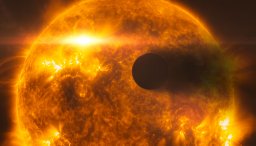 Vincent Bourrier合作论文数Observ Astron, Univ Geneva2
 James Paul Mason合作论文数Lab Atmospher & Space Phys, Univ Colorado2
 Allison Youngblood合作论文数NASA Goddard Space Flight Center2
 Jeremy J. Drake合作论文数Lockheed Martin2
 Martin Barstow合作论文数School of Physics & Astronomy, University of Leicester2
 Jeffrey L. Linsky合作论文数Department of Astrophysical and Planetary Sciences, College of Arts and Sciences, University of Colorado Boulder2
 Todd Tripp合作论文数Department of Astronomy, College of Natural Sciences, University of Massachusetts Amherst2
 Katja Poppenhaeger合作论文数Harvard Smithsonian Ctr Astrophys2
 Nancy Brickhouse合作论文数Solar, Stellar, and Planetary Sciences Division, Harvard-Smithsonian Center for Astrophysics2
 David McKenzie合作论文数2
 Laura Brenneman合作论文数Center for Astrophysics, Harvard & Smithsonian2
 Joel Bregman合作论文数Department of Astronomy, College of Literature, Science, and the Arts, University of Michigan2
 Fabien Grise合作论文数Observatoire Astronomique de Strasbourg2
 Guillaume Gronoff合作论文数Langley Research Center, National Aeronautics and Space Administration;Science Systems and Applications Inc Hampton2
 Cynthia S. Froning合作论文数Department of Astronomy, University of Texas at Austin;McDonald Observatory, University of Texas at Austin2
 Hans Moritz Günther合作论文数Kavli Institute for Astrophysics and Space Research, Massachusetts Institute of Technology2
 Luca Fossati合作论文数Institut für Weltraumforschung, ÖAW;Space Research Institute, Austrian Academy of Sciences2
 Ute V. Amerstorfer合作论文数Austrian Space Weather Office, GeoSphere Austria2Peter N. Cheimets合作论文数1Andrew Malonis合作论文数1
 Constance Spittler合作论文数1Sarah Lipscy合作论文数1Suzanne Romaine合作论文数1
 Edward N Hertz合作论文数1Maire Volz合作论文数1Mark Egan合作论文数1
 Tommi Koskinen合作论文数Lunar and Planetary Laboratory, College of Science, University of Arizona1
 Jason B McPhate合作论文数1
 Peter C Cheimets合作论文数Smithsonian Astrophysical Observatory1Gabor Furesz合作论文数1
 Adam Kowalski合作论文数Department of Astrophysical and Planetary Sciences, College of Arts and Sciences, University of Colorado Boulder;Laboratory for Atmospheric and Space Physics, University of Colorado Boulder;National Solar Observatory1Matthew Beasley合作论文数1Randall C. Smith合作论文数General Motors R&D1
 Sabrina Savage合作论文数National Aeronautics and Space Administration1Pasquale Temi合作论文数1
 Robert A. Simcoe合作论文数Department of Physics, Massachusetts Institute of Technology;Kavli Institute for Astrophysics and Space Research, Massachusetts Institute of Technology1




