The early history of dairy bacteriology is reviewed from the point of view of milk as a vector for pathogens, spoilage of milk and dairy products, a fermentation substrate and the development of starter cultures. Joseph Lister, a Scottish surgeon, can be considered the founder of dairy bacteriology since it was he who isolated the organism we now know as Lactococcus lactis. Other important early contributors were the two Danes, Matthias Vilhelm Samuel Storch and Sigurd Orla-Jensen, the Frenchman, Louis Pasteur, the Swiss, Eduard von Freundenreich, and the Americans, Robert Breed, Herbert Conn, and Bernard Hammer.
Starter cultures are essential for the production of most cheese types. Since the late 19th century, starter technology has become increasingly sophisticated, evolving from use of undefined mixtures of species and strains to use of well-defined mixtures of strains sometimes with custom-designed properties. Most primary starters are composed of a few species of lactic acid bacteria (LAB) such as Lactococcus lactis, Leuconostoc mesenteroides subsp. cremoris, Streptococcus thermophilus, Lactobacillus delbrueckii subsp. bulgaricus, and L. helveticus. Primary starters carry out acidification in the early phases of cheesemaking but also contribute to flavor and aroma. Other species (LAB and various bacteria, yeasts, and molds) are used as secondary starters and adjuncts, and contribute to ripening of many cheese types. This chapter provides a general introduction to starter culture systems, starter taxonomy and genomics, starter metabolism and its influence on cheese flavor and aroma, effects of bacteriophages, and strategies for starter preservation and propagation.
Cheese is the quintessential convenience food, which can be consumed as it is, without preparation, can be used as a sandwich filler, grated or diced and used as a condiment or as a component of several cooked dishes. An estimated 40% of cheese is used as an ingredient or component of other foods.
In this article, cheese as a vehicle of food poisoning is discussed, particularly the organisms involved, their sources, their infective doses, their growth during cheese ripening, and their control. It is concluded that ripened cheese is a safe product when it is properly made. However, soft cheeses have been responsible for food poisoning outbreaks worldwide. In cases where cheese has been incriminated in food poisoning, confounding factors including improper storage of the milk (no refrigeration for several days prior to manufacture), poor starter activity due to inhibition of acid production by phage and/or antibiotic residues in the milk, poor plant hygiene, gross environmental contamination, faulty pasteurization, shedding of the causative organisms by plant personnel, or different combinations of these factors are also often present. Biogenic amines are also discussed.
Smear or washed-rind cheeses develop an orange to red color on their surfaces during ripening, which is composed of bacteria and yeasts. For a long time, it was considered that Brevibacterium linens was the major bacterium on the surfaces of these cheeses. This organism was recently shown to be a mixture of two species, B. linens and the new species Brevibacterium aurantiacum. Both organisms produce pale yellow to deep orange or brown colonies, which are considered to be responsible for the orange to red color of the cheese. Several other new species of bacteria have recently been found on the surface of smear-ripened cheese including Arthrobacter arilaitensis and Arthrobacter bergerei, which were originally isolated from Reblochon and Camembert cheese, respectively, and Staphylococcus succinus subsp. casei and Staphylococcus equorum subsp. linens, which were isolated from a Swiss smear cheese made from raw milk. More recently, Agrococcus casei, Corynebacterium casei, Microbacterium gubbeenense, and Mycetola reblochonii have been isolated from different cheeses, including Livarot, Limburger, Gubbeen, Tilsit, and Reblochon. Their sources and their role in cheese ripening are also described.
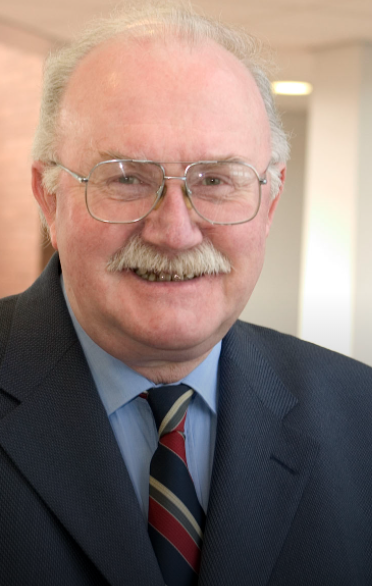 Patrick F. Fox合作论文数Department of Food Chemistry, School of Food and Nutritional Sciences, University College Cork28
 Paul L.H. Mcsweeney合作论文数Department of Food And Nutritional Sciences, School of Food & Nutritional Sciences, University College Cork21
 Timothy P. Guinee合作论文数Department of Food Chemistry and Technology, Teagasc Food Research Centre19
 Marc Vancanneyt合作论文数17
 Mary C Rea合作论文数National Dairy Products Research Centre16Roberto Gelsomino合作论文数13
 Jean Swings合作论文数Department of Biochemistry and Microbiology, Faculty of Sciences, University of Gent11
 Jerome Mounier合作论文数EA3882 Laboratoire Universitaire de Biodiversité et Ecologie Microbienne, Université de Brest9Kn Jordan合作论文数8Seamus Condon合作论文数8F. D. Drinan合作论文数8
 Tom Beresford合作论文数8NM Brennan合作论文数7
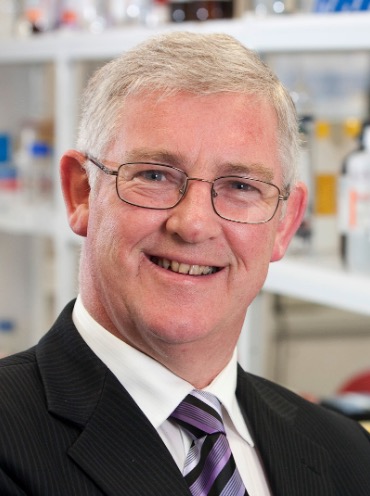 Gerald F. Fitzgerald合作论文数School of Microbiology, University College Cork;Alimentary Pharmabiotic Centre, University College Cork7
 Siegfried Scherer合作论文数Weihenstephan Life Science Center, Technical University of Munich;Nutrition and Food Research Center, ZIEL6
 Alan Ward合作论文数6Stefanie Goerges合作论文数6
 Michael Goodfellow合作论文数School of Natural and Environmental Sciences, Newcastle University;School of Biology, Newcastle University5Thomas P. Beresford合作论文数5S. Tobin合作论文数4
 Colin Hill合作论文数School of Microbiology, University College Cork4
 Dafni-Maria Kagkli合作论文数Teagasc Research Center Moorepark4S Condon合作论文数3
 Nagamani Bora合作论文数School of Biosciences, Faculty of Science, The University of Nottingham3
 Katrien Vandemeulebroecke合作论文数3
 John A. Lucey合作论文数Department of Food Science, University of Wisconsin-Madison3
 David Sheehan合作论文数Department of Biochemistry, University College Cork3B. Walsh合作论文数3Bart Hoste合作论文数3
 Nathalie Desmasures合作论文数3Françoise Irlinger合作论文数3Rudiger Beduhn合作论文数3Sandra Larpin合作论文数3George Kalantzopoulos合作论文数3j f chamba合作论文数2markus hohenegger合作论文数2Se Gilliland合作论文数2
 Ana Ramos合作论文数Instituto de Biologia Experimental e Tecnológica, Universidade Nova de Lisboa2
 Pascal Bonnarme合作论文数2Fitzsimons N A合作论文数2
 Richard Fitzgerald合作论文数Dept. Of Biological Sciences, Faculty Of Science & Engineering, University of Limerick2
 Luc De Vuyst合作论文数Department of Bio-Engineering Sciences, Faculty of Sciences and Bioengineering Sciences, Vrije Universiteit Brussel2
 Alan L. Kelly合作论文数Department of Food and Nutritional Sciences, School of Food and Nutritional Sciences, University College Cork2
 Effie Tsakalidou合作论文数Laboratory of Dairy Research, Agricultural University of Athens2
 William J. Reville合作论文数Department of Radiation Safety Office, University College2
 Peter Vandamme合作论文数Department of Biochemistry and microbiology, Faculty of Sciences, Ghent University;Laboratory of Microbiology, Ghent University2Shawn Doonan合作论文数2Micheline Guéguen合作论文数2Caoimhe Lynch合作论文数2




