The purpose of this study was to determine whether thymic transplantation in addition to highly active antiretroviral therapy (HAART) will restore T cell function in HIV infection. Eight treatment-naive HIV-infected patients with CD4+ T cell counts of 200-500/mm3 were randomized into thymic transplantation and control arms. All patients received HAART (zidovudine, lamivudine, and ritonavir) for 6 weeks prior to transplantation. Thymic transplantation was done without immunosuppression, using postnatal HLA-unmatched cultured allogeneic thymus tissue. Patients were immunized every 6 months with the neoantigen keyhole limpet hemocyanin (KLH) and the recall antigen tetanus toxoid (TT). T cell phenotype and function and T cell receptor rearrangement excision circles (TRECs) were assessed. Thymic allografts were biopsied at 2 months. Six HIV-infected patients completed the study. Four patients received cultured allogeneic postnatal thymic grafts, two others were controls. CD4+ T cell counts increased and T cell-proliferative responses to Candida antigen and TT normalized in all patients. Proliferative responses to KLH developed in three of four transplant recipients and one of two controls. Patients responding to KLH after secondary immunization had greater TREC increases compared with the patients who did not respond. All thymic allografts were rejected within 2 months. In summary, four of six patients developed T cell-proliferative responses to the neoantigen KLH over the first 2 years of HAART. The transplanted thymus tissue, however, was rejected. There was no clear difference in restoration of T cell function in the transplant recipients compared with the controls. Increases in TRECs after initiation of HAART may correlate with improved immune function.
Background The DiGeorge syndrome is a congenital disorder that affects the heart, parathyroid glands, and thymus. In complete DiGeorge syndrome, patients have severely reduced T-cell function.Methods We treated five infants (age, one to four months) with complete DiGeorge syndrome by transplantation of cultured postnatal thymus tissue. Follow-up evaluations included immune phenotyping and proliferative studies of peripheral-blood mononuclear cells plus biopsy of the thymus allograft. Thymic production of new T cells was assessed in peripheral blood by tests for T-cell-receptor recombination excision circles, which are formed from excised DNA during the rearrangement of T-cell-receptor genes.Results After the transplantation of thymus tissue, T-cell proliferative responses to mitogens developed in four of the five patients. Two of the patients survived with restoration of immune function; three patients died from infection or abnormalities unrelated to transplantation. Biopsies of grafted thymus in the surviving patients showed normal morphologic features and active T-cell production. In three patients, donor T cells could be detected about four weeks after transplantation, although there was no evidence of graft-versus-host disease on biopsy or at autopsy. In one patient, the T-cell development within the graft was demonstrated to accompany the appearance of recently developed T cells in the periphery and coincided with the onset of normal T-cell function. In one patient, there was evidence of thymus function and CD45RA+CD62L+ T cells more than five years after transplantation.Conclusions In some infants with profound immunodeficiency and complete DiGeorge syndrome, the transplantation of thymus tissue can restore normal immune function. Early thymus transplantation - before the development of infectious complications - may promote successful immune reconstitution. (N Engl J Med 1999;341:1180-9.) (C)1999, Massachusetts Medical Society.
Transplantation of cultured postnatal human thymus was performed in a patient with complete DiGeorge syndrome. Biopsy of the graft 3 mo after implantation revealed normal CD1+ thymocytes in thymic cortical epithelial regions and CD1- thymocytes in thymic medullary epithelial regions, respectively. HLA analysis of graft thymocyte and thymic microenvironment components demonstrated that developing thymocytes and thymic macrophages were recipient derived, while thymic epithelial components were of donor origin. The patient, who initially had no T cells and had profoundly defective T cell function, developed normal T cell responses to mitogens and Ags, tolerance to donor in a mixed lymphocyte reaction, and normal Ab titers after tetanus toxoid and pneumovax immunization. Thus, transplantation of cultured postnatal human thymic tissue in humans can form functional chimeric thymic tissue, and may provide a strategy to reconstitute the peripheral T cell pool in select congenital and acquired immune deficiency syndromes.
Purine nucleoside phosphorylase deficiency is an inherited disease of purine metabolism characterized clinically as combined immunodeficiency. The molecular defects have been published for 4 different alleles in 3 patients. We report four new mutations including two amino acid substitutions, A 174P and G190V, a single codon deletion, ΔI129, and a point mutation in intron 3 which leads to aberrant splicing and creation of a premature stop codon in exon 4 (286 -18G→A). Of the previously reported mutations, E89K was found in one additional patient, and R234P was found in 3 unrelated patients, making R234P the most common mutation reported to date in this disease. Hum Mutat 9:118–121, 1997. © 1997 Wiley-Liss, Inc.
The purpose of this study was to formulate a kinematic model of performance in the parallel squat, based on the movement characteristics of world class powerlifters, and to determine if the model could be utilized to assess technique differences between high and less-skilled subjects. Two trials were recorded via high-speed cinematography from a side view of twenty-four Ss during the 1974 U.S. Senior National A.A.U. Powerlifting Championships. Vertical and horizontal displacement patterns of three joint centers and the center of the bar were determined for the best trial of each S. These data were subsequently used to calculate desired linear and angular coordinates, velocities and accelerations for body segments and bar. Results indicated that although there was some variability in most kinematic parameters, vertical bar velocity was found to be very similar among competitors, even for Ss of different bodyweight. Consequently, the vertical velocity of the bar was selected as the parameter around which performance could be modeled in the parallel squat. A model was formulated by plotting the mean values in vertical bar velocity for all Ss scaled to a common time base. The resultant model was contrasted with vertical bar velocity data for less-skilled Ss to assess typical performance errors.
 Mary Louise Markert合作论文数School of Medicine, Duke University4
 Laura Hale合作论文数Department of Pathology, Duke University School of Medicine3
 Frances E. Ward合作论文数3Dd Kostyu合作论文数2
 Richard Koup合作论文数Immunology Laboratory, National Institute of Allergy and Infectious Diseases, National Institutes of Health;Vaccine Research Center, National Institute of Allergy and Infectious Diseases, National Institutes of Health2
 Barton Ford Haynes合作论文数Department of Medicine, Duke Human Vaccine Institute2Samuel M. Mahaffey合作论文数2T.J. Watson合作论文数2
 Daniel Douek合作论文数Immunology Laboratory, National Institute of Allergy and Infectious Diseases, National Institutes of Health2Andreea Ticu Boeck合作论文数2J Ottinger合作论文数1D A Driscoll合作论文数1HE RICE合作论文数1DP BOLOGNESI合作论文数1Mj Barrett合作论文数1Rm Ungerleider合作论文数1MICHAEL L. GREENBERG合作论文数1Fs Rousseau合作论文数1
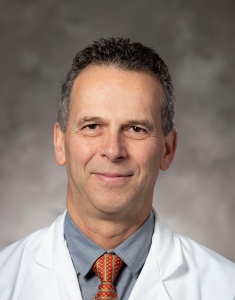 Guido Ferrari合作论文数Department of Surgery, School of Medicine, Duke University School of Medicine;Duke Global Health Institute1
 Kent James Weinhold合作论文数Immunologic Signatures Laboratory, Division of Surgical Sciences, Department of Surgery, Duke University School of Medicine1
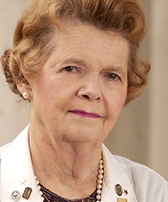 Rebecca Hatcher Buckley合作论文数Department of Pediatrics, Duke University School of Medicine1Dillman C J合作论文数1Lardner T J合作论文数1
 Harold R Collard合作论文数University of California, San Francisco1
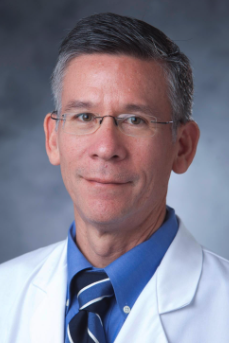 Herbert Kim Lyerly合作论文数Division of Surgical Sciences, Department of Surgery, School of Medicine, Duke University;Duke Global Health Institute, Duke University;Duke-Margolis Center for Health Policy, Duke University;Duke Cancer Institute, Duke University;Center for Applied Therapeutics, School of Medicine, Duke University;Replicate Bioscience, Inc.1
 J. William Gaynor合作论文数Children's Hospital of Philadelphia;Perelman School of Medicine, University of Pennsylvania1
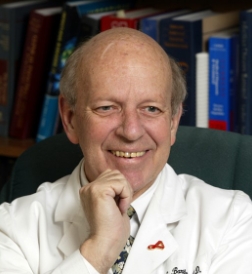 John G. Bartlett合作论文数Johns Hopkins University1S.E. Schiff合作论文数1Charles B. Hicks合作论文数1John M. Leonard合作论文数1
 Ashley Haase合作论文数Department of Microbiology and Immunology, Medial School, University of Minnesota1




