The total quantity of digital information in the world is growing at an alarming rate. Scientists and engineers are contributing heavily to this data “tsunami” by gathering data using computing and instrumentation at incredible rates. As data volumes and complexity grow, it is increasingly arduous to extract valuable information from the data and derive knowledge from that data. Addressing these demands of ever-growing data volumes and complexity requires game-changing advances in software, hardware, and algorithms. Solution technologies also must scale to handle the increased data collection and processing rates and simultaneously accelerate timely and effective analysis results. This need for ever faster data processing and manipulation as well as algorithms that scale to high-volume data sets have given birth to a new paradigm or discipline known as “data-intensive computing.” In this chapter, we define data-intensive computing, identify the challenges of massive data, outline solutions for hardware, software, and analytics, and discuss a number of applications in the areas of biology, cyber security, and atmospheric research.
The US Department of Energy (DOE) Atmospheric Radiation Measurement Program (ARM) is adopting the use of formalized provenance to support observational data products produced by ARM operations and relied upon by researchers. Because of the diversity of needs in the climate community provenance will need to be conveyed in a domain-oriented context. This paper explores a use case where semantic abstract workflows (SAW) are employed as a means to filter, aggregate, and contextually describe the historical events responsible for the ARM data product the scientist is relying upon.
Global climate researchers rely upon many forms of sensor data and analytical methods to help profile subtle changes in climate conditions. The U.S. Department of Energy’s Atmospheric Radiation Measurement (ARM) program provides researchers with a collection of curated Value Added Products (VAPs) resulting from continuous sensor data streams, data fusion, and modeling. We are leveraging the Open Provenance Model as a foundational construct that serves the needs of both the VAP producers and consumers. We are organizing the provenance in different tiers of granularity to model VAP lineage, causality at the component level within a VAP, and the causality for each time step as samples are being assembled within the VAP. This paper shares our implementation strategy and how the ARM operations staff and the climate research community can greatly benefit from this approach to more effectively assess and quantify VAP provenance.
Global climate researchers rely upon many forms of sensor data and analytical methods to help profile subtle changes in climate conditions. The U.S. Department of Energy Atmospheric Radiation Measurement (ARM) program provides researchers with curated Value Added Products (VAPs) resulting from continuous instrumentation streams, data fusion, and analytical profiling. The ARM operational staff and software development teams (data producers) rely upon a number of techniques to ensure strict quality control (QC) and quality assurance (QA) standards are maintained. Climate researchers (data consumers) are highly interested in obtaining as much provenance evidence as possible to establish data trustworthiness. Currently all the evidence is not easily attainable or identifiable without significant efforts to extract and piece together information from configuration files, log files, codes, or status information on the ARM website. Our objective is to identify a provenance model that serves the needs of both the VAP producers and consumers. This paper shares our initial results - a comprehensive multi-tier provenance model. We describe how both ARM operations staff and the climate research community can greatly benefit from this approach to more effectively assess and quantify the data historical record.
 Eric G. Stephan合作论文数Pacific Northwest National Laboratory3
 m c macduff合作论文数2
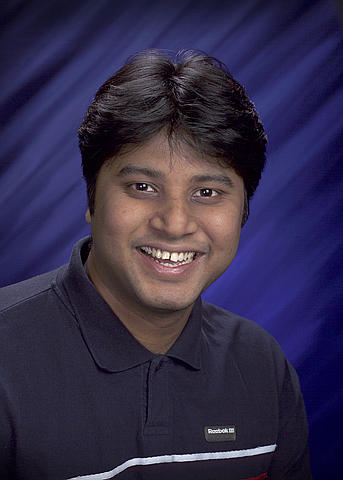 Sutanay Choudhury合作论文数Pacific Northwest National Laboratory2
 John R Johnson合作论文数Division of Oncology;Center for Drug Evaluation and Research;Drug Administration;Division of Oncology|Center for Drug Evaluation and Research|Drug Administration2
 William R. Cannon合作论文数Department of Psychiatry and Behavioral Sciences, Eastern Virginia Medical School2
 Ian Gorton合作论文数Northeastern University2
 Paul Whitney合作论文数Pacific Northwest National Laboratory2Nino Zuljevic合作论文数2
 Joshua Adkins合作论文数Biological Sciences Division, Pacific Northwest National Laboratory2
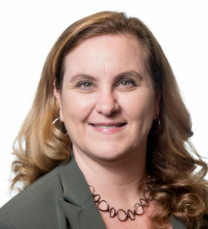 Bobbie-Jo Webb-Robertson合作论文数Pacific Northwest National Laboratory2
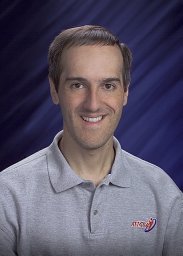 Daniel G. Chavarría-Miranda合作论文数pacific northwest national laboratory2
 Rushab Anuj Shah合作论文数2
 Deb Gracio合作论文数Pacific Northwest National Laboratory2
 Andres Marquez合作论文数2
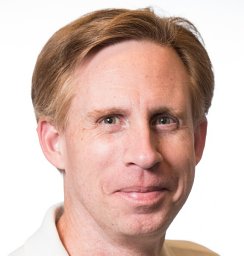 Matthew Monroe合作论文数Pacific Northwest National Laboratory2
 Richard Kouzes合作论文数Department of Energy, Pacific Northwest National Laboratory2Christopher S. Oehmen合作论文数Computational Biology & Bioinformatics, Pacific Northwest National Laboratory2
 Navdeep Jaitly合作论文数Apple2
 Douglas J Baxter合作论文数Pacific Northwest National Laboratory2William Pike合作论文数Pacific Northwest National Laboratory2
 Chad Scherrer合作论文数Pacific Northwest National Laboratory2K. L. Nitschke合作论文数1Jennie S. Rice合作论文数1r c eagan合作论文数1r a mccord合作论文数1j w voyles合作论文数1s t moore合作论文数1N. Zuljevic合作论文数1KL Sonntag合作论文数1s w christensen合作论文数1
 Chris R. Vernon合作论文数Pacific Northwest National Laboratory, Richland, WA, USA1
 Scott J. Richardson合作论文数Department of Meteorology and Atmospheric Science, College of Earth and Mineral Sciences, Penn State University1
 Xu Liang (梁旭)合作论文数University of Pittsbrgh1
 Erik Steen Jensen合作论文数Department of Biosystems and Technology, Faculty of Landscape Planning, Horticulture and Crop Production Sciences, Swedish University of Agricultural Science1
 Paulo Pinheiro Da Silva合作论文数 University of Texas ; El Paso;Computer Science 1Brad W Orr合作论文数1M. D. Ivey合作论文数1
 James H. Mather合作论文数1Brian D Perkins合作论文数1Pralit Patel合作论文数Pacific Northwest National Laboratory1
 Nathalie Voisin合作论文数Pacific Northwest National Laboratory;Civil and Environmental Engineering Department, University of Washington1Matthew C. Macduff合作论文数1
 Terence Critchlow合作论文数Pacific Northwest National Laboratory1Kenneth Kehoe合作论文数1
 Oreste Villa合作论文数High Performance Computing Group at Pacific Northwest National Laboratory1
 Mohamad I. Hejazi合作论文数Ven-Te Chow Hydrosystems Laboratory, University of Illinois at Urbana-Champaign1
 Charles N. Long合作论文数Pacific Northwest National Laboratory1K. J. Doty合作论文数1Tara Gibson合作论文数Pacific Northwest National Laboratory1




