Vinte anos atrás, uma nota antropológica descreveu as dimensões vigentes da análise do comportamento aplicada como prescrita e praticada em 1968: ela era, ou deveria se tornar, aplicada, comportamental, analítica, tecnológica, conceitual, eficaz e capaz de resultados apropriadamente generalizados. Uma nota antropológica semelhante, hoje, ainda encontra as mesmas dimensões prescritivas e, em maior medida, descritivas. Várias estratégias novas tornaram-se conhecidas; algumas no domínio da análise conceitual, algumas relacionadas ao status sociológico da disciplina e algumas sobre sua compreensão da natureza sistêmica necessária para qualquer disciplina aplicada que operará no domínio de comportamentos humanos importantes.Palavras-chave: aplicação, disseminação, tecnologia, terminologia, história. Nota: referência do texto original, cuja permissão de tradução foi garantida pela editora Wiley: Baer, D. M., Wolf, M. M. & Risley, T. R. (1987). Some still-current dimensions of applied behavior analysis. Journal of Applied Behavior Analysis, 20(4), 313-327. https://doi.org/10.1901/jaba.1987.20-313. TradutoresJoão Eduardo Cattani Vilares eMarcos Spector Azoubel.
A análise do comportamento individual tem sido sistematicamente estudada e praticada em vários contextos, ao longo de muitos anos. Essa análise resultou em descrições de princípios comportamentais que têm sido aplicados a problemas de comportamento socialmente relevantes nos últimos anos. As pesquisas de análise do comportamento aplicada – direcionadas a investigar as variáveis que podem ser efetivas para melhorar o comportamento sob estudo – possuem características que as distinguem das tradicionais pesquisas da análise do comportamento não aplicadas, conduzidas em laboratório. O estudo precisa ser aplicado, evidenciando a importância do comportamento alterado, comportamental, apresentando medidas diretas e quantitativas do comportamento alterado, e analítico, identificando com clareza o que foi responsável pela mudança. Além disso, o estudo deveria ser tecnológico, descrevendo precisamente todos os procedimentos que contribuíram para a mudança, conceitualmente sistemático, relacionando os procedimentos empregados e os resultados identificados com os processos comportamentais básicos, e efetivo, produzindo mudanças suficientemente relevantes, e deveria demonstrar alguma generalidade, planejando e avaliando a extensão dos efeitos da aplicação ao longo do tempo, para outras situações e para outros comportamentos.Palavras-chave: análise do comportamento aplicada, delineamentos experimentais, metodologia, pesquisa aplicada, tecnologia comportamental. Nota: Referência do texto original, cuja permissão de tradução foi garantida pela editora Wiley: Baer, D. M., Wolf, M. M. & Risley, T. R. (1968). Some current dimensions of applied behavior analysis. Journal of Applied Behavior Analysis, 1(1), 91-97. Resumo e abstract foram elaborados a partir dos principais aspectos do texto; a publicação original não incluía resumo. https://doi.org/10.1901/jaba.1968.1-91.TradutoresJoão Eduardo Cattani Vilares eMarcos Spector Azoubel.
Montrose Madison Wolf, who discovered the reinforcing power of adult attention for children and based on that discovery invented and named the nonviolent parenting procedure time-out; who discovered that absent speech and social development could be artificially created with operant conditioning techniques; who first engineered a token economy into a useful motivational system; who invented the good behavior game; who orchestrated the massive research program that developed and refined the Teaching-Family Model as a residential treatment solution for delinquent development; who reinvented field observation, repeated measurement, and single-subject research methods; who introduced and named the concept of social validity; and who led the founding of the discipline of problem-solving real-world research called applied behavior analysis, died of Huntington's disease on March 19, 2004, at his home in Lawrence, Kansas.
By Betty Hart and Todd R. Risley D uring the 1960's War on Poverty, we were among the many researchers, psychologists, and educators who brought our knowledge of child development to the front line in an optimistic effort to intervene early to forestall the terrible effects that poverty was having on some children's academic growth. We were also among the many who saw that our results, however promising at the start, washed out fairly early and fairly completely as children aged. In one planned intervention in Kansas City, Kans., we used our experience with clinical language in tervention to design a half-day program for the Turner House Preschool, located in the impoverished Juniper Gardens area of the city. Most interventions of the time used a variety of methods and then measured results with IQ tests, but ours focused on building the everyday language the children were using, then evaluating the growth of that language. In addition, our study included not juSt poor children from Turner House, but also a group of University of Kansas professors' children against whom we could measure the Turner House children's progress. All the children in the program eagerly engaged with the wide variety of new materials and language-intensive activi ties introduced in the preschool. The spontaneous speech data we collected showed a spurr of new vocabulary words
Journal of Applied Behavior AnalysisVolume 30, Issue 2 p. 377-381 Comments from JABA Readers MONTROSE M. WOLF: THE ORIGIN OF THE DIMENSIONS OF APPLIED BEHAVIOR ANALYSIS Todd R. Risley, Corresponding Author Todd R. Risley University of Alaska HC-01 Box 6820, Palmer, Alaska 99645 (E-mail: [email protected])Search for more papers by this author Todd R. Risley, Corresponding Author Todd R. Risley University of Alaska HC-01 Box 6820, Palmer, Alaska 99645 (E-mail: [email protected])Search for more papers by this author First published: 27 February 2013 https://doi.org/10.1901/jaba.1997.30-377Citations: 5AboutPDF ToolsRequest permissionExport citationAdd to favoritesTrack citation ShareShare Give accessShare full text accessShare full-text accessPlease review our Terms and Conditions of Use and check box below to share full-text version of article.I have read and accept the Wiley Online Library Terms and Conditions of UseShareable LinkUse the link below to share a full-text version of this article with your friends and colleagues. Learn more.Copy URL Share a linkShare onEmailFacebookTwitterLinkedInRedditWechat REFERENCES Allen, K. M., Hart, B. M., Buell, J. S., Harris, F. R., & Wolf, M. M. (1964). Effects of social reinforcement on isolate behavior of a nursery school child. Child Development, 35, 511–518. Bandura, A. (1969). Principles of behavior modification. New York: Holt. Bijou, S. W. (1996). Reflections on some early events related to behavior analysis of child development. The Behavior Analyst, 19, 49–60. Birnbrauer, J. S., Bijou, S. W., Wolf, M. M., & Kidder, J. D. (1965). Programmed instruction in the classroom. In L. P. Ulman & L. Krasner (Eds), Case studies in behavior modification (pp. 358–363). New York: Holt, Rinehart, & Winston. Birnbrauer, J. S., Wolf, M. M., Kidder, J. D., & Tague, C. (1965). Classroom behaviour of retarded pupils with token reinforcement. Journal of Experimental Child Psychology, 2, 219–235. Harris, F. R., Johnston, M. K., Kelley, C. S., & Wolf, M. M. (1964). Effects of positive social reinforcement on regressed crawling of a nursery school child. Journal of Educational Psychology, 55, 35–41. Hart, B. M., Allen, K. E., Buell, J. S., Harris, F. R., & Wolf, M. M. (1964). Effects of social reinforcement on operant crying. Journal of Experimental Child Psychology, 1, 145–153. Hart, B., & Risley, T. R. (1995). Meaningful differences in the everyday experience of young American children. Baltimore: Paul H. Brookes. Johnston, M. K., Kelley, C. S., Harris, F. R., & Wolf, M. M. (1966). An application of reinforcement principles to development of motor skills in a young child. Child Development, 3, 397–387. Leitenberg, H. (1976). Handbook of behavior modification and behavior therapy. Englewood Cliffs, NJ: Prentice Hall. Risley, T., & Wolf, M. M. (1966). Experimental manipulation of autistic behaviors and generalization into the home. In R. Ulrich, T. Stachnik & J. Mabry (Eds), Control of human behavior. Glenview, IL: Scott, Foresman. Risley, T., & Wolf, M. M. (1967). Establishing functional speech in echolalic children. Behaviour Research and Therapy, 5, 73–88. Staats, A. W., Staats, C. K., Schutz, R. E., & Wolf, M. M. (1962). The conditioning of textual responses using “extrinsic” reinforcers. Journal of the Experimental Analysis of Behavior, 5, 33–40. Wolf, M. M., Giles, D. K., & Hall, V. R. (1968). Experiments with token reinforcement in a remedial classroom. Behaviour Research and Therapy, 6, 51–64. Wolf, M. M., Kirigin, K. A., Fixsen, D. L., Blase, K. A., & Braukmann, C. J. (1995). The Teaching-Family Model: A case study in data-based program development and refinement (and dragon wrestling). Journal of Organizational Behavior Management, 15, 11–68. Wolf, M. M., Risley, T., Johnston, M., Harris, F., & Allen, E. (1967). Application of operant conditioning procedures to the behaviour problems of an autistic child: A follow-up and extension. Behaviour Research and Therapy, 5, 103–112. Wolf, M. M., Risley, T., & Mees, H. (1964). Application of operant conditioning procedures to the behaviour problems of an autistic child. Behaviour Research and Therapy, 1, 305–312. Citing Literature Volume30, Issue2Summer 1997Pages 377-381 ReferencesRelatedInformation
In recent years, there has been an increased focus on individualizing services for seriously emotionally disturbed youth. The authors present the results of a national survey that identified the features and challenges of individualized help. Interagency collaboration was cited most often as leading to the success of this approach; re-educating service providers to creatively plan for each youth individually was identified as the greatest challenge.
Application of Skinner's principles to socially significant human behavior had been well articulated by 1968 (Baer, Wolf, & Risley, 1968). Applications of these principles by Baer, Wolf, Risley, Hall, Hart, Christophersen, and their colleagues were in evidence as early as 1964 in the homes, schools, and clinics of inner-city Kansas City, Kansas, at the Juniper Gardens Housing Project. The work continues relatively uninterrupted, having contributed extensively to the literature of applied behavior analysis and the lives of community residents. This article describes the project and illustrates how applied behavioral research was initiated and extended, how the work addressed general concerns in psychology, and how it continues to address contemporary concerns within the community.
Independent, constructive use of leisure time is an important part of habilitation and humane treatment for profoundly multihandicapped persons, yet such individuals typically live in group-care settings where opportunities for and rates of appropriate independent leisure activity are very limited. This research was conducted in an institutional living environment during times when program activities were minimal and clients were typically inactive. We conducted a series of direct observations and experimental manipulations of the physical environment focusing on subjects' engagement with a variety of entertainment materials or toys. Results showed that empirically based toy selection, construction, and modification, and environmental engineering to ensure convenient and constant material availability increased subjects' active engagement with toys. The results provide another example of how the typical inactivity of profoundly multihandicapped people is strongly influenced by environmental factors that can be easily modified by indigenous staff.
In a multiple-reversal time-series design, additional plainclothes youth guidance officers were assigned to patrol and to issue juvenile warning citations in one of two target areas during school hours on weekdays. The presence and activity of these officers resulted in modest but consistent reductions in the number of criminal incidents reported in the target area. An untreated control area showed no consistent changes in the rates of criminal incidents. Issuance of juvenile citations appears to be a modestly effective crime control technology which may be implemented in a cost-efficient manner.
 Betty Hart合作论文数6Montrose M. Wolf合作论文数4
 Michael F. Cataldo合作论文数Department of Behavioral Psychology, Kennedy Krieger Institute;Department of Psychiatry and Behavioral Sciences, Johns Hopkins University School of Medicine;Kennedy Krieger Institute, Johns Hopkins University School of Medicine4
 Charles R. Greenwood合作论文数Juniper Gardens Children's Project, University of Kansas.3
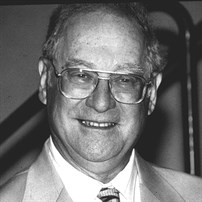 Donald M. Baer合作论文数Department of Applied Behavioral Sciences, University of Kansas3
 Dale Walker合作论文数and illustrates how applied behavioral research was ini-3B. Hart合作论文数2John F. Schnelle合作论文数2J E Favell合作论文数2Michael L. Jones合作论文数2J. B. Atwater合作论文数Department of Chemistry, Colorado State University2J. Iverson Riddle合作论文数2Jennifer Lattimore合作论文数2
 Debra Kamps合作论文数Center for Early Intervention in Reading and Behavior Juniper Gardens Children ' s Project;University of Kansas;Center for Early Intervention in Reading and Behavior Juniper Gardens Children ' s Project, University of Kansas2Montrose Wolf合作论文数2Edward R. Christophersen合作论文数Southern Illinois U.2Don Bushell合作论文数1James E. Favell合作论文数1JJ CARTA合作论文数1JC DELQUADRI合作论文数1C ARREAGAMAYER合作论文数1B TERRY合作论文数1AF CARR合作论文数1Barbara Terry合作论文数1
 Michael J Jacobson合作论文数Sydney School of Education and Social Work, Faculty of Arts and Social Sciences, The University of Sydney1Quilitch H R合作论文数1Reynolds N J合作论文数1Ann F. Wolfe合作论文数1Carmen Arreaga-Mayer合作论文数1Gary R. Ulicny合作论文数1George H. Currey合作论文数1Sandra Twardosz合作论文数University of Kansas1H. Robert Quilitch合作论文数1S. Gilliam合作论文数1
 Judith J. Carta合作论文数1Joseph C. Delquadri合作论文数1
 Patrick Mcnees合作论文数School of Nursing, University of Alabama at Birmingham1
 Eileen Allen合作论文数Center for Earth and Environmental Science, Lake Champlain Research Institute;SUNY Plattsburgh;Lake Champlain Research Institute and Center for Earth and Environmental Science1Peter W. Dowrick合作论文数1
 Francisco Montes合作论文数Departamento de Estadística e Investigación Operativa, Universitat de València1
 Charles H. Pierce合作论文数Royal Victoria Hospital, McGill University1Karen W. Macfarquhar合作论文数1Judith E. Favell合作论文数1Paul R. Rasmussen合作论文数1Florence Harris合作论文数1




