During continental collision, crustal rocks are buried, deformed, transformed and exhumed. The rates, timescales and tectonic implications of these processes are constrained through the sequence and conditions of metamorphic reactions in major and accessory phases. Petrographic, isotopic and elemental data from metabasite samples in NW Bhutan, eastern Himalaya, suggest initial equilibration under high-pressure (plagioclase-absent and rutile-present) conditions, followed by decompression to lower pressure conditions at high-temperatures that stabilized plagioclase, orthopyroxene and ilmenite. Field observations and chemical indicators suggest equilibration under the lower pressure conditions is likely linked to the infiltration of melt from the host metasedimentary rocks. The metabasites preserve two metamorphic growth stages of chemically-and petrographically distinct allanite that temporally overlap two stages of zircon growth. Allanite cores and zircon mantles grew at c. 19 +/- 2 and 17-15.5 Ma respectively, linked texturally and chemically to the high-pressure evolution. Symplectitic rims on embayed allanite cores, wholly symplectized Aln-Ilm and Aln-Cpx grains, and high U zircon rims grew at c. 15.5-14.5 Ma, linked chemically to the presence of melt and lower pressure, high-temperature conditions. A single garnet Lu-Hf date is interpreted as geologically meaningless, with the bulk rock composition modified by melt infiltration after garnet formation. The open system evolution of these rocks precludes precise determination of the reactive bulk composition during metamorphic evolution and thus absolute conditions, especially during the early high-pressure evolution. Despite these limitations, we show that combined geochemical and petrographic datasets are still able to provide insights into the rates and timescales of deep orogenic processes. The data suggest a younger and shallower evolution for the NW Bhutan metabasites compared to similar rocks in the central and eastern Himalayas.
Anatexis in orogenic systems has wide-reaching implications for the structure, mechanical strength, and later exhumation of the middle crust during orogeny. Previous studies of melt reactions in metapelitic rocks have identified three major melt-producing reactions: fluid-present incongruent melting, fluid-absent muscovite dehydration melting, and fluid-absent biotite dehydration melting. Due to the composition of the reacting phases and the formation of peritectic phases, each of these reactions has implications for element mobilisation. Petrographic and geochemical signatures of melt reactant and product minerals allow different reactions to be identified and distinguished. Migmatites and leucogranites occur across the Himalaya in the Greater Himalayan Sequence (GHS). Using samples from the Alaknanda valley, near Badrinath in the Garhwal Himalaya, we identify petrographic and mineral compositional characteristics that suggest a progressive thermal sequence through the fluid-present, muscovite-dehydration, and later biotite-dehydration melting reaction fields, but a differential record. Samples from a single outcrop only preserve records for one reaction type, despite having experienced the same thermal history. Our observational and in-situ chemical data from feldspars, micas, and garnet reveal melt reaction systematics through peritectic crystallisation textures and large-ion lithophile element concentrations. Our results show that the mineral chemistry and petrographic observations are similar between (source) migmatites and (sink) granites, and that together these datasets provide more powerful insight into migmatite and granite melting reaction history than bulk-rock data alone.
During continental collision, crustal rocks are buried, deformed, transformed and exhumed. The rates, timescales and tectonic implications of these processes are determined by linking geochemical, geochronological and microstructural data from metamorphic rock-forming and accessory minerals. Exposures of lower orogenic crust provide important insights into orogenic evolution, but are rare in young continental collision belts such as the Himalaya. In NW Bhutan, eastern Himalaya, a high-grade metamorphic terrane provides a rare glimpse into the evolution and exhumation of the deep eastern Himalayan crust and a detailed case study for deciphering the rates and timescales of deep-crustal processes in orogenic settings. We have collected U-Pb isotope and trace element data from allanite, zircon and garnet from metabasite boudins exposed in the Masang Kang valley in NW Bhutan. Our observations and data suggest that allanite cores record growth under eclogite facies conditions (>17 kbar ~650°C) at ca. 19 Ma, zircon inner rims and garnet cores record growth during decompression under eclogite facies conditions at ca 17-15.5. Ma, and symplectitic allanite rims, garnet rims and zircon outer rims record growth under granulite facies conditions at ~9-6 kbar; >750°C at ca. 15-14.5 Ma. Allanite is generally considered unstable under granulite-facies conditions and we think that this is the first recorded example of such preservation, likely facilitated by rapid exhumation. Our new observations and petrochronological data show that the transition from eclogite to granulite facies conditions occurred within 4-5 Ma in the Eastern Himalaya. Our data indicate that the exhumation of lower crustal rocks across the Himalaya was diachronous and may have been facilitated by different tectonic mechanisms.
Aluminosilicates (kyanite, sillimanite and andalusite) are useful pressure-temperature (P-T)indicators that can form in a range of rock types through different mineral reactions, including thosethat involve partial melting. Their involvement in melting reactions means that the presence ofaluminosilicates in migmatite mineral assemblages can help to (broadly) constrain the P-T conditionsof melt formation, which then has implications for evaluating models of orogenic tectonics.Xenocrystic grains could lead to spurious tectonic interpretations, so being able to distinguishbetween different petrogenetic sources is important. Petrological and geochemical investigation ofmigmatite-hosted kyanite from Eastern Bhutan shows that kyanite petrogenesis may be constrainedby combining information from morphology, cathodoluminescence response, microtextural positionand geochemical zoning patterns. Mg, Ti, Ca, Fe, Cr and Ge concentrations provide diagnostic cluesthat distinguish sub-solidus kyanite from kyanite that crystallised directly from melt, or grewperitectically during muscovite dehydration reactions. The abundance of these elements in kyanite isalso strongly controlled by protolith composition, with considerable inter-sample variation observedin this sample set. LA-ICP-MS maps, especially of Cr/V, provide additional information aboutchanging geochemical environments during kyanite growth. These data and observations show thatmost kyanite is of xenocrystic origin in the analysed samples, and therefore that its presence does notnecessarily constrain the P-T conditions of the melt reaction(s). This finding has significantimplications for the interpretation of kyanite-bearing migmatites as representing early stages ofmelting during Himalayan evolution.
Metals such as Li, Be, V, Co, Nb, In, Cs, Sn, Ta, and W are considered resources that are critical for modern economies. They can be significantly enriched in granites and pegmatites, but the mechanisms of enrichment remain poorly understood. Many metal-enriched granitic magmas form through mica dehydration reactions during high-grade metamorphism. The preferential incorporation of these metals into micas provides a mechanism for concentra-tion and mobilization during crustal melting. Comprehensive data sets of these elements and their partitioning in metamorphic micas across different metamorphic grades are currently lacking. We present the first extensive in situ laser ablation-inductively coupled plasma-mass spectrometry element data set collected from metasediment-hosted muscovite and biotite from three different metamorphic cross sections traversing sub-greenschist-(similar to 400 degrees C) to granulite-facies conditions (>900 degrees C). Within the same sample, Li, V, Co, Cs, and Ta concentrations are higher in biotite, whereas Be, In, Sn, and W concentrations are higher in muscovite. Subsolidus micas record only nonsystematic compositional variations between samples. Su-prasolidus biotites show systematic depletion in Li, Be, Sn, and Cs and enrichment in V and Co with increasing temperature in the highest-grade (muscovite-absent) samples. Indium and W reach peak concentrations in biotite at 750 degrees C and 850 degrees C, respectively. Muscovites record systematic enrichment in In and W and depletion in Be, Sn, and Cs with increasing metamorphic grade. These distinctive trends appear to be independent of tectonic setting (i.e., continental collision and crustal thinning). Our data set highlights the importance of higher-temperature melting (>750 degrees C), in particular, biotite breakdown reactions, for the release of Li, Be, Sn, Cs, and W into crustal melts.
Rare metals like Li, Be, V, Co, Nb, In, Cs, Sn, Ta, and W are considered critical resources and can be significantly enriched in granites and pegmatites. However the mechanisms of their enrichment in granitic magmas remain poorly understood. Many metal-enriched granitic magmas form through mica dehydration reactions during high-grade metamorphism. The preferential incorporation of these metals into micas provides a mechanism for their concentration and mobilisation during crustal anatexis. Comprehensive datasets of these elements and their partitioning in metamorphic micas across different metamorphic grades are currently lacking. We present the first extensive in-situ LA-ICP-MS element dataset collected from metasediment-hosted muscovite and biotite from three different metamorphic cross-sections traversing sub-greenschist (~400°C) to granulite-facies conditions (>900°C). Within the same sample Li, V, Co, Cs, and Ta are more concentrated in biotite, while Be, In, Sn, and W concentrations are higher in muscovite. Sub-solidus micas record only non-systematic compositional variations between samples. Supra-solidus biotites show systematic depletion in Li, Be, Sn and Cs and enrichment in V and Co with increasing temperature in the highest-grade (muscovite-absent) samples. Indium and W concentrations reach peak concentrations in biotite at 750°C and 850°C respectively. Muscovites record systematic enrichment in In and W and depletion in Be, Sn and Cs with increasing metamorphic grade. These distinctive trends appear independent of geological/tectonic setting (i.e. continental collision and crustal thinning). Our dataset highlights the importance of higher-temperature melting (>750°C) and in particular, biotite breakdown reactions for the release of Li, Be, Sn, Cs and W into crustal melts.
As consequence of ongoing climate change, permafrost degradation is thought to be increasingly affecting slope stability in periglacial environments. This is of growing concern in Iceland, where in the last decade, permafrost degradation has been identified among the triggering factors of landslides. The role of ground ice in conditioning the morphology and dynamics of landslides involving loose deposits is poorly understood. We show the geomorphological impact of the Móafellshyrna and Árnesfjall landslides that recently occurred in ice-cemented talus deposits in northern Iceland. Using field and aerial remote-sensing measurements of the morphological and morphometric characteristics of the landslides, we assess the influence of thawing ground ice on their propagation style and dynamics. The two mass movements are complex and are similar to rock- and debris-ice avalanches, changing trajectory and exhibiting evidence of transitioning their style of motion from a dry granular mass to a debris flow-like movement via multiple pulses. We infer that the thawing of ground ice together with the entrainment of saturated material provided the extra fluid causing this change in dynamics. The hazardous consequences of permafrost degradation will increasingly affect mountain regions in the future, and ground-ice thaw in steep terrain is a particularly hazardous phenomenon, as it may induce unexpected long-runout failures and can cause slope instability to continue even after the landslide event. Our study expands our knowledge of how landslides develop in unstable ice-cemented deposits and will aid assessment and mitigation of the hazard that they pose in Iceland and other mountainous periglacial areas.
The most significant consequence of prograde metamorphism for orogenic evolution is the melting of high-grade metamorphic rocks, resulting in a dramatic decrease in their mechanical strength, the activation of shear zones and consequent exhumation. Granitic bodies emplaced within the highest metamorphic grades of the Himalayan orogen form by the melting of amphibolite-grade pelitic rocks, either due to the presence of aqueous fluid or through the dehydration of hydrous phases such as muscovite. Across the Himalayas, these granites, and partially melted source migmatites, are found in the Greater Himalayan Sequence (GHS), bounded by the Main Central Thrust (MCT) and the South Tibetan Detachment (STD). Many of these granites formed during the Miocene when decompression of the unit during rapid exhumation triggered melting; however, exact timings and reaction pathways appear to vary laterally across the orogen. The timescales of anatexis, amalgamation, migration, and emplacement are the focus of active research and have implications for orogenic tectonic development. Recent studies of granite pluton formation suggest a series of pulsed melting events with protracted periods of crystallisation under low melt-fraction conditions. These studies show that grain-scale variations in age can be linked with trace element data in both monazite and zircon, spanning millions of years of crystallisation. It is, therefore, important to recognise the geochemical signatures that these processes leave in granites, migmatites, and melt-extracted restite and to delineate more precisely the relevant processes and timescales leading to magma genesis. We present a preliminary dataset that aims to constrain the source, melt reactions, and timescales of melting episodes that form the migmatites and leucogranites of the upper GHS. We sampled leucogranites, migmatites, and their host metasediments along the Rishi Ganga (Badrinath) and Alaknanda valleys in the Garhwal region of the Indian Himalaya. Zircon from these samples were analysed for their crystallisation age (U-Pb), Hf-isotopic ratios, oxygen isotope and trace element composition using LA-ICPMS. Rim domains identified using cathodoluminescence (CL) imaging were preferentially targeted, with the aim of collecting data that related to Himalayan melting processes. Preliminary findings suggest that the leucogranites crystallised from 22 Ma to ~13 Ma, with punctuated zircon crystallisation occurring throughout this timespan. Zircon rim ages from migmatites are generally older, ranging from 34 Ma to ~15 Ma. Integration of Hf-isotopic and trace elemental data, combined with petrographic observations allow mineral age data to be linked to changes in geological processes.
Molards have been defined in the past as conical mounds of debris that can form part of a landslide's deposits. We present the first conclusive evidence that molards in permafrost terrains are cones of loose debris that result from thawing of frozen blocks of ice-rich sediments mobilised by a landslide, and hence propose a rigorous definition of this landform in permafrost environments. We show that molards can be used as an indicator of permafrost degradation, and that their morphometry and spatial distribution give valuable insights into landslide dynamics in permafrost environments. We demonstrate that molards are readily recognisable not only in the field, but also in remote sensing data; surveys of historic aerial imagery allow the recognition of relict molards, which can be used as an indicator of current and past permafrost conditions. The triggering of landslides as a result of permafrost degradation will arguably occur more often as global atmospheric temperatures increase, so molards should be added to our armoury for tracking climate change, as well as helping us to understand landslide-related hazards. Finally, we have also identified candidate molards on Mars, so molards can inform about landscape evolution on Earth and other planetary bodies.
At first glance, it would be tempting to describe this attractive book merely as a ‘‘geological atlas of mountains,’’ but this would do the author a grave disservice. Yes, it presents a detailed snapshot of our current geological knowledge of the world’s mountain belts. However, the text not only describes how the mountains vary in space, but it also explores how they have evolved over time. As the author dissects their anatomy, he also examines the geological processes involved in shaping them, from youth to maturity. Moreover, their development is considered within the context of the whole Earth system and the overarching model of plate tectonics—key concepts that underpin the discipline of geology and that are summarized in one of the early chapters. The author, Graham Park, has a pedigree in accessible, introductory geology textbooks, including Foundations of Structural Geology (Park 1997), which I annotated lackadaisically as an undergraduate. His experience has helped craft a, perhaps inevitably, well-structured book with an attractive mix of graphics— photographic and satellite images as well as colorful diagrams—that offers the casual reader a taste of the inimitable variety and vast scope of geology. The book opens with a rather brief introductory chapter that touches on some ideas that are fundamental to understanding mountains: isostasy, uplift and erosion, plate tectonics— and a short myth-busting paragraph distinguishing the ages of mountains from the ages of the rocks they contain. To nongeologists, mountains seem quintessentially ancient. However, many mountain regions only became mountainous very recently (geologically speaking): The Himalayas, for example, have only existed as mountains for around 50 million years. However, those same mountain peaks contain rocks of many different ages: from 1 millionyear-old granites to 1.8 billion-year-old gneisses. To unpiece these geological puzzles, some familiarity is required with the model of plate tectonics, the subject of chapter 3. Leading up to this, however, there is an engaging chapter charting the historical development of theories on mountains from the late 16th century into the 20th century, when a critical mass of observations, data, and disparate ideas coalesced into the model we now know as plate tectonics. This historical perspective is another feature that elevates this volume above the simple textbook—it is fascinating to trace how individual scientists shaped and reshaped ideas on the origins of mountains. Chapter 3 then covers the main concepts, background information, and terminology that the reader needs to tackle the main core chapters—though a glossary towards the end of the book will no doubt come in handy for the nongeologist. This chapter provides the essential context for the rest of the book. With the groundwork laid, a reader can now venture into the core of the book: a comprehensive exploration of the morphology, geological features, and tectonic history of each mountain belt, within the context of its regional platetectonic setting. The author focuses first on currently active mountains of the Alpine–Himalayan and western Pacific belts, the western margin of the Americas, and Antarctica, before moving on to consider the largely submerged but no less impressive ocean ridge network. Finally, in true geological fashion, his gaze turns backwards into the vast abyss of time to ancient mountain belts, the inactive remnants of which still adorn the surface of our planet. I would suggest that these main chapters, 4 through 14, do not repay the reader by being read from end to end. Far more rewarding is the approach of dipping into a chapter or two dealing with a specific region of particular interest. While the review of all the world’s mountain ranges is an impressive undertaking in itself—the references listed before the index hint at the scholarship involved—attempting to assimilate that weight of knowledge by reading through it all in order is counterproductive. Because each mountain belt is treated similarly, consuming several chapters consecutively renders the text repetitious and formulaic. However, this consistency is part of the book’s strength: It allows rapid comparison of different regions and provides a familiar framework for exploring new areas. The tectonic sketch maps in particular are clear and accessible (even if the coloring is somewhat lurid for my taste!). Geological cross sections are included for many of the belts to illustrate interpretations of the deep subsurface; these are presented at a limited level of detail, since differences of opinion abound among geological researchers on the deeper structure of some mountain belts! More use could have been made of tabular or graphic summaries of the timing of events in some mountain belts (for example, the maps or cross sections showing how an orogenic belt evolved in stages); setting such complex histories down as text alone makes for somewhat indigestible content. However, this minor criticism should not detract from the author’s achievement: a guidebook to all the Earth’s mountain belts, familiar and unfamiliar, youthful and ancient, those that are still growing vigorously and those worn down to their roots. This volume could satisfy several different types of reader. I can imagine an undergraduate geology or geography student turning to it for Mountain Research and Development (MRD) An international, peer-reviewed open access journal published by the International Mountain Society (IMS) www.mrd-journal.org MountainMedia
(1) Université de Nantes, Laboratoire de Planétologie et Géodynamique, CNRS UMR6112, Nantes, France (costanza.morino@univ-nantes.fr), (2) The Open University, School of Physical Science, Milton Keynes, UK, (3) University of Iceland, Faculty of Civil and Environmental Engineering, Askja, Sturlugata 7, IS-101 Reykjavík, Iceland, , (4) Icelandic Meteorological Office, Avalanche Centre, Ísafjörður, Iceland, (5) British Geological Survey, Environmental Science Centre, Keyworth, UK, (6) Loughborough University, Department of Geography and Environment, Loughborough, UK, (7) The Open University, School of Environment, Earth and Ecosystem Sciences, Milton Keynes, UK
Debris flows are fast-moving gravity flows of poorly sorted rock and soil, mixed and saturated with water. Debris-flow initiation has been studied using empirical and experimental modelling, but the geomorphic changes, indicative of different triggering processes, are difficult to constrain with field observations only. We identify signatures to distinguish two different debris-flow release styles by integrating high-resolution multi-temporal remote sensing datasets and morphometric analysis. We analyse debris flows sourced above the town of isafjorour (Iceland). Two debris-flow triggering processes were previously hypothesised for this site: (i) slope failure, characterised by landslides evolving into debris flows; and (ii) the fire-hose effect, in which debris accumulated in pre-existing, steep-sided bedrock passages is transported by a surge of water. It is unknown which process dominates and determines the local risk. To investigate this question, we compare airborne LiDAR elevation models and aerial photographs collected in 2007 with similar data from 2013. We find that two new debris-flow tracks were created by slope failures. These are characterised by steep sliding surfaces and lateral leveed channels. Slope failure also occurred in two large, recently active tracks, creating the preparatory conditions for the fire-hose effect to mobilise existing debris. These tracks show alternating zones of fill and scour along their length, and debris stored below the source-area at rest angles >35 degrees. Our approach allows us to identify and quantify the morphological changes produced by slope failure release process, which generated the preparatory conditions for the fire-hose effect. As debris flows are rarely observed in action and morphological changes induced by them are difficult to detect and monitor, the same approach could be applied to other landscapes to understand debris-flow initiation in the absence of other monitoring information, and can improve the identification of zones at risk in inhabited areas near hillslopes with potential for debris flows. (c) 2018 The Authors. Earth Surface Processes and Landforms published by John Wiley & Sons Ltd.
Abstract A key aim of modern metamorphic geochronology is to constrain precise and accurate rates and timescales of tectonic processes. One promising approach in amphibolite and granulite-facies rocks links the geochronological information recorded in zoned accessory phases such as monazite to the pressure–temperature information recorded in zoned major rock-forming minerals such as garnet. Both phases incorporate rare earth elements (REE) as they crystallize and their equilibrium partitioning behaviour potentially provides a useful way of linking time to temperature. We report REE data from sub-solidus amphibolite-facies metapelites from Bhutan, where overlapping ages, inclusion relationships and Gd/Lu ratios suggest that garnet and monazite co-crystallized. The garnet–monazite REE relationships in these samples show a steeper pattern across the heavy (H)REE than previously reported. The difference between our dataset and the previously reported data may be due to a temperature-dependence on the partition coefficients, disequilibrium in either dataset, differences in monazite chemistry or the presence or absence of a third phase that competed for the available REE during growth. We urge caution against using empirically-derived partition coefficients from natural samples as evidence for, or against, equilibrium of REE-bearing phases until monazite–garnet partitioning behaviour is better constrained.
 Nigel Harris合作论文数School of Environmental, Earth and Ecosystem Sciences, Faculty of Science, Technology, Engineering and Mathematics, Open University34
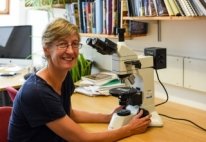 Clare J. Warren合作论文数Department of Earth Science Parks, Oxford University23
 Randall Parrish合作论文数School of the Environment, Geography and Geosciences, Faculty of Science and Health, University of Portsmouth16
 Nick M W Roberts合作论文数British Geological Survey10
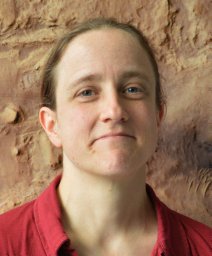 Susan J. Conway合作论文数Univ Nantes, CNRS, UMR 6112, Lab Planetol & Geodynam, Nantes, France8
 Barbara E Kunz合作论文数Earth System Science Research Centre, Department of Geosciences, Becherweg 21, Johannes Gutenberg-Universität, D-55099 Mainz, Germany8
 Colm Jordan合作论文数Department for Environment, Food and Rural Affairs;British Geological Survey8
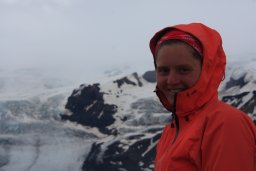 Costanza Morino合作论文数CNRS - Laboratoire Environnements, Dynamiques et Territoires de la Montagne, Université Savoie Mont Blanc7
 Matthew R. Balme合作论文数Department of Geological Sciences;Arizona State University;Department of Geological Sciences, Arizona State University7Lucy V. Greenwood合作论文数6Hammond Samantha合作论文数6
 Matthew S.A. Horstwood合作论文数6
 Ian J. Parkinson合作论文数Department of Earth and Environmental Sciences, The Open University6Þorsteinn Sæmundsson合作论文数6
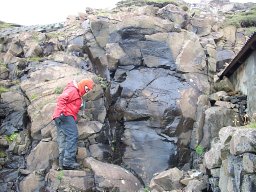 Sarah C. Sherlock合作论文数Department of Earth Sciences;Open University;Department of Earth Sciences, Open University6
 Jon Kristinn Helgason合作论文数5
 Gavin Foster合作论文数School of Ocean and Earth Science, University of Southampton5C.W. Dale合作论文数5Alison M. Halton合作论文数Sch Phys Sci, Open Univ4
 Kevin Burton合作论文数Department of Earth Sciences, Faculty of Science, Durham University4
 Catherine Mary Mottram合作论文数SEGG, University of Portsmouth4Randy Parrish合作论文数4
 Talat Ahmad合作论文数Department of Geology, University of Delhi;Jamia Millia Islamia4Ian Osborne合作论文数3
 Derek Vance合作论文数Department of Earth Science, ETH Zurich3
 Hongfei Zhang (张宏飞)合作论文数School of Earth Sciences, China University of Geosciences, Wuhan;State Key Laboratory of Geological Processes and Mineral Resources, China University of Geosciences, Wuhan3
 Mahesh Anand合作论文数Department of Mineralogy, The Natural History Museum3
 John Paul Platt (John P. Platt)合作论文数Department of Earth Sciences, University of Southern California, Los Angeles3Andy Richards合作论文数Department of Earth Sciences, The Open University3
 Abdelmouhcine Gannoun合作论文数Laboratoire Magmas et Volcans, Université Clermont Auvergne3
 Frances Elaine Jenner合作论文数Research School of Earth Sciences, The Australian National University3
 Christopher Spencer合作论文数Geologist and Associate Professor in the Department of Geological Sciences and Geological Engineering at Queen's University in Kingston, Ontario3
 Ian L. Millar合作论文数British Antarctic Survey c/o NERC Isotope Geosciences Laboratory3Sam Hammond合作论文数2taleb ahmad合作论文数2
 Daniele Regis合作论文数Geological Survey of Canada;Geological Survey of Canada2
 Li Zhang (张利)合作论文数School of Earth Sciences, China University of Geosciences2J.A. Chambers合作论文数2
 Alan Whittington合作论文数College of Sciences, The University of Texas at San Antonio2Jess King合作论文数2
 Mark Caddick合作论文数School of Biological Sciences, The University of Liverpool2
 Nick W. Rogers (Nick Rogers)合作论文数School of Environment, Earth & Ecosystem Sciences, Faculty of Science, Technology, Engineering & Mathematics, The Open University2Saibal Gupta合作论文数Department of Geology and Geophysics, Indian Institute of Technology2Jennifer Chambers合作论文数2
 Erich Draganits合作论文数Institute for Engineering Geology, Vienna University of Technology2Carlos J. Garrido合作论文数1ali gannoun合作论文数1Porsteinn Saemundsson合作论文数1Thornorsteinn Saemundsson合作论文数1




