PROBLEM TO BE SOLVED: To provide a system and a method for tagging a document for the purpose of preventing forgery. SOLUTION: In the system and method for determining the origin and the originality by tagging a recording sheet, a roller 10 for transferring at least a part of a random pattern 11 to a document is provided. The random pattern 11 is transferred to the sheet by press, die floating or punching. The pattern 11 being transferred to the sheet can be determined by a known technology and these patterns 11 can be imaged and stored in a data base. When a plurality of rollers 10, 20 are employed in series, the random pattern 11 can be transferred to one side or both sides of the sheet while varying the phase. A sequence code can be established by determining the phase difference of the random pattern 11. The rollers 10, 20 (including a plurality of rollers) provided with the random pattern 11 can be fixed to an imaging apparatus, especially the sheet carrying mechanism thereof.
Cryptography is a powerful tool for building secure distributed systems, albeit at substantial computational cost. This is especially true for public key cryptography. Conventional wisdom dictates that cryptography must be done locally in order to be secure. We argue for an approach in which public key cryptographic operations are provided as a network service. This service operates over longlived associations secured by symmetric cryptography. This network architecture amortizes the cost of specialpurpose cryptographic hardware across many users. We describe the implementation of such a system, and performance results we obtained.
 Matt Franklin合作论文数Department of Computer Science, College of Engineering, University of California, Davis11
 drews r dean合作论文数9
 Teresa F. Lunt合作论文数sri international9
 Thomas M. Breuel合作论文数NVIDIA Corporation9daniel h greene合作论文数6alan g bell合作论文数5hecht david l合作论文数5Douglas N. Curry合作论文数5Robert T. Krivacic合作论文数5
 D. K. Smetters合作论文数Google5
 Mark Stefik合作论文数Intelligent Systems Laboratory, Palo Alto Research Center5Roger R. Schell合作论文数4Kevin W. Kingdon合作论文数4todd a cass合作论文数3Richard J. Feiertag合作论文数3Robert R. Jueneman合作论文数2
 Jessica Staddon合作论文数JPMorgan Chase & Co.1
 Dirk Balfanz合作论文数ResearchCAS Sofware AG, Karlsruhe1Drew Dean合作论文数Computer Science Laboratory, SRI International1
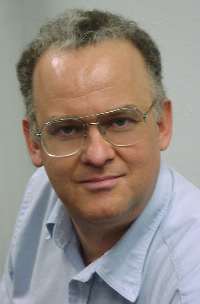 Ralph C. Merkle合作论文数Institute for Molecular Manufacturing1Michael Malkin合作论文数1
 Mike Spreitzer合作论文数IBM1
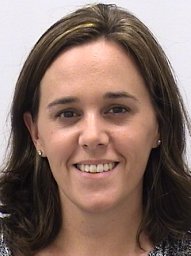 Sara Miner More合作论文数Department of Mathematics and Computer Science, McDaniel College1




