The motion reproduction system (MRS) transfers human dexterous motion skills to robots. Compared with other machine learning-based methods, it has an advantage in terms of the number of data points and hyperparameters. However, it may fail when the actual object of motion differs from that of acquired human motion. Conventional studies consider human stiffness, which characterizes the intention of human motion. Although they performed better than the original MRS with variable objects, they estimated human impedance using linear interpolation. Linear interpolation is insufficient for generating novel, human-like motions that are nonlinear and time-variant. In this article, more sophisticated motions were generated by fitting the relationship between environmental stiffness and position, velocity, and force nonlinearly using Gaussian process regression, which requires a smaller amount of data compared to machine learning-based schemes. Through experiments, the data number and error reduction between the true human motion and actual motion were confirmed by comparing the original and conventional MRS and the imitation learning. Therefore, the proposed method can generate motion for variable objects more precisely with a small amount of human motion data.
We propose a sensorless remote catheter control system that delivers real-time haptic feedback. Bilateral control combined with a reaction force observer estimates contact forces and transmits them to the operator in real time, while frequency-shaped feedback improves the perceived sensitivity and reduces fatigue. Using three catheter types and three operators, we evaluated position–force synchronization, loop delay, and vessel-wall load relative to manual manipulation. The average position error was approximately 2.14 × 10⁻⁵ m, and the force error was 0.493 N. Cross-correlation (≤ 1 Hz) showed no measurable lag in the low-frequency synchronization analysis within the 1 ms resolution. For force equivalence, the prespecified primary analysis employed a two one-sided tests (TOST) procedure based on estimates obtained from a linear mixed-effects (LME) model, with the smallest effect size set to ±10% of the manual mean; equivalence was supported (b = -0.029, 90% confidence interval [-0.119, 0.061]), whereas a stricter ±5% sensitivity analysis was not supported. All operators completed the tasks after minimal system familiarization. These findings indicate that the system replicates manual precision in a benchtop phantom setting while enabling real-time haptic feedback and maintaining vessel-wall loading comparable to that of manual manipulation. Our sensorless haptic technology represents a promising step toward future clinical translation of remote catheter systems, with applications in safer, standardized, and more intuitive endovascular procedures.
Electroaerodynamic propulsion systems, which use ionic wind resulting from corona discharge to generate thrust, have the advantages of being compact, lightweight, and silent. However, a critical challenge in improving thrust is that increasing the distance between the electrodes to increase the applied voltage increases the leakage of ions, which does not contribute to thrust, resulting in a reduced output thrust. To address this problem, this study proposes a method that uses a cylindrical Guide electrode placed at the same potential above the emitter to generate ions. As a result, this electrode changes the electric field distribution around the emitter and concentrates the electric field toward the collector, thereby suppressing ion leakage. Experimental results show that the addition of the Guide electrode significantly improves the maximum achievable thrust and thrust-to-power ratio, with a maximum thrust improvement of 36.6%. This study demonstrates a relatively more simple and effective electrode design for increasing the generated electroaerodynamic thrust and provides useful knowledge for the design of future high-efficiency and silent propulsion systems.
Electroaerodynamics (EAD) is one phenomenon that manipulates gas with high voltage. Corona discharge is a typical example and is known to produce thrust quietly without moving parts. Therefore, it is expected to be utilized in various ways, such as a thrust source of drones. As thrust with corona discharge depends on the applied voltage, it is necessary to manipulate the applied voltage for thrust control. However, large-scale systems require several tens of kV, and there is little adequate research on these systems. Thus, an adequate switching method is essential, and it is also crucial to elucidate the effect of switching on thrust. Hence, this study conducted thrust control with corona discharge and analyzed the influence of switching on thrust. Specifically, a resistor is connected in series to the electrode, and a switching element is connected in parallel with the resistor. The proposed method stabilizes and limits the voltage applied to the switching element and effectively controls the thrust and the voltage applied to the electrode. Two experiments were conducted to reveal the electrical characteristics of the electrode in corona discharge and confirm the effectiveness of the proposal. The first experiment showed the potential of switching for the electrode with corona discharge on the collector side. Moreover, the second experiment demonstrated that the proposed switching method worked properly, and thrust can be controlled by changing the duty ratio of switching. The achievements of this study are expected to control levitation systems EAD, such as corona discharge, and realize stable control.
The current methods to generate robot actions for automation in significantly different environments have limitations. This paper proposes a new method that matches the impedance of two prerecorded action data with the current environmental impedance to generate highly adaptable actions. This method recalculates the command values for the position and force based on the current impedance to improve reproducibility in different environments. Experiments conducted under conditions of extreme action impedance, such as position and force control, confirmed the superiority of the proposed method over existing motion reproduction system. The advantages of this method include the use of only two sets of motion data, significantly reducing the burden of data acquisition compared with machine-learning-based methods, and eliminating concerns about stability by using existing stable control systems. This study contributes to improving the environmental adaptability of robots while simplifying the action generation method.
A force generation mechanism utilizing corona discharge has the advantages of being lightweight, compact, and having no moving parts. The general structure of an electrode used to generate corona discharge is a wire on the high-voltage side and a flat plate on the ground side. To gain greater force generated by corona discharge, it is necessary to install and integrate a large number of electrodes. However, if a large number of electrodes are integrated, the required volume will increase. Therefore, a method of integrating the electrodes to increase the force-to-volume ratio is needed. Therefore, this paper comprehensively examines the two-dimensional arrangement of electrodes on the ground side and investigates the relationship with the force-to-volume ratio. Specifically, the force-to-volume ratio was investigated when the ground side was made of hollow hexagons, squares, or triangles compared to the wire-plate electrode. Also, since it is known that the force is more significant when needles are used on the high-voltage side rather than wires, the high-voltage side was made into a needle for electrodes with hollow polygons. The experimental results show that the force-to-volume ratios of the needle-hollow polygon electrodes were larger when the applied voltage was low, around 20 kV, and that of the wire-plate electrode was larger when the applied voltage was higher than 30 kV. These results show the relationship between the method of integrating the electrodes and the force-to-volume ratio, which was unknown in corona discharge. They can be used as a reference in the design of actuators.
Insufficient thrust density is a critical issue in a solid-state electro-aerodynamic propulsion system (SSEP) during vertical takeoff and landing (VTOL) drones. Therefore, this study proposes the use of booster electrodes designed to enhance ion generation. To evaluate its performance, numerical simulations were conducted using a two-dimensional, three-species plasma fluid model. The results were experimentally validated, demonstrating that booster electrodes enhance the thrust density of SSEP by ∼4.46 times at 15 kV, 2.22 times at 20 kV, and 1.84 times at 25 kV when compared with the results of the configuration without the booster electrode. This study encourages the practical applications of VTOL drones by demonstrating the improvement in thrust density with booster electrodes through both numerical analysis and experiments.
Understanding human movements is essential for teaching skills to novices and enabling robots to learn. Traditional movement analysis often relies on visual data, but incorporating force/tactile information is vital for object interactions. The spring-mass-damper model, used to represent force/tactile data, assumes continuous contact and consistent material properties, which are limitations when analyzing grinding actions that frequently alternate between contact and non-contact. This study proposes analyzing grinding by quantifying force/tactile sensations as the ratio of the root mean square (RMS) values of force to speed, using absolute impedance to measure sensations irrespective of contact. Findings indicated that operators typically initiate a pressing motion several seconds after detecting contact, and their reactions to samples of varying hardness differ significantly. These observations suggest a detailed breakdown of human grinding skills is feasible, highlighting the potential of force/tactile information in enhancing skill transfer to beginners and robots.
Electroaerodynamics (EAD) is a phenomenon that generates a gas motion by applying high voltage between electrodes. One method of creating thrust with EAD is the use of the corona discharge, which is a self-sustaining discharge. Since it does not require any moving parts, the corona discharge produces thrust robustly and quietly. Therefore, this thrust system is expected to be utilized as the thrust source for drones. However, since the relationship between thrust and applied voltage is nonlinear, dealing with this problem in control is indispensable. Although some studies have been conducted on control methods with the corona discharge, few have been performed on multi-degrees of freedom (DOF) control based on theoretical modeling, which is essential for achieving attitude control during flight. Thus, this paper proposes a control system based on theoretical modeling to realize 2-DOF height and angle control. This study utilizes the idea of differential mode and voltage range limitations and introduces a disturbance observer (DOB) to construct a control system. Two simulations are conducted to verify the effectiveness of the proposal. The first simulation shows that the proposal can follow the command value with small errors, indicating the possibility of multi-DOF control. The second simulation revealed that the proposal significantly suppressed attitude change under disturbance and contributed to improved responsiveness.
A corona discharge is a kind of self-sustaining discharge that is generated by applying high voltage to asymmetric electrodes. Actuators using the corona discharge are expected to be a new type of actuator because they are quiet and robust since they do not require moving parts. The corona discharge is characterized by the limited range of voltage that produces thrust and the existence of a delay between the applied voltage and the thrust. Voltage range limitations have already been considered, but delay-based modeling is insufficient. Therefore, this study proposes modeling considering characteristics of the corona discharge such as voltage range limitation and delay between the applied voltage and the thrust. Through experiments, the theoretical modeling was compared with the actual frequency response, and the transfer function in the low-frequency range was approximated as a second-order system. The results of this research are expected to be applied to control.
Electrohydrodynamics (EHD) is a thrust force produced when high voltage is applied to two electrodes, and actuators using EHD are expected to reduce equipment size and the effects of friction. However, the EHD effect of multiple anode electrodes has yet to be verified and should be considered when fabricating a multi-degree-of-freedom actuator using EHD. This paper examines the relationship between the applied voltage and the generated EHD to verify the effect of multiple anode electrodes on the EHD. Experiments were conducted using a device with two anode electrodes at right angles and another with two parallel electrodes. The results showed that the two anode electrodes placed at right angles interfered with each other, and the generated forces were not superposed. The direction of the generated force was approximately 45 deg. When the electrodes were placed horizontally, it was confirmed that the generated forces were superposed, indicating that the arrangement, not the number of anode electrodes, was the cause of the interference.
A corona discharge is a kind of self-sustaining discharge that is generated by applying high voltage to asymmetric electrodes. The thrust by the corona discharge is expected as a new actuator since it has no moving parts, is quiet, and is robust. However, the relationship between the applied voltage and the thrust is highly nonlinear, which means that this problem must be solved by control. Furthermore, a control system that compensates for disturbances such as wind and modeling errors is also required. Therefore, this paper proposes a control system with a voltage range limitation that takes into account the characteristics of corona discharges and the disturbance observer to improve disturbance suppression characteristics. Two experiments were conducted to confirm the effectiveness of the proposed method. The first experiment shows that the proposed method improves the response speed by 70.0% in step response. The second experiment indicates that the proposed method enhances the response speed by 60.0% in disturbance response and suppresses angle change by 42.3%. Through experiments, it is confirmed that the proposed method succeeded in attitude control on the centimeter order and improved control performance.
A method to generate wind based on electrohy-drodynamics (EHD) using corona discharge has been applied to various thrust-producing devices. However, the relationship between electrode structure and wind-induced thrust is still unclear, and electrode design guidelines have not yet been established. Therefore, this paper aims to formulate the relationship between the thrust and electrodes' configuration by taking continuous data from experiments. Experiments were conducted to investigate the change in thrust when the gap between electrodes was varied continuously, and when changing the shape of electrodes, after a preliminary experiment on the relationship between voltage polarity and thrust. Experiments revealed that thrust increased as the gap decreased at the same voltage, thrust began to be generated at a lower voltage when the emitter electrode was needles than when it was a wire. From these experimental results, it was demonstrated that the thrust was expressed as a linear equation of voltage, that there is an inverse proportion-like relationship between the gap and thrust, and that the corona discharge inception voltage became lower when needles were used as the emitter electrode, where the voltage applied, instead of a wire. These findings and considerations will greatly help to establish guidelines for designing devices using this method, which generates thrust without any moving parts.
Teleoperation with hydraulic actuator is useful for human action augmentation. However, disturbances in hydraulic actuators are complex and accurate estimation of external forces is difficult. In this paper, a reaction force observer and machine learning are combined to achieve high accuracy sensorless force estimation in hydraulic actuator. Furthermore, this method is applied to a bilateral control system to improve its performance. While there are many machine learning methods, this paper uses a Long Short-Term Memory network, a type of recurrent neural network that excels at inferring time series data, to accurately infer the hysteresis characteristics of disturbances in hydraulic actuator. Furthermore, 4ch bilateral control based on oblique coordinate control is used to realize teleoperation. In the experiment, a friction model-based compensation method and a machine learning-based compensation method are applied to bilateral control, and the performance of each method is evaluated.
A corona discharge is a type of self-sustaining discharge, which is often observed between pin-to-plate electrodes under high-voltage application. Force generation using the corona discharge has no moving parts and is robust; therefore it can be used as a new actuator. However, the relationship between the input voltage and output force caused by the corona discharge is highly nonlinear, so it is essential to deal with this issue through control. In particular, it is important to consider the two types of limitations induced by the corona discharge. First, the corona discharge has a lower voltage limit at which the discharge is initiated, thus without the consideration of the corona inception voltage, the response speed deteriorates, and the overshoot increases. Second, excessive applied voltage causes spark discharge, which causes safety problems. Therefore, this paper proposes voltage reference generation and an angle control method based on differential mode voltage that considers the aforementioned voltage range limitations. Simulations confirm that the proposed method improves the response speed by 13.2% and suppresses the overshoot by 28.0% when torque disturbances are added while the applied voltage fit within the desired range.
A method to generate wind based on electrohy-drodynamics (EHD) using corona discharge has been applied to various thrust-producing devices. However, the relationship between electrode structure and wind-induced thrust is still unclear, and electrode design guidelines have not yet been established. Therefore, this paper aims to formulate the relationship between the thrust and electrodes' configuration by taking continuous data from experiments. Experiments were conducted to investigate the change in thrust when the gap between electrodes was varied continuously, and when changing the shape of electrodes, after a preliminary experiment on the relationship between voltage polarity and thrust. Experiments revealed that thrust increased as the gap decreased at the same voltage, thrust began to be generated at a lower voltage when the emitter electrode was needles than when it was a wire. From these experimental results, it was demonstrated that the thrust was expressed as a linear equation of voltage, that there is an inverse proportion-like relationship between the gap and thrust, and that the corona discharge inception voltage became lower when needles were used as the emitter electrode, where the voltage applied, instead of a wire. These findings and considerations will greatly help to establish guidelines for designing devices using this method, which generates thrust without any moving parts.
The development of automatically controlled medical robots (ACMR) has certain limitations. Due to their rigidity, if they are used in surgery, it would be extremely difficult to protect the patient’s soft blood vessels and nerves. Hence, ACMR have not been put into practical use. The main purpose of this research is to address the limitations in order to develop the world’s first ACMR that has a successful practical application within surgery. The first surgical procedure we aim to apply the ACMR to is Le Fort I osteotomy in maxillofacial surgery. While performing Le Fort I osteotomy, the robots must avoid damage to the descending palatine artery, which can cause fatal bleeding. We succeeded in automatically stopping the osteotomy immediately before the artery without the need to acquire model numerical information in advance, that is, with a model-free detection. The proposed method for auto-stopping is to identify the osteotomy reaction force obtained by the reaction force observer using the concept of the Z-score.
Robots are being developed to perform tasks in homes and factories autonomously. Several studies have examined motion generation based on haptic information, and some studies consider the environment as physical property information. However, there is a trade-off between the accuracy and the time required for the physical property estimation. Therefore, in this study, we propose a method for estimating physical properties based on training the relationship between the two estimation models. The first is a fast sequential estimation model, and the second is a highly accurate posterior estimation model. Training the relationship between the two models makes highly accurate sequential property estimation possible. Validation results showed improved accuracy of property estimation for learning samples and some untrained samples.
The continuously variable transmission (CVT) realizes variable output velocity and torque by changing reduction ratio continuously. However the existing CVT cannot avoid to be narrow variable range or getting huge, because the reduction ratio depends on the ratio of radius gyration between input and output. To solve this problem, a novel CVT by electro-hydrostatic actuator (EHA) has been proposed. The proposed CVT consists of two closed hydraulic circuits with different reduction ratio. By changing two hydraulic circuits at a fast rate, the wide and continuous variable transmission can be realized. This paper experimentally verifies the utility of proposed mechanism.
 Nozaki, Takahiro合作论文数Department of System Design Engineering, Keio University;c;Department of System Design Engineering, Keio University17
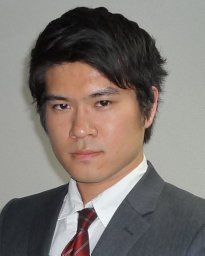 Sho Sakaino合作论文数Department of System Design Engineering, Keio University17
 Toshiaki Tsuji (辻俊明)合作论文数Department of Electrical Engineering, Electronics, and Applied Physics, Saitama University16
 Hiroaki Katagiri合作论文数10
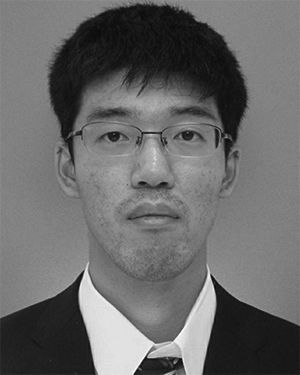 Hiroshi Asai合作论文数9
 Kouhei Ohnishi (大西公平)合作论文数Haptics Research Center, Keio University;Global Research Institute, Keio University9Naoto Mizukami合作论文数8
 Yuki Saito合作论文数Departments of Otolaryngology, Head and Neck Surgery, University of Tokyo8Shigeki Yashita合作论文数6Yuu Hasegawa合作论文数5Mizoguchi, Hiroto合作论文数5
 Yuki Inada合作论文数4
 Yutaka Kazoe合作论文数Department of System Design Engineering;Keio University;Department of System Design Engineering, Keio University4Kazuki Yane合作论文数2Yusuke Kido合作论文数1A. Saito合作论文数1Tsuyoshi ADACHI合作论文数1
 Shuichi Adachi (足立修一)合作论文数Faculty of Science and Technology, Keio University1Takamitsu Matsubara合作论文数1Kei Sugihara合作论文数1
 Xiaobai Sun合作论文数Department of Computer Science, Trinity College of Arts & Sciences, Duke University1
 Hara Masayuki合作论文数1
 Wataru Iida合作论文数1Keisuke Yamazaki合作论文数Tokyo Institute of Technology1




