The Geheimes Staatsarchiv Preußischer Kulturbesitz Berlin is an archive with thousands of patents from the 19th century. The documents include patent texts and figures as well as the comments of the reviewers. The paper is about first common activities of the archive and the Ilmenau University of Technology to make the documents available to a broad public. Aside of the digital reproduction and presentation of texts and images the activities focus on remodeling the technical devices and animate the models with WebGL in web browsers. In the created interactive animations different functional and constructive aspects can be explained to the viewers. The original content as well as the derived content like videos and interactive animations is finally made available in the DMG-Lib portal. The paper describes the used workflow and experiences as well as selected examples.
This paper presents how the "Digital Mechanism and Gear Library" (DMG-Lib) can support design engineers in their daily work. Selected case scenarios of typical engineering tasks and their solution supported by the DMG-Lib are demonstrated. The DMG-Lib is a digital, internet-based library (www.dmg-lib.org) with the objective of collection, integration, preservation, systematization and adequate online presentation of information in the field of mechanism and machine science. The DMG-Lib offers users a wide variety of opportunities for retrieval in heterogeneous information sources and media types. The digitized content sources are extensively post-processed and enriched with additional information as well as cross-linked with various information. Supplemented with innovative multimedia applications and a semantic information retrieval environment, the DMG-Lib provides an efficient access to this knowledge space not only for engineers but also for students, teachers, historians or other technical interested persons.
In order to ensure a uniform indexing of technical information and a coordinated search engine in the field of mechanisms science, it is useful to develop a multilingual illustrated μ-thesaurus of “mechanism” indexing terms. This paper proposes a complete database of multilingual illustrated mechanisms science indexing terms, which will overcome the language barrier and will be integrated into technical macro-thesauri.
In 2011 the thinkMOTION project started. It focuses on making knowledge in the field of motion systems accessible to a broad public. The collected material covers forgotten treasures as well as current day research results. Different kinds of representation are supported, most notably books, articles, patents, images, videos, interactive animations and formalized mechanism descriptions. From the technical point of view the work in thinkMOTION is based on the DMG-Lib which was started as a German national project. Now workflow and tools were adapted to fit the needs of the work on European level. The content is collected on the DMG-Lib platform and presented to the international audience in different ways. The most important way for thinkMOTION is to make all the content accessible via Europeana, a multi-lingual online collection of millions of digitized items. This article focuses on the thinkMOTION workflow and the support of multilingualism.
This paper deals with introducing extended audio-visual VR technologies into product development process. It will be shown that, in order to provide product models fit for design purposes, first some intensive basic research questions have to be solved. This contribution discusses the use of a VR-system and the simulation meth¬ods and models required for product development. This is explained via the example of a pick-and-place unit. The task of the specific design process is to develop a two-coordinate pick-and-place unit for assembling purposes with short cycle times and a low noise level.
In historical literature various depictions of technical solutions in the field of motion systems can be found. The form of the stored knowledge may be different. For example it may be represented as textual description, image or diagram. Those sources of knowledge are spread all over the world in libraries, museums, companies, universities and other institutions. Today it is at least in general possible to have fast access to some of these sources, because a lot of digitization projects present their results online. Some of the projects concern common (possibly technical) literature and patents whereas other projects are focused on the special field of motion systems (e. g. DMG-Lib or KMODDL). The main problem is, that the solutions described in the different sources can not be found efficiently by the engineering designers because usual search techniques supplied in the Internet are text-based and the textual descriptions have a certain language which is in the older literature often not English. But even if the key words are entered in the correct language a lot of solutions will not be found, because the author uses terms according to his personal context (e. g. determined by time, region and community). Furthermore solutions described in images and diagrams will only be found, if an attached text can be found. Thats why new approaches are needed. Projects like DMG-Lib and KMODDL try to develop such approaches which reactivate the rich cultural heritage in mechanism and machine science. Combined with modern materials, manufacturing processes and areas of application the old solution principles can lead to new innovative products. Because of the world wide demand as well as the world wide location of the sources international cooperation is needed. A network of interested persons, institutions and companies must be build up, which collects the different sources, extracts the solutions and makes them accessible. The presented paper deals with a concept, the possible realization and necessary tools for such a network. The emphasis lies on meta data, handling of multilingualism, extraction of solution principles, representation of solution principles and search techniques.
This paper presents a solution repository that is part of the Digital Mechanism and Gear Library (DMG-Lib). The aim of this project is to develop a new digital, internet-based library (www.dmg-lib.org) to collect, preserve and present the knowledge of mechanism and gear science. Using the state-of-the-art in the field of interaction, metadata and search algorithms, the digital library will support engineering designers in many aspects of product development as it helps to find possible design solutions, calculation procedures for dimensioning, etc. Combined with innovative multimedia applications and a semantic information retrieval environment, DMG-Lib provides an efficient access to this knowledge space of mechanism and gear science.
In the past it was often adequate to assemble an overall system from separately developed and optimized parts. However, recent developments in engineering show the need to integrate mechanical, optical, electrical, electronical and software components. This new quality of interdisciplinary collaboration requires new computeraided, phase- and domain-spanning tools for modeling, analysis, simulation and optimization of complex design objects particularly in the early phases of product development. The article covers the first intermediate results of the ongoing research concerning a phase-overlapping design system for heterogeneous systems that supports the transition from the solution principle to embodiment design.
A new continuous sterilization system was designed, constructed, started up, and qualified for media sterilization for secondary metabolite cultivations, bioconversions, and enzyme production. An existing Honeywell Total Distributed Control 3000-based control system was extended using redundant High performance Process Manager controllers for 98 I/O (input/output) points. This new equipment was retrofitted into an industrial research fermentation pilot plant, designed and constructed in the early 1980s. Design strategies of this new continuous sterilizer system and the expanded control system are described and compared with the literature (including dairy and bio-waste inactivation applications) and the weaknesses of the prior installation for expected effectiveness. In addition, the reasoning behind selection of some of these improved features has been incorporated. Examples of enhancements adopted include sanitary heat exchanger (HEX) design, incorporation of a "flash" cooling HEX, on-line calculation of F o and R o, and use of field I/O modules located near the vessel to permit low-cost addition of new instrumentation. Sterilizer performance also was characterized over the expected range of operating conditions. Differences between design and observed temperature, pressure, and other profiles were quantified and investigated.
The paper presents concepts for a computer-based design of positioning and measuring ma-chines as virtual prototypes to support a phase-overlapping multi-stage design. The basic con-cept is the modularisation at all levels of abstraction during the design process. For a consis-tent description of the virtual prototypes a constraint-based and catalogue oriented method is used. The modelling follows the described four-stage process of synthesis. It is thus possible even at the initial planning stage to make important decisions on the possible optimum design.
Four new fermenters were designed and constructed for use in secondary metabolite cultivations, bioconversions, and enzyme production. A new PC/PLC-based control system also was implemented using GE Fanuc PLCs, Genius I/O blocks, and Fix Dynamics SCADA software. These systems were incorporated into an industrial research fermentation pilot plant, designed and constructed in the early 1980s. Details of the design of these new fermenters and the new control system are described and compared with the existing installation for expected effectiveness. In addition, the reasoning behind selection of some of these features has been included. Key to the design was the goal of preserving similarity between the new and previously existing and successfully utilized fermenter hardware and software installations where feasible but implementing improvements where warranted and beneficial. Examples of enhancements include strategic use of Inconel as a material of construction to reduce corrosion, piping layout design for simplified hazardous energy isolation, on-line calculation and control of nutrient feed rates, and the use of field I/O modules located near the vessel to permit low-cost addition of new instrumentation.
 G. Höhne合作论文数6Ulf Döring合作论文数6P. Salmon合作论文数5Randolph L Greasham合作论文数5
 Michel Chartrain合作论文数Department of Bioprocess R&D, Merck Research Laboratories4Peter Potzinger合作论文数4Lorraine Katz合作论文数3U. Döring合作论文数3Veit Henkel合作论文数3michael reesing合作论文数2
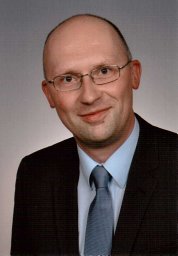 M. Lotz合作论文数Technische Universität Ilmenau2Rene Brecht合作论文数2C. Marcin合作论文数2
 Burkhard Corves合作论文数Department of Mechanism Theory and Dynamics of Machines (IGM),, RWTH Aachen University2B Buckland合作论文数2N. L. Arthur合作论文数2Karl-Heinz Modler合作论文数2I. Maniu合作论文数1
 Agneta-Elisabeta Lovasz合作论文数1S Smith合作论文数1C. Weber合作论文数1B Junker合作论文数1E. Bastian合作论文数1J. Zhang合作论文数1dr ing habil k zimmermann合作论文数1dipl ing j grabow合作论文数1dr ing h adolf合作论文数1K. Price合作论文数1E. Fisher合作论文数1J Lynch合作论文数1
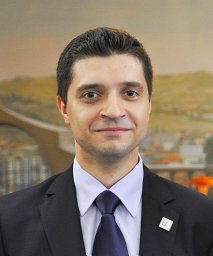 Valentin Ciupe合作论文数Fac Mech, Politehn Univ Timisoara1
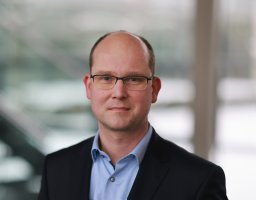 Stephan Husung合作论文数Ilmenau University of Technology1A Seeley合作论文数1Kodzo Gbewonyo合作论文数1N Connors合作论文数1Marilyn Thien合作论文数1Stephen W Drew合作论文数1Beth Junker合作论文数1
 Corina Mihaela Gruescu合作论文数1
 Junshan Zhang (章君山)合作论文数School of Electrical, Computer and Energy Engineering, Arizona State University;Department of Electrical and Computer Engineering, University of California Davis1H. Krömker合作论文数1Barry C Buckland合作论文数1Jurgen Wernstedt合作论文数1Beat D. Bruderlin合作论文数1
 Pal Kardos合作论文数1M. A. Shifflet合作论文数1Colleen Taylor合作论文数1D. Perju合作论文数1J. Adamca合作论文数1




