Supercapacitors are superior in terms of long cycle life and power delivery which makes it more efficient in many applications. Here we propose the effect on capacitance by varying the concentration of Ni and C electrode material deposited on Au as the current collector electrode by ion beam irradiation method, which assists in the processing and engineering of new material. For the electrode fabrication, Au foil was irradiated with Ar + ions with simultaneous supply of Ni and C with various Ni/C ratios by ion beam irradiation method at room temperature and labeled as NiC-1, NiC-2, and NiC-3. Through SEM imaging, a distinct nanoprotrusion was identified. Successful control of nickel supply was affirmed via results obtained by inductively coupled plasma mass spectrometry (ICP-MS), revealing nickel concentrations of 3.9 & micro;g/cm2, 14 & micro;g/cm2, 30 & micro;g/cm2 in the respective samples NiC-1, NiC-2, and NiC-3. The high-resolution transmission electron microscopy (TEM) observation unveiled a uniform distribution of Ni nanoparticles (Ni NPs) within a carbon matrix. Cyclic voltammetry (CV) measurement demonstrated typical faradaic redox reactions across all samples. Electrochemical assessment indicated that higher carbon content correlated with enhanced reaction efficiency, suggesting a potential extension in the life cycle of the pseudocapacitor. Notably, constant current and CV measurements highlighted superior performance in the sample NiC-1. In conclusion, the proposed pseudocapacitor configuration, NiC-1 (656 Fg-1), holds promise for enhanced performance.
The synthesis of graphene at lower temperatures remains challenging, along with the expansion of its application areas. Here we demonstrated the graphene synthesis on various substrates at and above 350 degrees C by a solid phase reaction method. In this method, C-rich Ni-C films are deposited on the substrates by conventional magnetron sputter deposition at room temperature with a binary target, followed by vacuum annealing. This resulted in phase separation of the multilayer graphene on top. The temperature dependence of graphene formation is investigated by high-resolution transmission electron microscopy (TEM), in situ X-ray diffraction (XRD) and Raman spectroscopy. Graphene thus synthesized on a stainless steel (SS) plate is successfully used to enhance the biofilm formation and the current generation by Geobacter species for use in microbial fuel cell application. As transfer-free graphene can be synthesized directly on substrates irrespective of their material and shape, and is usable in harsh environment of liquid, this simple method is believed to be quite promising for a variety of applications.
Perovskite ferroelectrics remain central in electronic materials research, with hybrid improper ferroelectricity (HIF) offering a mechanism to realize spontaneous polarization through nonpolar octahedral distortions. A promising approach for expanding the family of HIF materials is to examine layered perovskites with four or more layers (n >= 4). Here, we employ Dion-Jacobson-type homologous layered perovskites Cs(Bi2Sr n-3)(Ti n-1Nb)O3n+1 (n = 3, 4, and 5) as a model system to study their ferroelectric domain structure with atomic-scale analysis. Aberration-corrected scanning transmission electron microscopy reveals the evolution of domain structures from neutral walls (n = 3) to coexisting neutral and charged walls (n = 4 and 5). In the HIF compound CsBi2SrTi3NbO13 (n = 4), the suppression of both elastic and dipolar energy components results in lower overall domain wall energy, thereby promoting the formation of unit-cell-thick, nanosized domains. Our study addresses the complex structural and energetic landscape of high-order perovskites, opening pathways for understanding and designing advanced ferroelectrics based on HIF.
For a wider range of applications of porous graphene, including the functionalization of the surface of daily items, its direct coating onto the surface is highly demanded. Here, we demonstrated porous graphene coating by simple vacuum annealing of Co-C based films on SiO2/Si substrates at 800 degrees C. The porous graphene films thus prepared featured a dense distribution of core-shell structures consisting of an empty core surrounded by a multilayer graphene shell (hollow graphene shell), together with dispersed Co nanoparticles. Adding a tiny amount of Ag (<-1 atomic %) led to a more pronounced distribution of the hollow graphene shell, as well as a dispersion of finer Co nanoparticles, due to the faster agglomeration and evaporation of Ag than Co. Aqueous extracts of Sargassum horneri loaded onto the porous graphene films thus prepared showed excellent virucidal activity against the influenza virus, even after the test piece had been rinsed (with a residual virus rate of -0.4 %). This direct porous graphene coating method is, in principle, applicable to any heat-tolerant substrates independent of the shape. Thus, this method is promising for direct porous graphene coating applications that is useable even in the harsh working conditions of liquids.
Perpendicularly magnetized magnetic tunnel junctions (MTJs) based on oxide materials are promising candidates for spintronic applications because of their high chemical stability and potential for high spin polarization. In this work, we investigated the spin-polarized electron tunneling through MgO (001) barriers from conductive Fe-rich cobalt ferrite CoyFe3-yO4 (C-CFO) (001) layers, where the conductivity is caused by electron hopping between Fe2+ and Fe3+ ions and the films exhibit perpendicular magnetic anisotropy. Perpendicularly magnetized C-CFO/MgO/C-CFO MTJs, composed of lower and upper C-CFO electrodes serving as a spin injector and a spin detector, exhibited clear tunneling magnetoresistance (TMR) effect and a spin injection efficiency of -14.2% at 150 K. The bias-voltage dependence of the TMR ratio is considerably smaller than that reported for conventional oxide-based MTJs. These results demonstrate that C-CFO can function as an electrode material in perpendicularly magnetized MTJs and exhibits relatively weak bias dependence compared with previously reported oxide-based systems.
The potential for Ca2+ conduction along the < 001 > and < 110 > directions in the melilite structure type compound Ca2Ga2SiO7 (space group P42(1)m) has been elucidated through the utilization of the bond valence energy landscape method. The randomly grain-oriented polycrystal exhibited an increase in bulk conductivity for Ca2+ (sigma(bulk)) from 6.24 x 10(-10) S cm(-1) at 573 K to 2.09 x 10(-5) S cm(-1) at 1073 K, with an activation energy of 1.146 (10) eV. The transference number at 1073 K was 0.982. The sigma(bulk)-value of Ca2Ga2SiO7 at each temperature from 673 to 1073 K was intermediate between those of the grossite structure type compounds CaGa4O7 and CaAl4O7, while the sigma(bulk)-value of the NASICON-type compound (Ca0.05Hf0.9)(4/3.9)Nb(PO4)(3) at each temperature from 573 to 873 K was superior to those of these three compounds. The total conductivity for Ca2+ of Ca2Ga2SiO7 was more than 12.4 times larger than that of the NASICON-type compound CaZr4(PO4)(6) at each temperature from 923 to 1073 K.
To enhance the conductivity of La3+, the (402) plane aligned polycrystalline La4Ga2O9 (space group P21/c) was prepared by sintering at 1673 K for 2 h after colloidal processing under a high magnetic field of 12 T. The textured polycrystal was characterized by X-ray diffraction and impedance spectroscopy with respect to the grain alignment direction. The (402) plane normal of each constituent crystal grain of the polycrystal was found to be almost parallel to the applied magnetic field. The texture fraction of (402), expressed as the Lotgering factor f(402), was 0.235. A comparison was made of the conductivities parallel (sigma parallel to) and perpendicular (1) to the aligned plane normal at temperatures ranging from 673 to 1073 K. These were also compared with the conductivity (r) of randomly grain-oriented La(4)Ga(2)O(9 )polycrystal. The sigma parallel to, ranging from 1.63 x 10(-)(7) S cm(-1 ) at 623 K to 8.52 (c) 10-4 S cm(-1 )at 1073 K, demonstrated the highest value at each temperature, followed by r and 1 in that order. The sigma parallel to/sigma r ratios ranged from 10.0 at 673 K to 15.2 at 1073 K, and the sigma perpendicular to/sigma r ratios ranged from 6.7 at 873 K to 8.3 at 1073 K. Since the a-axis is almost parallel to the (402) plane normal, the enhanced La(3+ )conductivity of the La(4)Ga(2)O(9 )polycrystal has confirmed, for the first time, the prediction by the bond valence energy landscape method in the literature that La3+ conduction is preferential along the a-axis.
The A-site cation-ordered Ruddlesden-Popper compound Gd3Ba2Fe4O12.5 was synthesized using the topotactic chemical reaction of Gd3Ba2Fe4O12. The crystal structure was determined through single-crystal X-ray diffraction and scanning transmission electron microscopy. Gd3Ba2Fe4O12.5 crystallizes in a tetragonal unit cell with P42/mnm symmetry, where a = 5.57240(10) Å and c = 35.3289(8) Å, differing from the P42/ncm space group of Gd3Ba2Fe4O12. The topotactically introduced oxide ions randomly occupy half of the atomic sites on the central layer (Gd layer) of the perovskite block, causing the iron ions on both sides of the layer to form six-coordinate octahedra and five-coordinate pyramids. Consequently, these polyhedra are randomly distributed within the perovskite blocks. Mössbauer spectroscopy revealed the presence of three independent trivalent Fe sites, corresponding to two FeO6 octahedra and one FeO5 pyramid. The introduction of oxide ions into Gd3Ba2Fe4O12 to form Gd3Ba2Fe4O12.5 altered the polyhedral rotation pattern from the same direction to the opposite direction relative to the ⟨110⟩ direction at the center of each perovskite block, although both compounds equally exhibited the a-b0c0/b0a-c0 manner. The occupation of O ions in the Gd layers of Gd3Ba2Fe4O12 induces a change in the crystal symmetry, which is associated with the octahedral rotation pattern and coordination environment.
The crystal structure of CuVP2S6 is investigated by transmission electron microscopy (TEM) and single-crystal X-ray diffraction. Cu, V and dimerized P2 are each octahedrally coordinated by S atoms. Each metal ion species forms a triangular lattice, which is interdigitated to form a two-dimensional sheet. Each sheet forms a layered structure with van der Waals gaps between them. The crystal has a rotational twin structure, which is manifested in the form of stacking disorder. Refined structure analysis reveals characteristic rotational distortion of the octahedra. The existence of Cu sites protruding into the van der Waals gap is directly shown by high-resolution scanning TEM.
Aerosol deposition is a promising technique for preparing thick, dense ceramic films on various substrates at room temperature. However, the resulting microstructure shows disadvantages for certain applications; for instance, defects and residual stresses are, together with the nanocrystalline grains, responsible for the low functional properties of aerosol-deposited films, limiting their usability for applications such as piezoelectric energy harvesting. As such, this study investigates the relaxation of aerosol deposition-induced defects and residual compressive stress during annealing. Barium titanate films with a 10-15 mu m thickness are sprayed on stainless steel substrates as a model material system. While as-deposited films display linear dielectric behavior, ferroelectricity can partially be recovered by annealing up to 600 degrees C. This is proposed to be connected with a reduction in compressive residual stress that is directly observed using in situ temperature-dependent X-ray diffraction. Above 250 degrees C, a transition from compressive towards tensile stress can be found, which is caused by thermal expansion and an observed shrinkage of the film. This shrinkage is proposed to be connected to a recombination of defects, e.g., oxygen vacancies. After annealing up to 700 degrees C, the residual stress is permanently reduced from-420 MPa to-320 MPa, and defects, such as the non-crystalline grain boundary areas observed in transmission electron microscopy, are partially relaxed. However, annealing temperatures above 500 degrees C could be responsible for reintroducing additional compressive stress due to the thermal expansion mismatch between film and substrate.
Water is crucial in space missions, and developing lightweight, high-performing catalysts for water recycling is essential. Extensive research on nanosized and even single-atom catalysts supported on oxides has been conducted for this purpose. However, the oxide supports usually constitute over 90% of the total mass, so the catalysts are heavy. Here, we fabricated a light, fibrous RuO2 nanostructured textile consisting solely of RuO2 nanoparticles (NPs), which did not require an oxide support, and evaluated it in the Sabatier reaction for water recycling. Remarkably, this support-free catalyst textile displayed an unprecedented catalytic mass activity (~60 mmolCH4 h-1 gcat-1 at 160 °C), which was approximately 20 times higher than that of a previously reported Ru/TiO2 catalyst, and the highest TOF (0.021 s-1 at 160 °C). Although well-known catalyst degradation was observed during prolonged testing, the performance of the textile remained exceptional even after 46 hours of continuous operation. A detailed surface analysis unveiled phenomena such as RuO2 reduction, nanoparticle growth, surface smoothing, and Ru loss during the reaction, contributing to degradation. We expect that addressing these intrinsic and thermodynamically driven phenomena will improve activity and durability.
Nitride (N3-) or cyanamide (CN22-) based mixed-anion compounds stand as attractive materials due to their unique properties derived from the binary or multiple anions, although their synthesis remains challenging in incorporating the N3- or CN22- anions safely. This work highlights the first demonstration of in situ single phase formation of a LaCl(CN2) mixed-anion compound from a stable single source precursor, melamine modified with LaCl3 preparable under aqueous conditions. The in situ formation of LaCl(CN2) involves the chemical modification of melamine with LaCl3 to form a complex. Upon heating of the precursor under N-2 flowing, this complex generates cyanamide species around 400 degrees C, which react with LaCl3 and nonsublimated melamine to afford a binary LaCl(CN2)/g-C3N4 composite. Further pyrolysis at 800 degrees C decomposes the g-C3N4 counterpart, resulting in the LaCl(CN2) single-phase formation. The electronic properties of the precursor-derived single phase LaCl(CN2) were studied by the density functional theory calculation and UV-vis spectroscopy combined with X-ray photoelectron spectroscopy analyses and characterized by measuring 4.7, 1.8, and -2.9 eV for the band gap energy, the valence band maximum, and the conduction band minimum relative to Fermi energy, respectively. This study paves the way for exploring various cyanamide-based mixed anion compounds, advancing their potential applications in various fields.
The c-axis-aligned polycrystalline lanthanum silicate oxyapatite (LSO) was prepared by the reactive diffusion between random grain oriented La(2)SiO(5 )polycrystal and [SiO + 1/2O(2)] gases at 1873 K for 10 h. Based on the grain sizes, aspect ratios, elongation directions, and c-axis orientations for the constituent LSO crystals, the polycrystalline microtexture was classified into three regions denoted by I, II, and III. Region I was located on the innermost side of the pellet sample, region III was situated on the surface, and region II was positioned between the regions I and III. The region I with the layer thickness of approximately 140 mu m was composed of relatively large crystal grains with their elongation directions along the c-axes. The individual crystal grains were aligned almost along their c-axes, with their a-axis directions being randomly oriented around the grain alignment direction. Although this region exhibited the highest orientation compared to the other two regions, there were also significantly lower orientation grains present, accounting for approximately 6.1 % of the total. If the formation of these grains that reduce the degree of orientation can be prevented, a higher degree of orientation can be achieved for the region I. On the other hand, there were much smaller crystal grains in the regions II and III. The LSO polycrystal with the region II showed the lowest orientation degree among those of the three regions. The region III consisted of grains with a relatively high degree of c-axis orientation and elongated along the c-axis. The differences in microtexture between the three regions would be attributed to the distinct growth behaviors of the constituent LSO crystal grains.
We investigated the correlation between crystal structures and spin states of cobalt perovskites ${\mathrm{La}}_{1\ensuremath{-}x}{\mathrm{Pr}}_{x}{\mathrm{CoO}}_{3}$ $(x=0.30, 0.34)$ by x-ray powder diffraction, transmission electron microscopy, and magnetic measurements at low temperatures. The $x=0.30$ and $x=0.34$ compounds exhibit structural phase transitions between a low-temperature orthorhombic phase (Pbnm) and a high-temperature rhombohedral phase $(R\overline{3}c)$ at around 170 and 250 K, respectively. In fairly wide temperature ranges around these temperatures, the low-temperature phase and the high-temperature phase coexist. The contribution of ${\mathrm{Co}}^{3+}$ ions to magnetic susceptibility approaches zero with decreasing temperatures. This indicates that low-spin cobalt ions increased at low temperatures. The ${\mathrm{CoO}}_{6}$ octahedron in the low-temperature orthorhombic phase shows an almost isotropic one in low temperatures, but changes to an anisotropic one as the temperature rises until the phase transition temperature. This suggests that the intermediate-spin state gradually develops from the low-temperature dominant low-spin state with increasing temperature. We also observed small anomalies in the magnetic susceptibility of each compound in the vicinity of the structural phase transition temperature.
The low-temperature graphene growth is a crucial step toward more efficient, cost-effective, productive, cheap, and sustainable energy systems. In this work, we report the effect of transition metal nanoparticles (TMNPs) Ag, Pd, and Cu on the graphitization of amorphous carbon (a-C) deposited onto SiO2 substrates using a one-step magnetron sputtering technique at room temperature (RT). Transmission electron microscopy (TEM), Raman spectroscopy, and x-ray photoelectron spectroscopy (XPS) were used to examine the structures of TMNP-C films. The a-C around the metallic NPs spontaneously formed a disordered graphitic structure. Moreover, the 2D peak was detected in Raman spectra, and XPS analyses revealed the sp(2) graphitization for the Ag-C, Pd-C, and Cu-C films deposited on the SiO2 substrates. These studies suggest that these metals' graphitization activity is in the sequence of Pd > Cu > Ag. The highest catalytic activity of Pd NPs in graphitization at low temperatures was due to the highest carbon solubility and nano-sized particles. Thus, the control of the particle size of the catalyst to enhance the carbon solubility and decrease the melting point will open up a new strategy to grow high-quality graphene at low- temperatures.
Abstract Flexible control of the composition and morphology of nanocrystals (NCs) over a wide range is an essential technology for the creation of functional nanomaterials. Cation exchange (CE) is a facile method by which to finely tune the compositions of ionic NCs, providing an opportunity to obtain complex nanostructures that are difficult to form using conventional chemical synthesis procedures. However, due to their robust anion frameworks, CE cannot typically be used to modify the original morphology of the host NCs. In this study, we report an anisotropic morphological transformation of Cu1.8S NCs during CE. Upon partial CE of Cu1.8S nanoplates (NPLs) with Mn2+, the hexagonal NPLs are transformed into crescent-shaped Cu1.8S–MnS NPLs. Upon further CE, these crescent-shaped NPLs evolve back into completely hexagonal MnS NPLs. Comprehensive characterization of the intermediates reveals that this waxing-and-waning shape-evolution process is due to dissolution, redeposition, and intraparticle migration of Cu+ and S2−. Furthermore, in addition to Mn2+, this CE-induced transformation process occurs with Zn2+, Cd2+ and Fe3+. This finding presents a strategy by which to create heterostructured NCs with various morphologies and compositions under mild conditions.
In this study, we investigated the charged domain wall structure of lead-free piezoceramics (Na0.55K0.45)NbO3 using multiple microscopy techniques. It was found that the oxygen partial pressure during sintering affected the volatilization of A(2)O (A = Na, K), whereby the resulting vacancies were found to be related to grain sizes. In the polycrystals sintered under the air atmosphere condition, almost all grains show rapid grain growth and complex domain structures containing striped and indefinite shaped domains as revealed by confocal laser microscope and piezoelectric force microscope images. Transmission electron microscopy showed that a part of these domain structures has charged domain walls due to bending the 180 degrees domain walls. The A-site vacancies, such as Na and K, lead to forming large grains and charged domain wall structures.
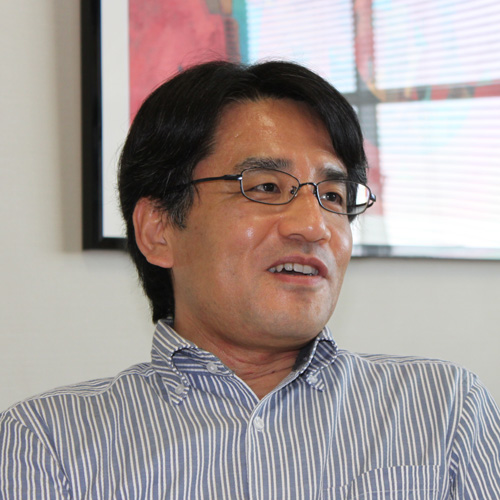 Koichiro Fukuda (福田功一郎)合作论文数Department of Life Science and Applied Chemistry, Nagoya Institute of Technology86
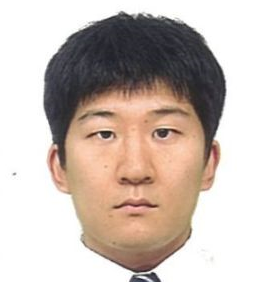 Daisuke Urushihara (漆原大典)合作论文数Center for Innovative Young Researchers, Nagoya Institute of Technology70
 Yoshio Matsui (松井良夫)合作论文数National Institute for Materials Science45
 Koji Kimoto (木本浩司)合作论文数Center for Basic Research on Materials, National Institute for Materials Science36
 Hiroki Banno合作论文数Division of Advanced Ceramics, Nagoya Institute of Technology18Philippe Thomas合作论文数16Yuji Iwamoto合作论文数Graduate School of Science and Engineering, Ehime University15
 Masaki Tanemura合作论文数Department of Physical Science and Engineering, Nagoya Institute of Technology14
 Xiuzhen Yu合作论文数Electronic States Microscopy Research Team, RIKEN Center for Emergent Matter Science13shigeo mori合作论文数12Olivier Masson合作论文数12Sawao Honda合作论文数12
 Taka-Hisa Arima (有馬孝尚)合作论文数Department of Advanced Materials Science, Division of Transdisciplinary Sciences, Graduate School of Frontier Sciences, The University of Tokyo;Center for Emergent Matter Science, RIKEN11Tsukasa Hirayama合作论文数11
 Kazuo Yamamoto合作论文数Japan Fine Ceramics Center10Emilie Béchade合作论文数10Mai Komabuchi合作论文数9
 Yaakob Yazid合作论文数9Nobuyuki Abe合作论文数9Abid Berghout合作论文数9
 Hiromi Nakano合作论文数9Momoko Okabe合作论文数8
 Samuel Bernard合作论文数8
 Yoshinori Tokura (十倉好紀)合作论文数Tokura Laboratory, Department of Applied Physics, University of Tokyo;National Institute of Advanced Industrial Science and Technology;RIKEN Center for Emergent Matter Science8Koshi Takenaka (竹中康司)合作论文数Department of Applied Physics, Graduate School of Engineering Applied Physics 2, Nagoya University8
 Zempachi Ogumi (小久見 善八)合作论文数Department of Energy and Hydrocarbon Chemistry, Graduate School of Engineering, Kyoto University8
 Shinya Koshihara (腰原伸也)合作论文数Department of Chemistry Energy Science and Informatic, School of Science, Tokyo Institute of Technology8
 Yasutoshi Iriyama (入山恭寿)合作论文数Department of Materials,Physics and Energy Engineering Biological Material Engineering, Graduate School of Engineering, Nagoya University8Takuro Nagai合作论文数8Nobuo Ishizawa合作论文数8
 J. Jouin合作论文数7Yoichi Horibe合作论文数7Masanobu Nakayama合作论文数Department of Applied Chemistry, Tokyo Institute of Technology7Shotaro Tada合作论文数6
 Lei Miao (苗蕾)合作论文数桂林电子科技大学材料科学与工程学院6
 Hiroya Sakurai (櫻井裕也)合作论文数Research Center for Materials Nanoarchitectonics, National Institute for Materials Science6
 Naoto Hirosaki (廣崎尚登)合作论文数Research Center for Functional Materials, National Institute for Materials Science6
 Mohd Zamri Mohd Yusop合作论文数Graduate School of Engineering, Nagoya Institute of Techonology6
 Yoichi Okimoto合作论文数Joint Research Center for Atom Technology (JRCAT), Tsukuba 305-0046, Japan6
 Kuwahara Hideki (桑原英樹)合作论文数Department of Engineering and Applied Sciences, Faculty of Science and Technology, Sophia University6
 Kyle Grant Webber合作论文数Inst Mat Sci, Tech Univ Darmstadt6Daisuke Akahoshi合作论文数6Motoaki Kaga合作论文数6
 Masaki Hada合作论文数Department of Nuclear Engineering, Kyoto University6
 Chikako Moriyoshi (森吉千佳子)合作论文数Graduate School of Advanced Science and Engineering, Hiroshima University6LIU Chengyan (刘呈燕)合作论文数5Norifumi Asakuma合作论文数5Eiji Takayama-Muromachi合作论文数5T. Nagai合作论文数5




